
Eric Hoffer (1898–1983)
Author of The True Believer: Thoughts on the Nature of Mass Movements
About the Author
Image credit: The B. S. Report
Works by Eric Hoffer
Associated Works
Gentlemen, Scholars and Scoundrels: A Treasury of the Best of Harper's Magazine from 1850 to the Present (1972) — Contributor — 62 copies
Tagged
Common Knowledge
- Canonical name
- Hoffer, Eric
- Birthdate
- 1898-07-25
- Date of death
- 1983-05-21
- Gender
- male
- Education
- self-educated
- Occupations
- longshoreman
migrant worker
philosopher - Awards and honors
- Presidential Medal of Freedom (1983)
American Academy of Arts and Letters Academy Award (Literature ∙ 1964)
Eric Hoffer Award - Nationality
- USA
- Birthplace
- The Bronx, New York, New York, USA
- Places of residence
- The Embarcadero, San Francisco, California, USA
- Place of death
- San Francisco, California, USA
- Burial location
- Holy Cross Catholic Cemetery, Colma, San Mateo County, California, USA
- Map Location
- New York, USA
Members
Reviews
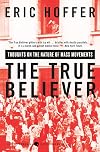
A pithy philosophical rumination on the nature and qualities of the "true believer." In sum, this is a frustrated individual who seeks to flee his meaningless life, to abjure liberties and find purpose through assimilation into a greater whole. The mission is ultimately less important than the merging into a close collective.
The author shows great wit and wide familiarity with examples of the phenomena he describes. Although writing not long after WWII, he does not limit his examples to show more Nazis and fascists. Mass movements are all around us. Especially relevant for anyone wanting insights into the popularity of Donald Trump. show less
The author shows great wit and wide familiarity with examples of the phenomena he describes. Although writing not long after WWII, he does not limit his examples to show more Nazis and fascists. Mass movements are all around us. Especially relevant for anyone wanting insights into the popularity of Donald Trump. show less

The title of Eric Hoffer's book “Working and Thinking on the Waterfront,” published in 1969, contains the key to the success of this longshoreman/philosopher: working AND thinking. For him, the two went together. When he took a week's vacation, assuming he would have lots of time to write, he found he could write nothing at all. He needed physical labor, unloading ships on docks in the San Francisco Bay, to put his mind in the proper zone for the thoughts that he turned into books like show more “The True Believer” and “The Temper of Our Time.”
Fortunately for Hoffer, being a longshoreman meant he didn't necessarily have to work eight hours a day or five days a week. Just a few hours of work would jumpstart his mind, then he could devote the rest of the day to reading and writing. This book consists of his journal entries in 1958 and 1959 when he was trying to organize thoughts that he would turn into the book “The Ordeal of Change.” Most of these entries begin with comments about the job he had that day, such as, "Danish ship at Pier 31. More meat from New Zealand." Then he would launch into his thoughts about culture, society and human nature.
Hoffer became something of a media sensation in the 1960s when Eric Sevareid interviewed him on CBS television. One can find excerpts on YouTube. In one of these I listened to this morning, Hoffer says "a philosopher generalizes ideas." That describes exactly what Hoffer did. From what he read and what he observed, he looked for patterns, themes and generalizations, which he would refine over a period of time and finally condense into his books, which remain in print and remain worth reading.
One downside to this way of thinking, revealed in his journals, is that it can become easy to overgeneralize using insufficient information. On the waterfront he would work with different men each day, often from different countries or of different races, and based on his work experiences on a particular day he would say things like "the Finns are the salt of the earth" or. speaking of the Slavs he worked with one day, "I cannot see how people of their kind back in the Old Country need a totalitarian government to tell them what to do." Sometimes his generalizations, as when he writes about women, are much less positive.
Hoffer's most frequent target in his journals, as in his books, are intellectuals. He defines what he means by the term in a preface: "They are people who feel themselves members of the educated minority, with a God-given right to direct and shape events. An intellectual need not be well educated or particularly intelligent. What counts is the feeling of being a member of an educated elite." He plants barbs for such people throughout his journals.
Unlike his other books, “Working and Thinking on the Waterfront” allows glimpses into his personal life. He frequently mentions spending time with a married woman named Lili and a little boy, also named Eric. Little Eric is Hoffer's son from an affair with Lili. Her husband, oddly enough, welcomes Hoffer on occasional visits to their home. Hoffer, in his mid-50s at this time, seems like a typical proud father, happy to generalize about his son's emerging strengths. show less
Fortunately for Hoffer, being a longshoreman meant he didn't necessarily have to work eight hours a day or five days a week. Just a few hours of work would jumpstart his mind, then he could devote the rest of the day to reading and writing. This book consists of his journal entries in 1958 and 1959 when he was trying to organize thoughts that he would turn into the book “The Ordeal of Change.” Most of these entries begin with comments about the job he had that day, such as, "Danish ship at Pier 31. More meat from New Zealand." Then he would launch into his thoughts about culture, society and human nature.
Hoffer became something of a media sensation in the 1960s when Eric Sevareid interviewed him on CBS television. One can find excerpts on YouTube. In one of these I listened to this morning, Hoffer says "a philosopher generalizes ideas." That describes exactly what Hoffer did. From what he read and what he observed, he looked for patterns, themes and generalizations, which he would refine over a period of time and finally condense into his books, which remain in print and remain worth reading.
One downside to this way of thinking, revealed in his journals, is that it can become easy to overgeneralize using insufficient information. On the waterfront he would work with different men each day, often from different countries or of different races, and based on his work experiences on a particular day he would say things like "the Finns are the salt of the earth" or. speaking of the Slavs he worked with one day, "I cannot see how people of their kind back in the Old Country need a totalitarian government to tell them what to do." Sometimes his generalizations, as when he writes about women, are much less positive.
Hoffer's most frequent target in his journals, as in his books, are intellectuals. He defines what he means by the term in a preface: "They are people who feel themselves members of the educated minority, with a God-given right to direct and shape events. An intellectual need not be well educated or particularly intelligent. What counts is the feeling of being a member of an educated elite." He plants barbs for such people throughout his journals.
Unlike his other books, “Working and Thinking on the Waterfront” allows glimpses into his personal life. He frequently mentions spending time with a married woman named Lili and a little boy, also named Eric. Little Eric is Hoffer's son from an affair with Lili. Her husband, oddly enough, welcomes Hoffer on occasional visits to their home. Hoffer, in his mid-50s at this time, seems like a typical proud father, happy to generalize about his son's emerging strengths. show less
Mass movements are one of the most terrifying forces in recent history; cataclysmic social upheavals that shatter states and lead to war, famine, and genocide. In this dense, philosophical tome, Hoffer examines the common features of mass movements, from semetic religions, to Nazis and Communism. All mass movements draw on a particular alliance between the worst elements of society, and the frustrated literati, creating an image of an idealized future that justifies any violence inflicted on show more the present. The fanatic does not want to be free, but rather desires to be free from freedom.
While this book is decades old, and hence a little dated, it's lessons are still invaluable when applied to contemporary politics. What might seem facile directed at the moments of today has great truth when applied with a little historical perspective. show less
While this book is decades old, and hence a little dated, it's lessons are still invaluable when applied to contemporary politics. What might seem facile directed at the moments of today has great truth when applied with a little historical perspective. show less

I had forgotten this book - last time I read it was better than 50 years ago. If you want to understand today's American political situation, read this book. This is Machiavelli for the modern age. "The quality of ideas seems to play a minor role in mass movement leadership. What counts is the arrogant gesture, the complete disregard of the opinion of others, the single handed defiance of the world. Charlatanism to some degree is indispensable to effective leadership. There can be no mass show more movement without some deliberate misrepresentation of facts."
Be afraid. Be very afraid. show less
Be afraid. Be very afraid. show less
Lists
Awards


You May Also Like


Associated Authors
Statistics
- Works
- 19
- Also by
- 2
- Members
- 3,711
- Popularity
- #6,827
- Rating
- 4.2
- Reviews
- 49
- ISBNs
- 58
- Languages
- 8
- Favorited
- 16