
Nescio (1882–1961)
Author of Amsterdam Stories
About the Author
Image credit: Nescio, J.H.F. Grönloh, in 1917
Series
Works by Nescio
'Heimwee' en andere fragmenten 12 copies
Insula dei 11 copies
Nescio: De uitvreter: historisch-kritische uitgave met commentaar over de genese van verhaal en verhaalfiguur; Deel 2: Apparaat (1990) 3 copies, 1 review
Nescio 3 copies
Nescio De uitvreter : historisch-kritische uitgave met commentaar over de genese van verhaal en verhaalfiguur. Dl. 1: teksten 3 copies, 1 review
And yet, and yet... 2 copies
Het dal der plichten 2 copies
Onverwacht gezelschap : Nescio, J. Slauerhoff, F. Bordewijk, Albert Helman, Marcellus Emants, S. Vestdijk, Louis Couperus (1987) 2 copies
Fullesies 1 copy
Paard onder pet 1 copy
Kyrie eleison 1 copy
Weet u... 1 copy
Pierwsze wzruszenie 1 copy
Een briefwisseling met Nescio — Author — 1 copy
Associated Works
De Nederlandse en Vlaamse literatuur vanaf 1880 in 250 verhalen (2005) — Contributor — 78 copies, 2 reviews
De Nederlandse en Vlaamse literatuur vanaf 1880 in 60 lange verhalen (2006) — Contributor — 43 copies, 2 reviews
'Van u heb ik ook een heleboel gelezen...' : tien kronkels van S. Carmiggelt over Nescio (1993) — honoree — 10 copies
Nederland leest : de mooiste korte verhalen - Utrecht leest (2015) — Contributor — 8 copies, 1 review
Nederland leest : de mooiste korte verhalen - Noord-Holland leest (2015) — Contributor — 7 copies, 1 review
Kristal : letterkundige productie — Contributor, some editions — 1 copy
Tagged
Common Knowledge
- Canonical name
- Nescio
- Legal name
- Grönloh, Jan Hendrik Frederik (Frits)
- Other names
- Nescio
- Birthdate
- 1882-06-22
- Date of death
- 1961-07-25
- Gender
- male
- Education
- Openbare Handelsschool
- Occupations
- businessman
writer - Organizations
- Debatingclub GOHV (Gedachtenwisseling Ontwikkelt Het Verstand) | Mede-oprichter en lid (1899-1901)
Kolonie Tames bij Huizen | Medestichter en lid (1901-1903) - Awards and honors
- Marianne Philips-prijs 1954 voor gehele oeuvre
- Relationships
- Kollewijn, Roeland Anthonie (leraar Nederlands op de H.B.S.)
Eeden, Frederik van (de man die de Sarphatistraat de mooiste plek van Europa vond; kolonie Walden) - Nationality
- Netherlands
- Birthplace
- Amsterdam, The Netherlands
- Places of residence
- Amsterdam, The Netherlands
- Place of death
- Hilversum, The Netherlands
- Burial location
- Nieuwe Oosterbegraafplaats, Amsterdam, The Netherlands
- Associated Place (for map)
- Amsterdam, The Netherlands
Members
Reviews
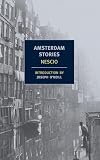
A truly wonderful collection by a gifted short story writer and life chronicler who is sadly unknown outside of his native Holland. Even this collection, superbly selected and translated by Damion Searls for NYRB Classics, is the first of Nescio's works to be available in English.
Nescio's gift is for focusing on the city as a living, breathing, and sometimes temperamental character in its own right. He also has a fine touch for characterization and interior conflict; many characters recur in show more the tales collected here, and the Künstlerroman themes are evident in nearly all of the stories. Nescio's focus on youth, on freedom, and on dreams is idyllic at times and then crushed by the harsh realities of maturation, external factors, and the world at large.
One of his strongest stories, "Little Poet," handles all of his usual themes with a highly nuanced awareness of war, infidelity, and the diminishing role of the artist in modern life. Nescio's increased attention to issues of gender and how these relate to his concerns from this story onward show an immense shift in his treatment, widening the scope, and leaving at least this reader hungry for more of his stories to be translated into English.
"The Freeloader" and "Young Titans"—which, along with "Little Poet," are the longest of Nescio's tales—are also remarkable, the first being stronger for its Melvillean misanthropy. Of the other tales collected here, only "The Writing on the Wall" and "Out Along the IJ" are weak; whether this is due to their rather short length (Nescio appears to need much longer canvases to unfold his narratives, except for two I'll mention below) or merely because they were sketches for other work, I can't say. What I can say is that his extremely short "The Valley of Obligations" is the closest to modernist prose poetry Nescio comes in a prescient way, and "The End" is apocalyptic in its Künstlerroman pessimism, its antebellum anxieties, and its aesthetic simplicity, both stories proving that Nescio worked brilliantly in shorter forms as well as longer novella-length tales.
Youth, dreams, life, love, loss, and the unrelenting realities of the world at large. All of this and the shifting, sometimes alien and sometimes intimate city of Amsterdam as a backdrop—Nescio's tales are timeless and all too ready for a new generation of readers. show less
Nescio's gift is for focusing on the city as a living, breathing, and sometimes temperamental character in its own right. He also has a fine touch for characterization and interior conflict; many characters recur in show more the tales collected here, and the Künstlerroman themes are evident in nearly all of the stories. Nescio's focus on youth, on freedom, and on dreams is idyllic at times and then crushed by the harsh realities of maturation, external factors, and the world at large.
One of his strongest stories, "Little Poet," handles all of his usual themes with a highly nuanced awareness of war, infidelity, and the diminishing role of the artist in modern life. Nescio's increased attention to issues of gender and how these relate to his concerns from this story onward show an immense shift in his treatment, widening the scope, and leaving at least this reader hungry for more of his stories to be translated into English.
"The Freeloader" and "Young Titans"—which, along with "Little Poet," are the longest of Nescio's tales—are also remarkable, the first being stronger for its Melvillean misanthropy. Of the other tales collected here, only "The Writing on the Wall" and "Out Along the IJ" are weak; whether this is due to their rather short length (Nescio appears to need much longer canvases to unfold his narratives, except for two I'll mention below) or merely because they were sketches for other work, I can't say. What I can say is that his extremely short "The Valley of Obligations" is the closest to modernist prose poetry Nescio comes in a prescient way, and "The End" is apocalyptic in its Künstlerroman pessimism, its antebellum anxieties, and its aesthetic simplicity, both stories proving that Nescio worked brilliantly in shorter forms as well as longer novella-length tales.
Youth, dreams, life, love, loss, and the unrelenting realities of the world at large. All of this and the shifting, sometimes alien and sometimes intimate city of Amsterdam as a backdrop—Nescio's tales are timeless and all too ready for a new generation of readers. show less
Actually, 4.5 stars...
What a welcome change of pace!
Nescio was the pseudonym of Jan Hendrik Frederik Grönloh (1882-1961), a pseudonym he felt was necessary to protect his career at an Amsterdam import-export house (at least until 1929), where he spent 33 years of his life and where he rose to be the director of the firm. But this was no life story like that of his contemporary Charles Ives, who was satisfied with his career as insurance executive and used most of his free time to write show more idiosyncratic music ahead of its time. It is fairly clear that Grönloh did not want his career, but by the age of 30 he had 4 young daughters and a wife to take care of. However, he also didn't really want to be a writer, either, for he published little, even after he retired at the age of 55. Like one of his best known characters, he wanted to be, not to do.
But the little he graced us with leaves me regretting that he didn't feel more strongly the calling to be a writer. For the short stories and sketches selected and translated by Damion Searles for this book, including all of the stories published in his first book (1918) which can be found in the original Dutch on the Project Gutenberg site, are charming, lively, melancholic and wry. With no sign of the drive to impress evinced by some of our contemporary authors, Nescio artfully tells his stories with a light touch. He is regarded as an admirable stylist in the Netherlands, which is why I read De uitvreter (the first story in this collection) in Dutch. I succeeded only in confirming once again that understanding what is written is a long way from grasping literary quality... There is no sign of linguistic fireworks, and it flows very nicely. More than that I can't say at this point.
So back to the translation, which also flows nicely and captures Nescio's wry humor and quiet sadness (which occasionally breaks out into loud despair - see below). What comes through clearly is an unmistakable voice, one you want to hear more of and regret when it stops its amused and sad narration.
About what, you ask.
The collection opens with "The Freeloader" ( uitvreter - loafer, sponger). This tells of the interactions of a group of young men, of which the primary characters are three: a self-tormented painter, the "freeloader" and the first person narrator, who is a writer of sorts. At first irritated by the freeloader's shameless sponging, the other two become fascinated by his free spirit and his manner of living totally in the moment. But the freeloader is ground down, though most of the grinding takes place outside of the view of the narrator. We are left speculating about the details.
In the next story Titaantjes (little titans, translated by Searls as "Young Titans", which, I think, misses some of the irony), the same group of young men appears again, without the freeloader. This time they are a typical bunch of 19-20 year olds, "us against them all", disparaging all they find before them and anxious to change the world, though exactly how and in what manner are not too clear to them. Grönloh aptly sketches this time of life and I, at least, at a safe distance from that period of my life, laughed aloud here. I suspect that those going through that time of life would not crack a smile.
Oh, we took our revenge, we learned languages they had never even heard of and we read books they couldn't even begin to understand, we experienced feelings they never knew existed.
So right! Do you remember? I can't help but contrast these healthy sentiments with the anomie of the young people in Tao Lin's Taipei , to mention but one example.
But life has a way of taking young people and changing them, changing them into something they never dreamed they would become; for the better, for the worse? Often, one really can't judge from the outside. The narrator tells the story 10 years after this time of inchoate hopes and dreams has passed, and sobering glimpses of the eventual outcomes of these people are allowed...
The narrator finds a kind of peace: "God's aim is aimlessness." In the next line: "But to keep this awareness always is granted to no man." His view is anti-modern - life is eternal, unchanging cycle; apparent changes are superficial, negligible. Individual lives go through huge changes; life itself never changes. Grönloh finds consolation there.
Not wanting this review to become all too long, I won't say anything about the remaining stories (not even the nearly perfect "Little Poet") and close, instead, with these remarks:
The strains caused by the disparity between his nature and the demands of his profession were intense enough to cause a nervous breakdown in 1927, resulting in a short hospitalization. But they also manifested themselves in the following brief text, "The Valley of Obligations" (1922):
I sit on the hill and look down into the valley of obligations. It is barren, there is no water, there are no flowers or trees in the valley. A lot of people are milling around, most of them drooping and misshapen and constantly looking down at the ground. Some of them look up every once in a while and then they scream. They all die sooner or later but I don't see their numbers decrease, the valley always looks the same. Do they deserve anything better?
I stand in the valley on a slag heap next to a small pile of scrap wood and a broken wash kettle. And I look up and see myself sitting up there and I howl like a dog in the night.
I've been there, but only as a young man, occasionally; Grönloh was 40 when he wrote this... Well, he had a long, long retirement and spent uncounted hours walking through his beloved Dutch countryside, just looking and being. At his death a journal of his hikes was found and has been published (in fact, nearly every scrap of his writing has been published, because the Dutch have taken him into their hearts), and I am intrigued, because when he described the countryside, the sky and the sea in these stories the intensity of his attention markedly increased. I'm afraid I might just have to hunt down nearly every scrap of his writing, too. show less
What a welcome change of pace!
Nescio was the pseudonym of Jan Hendrik Frederik Grönloh (1882-1961), a pseudonym he felt was necessary to protect his career at an Amsterdam import-export house (at least until 1929), where he spent 33 years of his life and where he rose to be the director of the firm. But this was no life story like that of his contemporary Charles Ives, who was satisfied with his career as insurance executive and used most of his free time to write show more idiosyncratic music ahead of its time. It is fairly clear that Grönloh did not want his career, but by the age of 30 he had 4 young daughters and a wife to take care of. However, he also didn't really want to be a writer, either, for he published little, even after he retired at the age of 55. Like one of his best known characters, he wanted to be, not to do.
But the little he graced us with leaves me regretting that he didn't feel more strongly the calling to be a writer. For the short stories and sketches selected and translated by Damion Searles for this book, including all of the stories published in his first book (1918) which can be found in the original Dutch on the Project Gutenberg site, are charming, lively, melancholic and wry. With no sign of the drive to impress evinced by some of our contemporary authors, Nescio artfully tells his stories with a light touch. He is regarded as an admirable stylist in the Netherlands, which is why I read De uitvreter (the first story in this collection) in Dutch. I succeeded only in confirming once again that understanding what is written is a long way from grasping literary quality... There is no sign of linguistic fireworks, and it flows very nicely. More than that I can't say at this point.
So back to the translation, which also flows nicely and captures Nescio's wry humor and quiet sadness (which occasionally breaks out into loud despair - see below). What comes through clearly is an unmistakable voice, one you want to hear more of and regret when it stops its amused and sad narration.
About what, you ask.
The collection opens with "The Freeloader" ( uitvreter - loafer, sponger). This tells of the interactions of a group of young men, of which the primary characters are three: a self-tormented painter, the "freeloader" and the first person narrator, who is a writer of sorts. At first irritated by the freeloader's shameless sponging, the other two become fascinated by his free spirit and his manner of living totally in the moment. But the freeloader is ground down, though most of the grinding takes place outside of the view of the narrator. We are left speculating about the details.
In the next story Titaantjes (little titans, translated by Searls as "Young Titans", which, I think, misses some of the irony), the same group of young men appears again, without the freeloader. This time they are a typical bunch of 19-20 year olds, "us against them all", disparaging all they find before them and anxious to change the world, though exactly how and in what manner are not too clear to them. Grönloh aptly sketches this time of life and I, at least, at a safe distance from that period of my life, laughed aloud here. I suspect that those going through that time of life would not crack a smile.
Oh, we took our revenge, we learned languages they had never even heard of and we read books they couldn't even begin to understand, we experienced feelings they never knew existed.
So right! Do you remember? I can't help but contrast these healthy sentiments with the anomie of the young people in Tao Lin's Taipei , to mention but one example.
But life has a way of taking young people and changing them, changing them into something they never dreamed they would become; for the better, for the worse? Often, one really can't judge from the outside. The narrator tells the story 10 years after this time of inchoate hopes and dreams has passed, and sobering glimpses of the eventual outcomes of these people are allowed...
The narrator finds a kind of peace: "God's aim is aimlessness." In the next line: "But to keep this awareness always is granted to no man." His view is anti-modern - life is eternal, unchanging cycle; apparent changes are superficial, negligible. Individual lives go through huge changes; life itself never changes. Grönloh finds consolation there.
Not wanting this review to become all too long, I won't say anything about the remaining stories (not even the nearly perfect "Little Poet") and close, instead, with these remarks:
The strains caused by the disparity between his nature and the demands of his profession were intense enough to cause a nervous breakdown in 1927, resulting in a short hospitalization. But they also manifested themselves in the following brief text, "The Valley of Obligations" (1922):
I sit on the hill and look down into the valley of obligations. It is barren, there is no water, there are no flowers or trees in the valley. A lot of people are milling around, most of them drooping and misshapen and constantly looking down at the ground. Some of them look up every once in a while and then they scream. They all die sooner or later but I don't see their numbers decrease, the valley always looks the same. Do they deserve anything better?
I stand in the valley on a slag heap next to a small pile of scrap wood and a broken wash kettle. And I look up and see myself sitting up there and I howl like a dog in the night.
I've been there, but only as a young man, occasionally; Grönloh was 40 when he wrote this... Well, he had a long, long retirement and spent uncounted hours walking through his beloved Dutch countryside, just looking and being. At his death a journal of his hikes was found and has been published (in fact, nearly every scrap of his writing has been published, because the Dutch have taken him into their hearts), and I am intrigued, because when he described the countryside, the sky and the sea in these stories the intensity of his attention markedly increased. I'm afraid I might just have to hunt down nearly every scrap of his writing, too. show less
But since he was a true little poet something had to be missing. What is anything that little poet actually has ever worth to him?
And then he got so enraged at everything, living and dead, that he interrupted his endless eroticism and wrote a grim and bitter little book that made him famous right away. But that happened later, we’ll get to that.
It was back when I was still planning to write the big thick book that I’ll never write and that you have to have written to become famous, or show more so they say. A big novel made of reinforced concrete, two volumes if possible, and epic, really epic – the epic saga is the highest genre of literature, I read that somewhere too, more than once. Those people write whatever they feel like. They endlessly make art, dead literature and other dead works of art, and it doesn’t seem to kill them either. show less
And then he got so enraged at everything, living and dead, that he interrupted his endless eroticism and wrote a grim and bitter little book that made him famous right away. But that happened later, we’ll get to that.
It was back when I was still planning to write the big thick book that I’ll never write and that you have to have written to become famous, or show more so they say. A big novel made of reinforced concrete, two volumes if possible, and epic, really epic – the epic saga is the highest genre of literature, I read that somewhere too, more than once. Those people write whatever they feel like. They endlessly make art, dead literature and other dead works of art, and it doesn’t seem to kill them either. show less

These notes from diaries kept during the final nine years of Nescio's life had never been published before. They are not accounts of his whole day, but only descriptions of walks and short trips he made. Most trips are in the vicinity of Amsterdam, the landscape of my hometown, so I read this with a great deal of nostalgia. Not the bustle of life and business are his main concern but nature, castles and church towers. This makes these diaries very contemplative and stilled.
Lists
Awards


You May Also Like


Associated Authors
Statistics
- Works
- 42
- Also by
- 20
- Members
- 1,168
- Popularity
- #22,016
- Rating
- 3.8
- Reviews
- 25
- ISBNs
- 70
- Languages
- 5
- Favorited
- 12