
Carter Scholz
Author of Kafka Americana: Fiction
About the Author
He lives in California. (Bowker Author Biography)
Works by Carter Scholz
The Nine Billion Names of God 3 copies
Receding Horizon [short story] — Author — 2 copies
Mengele's Jew {short story} 2 copies
Travels 2 copies
Frog peak anthology 2 copies
Vanguard 2.0 (short story) 2 copies
Galileo Complains [short fiction] 2 copies
Radiance [short story] 2 copies
Gypsy {short story} 1 copy
In Reticulum 1 copy
Transients {short story} 1 copy
Clod Pebble 1 copy
Bad Pennies 1 copy
The Menagerie Of Babel 1 copy
Voyageurs 1 copy
Associated Works
The Year's Best Science Fiction: Thirty-Third Annual Collection (2016) — Contributor — 189 copies, 2 reviews
The Very Best of the Best: 35 Years of The Year's Best Science Fiction (2019) — Contributor — 180 copies, 1 review
The Year's Best Science Fiction: Thirty-Fifth Annual Collection (2018) — Contributor — 151 copies, 3 reviews
The Year's Best Science Fiction: Thirty-Fourth Annual Collection (2017) — Contributor — 147 copies, 4 reviews
The Final Frontier: Stories of Exploring Space, Colonizing the Universe, and First Contact (2018) — Contributor — 72 copies, 4 reviews
Light Years and Dark: Science Fiction and Fantasy of and for Our Time (1984) — Contributor — 37 copies
Visions, Ventures, Escape Velocities: A Collection of Space Futures (2017) — Contributor — 22 copies, 1 review
The Magazine of Fantasy and Science Fiction May/June 2011, Vol. 120, Nos. 5 & 6 (2011) — Contributor — 11 copies
Johann Sebastian Bach Memorial Barbecue. Internationale Science Fiction Erzählungen. (1992) — Contributor — 4 copies
Mondaugen — Contributor — 1 copy
Tagged
Common Knowledge
- Legal name
- Scholz, Robert Carter
- Birthdate
- 1953-09-22
- Gender
- male
- Education
- Rhode Island School of Design
- Occupations
- composer
author - Nationality
- USA
- Birthplace
- New York, New York, USA
- Associated Place (for map)
- New York, USA
Members
Reviews

A brilliant, overlooked novel about 2 physicists entangled in corruption, mid-life crises, institutional incentives, technological inevitability, the end of the Cold War, nuclear bombs & the Star Wars missile defense program, existential risks & accelerationism. Based on true events, with unparalleled realistic dialogue. A bleak masterpiece...
(...)
Thematically, Scholz pairs a character that is realistic and sees human politics for what it is – inevitable, Machiavellian, out of control, show more conflicted – and one that is naive, in search for truth. But in the novel – as in life – truth is problematic, as even smart men can’t agree. It is not much of a spoiler to say the tragedy of Quine is that he eventually makes ‘moral’ mistakes like Highet too. Yet, morality is in the eye of the beholder, and while Scholz has written an indicting, political book, it steers clear of easy judgements or finger pointing. Democratic oversight is very hard to get right, and bureaucracy unavoidable. Decisions are “taken in the absolute vacuum of procedure and contingency”, and humans have complex, differing motivations. We all need to eat.
(...)
Full review on Weighing A Pig Doesn't Fatten It show less
(...)
Thematically, Scholz pairs a character that is realistic and sees human politics for what it is – inevitable, Machiavellian, out of control, show more conflicted – and one that is naive, in search for truth. But in the novel – as in life – truth is problematic, as even smart men can’t agree. It is not much of a spoiler to say the tragedy of Quine is that he eventually makes ‘moral’ mistakes like Highet too. Yet, morality is in the eye of the beholder, and while Scholz has written an indicting, political book, it steers clear of easy judgements or finger pointing. Democratic oversight is very hard to get right, and bureaucracy unavoidable. Decisions are “taken in the absolute vacuum of procedure and contingency”, and humans have complex, differing motivations. We all need to eat.
(...)
Full review on Weighing A Pig Doesn't Fatten It show less

This novella brought to mind a short story I read as a child, which has stuck with me for decades. That story was "Far Centaurus" by A.E. Van Vogt. While the details are different, some of the general beats are similar. The sublight starship journey, even to the same destination. The members of the crew waking up one by one to check on the ship, reviewing and adding to the ship's log. The Van Vogt story was formative for me, but I don't think quite as much of "Gypsy." It is well-written, but show more too dystopian for my liking. The author did a good job of weaving together the backstory of the orchestration of the 'escape from Earth' with each awakened crewmember's backstory, as well as the issue each has to address with the mission. I haven't read any other books from the "Outspoken Authors" series, but something about it reminds me of a sort of "Dangerous Visions" for the 21st century. Definitely worth the read, but probably not a keeper. show less
I’d never heard of Scholz, although apparently he is held in high regard. Looking at some of the comments on this book, it’s clear he has plenty of genre friends in San Francisco/Oakland, where he lives – including Kim Stanley Robinson – and where PM Press is based. None of which is a reflection on Scholz’s ability, more on the requirement of connections and patronage in genre in order for good fiction to get noticed. And ‘Gypsy’, the title novella of this collection, is very show more good indeed. It’s 2015’s third generation starship story, and probably the best of the three as a generation starship story. Tchaikovsky’s Children of Time scores well because of its spider civilisation, Kim Stanley Robinson’s Aurora has some good bits about narratology… but Scholz’s ‘Gypsy’ goes for real science and engineering and paints a bleak picture – one not helped by the driving force behind the flight being the immanent collapse of Earth’s biosphere. Not that the flight itself provides any answers. The remainder of the collection comprises a somewhat tired epistolary short story, an essay about US economic shenanigans, a story presented as house committee testimony, and an interview with Scholz. I have a lot of time for Scholz’s approach to genre, as given in his interview, but only the title novella seems a good expression of it. show less
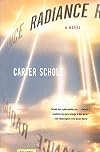
Do responsible grownups manage nuclear physics research, nuclear weapons development, and the generation of nuclear power, as well as their ceaselessly proliferating manifestations and consequences? Commonplace images of Secret Service agents carrying "the football" for the President of the United States, of a hotline linking Moscow and Washington, and more recently of terrorists carrying "suitcase nukes" intimate that specific, accountable individuals at the top of distinct chains of show more command hold the fate of millions (if not billions) of humans in their hands. Such images seduce us with the notion that the vast power of nuclear forces unleashed by twentieth-century science can be safely controlled providing only that the persons at the top are moral, well-intentioned people. And so, the politicians implicitly promise, we will be "safe" if we can just manage to keep nuclear power and weapons out of the hands of "evil-doers" and "bad guys." But what if this schema depicting a handful of individuals wielding the power of the ultimate destruction barely brushes against the reality? What if the moral maturity and leadership of individuals in the current institutional and political context is largely irrelevant to the safe management of nuclear fission and its products?
Carter Scholz's novel Radiance may be more properly categorized as fiction about science than science fiction, but it reads like science fiction sited at the edge of the current moment. The narrative of this novel of ideas demands of its readers some of the same skills that science fiction requires, and, like the best science fiction, its dense texture of detail, figuring the day-to-day life of a weapons scientist, wraps the reader in the novel's world from its first pages:
None of this cauldron of approximation, this vast rationalization, this ingenious mimickry, was Quine's responsibility. To him it was a black box. His laser simulation ran on top of it all, passing it data, receiving its judgments. Again he ignited his bomb and waited for the nuclear pinball of particles and energies to reach his rods. Color bars and line graphs crept across the screen, the visible satisfactions of programming. The solipsistic machine worlds. It was near to pornography, without nuance. Any halfbright notion could be simluated, the simluation tweaked to an approximation of success, and the success conjured as proof for more funding. Tweak and squeak, as Highet put it. Realization was a "materials" problem. Bend your backs, men, to prove this golden turd of an idea.(7)
The novel's protagonist is not a character, but a place and institution called simply "the Lab," likely a thinly-veiled Lawrence Livermore Laboratory. As a place, the Lab is sinister, mysterious, and threatening--- and under continual siege from nuclear-safety activists. Already designated a Superfund cleanup site, the Lab is also the source of an unacknowledged menacing toxic plume spreading miles underground, poisoning everything it touches. The hard drives of its computers hold evidence of decades of fraudulent test results (upon which each new budget depends) as well as pornographic images that encode the classified data of every US nuclear test ever conducted. While early in the novel we glimpse younger men who work in Section X ("the Playpen") joyfully racing through the halls hurling balloons at one another, the Lab, we can be sure, will eventually snare every one one of them in its coils, devouring their dreams of doing great science, destroying their integrity--- or else spitting them out, rejects of the machine, indelibly marked as failures who can't cut it.
Those scientists whom the Lab snares are, as the Edward Teller-like Dr. Aron Réti says, not among the "best." Those working on the Bomb during World War II "were all excellent, all first rate, but even so, some were a bit above the rest"(212). The "very best," he says, "did not want to go on making bombs"(212). And so Réti, when the Lab was started, became its director "by a forfeit." They won Nobel prizes, while he won "the ear of generals and Presidents"(212). According to Réti, the "age of the individual heroic scientist is over." And because "government is not interested in physis, in scientia"(213), any real science that gets done at the Lab is superfluous to the Lab's functioning.
To underscore the Lab's relentless dominance of the merely human, Scholz depicts two successive directors with sharply different personalities and personal agenda, caught up in the Lab's history and drive for survival. Each came to the Lab as a promising young physicist and protege of Réti; neither respects himself any longer as a scientist.
Leo Highet rates his regime a success because he managed to secure billion-dollar-a-year funding for the Lab. He throws quotes from Leonardo da Vinci at the scientists he manages and tells them that since Leonardo put up with extraneous-to-research demands from his patron, the Duke of Sforza, so should they put up with the many extraneous-to-research demands the Lab makes on them. Infatuated with the idea of playing patron to the Leonardos of his day, he sports vanity license plates inscribed SFORZA. He says of himself, "I'm a smart guy but to be brutally honest I'm a second rate physicist"(35). His management style is direct, controlling, and abrasive. He remarks to a US Senator about the scientists working for him, "They own their genitals. The rest of them's mine"(57).
Of the Lab's billion-dollar annual budget under Highet's management, 40% has "disappeared." Highet's first priority is to keep the government funds coming, even when that entails faking data and concealing test results. The conservative businessmen and politicians supporting the Lab treat it as a cash cow for shell companies and "dual-use" (largely crackbrained) spin-offs. Highet expresses bitterness when a senator calls the Lab "a scientific brothel"(36), but he tacitly accepts that corruption as well as fraud are necessary perequisites for keeping the Lab going and spends the lion's share of his time facilitating businessmen's schemes. He manages these seeming contradictions by imagining that he creates reality. He insists that failed tests, for instance, are of no importance and must not be allowed to get in the way of theory. As his mentor, Aron Réti, tells Philip Quine,
All ends, even the best, are reached by impure means. Reason is supposed to be the hallmark of science, but I tell you that no one is swayed by reason. A theory, an idea, does not make its own way. It was Einstein who said merit alone is very little good; it must be backed by tact and knowledge of the world. I know of many cases where maybe the data does not quite agree with your theory, no, you think, the carpers will question, your case is far clearer if you discard this set of data, if you report only these results. And who are these frauds? Ptolemy. Galileo. Newton. Bernoulli. Mendel. Millikan. What matters in the long run is not some wishful dream of scruples, but whether you have driven your knowledge home!(21)
Leo Highet expresses contempt for Quine's longing for scientific integrity. "People like you, Philip, you suffer reality. I make it happen"(93). In fact, Philip is instrumental in bringing Highet down by writing a report that spells out years of faked data and fraudulent reports.
Philip Quine, Highet's successor, is presumed to be a new broom that will sweep the Lab clean of fraud, if not of corruption. Although opposed to the faking of data and wary of the "dual-use" spin-offs the businessmen assume he will, as director, facilitate, Quine possesses no positive vision for transforming the Lab. Desperately he embraces the new (Clinton) administration's language of "stewardship," treating this PR tag as though it were a literal description of the Lab's work, thereby frustrating and infuriating almost everyone. Quine's management style is passive-aggressive, while his overall management strategy is to hear and see neither evil nor dissent. Where Highet wields power without inhibition, Quine sets up his opponents for surprise falls and never admits to himself that he is exercising power at all.
Although Highet and Quine offer a sharp contrast in their personalities, management styles, and agenda, the habitus of their day-to-day experiences nearly levels their differences. The narrative explicitly reiterates the litany of road signs and advertisements each man encounters driving to and from the Lab, countless times throughout the book. Both directors are plagued by environmental problems with the rooms in which their meetings are scheduled and must constantly cope with problems afflicting the Lab's communications system. They both likewise feel battered by the reactionary harrangues of a thinly-veiled Rush Limbaugh, which are always blaring from the radio in the office of Dolores, the director's secretary. And each of them suffers from diarrhea and a swollen face (Highet's due to allergies, Quine's to poison oak), wages wet and wild hygeinic struggles in men's rooms (resulting in their having to apologize for their damp handshakes afterwards), and find ants crawling over the remains of their PapaGeno's pizzas at home.
Many of the small differences in their personal lives underscore their basic similarities. While Highet is impatient at his mother's taking months to die from cancer, he salves his conscience for not helping his siblings to care for her by providing cash for the "extras" her insurance does not cover. Quine, on the other hand experiences not the smallest degree of grief (or even guilt) when he learns that his estranged father is dead. But neither man feels any emotional connection to their biological families. Highet's heart beats "wildly" when he talks to Lynn Hamlin, a nuclear-safety activist, but unable even to contemplate an emotional connection with a sexual partner, he satisfies himself instead with a prostitute. Quine does have sexual relationships (including one with Hamlin), but so thoroughly compartmentalizes every aspect of his life that he is unable to do more than simply wish for an emotional connection. In short, Highet may be driven by the memory of adolescent inferiority, and Quine by a constant sense of having made the wrong choices and missed his best opportunities (for love, for being a real scientist), but both are hollow men incapable of intimate relationships and unwilling to assume moral responsibility for their decisions.
Of all Scholz's many brilliant moves in Radiance, his construction of the Lab's antagonist, Lynn Hamlin, may be the most fascinating. Hamlin is not the Lab's chief and only adversary, but the novel's dialogical structure symbolically positions her as such. Everything we know of her comes filtered through the extremely tight points of view of Highet and Quine. Scholz's narrative does not pretend to present an objective record of its characters' speech authenticated by being enclosed in quotation marks; rather, thes narrative offers a melange of voices constantly intruding on the pov character's consciousness, each voice indicated only by a dash. To the extent that Hamlin serves as the Lab's antagonist, the narrative renders her mute. The narrative never once offers us a voice of clear, moral dissent to the menace the Lab poses since such a voice never registers with the pov characters. Instead, the narrative shows how the Lab works, hints at the threat it poses to the community in which it is sited, and then leaves it to the reader to make the connections-- inviting the reader to speak, as it were, in the antagonist's place. The reader can't help but see what the pov characters consistently miss. The "facts" of the narrative may be filtered through extremely tight povs, but Scholz's continual deployment of irony effectively expands the reader's angle of vision beyond that of the Lab's directors.
Significantly, Lynn Hamlin can serve as the Lab's primary antagonist precisely because she is one of the only emotionally and morally mature characters depicted in the book (all of whom, somehow, seem to be women). On the first page, Highet singles out Hamlin among all the demonstrators at the Lab's gates to heckle because, we learn later, he finds her sexually attractive (behaving, thus, in the way of fifth-grade boys who typically show their "affection" for a particular girl by pulling her hair or kicking her). He yells "Get a life!" at her(3), a jeer that the reader will later find ironic. Neither he nor Quine has "gotten" anything that could be called "a life." Not only are they unable to sustain deep emotional relationships with parents, siblings, or lovers, but Hamlin, after remarking to Highet that he resembles Quine, says that she sees behavior like Highet's in day care. "I don't need this in my adult life"(113), she tells him, effectively dismissing him from her consideration.
Because she is positioned as the Lab's antagonist, Hamlin is twice labeled a "Luddite," first by Highet and then by Quine. Since as Quine's lover Hamlin delights in his explications of physical phenomena and recent work in physics, the narrative invites the reader to infer that both men use the label "Luddite" as a lazy way of dismissing activists without ever bothering to listen to their views. He has so little awareness (much less understanding) of her position as the Lab's antagonist that he actually offers her a job at the Lab. He apparently takes her opposition seriously only occasionally, as when he fears that she has looked at papers in his briefcase, a suspicion he entertains simply because he has never taken the trouble to notice that the Lab has a very persistent and large leak (a la Watergate's Deep Throat)-- and because he seriously underestimates both her intelligence and her knowledge of the Lab.
In the course of the novel, both Highet and Quine successively discover, as directors, that they have lost control of the Lab: Highet abruptly, and Quine more gradually. The most intense and poignant moment of the novel marks the point when Quine first begins to realize that not only has he lost the life of the scientist that he had thought would be his, but that the Lab and all that it represents in the book are beyond any institution's or person's control. Quine and Hamlin have just had sex. Quine is crying. "Bone by bone he returned to that loathed self, which could not recollect when it began, which had no future but itself, abyss covered with trance"(302). When Hamlin asks him what is wrong, he tries to explain his pain.
...every day it's like, like waking up from a, a long sleep, to a world where things have, have gone on without me and I don't know how I got here, what day it is, how much time has passed, everything I'll never, never recover, all that loss, every day I wake up that way and every day the hope for, for something else gets smaller, and I have nothing, just nothing... (302)
His encounter with the pain of history begins, here, with his personal history. But he merges his personal history almost at once into the larger history (which he does not, of course, explain to Hamlin).
Almost a voice stirred in him. It starts before Hanford, it almost said. It starts with Rontgen, with the piece of barium glowing in the path of invisible rays, striking out the fire that God had put there. It starts with his wife's hand on the photographic plate, its transparence there, the ashen bones visible within the milk flesh....(303) It starts with Becquerel carrying the radium in his pocket that burned his skin.... It starts with Marie Curie poisoning herself....With the women who by the thousands in watch factories tipped their brushes with that glow.... sickened and died from that radiance taken into their bones. It begins with Ernest Lawrence rushing across the Berkeley campus, the idea of a proton accelerator uncontainable in his mind, calling out, I'm going to be famous! With Oppenheimer at Jornada del Muerte that morning of Trinity.... What were they now at the Lab in all their thousands but the colonial bureaucrats of that realm, the followers and the clerks and commisars? Mere gatekeepers of that power. Or in its keeping. It goes of its own momentum beyond Hanford, to Trinity, to Hiroshima, to the prisoners.... It starts with Sforza...(304)
And then the narrative quotes Leonardo. "It is mind, it is hunger, it is greed, it is defense, it is mischief, it is the devil, it is the god; it is life"(304). Not long after this, very near the end of the book, a stream of names exceeding four pages enumerates years and years of nuclear tests.
Radiance's marvelously detailed and continuously reiterated imagery offers us a vision of vast and ever-expanding machinery far exceeding any individual's hope of control. Can we be assured that management and oversight of the nuclear forces unleashed in the twentieth century are in consciously responsible, mature hands? Radiance shows that the answer is no and that to the extent that current institutions of science and technology exist merely to generate profit and serve the private and particular interests of the US's thoroughly corrupt political system the answer can only be no. The novel ends with Quine finally understanding that much.
Superbright and all its progeny stood plain before him in conception and in detail and in its component parts and its deepest strategies and in its awful and enticing radiance. He saw the design and the making of that device complete, and of further devices without end, and he stood apart from them as if it mattered not at all whether the deviser was himself or some other or whether they came into being sooner or later. Trembling, he stared across the burning fields and whispered, --Stop. Stop. But the traffic rushed on.(388)
Seattle
July, 2002 show less
Carter Scholz's novel Radiance may be more properly categorized as fiction about science than science fiction, but it reads like science fiction sited at the edge of the current moment. The narrative of this novel of ideas demands of its readers some of the same skills that science fiction requires, and, like the best science fiction, its dense texture of detail, figuring the day-to-day life of a weapons scientist, wraps the reader in the novel's world from its first pages:
None of this cauldron of approximation, this vast rationalization, this ingenious mimickry, was Quine's responsibility. To him it was a black box. His laser simulation ran on top of it all, passing it data, receiving its judgments. Again he ignited his bomb and waited for the nuclear pinball of particles and energies to reach his rods. Color bars and line graphs crept across the screen, the visible satisfactions of programming. The solipsistic machine worlds. It was near to pornography, without nuance. Any halfbright notion could be simluated, the simluation tweaked to an approximation of success, and the success conjured as proof for more funding. Tweak and squeak, as Highet put it. Realization was a "materials" problem. Bend your backs, men, to prove this golden turd of an idea.(7)
The novel's protagonist is not a character, but a place and institution called simply "the Lab," likely a thinly-veiled Lawrence Livermore Laboratory. As a place, the Lab is sinister, mysterious, and threatening--- and under continual siege from nuclear-safety activists. Already designated a Superfund cleanup site, the Lab is also the source of an unacknowledged menacing toxic plume spreading miles underground, poisoning everything it touches. The hard drives of its computers hold evidence of decades of fraudulent test results (upon which each new budget depends) as well as pornographic images that encode the classified data of every US nuclear test ever conducted. While early in the novel we glimpse younger men who work in Section X ("the Playpen") joyfully racing through the halls hurling balloons at one another, the Lab, we can be sure, will eventually snare every one one of them in its coils, devouring their dreams of doing great science, destroying their integrity--- or else spitting them out, rejects of the machine, indelibly marked as failures who can't cut it.
Those scientists whom the Lab snares are, as the Edward Teller-like Dr. Aron Réti says, not among the "best." Those working on the Bomb during World War II "were all excellent, all first rate, but even so, some were a bit above the rest"(212). The "very best," he says, "did not want to go on making bombs"(212). And so Réti, when the Lab was started, became its director "by a forfeit." They won Nobel prizes, while he won "the ear of generals and Presidents"(212). According to Réti, the "age of the individual heroic scientist is over." And because "government is not interested in physis, in scientia"(213), any real science that gets done at the Lab is superfluous to the Lab's functioning.
To underscore the Lab's relentless dominance of the merely human, Scholz depicts two successive directors with sharply different personalities and personal agenda, caught up in the Lab's history and drive for survival. Each came to the Lab as a promising young physicist and protege of Réti; neither respects himself any longer as a scientist.
Leo Highet rates his regime a success because he managed to secure billion-dollar-a-year funding for the Lab. He throws quotes from Leonardo da Vinci at the scientists he manages and tells them that since Leonardo put up with extraneous-to-research demands from his patron, the Duke of Sforza, so should they put up with the many extraneous-to-research demands the Lab makes on them. Infatuated with the idea of playing patron to the Leonardos of his day, he sports vanity license plates inscribed SFORZA. He says of himself, "I'm a smart guy but to be brutally honest I'm a second rate physicist"(35). His management style is direct, controlling, and abrasive. He remarks to a US Senator about the scientists working for him, "They own their genitals. The rest of them's mine"(57).
Of the Lab's billion-dollar annual budget under Highet's management, 40% has "disappeared." Highet's first priority is to keep the government funds coming, even when that entails faking data and concealing test results. The conservative businessmen and politicians supporting the Lab treat it as a cash cow for shell companies and "dual-use" (largely crackbrained) spin-offs. Highet expresses bitterness when a senator calls the Lab "a scientific brothel"(36), but he tacitly accepts that corruption as well as fraud are necessary perequisites for keeping the Lab going and spends the lion's share of his time facilitating businessmen's schemes. He manages these seeming contradictions by imagining that he creates reality. He insists that failed tests, for instance, are of no importance and must not be allowed to get in the way of theory. As his mentor, Aron Réti, tells Philip Quine,
All ends, even the best, are reached by impure means. Reason is supposed to be the hallmark of science, but I tell you that no one is swayed by reason. A theory, an idea, does not make its own way. It was Einstein who said merit alone is very little good; it must be backed by tact and knowledge of the world. I know of many cases where maybe the data does not quite agree with your theory, no, you think, the carpers will question, your case is far clearer if you discard this set of data, if you report only these results. And who are these frauds? Ptolemy. Galileo. Newton. Bernoulli. Mendel. Millikan. What matters in the long run is not some wishful dream of scruples, but whether you have driven your knowledge home!(21)
Leo Highet expresses contempt for Quine's longing for scientific integrity. "People like you, Philip, you suffer reality. I make it happen"(93). In fact, Philip is instrumental in bringing Highet down by writing a report that spells out years of faked data and fraudulent reports.
Philip Quine, Highet's successor, is presumed to be a new broom that will sweep the Lab clean of fraud, if not of corruption. Although opposed to the faking of data and wary of the "dual-use" spin-offs the businessmen assume he will, as director, facilitate, Quine possesses no positive vision for transforming the Lab. Desperately he embraces the new (Clinton) administration's language of "stewardship," treating this PR tag as though it were a literal description of the Lab's work, thereby frustrating and infuriating almost everyone. Quine's management style is passive-aggressive, while his overall management strategy is to hear and see neither evil nor dissent. Where Highet wields power without inhibition, Quine sets up his opponents for surprise falls and never admits to himself that he is exercising power at all.
Although Highet and Quine offer a sharp contrast in their personalities, management styles, and agenda, the habitus of their day-to-day experiences nearly levels their differences. The narrative explicitly reiterates the litany of road signs and advertisements each man encounters driving to and from the Lab, countless times throughout the book. Both directors are plagued by environmental problems with the rooms in which their meetings are scheduled and must constantly cope with problems afflicting the Lab's communications system. They both likewise feel battered by the reactionary harrangues of a thinly-veiled Rush Limbaugh, which are always blaring from the radio in the office of Dolores, the director's secretary. And each of them suffers from diarrhea and a swollen face (Highet's due to allergies, Quine's to poison oak), wages wet and wild hygeinic struggles in men's rooms (resulting in their having to apologize for their damp handshakes afterwards), and find ants crawling over the remains of their PapaGeno's pizzas at home.
Many of the small differences in their personal lives underscore their basic similarities. While Highet is impatient at his mother's taking months to die from cancer, he salves his conscience for not helping his siblings to care for her by providing cash for the "extras" her insurance does not cover. Quine, on the other hand experiences not the smallest degree of grief (or even guilt) when he learns that his estranged father is dead. But neither man feels any emotional connection to their biological families. Highet's heart beats "wildly" when he talks to Lynn Hamlin, a nuclear-safety activist, but unable even to contemplate an emotional connection with a sexual partner, he satisfies himself instead with a prostitute. Quine does have sexual relationships (including one with Hamlin), but so thoroughly compartmentalizes every aspect of his life that he is unable to do more than simply wish for an emotional connection. In short, Highet may be driven by the memory of adolescent inferiority, and Quine by a constant sense of having made the wrong choices and missed his best opportunities (for love, for being a real scientist), but both are hollow men incapable of intimate relationships and unwilling to assume moral responsibility for their decisions.
Of all Scholz's many brilliant moves in Radiance, his construction of the Lab's antagonist, Lynn Hamlin, may be the most fascinating. Hamlin is not the Lab's chief and only adversary, but the novel's dialogical structure symbolically positions her as such. Everything we know of her comes filtered through the extremely tight points of view of Highet and Quine. Scholz's narrative does not pretend to present an objective record of its characters' speech authenticated by being enclosed in quotation marks; rather, thes narrative offers a melange of voices constantly intruding on the pov character's consciousness, each voice indicated only by a dash. To the extent that Hamlin serves as the Lab's antagonist, the narrative renders her mute. The narrative never once offers us a voice of clear, moral dissent to the menace the Lab poses since such a voice never registers with the pov characters. Instead, the narrative shows how the Lab works, hints at the threat it poses to the community in which it is sited, and then leaves it to the reader to make the connections-- inviting the reader to speak, as it were, in the antagonist's place. The reader can't help but see what the pov characters consistently miss. The "facts" of the narrative may be filtered through extremely tight povs, but Scholz's continual deployment of irony effectively expands the reader's angle of vision beyond that of the Lab's directors.
Significantly, Lynn Hamlin can serve as the Lab's primary antagonist precisely because she is one of the only emotionally and morally mature characters depicted in the book (all of whom, somehow, seem to be women). On the first page, Highet singles out Hamlin among all the demonstrators at the Lab's gates to heckle because, we learn later, he finds her sexually attractive (behaving, thus, in the way of fifth-grade boys who typically show their "affection" for a particular girl by pulling her hair or kicking her). He yells "Get a life!" at her(3), a jeer that the reader will later find ironic. Neither he nor Quine has "gotten" anything that could be called "a life." Not only are they unable to sustain deep emotional relationships with parents, siblings, or lovers, but Hamlin, after remarking to Highet that he resembles Quine, says that she sees behavior like Highet's in day care. "I don't need this in my adult life"(113), she tells him, effectively dismissing him from her consideration.
Because she is positioned as the Lab's antagonist, Hamlin is twice labeled a "Luddite," first by Highet and then by Quine. Since as Quine's lover Hamlin delights in his explications of physical phenomena and recent work in physics, the narrative invites the reader to infer that both men use the label "Luddite" as a lazy way of dismissing activists without ever bothering to listen to their views. He has so little awareness (much less understanding) of her position as the Lab's antagonist that he actually offers her a job at the Lab. He apparently takes her opposition seriously only occasionally, as when he fears that she has looked at papers in his briefcase, a suspicion he entertains simply because he has never taken the trouble to notice that the Lab has a very persistent and large leak (a la Watergate's Deep Throat)-- and because he seriously underestimates both her intelligence and her knowledge of the Lab.
In the course of the novel, both Highet and Quine successively discover, as directors, that they have lost control of the Lab: Highet abruptly, and Quine more gradually. The most intense and poignant moment of the novel marks the point when Quine first begins to realize that not only has he lost the life of the scientist that he had thought would be his, but that the Lab and all that it represents in the book are beyond any institution's or person's control. Quine and Hamlin have just had sex. Quine is crying. "Bone by bone he returned to that loathed self, which could not recollect when it began, which had no future but itself, abyss covered with trance"(302). When Hamlin asks him what is wrong, he tries to explain his pain.
...every day it's like, like waking up from a, a long sleep, to a world where things have, have gone on without me and I don't know how I got here, what day it is, how much time has passed, everything I'll never, never recover, all that loss, every day I wake up that way and every day the hope for, for something else gets smaller, and I have nothing, just nothing... (302)
His encounter with the pain of history begins, here, with his personal history. But he merges his personal history almost at once into the larger history (which he does not, of course, explain to Hamlin).
Almost a voice stirred in him. It starts before Hanford, it almost said. It starts with Rontgen, with the piece of barium glowing in the path of invisible rays, striking out the fire that God had put there. It starts with his wife's hand on the photographic plate, its transparence there, the ashen bones visible within the milk flesh....(303) It starts with Becquerel carrying the radium in his pocket that burned his skin.... It starts with Marie Curie poisoning herself....With the women who by the thousands in watch factories tipped their brushes with that glow.... sickened and died from that radiance taken into their bones. It begins with Ernest Lawrence rushing across the Berkeley campus, the idea of a proton accelerator uncontainable in his mind, calling out, I'm going to be famous! With Oppenheimer at Jornada del Muerte that morning of Trinity.... What were they now at the Lab in all their thousands but the colonial bureaucrats of that realm, the followers and the clerks and commisars? Mere gatekeepers of that power. Or in its keeping. It goes of its own momentum beyond Hanford, to Trinity, to Hiroshima, to the prisoners.... It starts with Sforza...(304)
And then the narrative quotes Leonardo. "It is mind, it is hunger, it is greed, it is defense, it is mischief, it is the devil, it is the god; it is life"(304). Not long after this, very near the end of the book, a stream of names exceeding four pages enumerates years and years of nuclear tests.
Radiance's marvelously detailed and continuously reiterated imagery offers us a vision of vast and ever-expanding machinery far exceeding any individual's hope of control. Can we be assured that management and oversight of the nuclear forces unleashed in the twentieth century are in consciously responsible, mature hands? Radiance shows that the answer is no and that to the extent that current institutions of science and technology exist merely to generate profit and serve the private and particular interests of the US's thoroughly corrupt political system the answer can only be no. The novel ends with Quine finally understanding that much.
Superbright and all its progeny stood plain before him in conception and in detail and in its component parts and its deepest strategies and in its awful and enticing radiance. He saw the design and the making of that device complete, and of further devices without end, and he stood apart from them as if it mattered not at all whether the deviser was himself or some other or whether they came into being sooner or later. Trembling, he stared across the burning fields and whispered, --Stop. Stop. But the traffic rushed on.(388)
Seattle
July, 2002 show less
Lists
Awards


You May Also Like


Associated Authors
Statistics
- Works
- 27
- Also by
- 50
- Members
- 411
- Popularity
- #59,240
- Rating
- 3.6
- Reviews
- 16
- ISBNs
- 13
- Languages
- 1
- Favorited
- 1