
Robert Dinsdale
Author of The Toymakers
About the Author
Works by Robert Dinsdale
Tagged
Common Knowledge
- Canonical name
- Dinsdale, Robert
- Birthdate
- 1982
- Gender
- male
- Education
- Leeds - no further explanation
- Nationality
- UK
- Places of residence
- London, England, UK
- Associated Place (for map)
- England, UK
Members
Reviews
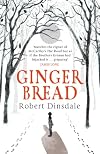
‘’Once, all of the world was covered in forests. But, slowly, over the years, those forests were driven back - by people just like us. They chopped them down to make timber, and burned them to make farms. But this little corner of the world where we live is very special. Because half our country is covered in forests that have been chopped or cut back. The oaks in these forests are hundreds of years old. They’ve grown wizened and wise. And those forests have seen it all: the Russian, show more and Poland, and Germany, emperors and kings and too many wars. Those trees would tell some stories, if only they could speak!’’
In a city close to a dark forest in Belarus, a little boy is carrying a heavy burden. Without a father and with his beloved mother facing a critical illness, Alek is forced to remain in the care of his papa, his mother’s father, a man formidable, terrifying and seemingly wise. His grandfather is troubled and troubling but Alek has given a promise to his mama and cannot take it back. He has to face the dark forest, the hungry trees, the shadows of the past. Above all, he has to protect his sanity from a man who was treated unjustly by forces darker than the thickest canopies of the threatening forest…
‘’The forests are alive, boy. They live and love and hate, just the same as you and me.’’
The Toymakers by Robert Dinsdale is one of the most unique, beautiful, magical books I’ve ever read. Gingerbread is very different but no less haunting and powerful. Where The Toymakers is full of the magic of Christmas, Gingerbread is adorned with the darkness and mystery of the Slavic fairy tales and nature. The dark forest with the bloodthirsty trees and the carnivorous shadows becomes a metaphor for a man’s tortured soul and a boy’s agony to stay true to his vow while protecting the ones he loves from a wrath that is blind and unjust. Forest folklore, Belarusian history, Slavic culture, Baba Yaga, Ded Moroz, the spirits that reside in centuries-old trees...A painting of legends and traditions by a brilliant artist.
‘’Well, smiled the first wise man -for he had woven a trap of words, and caught at the soldier, If you would rather be in the woods than serving the Winter King, you are his enemy. So now you must be banished to the farthest east, to the world of Perpetual Winter, and there you must toil in your king’s service, in that great frozen city called Gulag.’’
Apart from the unseen world, though, there is a harsh reality that Alek must face. Gingerbread provides a realistic depiction of a person fighting cancer. It hurts so much because this is a young mother that won’t have the chance to see her wonderful, clever boy become a man. Dinsdale writes about an unbearably painful subject in a quiet, sensitive way and the result is extremely powerful. A boy is forced to grow up viciously fast, experiencing a strange, cruel world and a grandfather whose heart and soul have been haunted by the Soviet horrors.
History is never far away in this story and I am glad to finally meet a writer who refers to the partisans as the heroes they were. After the abominable In The Shadow of Wolves by Alvydas Slepikas. Because, let’s face it, that writer wanted the reader to feel sorry for the people who didn’t give a damn about the Holocaust, who ‘’didn’t know’’. I am sorry, Nazi writer, get out! Dinsdale is a magnificent writer who writes with respect, perspective and above all, he is knowledgeable and objective. He doesn’t take his readers for uninformed fools. The way he has created the allusions to refer to the Soviet Era is outstanding, haunting and heartbreaking. The Winter King, the King in the West, the land of Perpetual Winter, the Iron Wall…
The last chapters of the novel are pure agony. I felt my mind spinning and my heart was pounding with horror. The ending is superb. Each character - Alek, papa, mama, Elenya, Mr Navitski- deserves a book of their own. This is how Literature becomes an unforgettable experience.
‘’But other trees saw the work of the King in the West and were filled with joy. Because trees feed on dead things, and send their roots down to drink them up, and when the King in the West killed in the forests, some trees were tempted to feed on the murdered men. And those trees grow mighty and powerful, with branches made from dead men, and there in the forests, the trees that have drunk on the dead of the wars of winter - for those are the trees whose trunks have the faces of men. For that is their curse, to forever wear the features of the men they have eaten.’’ show less
In a city close to a dark forest in Belarus, a little boy is carrying a heavy burden. Without a father and with his beloved mother facing a critical illness, Alek is forced to remain in the care of his papa, his mother’s father, a man formidable, terrifying and seemingly wise. His grandfather is troubled and troubling but Alek has given a promise to his mama and cannot take it back. He has to face the dark forest, the hungry trees, the shadows of the past. Above all, he has to protect his sanity from a man who was treated unjustly by forces darker than the thickest canopies of the threatening forest…
‘’The forests are alive, boy. They live and love and hate, just the same as you and me.’’
The Toymakers by Robert Dinsdale is one of the most unique, beautiful, magical books I’ve ever read. Gingerbread is very different but no less haunting and powerful. Where The Toymakers is full of the magic of Christmas, Gingerbread is adorned with the darkness and mystery of the Slavic fairy tales and nature. The dark forest with the bloodthirsty trees and the carnivorous shadows becomes a metaphor for a man’s tortured soul and a boy’s agony to stay true to his vow while protecting the ones he loves from a wrath that is blind and unjust. Forest folklore, Belarusian history, Slavic culture, Baba Yaga, Ded Moroz, the spirits that reside in centuries-old trees...A painting of legends and traditions by a brilliant artist.
‘’Well, smiled the first wise man -for he had woven a trap of words, and caught at the soldier, If you would rather be in the woods than serving the Winter King, you are his enemy. So now you must be banished to the farthest east, to the world of Perpetual Winter, and there you must toil in your king’s service, in that great frozen city called Gulag.’’
Apart from the unseen world, though, there is a harsh reality that Alek must face. Gingerbread provides a realistic depiction of a person fighting cancer. It hurts so much because this is a young mother that won’t have the chance to see her wonderful, clever boy become a man. Dinsdale writes about an unbearably painful subject in a quiet, sensitive way and the result is extremely powerful. A boy is forced to grow up viciously fast, experiencing a strange, cruel world and a grandfather whose heart and soul have been haunted by the Soviet horrors.
History is never far away in this story and I am glad to finally meet a writer who refers to the partisans as the heroes they were. After the abominable In The Shadow of Wolves by Alvydas Slepikas. Because, let’s face it, that writer wanted the reader to feel sorry for the people who didn’t give a damn about the Holocaust, who ‘’didn’t know’’. I am sorry, Nazi writer, get out! Dinsdale is a magnificent writer who writes with respect, perspective and above all, he is knowledgeable and objective. He doesn’t take his readers for uninformed fools. The way he has created the allusions to refer to the Soviet Era is outstanding, haunting and heartbreaking. The Winter King, the King in the West, the land of Perpetual Winter, the Iron Wall…
The last chapters of the novel are pure agony. I felt my mind spinning and my heart was pounding with horror. The ending is superb. Each character - Alek, papa, mama, Elenya, Mr Navitski- deserves a book of their own. This is how Literature becomes an unforgettable experience.
‘’But other trees saw the work of the King in the West and were filled with joy. Because trees feed on dead things, and send their roots down to drink them up, and when the King in the West killed in the forests, some trees were tempted to feed on the murdered men. And those trees grow mighty and powerful, with branches made from dead men, and there in the forests, the trees that have drunk on the dead of the wars of winter - for those are the trees whose trunks have the faces of men. For that is their curse, to forever wear the features of the men they have eaten.’’ show less
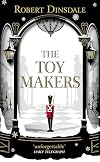
‘’Are you lost? Are you afraid? Are you a child at heart?’’
I never thought that there would ever be another book that would make me experience all the emotions The Night Circus brought to surface. The awe, the magic, the sadness and the hope. Naturally, I was immediately drawn to the story of ‘’The Toymakers’’, but I thought that it would be an elegant fairytale, a book to prepare me for the festive reads of this year’s Christmas that’s fastly approaching. But this novel show more by Robert Dinsdale proved to be so much more. A gem of beautiful quotes, vivid characters, exceptional writing. A fairytale for grown-ups, a creation where life is seen at its most majestic and its darkest moments.
Dinsdale has created a striking Prologue, written in a fascinating contemporary version of Dickensian language that is natural, flowing and poetic. So we are immediately transferred to the magical world of Papa Jack’s Emporium, a toyshop that opens with the first frost and closes when the snowdrops start blooming again...It’s a toyshop in the heart of London, but unlike any toyshop we’ve ever seen. Magic makes its home inside its walls and this is where Cathy, a young woman in need of safety, finds her way under difficult circumstances. Papa Jack and his two sons, Kaspar and Emil, offer refuge and the journey begins…
‘’It was the first frost of winter this morning. We don’t turn folk away, not on first frost.’’
The story is centered around Kaspar and Emil’s battle for the control of the Emporium and the affection of Jack and Cathy through her eyes, in a saga - because that’s what it is- that starts in 1907 and concludes in 1953. We go through the two devastating World Wars and the ongoing fight between the two brothers. The themes of love, loyalty and war are the ones that guide the story further. How hatred and affection are separated by a thin line, how war can wound our souls more than it can ever hurt our bodies. Dinsdale writes and magic and beauty flow through his words, but at the same time, he doesn’t shy away from darkness, pain and death. Jack’s background story of his imprisonment in Siberia is harrowing. As the Great War sheds its horrible shadow over Europe, the Emporium doesn’t remain unscathed and not only because of Papa’s nationality. The post-traumatic shock effect, the abominable ‘’white feather’’ incidents are brilliantly woven into the story, a dark reality to remind us of our bleak human nature amidst the otherworldly beauty of being a child. At the same time, there are scenes of ethereal, whimsical poetry, such as the night lights and the opening day of the shop year after year.
The characters of Jack, Cathy, Kaspar and Martha are beautiful, strong, complex. Cathy is our eyes to the story and her strength, grace and loyalty are features that make her an extremely memorable protagonist. Martha is the exact, perfect copy of her mother. Jack is the rock that supports the construction of a turbulent lifetime and Kaspar is one of the most complex characters I’ve recently come across. On the other hand, Emil and Nina are horrible. I couldn’t stand them, I hated them so much...He is whiny, insecure, irritating, selfish. Nina is absolutely stupid, an utterly uneducated egoist, unlikable to the core. They were pretty well-matched and helped in making Cathy and Kaspar even more perfect.
This novel is full of changes and implications and I try to safely step into the no-man’s land of spoilers. It starts like a fairytale, with a vague aura of ‘’The Night Circus’’ and a warm, cozy feeling of a late-Victorian Christmas read, haunting and dreamy. And it grows and becomes darker and darker. Darkened by a world drowned in blood and madness, by a man’s desire for control and self-assurance. Give yourselves the chance to experience a beautiful, bittersweet example of Historical Fiction and Magical Realism. Suspend all your realistic expectations, suspend disbelief and let yourselves enter the world of Emporium, where everything has a mind and life of its own. Where the aisles become a metaphor for every passion, strength and loss in our lives.
Many thanks to Penguin Random House and NetGalley for the ARC in exchange of an honest review. show less
I never thought that there would ever be another book that would make me experience all the emotions The Night Circus brought to surface. The awe, the magic, the sadness and the hope. Naturally, I was immediately drawn to the story of ‘’The Toymakers’’, but I thought that it would be an elegant fairytale, a book to prepare me for the festive reads of this year’s Christmas that’s fastly approaching. But this novel show more by Robert Dinsdale proved to be so much more. A gem of beautiful quotes, vivid characters, exceptional writing. A fairytale for grown-ups, a creation where life is seen at its most majestic and its darkest moments.
Dinsdale has created a striking Prologue, written in a fascinating contemporary version of Dickensian language that is natural, flowing and poetic. So we are immediately transferred to the magical world of Papa Jack’s Emporium, a toyshop that opens with the first frost and closes when the snowdrops start blooming again...It’s a toyshop in the heart of London, but unlike any toyshop we’ve ever seen. Magic makes its home inside its walls and this is where Cathy, a young woman in need of safety, finds her way under difficult circumstances. Papa Jack and his two sons, Kaspar and Emil, offer refuge and the journey begins…
‘’It was the first frost of winter this morning. We don’t turn folk away, not on first frost.’’
The story is centered around Kaspar and Emil’s battle for the control of the Emporium and the affection of Jack and Cathy through her eyes, in a saga - because that’s what it is- that starts in 1907 and concludes in 1953. We go through the two devastating World Wars and the ongoing fight between the two brothers. The themes of love, loyalty and war are the ones that guide the story further. How hatred and affection are separated by a thin line, how war can wound our souls more than it can ever hurt our bodies. Dinsdale writes and magic and beauty flow through his words, but at the same time, he doesn’t shy away from darkness, pain and death. Jack’s background story of his imprisonment in Siberia is harrowing. As the Great War sheds its horrible shadow over Europe, the Emporium doesn’t remain unscathed and not only because of Papa’s nationality. The post-traumatic shock effect, the abominable ‘’white feather’’ incidents are brilliantly woven into the story, a dark reality to remind us of our bleak human nature amidst the otherworldly beauty of being a child. At the same time, there are scenes of ethereal, whimsical poetry, such as the night lights and the opening day of the shop year after year.
The characters of Jack, Cathy, Kaspar and Martha are beautiful, strong, complex. Cathy is our eyes to the story and her strength, grace and loyalty are features that make her an extremely memorable protagonist. Martha is the exact, perfect copy of her mother. Jack is the rock that supports the construction of a turbulent lifetime and Kaspar is one of the most complex characters I’ve recently come across. On the other hand, Emil and Nina are horrible. I couldn’t stand them, I hated them so much...He is whiny, insecure, irritating, selfish. Nina is absolutely stupid, an utterly uneducated egoist, unlikable to the core. They were pretty well-matched and helped in making Cathy and Kaspar even more perfect.
This novel is full of changes and implications and I try to safely step into the no-man’s land of spoilers. It starts like a fairytale, with a vague aura of ‘’The Night Circus’’ and a warm, cozy feeling of a late-Victorian Christmas read, haunting and dreamy. And it grows and becomes darker and darker. Darkened by a world drowned in blood and madness, by a man’s desire for control and self-assurance. Give yourselves the chance to experience a beautiful, bittersweet example of Historical Fiction and Magical Realism. Suspend all your realistic expectations, suspend disbelief and let yourselves enter the world of Emporium, where everything has a mind and life of its own. Where the aisles become a metaphor for every passion, strength and loss in our lives.
Many thanks to Penguin Random House and NetGalley for the ARC in exchange of an honest review. show less

It has been a long time since I found a book I wanted to savor -- read slowly, put down after every chapter or two, and even take to work to read during stolen moments throughout the day. A beautifully told story of family (and the many meanings of the word) and power of magic and imagination.
When I added it to my TBR pile, I had seen The Toymakers compared to The Night Circus. I wasn't looking for something *exactly* like TNC and I was anxious that it might feel too much of a copy cat. show more Fortunately, my fears were unfounded and The Toymakers stands on its own merit and brings plenty of imagination and creativity to my library. I especially appreciated the value that the historical context brings to the narrative and that, despite being surrounded by inscrutable magic, the characters and their situations feel authentic.
Read this round on as a rented ebook, but cannot wait to buy a copy for my shelf. The perfect winter read (perhaps to start at the first frost of the season?), I look forward to revisiting Dinsdale's world again very soon. show less
When I added it to my TBR pile, I had seen The Toymakers compared to The Night Circus. I wasn't looking for something *exactly* like TNC and I was anxious that it might feel too much of a copy cat. show more Fortunately, my fears were unfounded and The Toymakers stands on its own merit and brings plenty of imagination and creativity to my library. I especially appreciated the value that the historical context brings to the narrative and that, despite being surrounded by inscrutable magic, the characters and their situations feel authentic.
Read this round on as a rented ebook, but cannot wait to buy a copy for my shelf. The perfect winter read (perhaps to start at the first frost of the season?), I look forward to revisiting Dinsdale's world again very soon. show less
[This is a review I wrote in 2009]
**A story of brotherly love and of senseless war.**
The trenches of the First World War and the senseless loss of life such as that which took place on the Somme in 1916, is one of the greatest atrocities that Western Europe has seen in the last 100 years. I read a lot of First World War literature, both fact and fiction; for adults and for children. This is a novel which adds yet another dimension to the literature of the Great War.
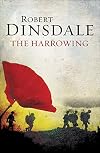
Essentially The Harrowing show more is a story of two brothers, and ultimately a story of brotherly love and devotion conquering prejudice, misplaced justice, revenge, and the atrocities of war. William and Samuel Redmond are brothers, brought up in the terraces of Leeds. William, the elder of the two teenage boys, has just been conscripted to serve in the army. Samuel, the younger, seethes with the pain and frustration of constantly living in his brother's shadow; his brother William who can do no wrong. On the eve of William's departure, as the boys are walking across the moor, Samuel is overcome at the thought of following in his brother's footsteps yet again; of being sent off to war when he comes of age; of having to serve as a private and answer to his brother, who he imagines will have risen through the ranks and become a captain by this time. Samuel takes hold of a rock and smashes it into his brother's head. (Nothing to spoil the plot for you here, as this all takes place in the first couple of pages).
This event is to form the basis of the story, as William when he awakes from a coma, determines to find his brother, even if that means joining up, donning an army uniform, and with a constantly throbbing aching head following his little brother across the channel to the fields of Flanders. William's motivation is not revenge, but forgiveness, and to bring home his little brother who is serving underage in the fields of France. Many obstacles cross the paths of both boys and they both change significantly as each searches for something lost. Samuel becomes especially easy to empathise with as he is forced to grow quickly into manhood, and his confidence, stature and personality grow with him too.
A thoughtful read; the book improves as the story progresses. A slow start, packed with flowery and unnecessarily poetic language detracts from the story, the setting and the background of war. The author does convey a sense of the confusion William must feel when he awakes from the fog of his head injury, but in the process he creates an element of confusion, which at times borders on boredom, for the reader. That said, the book picks up in both pace and clarity and I found I was really wanting to turn the pages by Part Three. Although I think the book could have been fine-tuned a little more, there is something quite powerful in the story that leaves you thinking about the fate of these two brothers long after you have turned the final page. Not the best novel I have read this year, but still a good one and a worthy addition to stories about the First World War. show less
**A story of brotherly love and of senseless war.**
The trenches of the First World War and the senseless loss of life such as that which took place on the Somme in 1916, is one of the greatest atrocities that Western Europe has seen in the last 100 years. I read a lot of First World War literature, both fact and fiction; for adults and for children. This is a novel which adds yet another dimension to the literature of the Great War.
Essentially The Harrowing show more is a story of two brothers, and ultimately a story of brotherly love and devotion conquering prejudice, misplaced justice, revenge, and the atrocities of war. William and Samuel Redmond are brothers, brought up in the terraces of Leeds. William, the elder of the two teenage boys, has just been conscripted to serve in the army. Samuel, the younger, seethes with the pain and frustration of constantly living in his brother's shadow; his brother William who can do no wrong. On the eve of William's departure, as the boys are walking across the moor, Samuel is overcome at the thought of following in his brother's footsteps yet again; of being sent off to war when he comes of age; of having to serve as a private and answer to his brother, who he imagines will have risen through the ranks and become a captain by this time. Samuel takes hold of a rock and smashes it into his brother's head. (Nothing to spoil the plot for you here, as this all takes place in the first couple of pages).
This event is to form the basis of the story, as William when he awakes from a coma, determines to find his brother, even if that means joining up, donning an army uniform, and with a constantly throbbing aching head following his little brother across the channel to the fields of Flanders. William's motivation is not revenge, but forgiveness, and to bring home his little brother who is serving underage in the fields of France. Many obstacles cross the paths of both boys and they both change significantly as each searches for something lost. Samuel becomes especially easy to empathise with as he is forced to grow quickly into manhood, and his confidence, stature and personality grow with him too.
A thoughtful read; the book improves as the story progresses. A slow start, packed with flowery and unnecessarily poetic language detracts from the story, the setting and the background of war. The author does convey a sense of the confusion William must feel when he awakes from the fog of his head injury, but in the process he creates an element of confusion, which at times borders on boredom, for the reader. That said, the book picks up in both pace and clarity and I found I was really wanting to turn the pages by Part Three. Although I think the book could have been fine-tuned a little more, there is something quite powerful in the story that leaves you thinking about the fate of these two brothers long after you have turned the final page. Not the best novel I have read this year, but still a good one and a worthy addition to stories about the First World War. show less
Lists
Awards


You May Also Like


Statistics
- Works
- 7
- Members
- 700
- Popularity
- #36,172
- Rating
- 3.7
- Reviews
- 38
- ISBNs
- 45
- Languages
- 1
