
R. David Lankes
Author of The Atlas of New Librarianship
About the Author
R. David Lankes is a professor and the director of the University of South Carolina's School of Information Science.
Works by R. David Lankes
Tagged
Common Knowledge
Members
Reviews
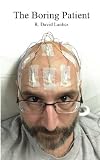
R. David Lankes, in his poignantly reflective book “The Boring Patient," is once again anything but boring. Written to share the experiences he had after being diagnosed with Hodgkin’s lymphoma, Patient “is not about cancer. It is about my response to being diagnosed, living with, and being treated for cancer,” he tells us in the first few pages. “That is an important distinction because cancer is not funny. Cancer sucks. Cancer does not teach, cancer does not preach, cancer does show more not comfort, or inspire, or inform. Cancer kills.” The cast of characters is far-reaching and well-drawn. We meet “The Bringer of Doom,” an oncology fellow so lacking in social skills that she coldly tells Lankes and his wife that he has Hodgkin’s, then immediately separates the couple so she can whisk him away for a bone marrow biopsy “as the lab was about to close.” We meet others who were far more supportive. And through brief, finely-crafted passages, we meet his wife (Anne Marie) who becomes “Xena the Patient Advocate”—a reminder that the advocates in our lives are among the most valuable assets and resources we have, as anyone familiar with the American medical system knows before reading even a few pages of The Boring Patient. Most impressively and importantly for those of us involved in training-teaching-learning, Lankes never loses sight of the important role he plays for his readers—the role of someone who makes information meaningful to those of us receiving it through the book. If we can absorb and foster that learner-centric view of what we do as information providers and facilitators of learning, we will have emerged from our journey with this not-so-boring patient the better for having joined him. show less
It took me much longer than I anticipated to read this book, but I am so glad I invested the time and effort. After having spent the past ten years of my life working in libraries, I have seen some drastic changes. The gain and loss of funding, an economic recession, building closures, technological innovations and near-ubiquity, shifting organizational structures are just some drastic changes off the top of my head. However, there are some very basic principles that I have seen in mentors show more and role models that have not changed, and those principles are what Lankes is getting at in his atlas.
I met a lot of people in my Library and Information Science program that became librarians because they love books. Personally, I appreciate books for their utility and occasionally for their beauty, but I don’t want to own them, and I certainly don’t love them. I love what they provide. I became I librarian because I wanted to help people. This is the sustainable aspect of the profession; this is what will carry librarians into the future. Jennifer Rose Recht wrote a supplemental agreement in The Atlas of New Librarianship that sums it up:
“We are caretakers of information. And when we focus all our energy on the fraction of information that is contained in books, it’s as if the whole richness of programming to be found in a library can be ignored or reduced to the question of whether, on the way out, someone checked out a book” (p. 299).
So, if we aren’t about books, what are we about? Lankes lays this out quite nicely. He says repeatedly, “The mission of librarians is to improve society through facilitating knowledge creation in their communities.” There are a lot of parts to that mission, and each one is worth noting. He uses the term librarians rather than libraries for a very specific purpose. It is not the collection of artifacts (books, audio recordings, maps, etc.) that make a library, it is the librarian. I heard Lankes give a presentation online in which he stated something similar to this: A room full of books is simply a closet; an empty room with a librarian is a library. It doesn’t matter what tools we use to curate information and talk about knowledge.
The next part of this mission is about improving society. Librarians are required to help others; it’s part of the job description. I have a degree in sociology, but I decided to be a librarian. I wanted to focus my passions to help others find, acquire, and process information to improve their lives. There is something in empowering others through helping them make use of newly procured knowledge that feels wonderful and accomplished. Not everyone is able to go to work every day and feel the impact of positivity they provide in others’ lives. It is a noble profession that librarians should be proud to be a part of.
Facilitating knowledge creation is next. The idea of facilitating is a long-held goal of librarians. When the world’s information was focused in books, the librarian was needed to help wade through this knowledge, creating pathfinders, indices, performing interviews with patrons to figure out what resources could best help them, and teaching others how to use these artifacts. The inventions of the World Wide Web and search engines have not negated the need for facilitation with information. There is much more information than ever. The questions asked of librarians may have changed and ready reference may be best answered through a search engine query, but the deeper and more complicated questions are not going to be found this way. The power of the librarian is the conversation. This conversation could be between librarian and patron, but it may also be between the patron and another organization and facilitated by a librarian. It may be among patrons. There is no limit to the reaches of conversation, and with social tools on the web we are seeing that multiplied one hundred fold. Conversations are everywhere, and only through conversations (among people or within ourselves) is knowledge created.
The last part of the mission discusses communities. Librarians will help anyone (within reason) who walks into the library. This, however, is not the end of the community. Librarians must actively seek out all of the communities, whether they use the library or not, that the library does or could potentially serve. There are endless ways to describe community: people that live nearby, businesses, social services, hobbyists, children, you name it. The opportunity to fulfill the mission of librarians is limitless when you leave the library building. It is shortsighted to think people will use the library unless you make it so easy and so obvious how the library can help them. One of the best ways to do this is to go where librarians are needed. Joining groups, getting on advisory boards, visiting schools and community centers are just a few ways to make the librarian integrated into and integral to the community.
All day long, librarians are performing various tasks, some the public sees, but many are behind the scenes. Many feel deluged with tasks and the thought of having more to do invokes anxiety and frustration. I know from personal experience that I do a lot of things throughout the day that could easily be done by others who have a lot less on their daily plates. I work with smart, capable, and professional people who do not have the title of librarian but who run circles around me in readers advisory. We have tools and staff that can be reallocated in ways that allow for more than enough time if we change how the library is run and how we do our jobs. We need to innovate. Lankes, on innovation, states: “Those things that are taking your time are the things you should be looking to innovate. Innovation is not a time slot, it is an attitude” (p. 127).
As in any profession, there will be disagreements about what we do and how to do it. Hopefully, though, most will agree on why we exist. That agreement is what will create the future of librarianship. If our tasks and methods are based on that, librarianship will survive. People can become very attached to those tasks they had been doing for years and may rile against change. Lankes refers to a persona called bibiofundamentalist, dedicated to tradition and social obligations. These traditions often revolve around artifacts, standards, and statistics. They will argue against new librarianship.
“The voices of bibliofundamentalists must not be silenced or dismissed. We must not look on them as enemies. Instead we must thank them for their service and ask them why. Why do we collect? Why do we classify? Why do we promote reading? Listen, then ask them, politely, isn’t it so we can make society a better place? If we can agree on that, then we have only but to define our terms. Debate and challenge is only good for this profession. It means there is a conversation going on, and we are learning.
“But listen to me. There will come a point when the debate must end – when, as we know from our understanding of Conversation Theory, we must agree to disagree. Then we will have to do something painful. We will have to leave them behind” (p. 172). show less
I met a lot of people in my Library and Information Science program that became librarians because they love books. Personally, I appreciate books for their utility and occasionally for their beauty, but I don’t want to own them, and I certainly don’t love them. I love what they provide. I became I librarian because I wanted to help people. This is the sustainable aspect of the profession; this is what will carry librarians into the future. Jennifer Rose Recht wrote a supplemental agreement in The Atlas of New Librarianship that sums it up:
“We are caretakers of information. And when we focus all our energy on the fraction of information that is contained in books, it’s as if the whole richness of programming to be found in a library can be ignored or reduced to the question of whether, on the way out, someone checked out a book” (p. 299).
So, if we aren’t about books, what are we about? Lankes lays this out quite nicely. He says repeatedly, “The mission of librarians is to improve society through facilitating knowledge creation in their communities.” There are a lot of parts to that mission, and each one is worth noting. He uses the term librarians rather than libraries for a very specific purpose. It is not the collection of artifacts (books, audio recordings, maps, etc.) that make a library, it is the librarian. I heard Lankes give a presentation online in which he stated something similar to this: A room full of books is simply a closet; an empty room with a librarian is a library. It doesn’t matter what tools we use to curate information and talk about knowledge.
The next part of this mission is about improving society. Librarians are required to help others; it’s part of the job description. I have a degree in sociology, but I decided to be a librarian. I wanted to focus my passions to help others find, acquire, and process information to improve their lives. There is something in empowering others through helping them make use of newly procured knowledge that feels wonderful and accomplished. Not everyone is able to go to work every day and feel the impact of positivity they provide in others’ lives. It is a noble profession that librarians should be proud to be a part of.
Facilitating knowledge creation is next. The idea of facilitating is a long-held goal of librarians. When the world’s information was focused in books, the librarian was needed to help wade through this knowledge, creating pathfinders, indices, performing interviews with patrons to figure out what resources could best help them, and teaching others how to use these artifacts. The inventions of the World Wide Web and search engines have not negated the need for facilitation with information. There is much more information than ever. The questions asked of librarians may have changed and ready reference may be best answered through a search engine query, but the deeper and more complicated questions are not going to be found this way. The power of the librarian is the conversation. This conversation could be between librarian and patron, but it may also be between the patron and another organization and facilitated by a librarian. It may be among patrons. There is no limit to the reaches of conversation, and with social tools on the web we are seeing that multiplied one hundred fold. Conversations are everywhere, and only through conversations (among people or within ourselves) is knowledge created.
The last part of the mission discusses communities. Librarians will help anyone (within reason) who walks into the library. This, however, is not the end of the community. Librarians must actively seek out all of the communities, whether they use the library or not, that the library does or could potentially serve. There are endless ways to describe community: people that live nearby, businesses, social services, hobbyists, children, you name it. The opportunity to fulfill the mission of librarians is limitless when you leave the library building. It is shortsighted to think people will use the library unless you make it so easy and so obvious how the library can help them. One of the best ways to do this is to go where librarians are needed. Joining groups, getting on advisory boards, visiting schools and community centers are just a few ways to make the librarian integrated into and integral to the community.
All day long, librarians are performing various tasks, some the public sees, but many are behind the scenes. Many feel deluged with tasks and the thought of having more to do invokes anxiety and frustration. I know from personal experience that I do a lot of things throughout the day that could easily be done by others who have a lot less on their daily plates. I work with smart, capable, and professional people who do not have the title of librarian but who run circles around me in readers advisory. We have tools and staff that can be reallocated in ways that allow for more than enough time if we change how the library is run and how we do our jobs. We need to innovate. Lankes, on innovation, states: “Those things that are taking your time are the things you should be looking to innovate. Innovation is not a time slot, it is an attitude” (p. 127).
As in any profession, there will be disagreements about what we do and how to do it. Hopefully, though, most will agree on why we exist. That agreement is what will create the future of librarianship. If our tasks and methods are based on that, librarianship will survive. People can become very attached to those tasks they had been doing for years and may rile against change. Lankes refers to a persona called bibiofundamentalist, dedicated to tradition and social obligations. These traditions often revolve around artifacts, standards, and statistics. They will argue against new librarianship.
“The voices of bibliofundamentalists must not be silenced or dismissed. We must not look on them as enemies. Instead we must thank them for their service and ask them why. Why do we collect? Why do we classify? Why do we promote reading? Listen, then ask them, politely, isn’t it so we can make society a better place? If we can agree on that, then we have only but to define our terms. Debate and challenge is only good for this profession. It means there is a conversation going on, and we are learning.
“But listen to me. There will come a point when the debate must end – when, as we know from our understanding of Conversation Theory, we must agree to disagree. Then we will have to do something painful. We will have to leave them behind” (p. 172). show less
An interesting topic, but the approach did not feel coherent or helpful. A lot of gesturing towards important topics without providing any real guidance. For instance, we can read "Library schools don't teach courses in Narcan..." on page 56 in the preface to the third major section of the book, but then the chapter doesn't really circle back to that. Poor (AI voice-to-text, I speculate?) editing, such as the reference to "the Italian cohort of gorilla librarians" on page 59, but then show more thereafter references to "guerilla librarians," which makes more sense (though there is that famous Monty Python skit in which a man in a gorilla suit interviews for a job as a librarian). All in all, this felt honestly like it was AI slop that was fed content by R. David Lankes and was commenting on it in the style of R. David Lankes. I'm not saying that's what it was -- I'm confident that Lankes did give these speeches. I'm saying that's what it felt to me like I was reading. show less

I have been reading many of Lankes posts and presentations and have really enjoyed them. I am very interested in Lankes voice and his talks and presentations always hold my attention. He seems to be right on the pulse of what libraries should be doing and where they are going.
When I saw that he was publishing a book called The Atlas of New Librarianship, I knew I had to get it. I was pleasantly surprised that the book takes a general approach that would put any library student or anyone show more interested in a fresh approach to librarianship into the right mindset. I realized that the flow of the book is very general and uses language that is easily digestible (and it is more like 200 pages, not over 1,000)
Communication and conversation are the keys to serving the library community according to Lankes. Knowledge is created through conversation. The book is purposely ambiguous so that all fields are covered, but also puts you into the right head space. I wish that I had this book in library school. I didn’t really learn about strategic planning and collaboration as is discussed in this book until afterward. I didn’t even know of the benefits until I became a director.
This book allows any librarian the ability to think critically and open these conversations with their community, whoever that may represent. This is a book that should be available in all library schools. There should be one class that encourages this kind of community focused conversation and collaboration as I believe that’s the secret to a sustainable future. If we don’t have support from our communities, or viewed as an integral part of them, then we appear to be very dispensable.
Great Passages:
"Don't waste your precious gift of fresh perspective by reading these words or listening to the voices of your faculty and assuming we are right. We are preparing you to be librarians not clones." p.11
"I have long contended that a room full of books is simply a closet but that an empty room with a librarian in it is still a library." p. 16
"The effect of this on the mission of librarians is at least two fold: Librarians must understand that they are only one source among many for a community, and librarians must be at least aware of the view of many sources on topics. This is not new by any means. One could argue that this is exactly how librarians have become seen as honest and credible agents. Not by seeking to be the authority on a source but rather by openly and transparently guiding members through multiple sources seeking consistency. This would indicate that as librarians move forward, they must be willing to move beyond any one class of resources (such as artifacts over experts)." p. 24
Ever wonder why only drug dealers and computer scientists talk of users? Because early models of information systems put the person asking questions outside the bounds of the system. The modern equivalent is the use of the term "customer" or "client". It is a model in which one sets up a system that is used by an actor outside of the system. "Patron" and "member" in contrast, imply that the beneficiaries of library services are part of the service and help to shape it. Remember that the word "patron"comes from "patronage"--to give support. This will loop back to the use of language soon in how the system deals with different language levels (after all, if you are part of a system, the system had better be able to handle your language). p 36
Here is how NOT to stop a rumor: tell people that the rumor is not true. I know it sounds counterintuitive, but brains have a hard tie keeping track of pesky little sdetais, such as the word not. According to Sam Wang and Sandra Aamodt,the brain re-creates and then re-stores the information we recall. In the process, it often loses track of the context from which it came. It also tends to remember things it writes down often. So even though you are refuting something, you are also repeating the falsehood, thus strengthening your recall of it. p.42
Identifying needs:
1. Identify key member groups
2. Identify key conversations within and across member groups.
3. Identify regularities in the conversation.
4. Map any existing librarian services
5. Assign a value to the potential benefit librarians can bring to the conversations.
6. Assign a value to the potential value the conversations have to the librarians.
7. Align librarian services to the high-priority conversations (p. 110)
The skills we must retain from public service and integrate throughout all librarian-provided services, are the ability to assess community needs and to be flexible in providing them. We must also take these services and incorporate them into a unified view of the library and take them outside physical walls to the community itself. p 154 show less
When I saw that he was publishing a book called The Atlas of New Librarianship, I knew I had to get it. I was pleasantly surprised that the book takes a general approach that would put any library student or anyone show more interested in a fresh approach to librarianship into the right mindset. I realized that the flow of the book is very general and uses language that is easily digestible (and it is more like 200 pages, not over 1,000)
Communication and conversation are the keys to serving the library community according to Lankes. Knowledge is created through conversation. The book is purposely ambiguous so that all fields are covered, but also puts you into the right head space. I wish that I had this book in library school. I didn’t really learn about strategic planning and collaboration as is discussed in this book until afterward. I didn’t even know of the benefits until I became a director.
This book allows any librarian the ability to think critically and open these conversations with their community, whoever that may represent. This is a book that should be available in all library schools. There should be one class that encourages this kind of community focused conversation and collaboration as I believe that’s the secret to a sustainable future. If we don’t have support from our communities, or viewed as an integral part of them, then we appear to be very dispensable.
Great Passages:
"Don't waste your precious gift of fresh perspective by reading these words or listening to the voices of your faculty and assuming we are right. We are preparing you to be librarians not clones." p.11
"I have long contended that a room full of books is simply a closet but that an empty room with a librarian in it is still a library." p. 16
"The effect of this on the mission of librarians is at least two fold: Librarians must understand that they are only one source among many for a community, and librarians must be at least aware of the view of many sources on topics. This is not new by any means. One could argue that this is exactly how librarians have become seen as honest and credible agents. Not by seeking to be the authority on a source but rather by openly and transparently guiding members through multiple sources seeking consistency. This would indicate that as librarians move forward, they must be willing to move beyond any one class of resources (such as artifacts over experts)." p. 24
Ever wonder why only drug dealers and computer scientists talk of users? Because early models of information systems put the person asking questions outside the bounds of the system. The modern equivalent is the use of the term "customer" or "client". It is a model in which one sets up a system that is used by an actor outside of the system. "Patron" and "member" in contrast, imply that the beneficiaries of library services are part of the service and help to shape it. Remember that the word "patron"comes from "patronage"--to give support. This will loop back to the use of language soon in how the system deals with different language levels (after all, if you are part of a system, the system had better be able to handle your language). p 36
Here is how NOT to stop a rumor: tell people that the rumor is not true. I know it sounds counterintuitive, but brains have a hard tie keeping track of pesky little sdetais, such as the word not. According to Sam Wang and Sandra Aamodt,the brain re-creates and then re-stores the information we recall. In the process, it often loses track of the context from which it came. It also tends to remember things it writes down often. So even though you are refuting something, you are also repeating the falsehood, thus strengthening your recall of it. p.42
Identifying needs:
1. Identify key member groups
2. Identify key conversations within and across member groups.
3. Identify regularities in the conversation.
4. Map any existing librarian services
5. Assign a value to the potential benefit librarians can bring to the conversations.
6. Assign a value to the potential value the conversations have to the librarians.
7. Align librarian services to the high-priority conversations (p. 110)
The skills we must retain from public service and integrate throughout all librarian-provided services, are the ability to assess community needs and to be flexible in providing them. We must also take these services and incorporate them into a unified view of the library and take them outside physical walls to the community itself. p 154 show less
Awards

You May Also Like


Statistics
- Works
- 20
- Members
- 612
- Popularity
- #41,085
- Rating
- 4.1
- Reviews
- 18
- ISBNs
- 36
- Languages
- 4
