
Jann Wenner
Author of Gonzo: The Life of Hunter S. Thompson
About the Author
Image credit: Undated photograph by Mark Seliger.
Works by Jann Wenner
The Masters: Conversations with Dylan, Lennon, Jagger, Townshend, Garcia, Bono, and Springsteen (2023) 25 copies
50 Years of Rolling Stone: The Music, Politics and People that Shaped Our Culture (2017) 20 copies, 1 review
Rolling Stone 50 Years of Covers: A History of the Most Influential Magazine in Pop Culture (2018) 19 copies
Rolling Stone Led Zeppelin Collectors Edition Jimmy Page Robert Plant Ultimate Guide to Their Music and Legend (2013) 4 copies
Lembranças de Lennon 2 copies
Rolling Stone Magazine #1092 | November 26, 2009 | Bono, Mick Jagger & Bruce Springsteen (2009) — Editor & Publisher — 1 copy
Nirvana: The Ultimate Guide to Their Music and Legend [Rolling Stone Special Collectors Edition] 1 copy
Pink Floyd: The Ultimate Guide to Their Music & Legend [Rolling Stone Special Collectors Edition] 1 copy
Pearl Jam: The Ultimate Guide to Their Music & Legend [Rolling Stone Special Collectors Edition] 1 copy
Groupies and Other Girls 1 copy
Rolling Stone Magazine Nirvana Special Collector's Edition The Ultimate Guide To Their Music And Legend (2014) 1 copy
ROLLING STONE MAGAZINE BOB DYLAN SPECIAL COLLECTOR'S EDT. [Single Issue] His 100 Greatest Songs 1 copy
Ahmet Ertegun: A Celebration 1 copy
John Lennon Interview 1970 1 copy
Associated Works
Fear and Loathing at Rolling Stone: The Essential Writing of Hunter S. Thompson (2011) — Editor — 314 copies, 4 reviews
Tagged
Common Knowledge
- Canonical name
- Wenner, Jann
- Legal name
- Wenne, Jann Simon
- Birthdate
- 1946-01-07
- Gender
- male
- Education
- University of California, Berkeley (dropped out)
- Occupations
- magazine owner (Us Weekly ∙ Men's Health)
- Organizations
- Rolling Stone (co-founder)
Wenner Media - Awards and honors
- American Society of Magazine Editors Hall of Fame (1997)
Rock and Roll Hall of Fame (2004 ∙ Lifetime Achievement)
Norman Mailer Prize (2010) - Short biography
- Andrex Toilet Tissue
- Nationality
- USA
- Birthplace
- New York, New York, USA
- Places of residence
- San Francisco, California, USA
- Associated Place (for map)
- USA
Members
Reviews
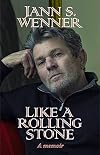
I had just finished Jann Wenner’s memoir when the news of his interview with The New York Times broke. I was six when Rolling Stone was first published and had a print subscription for a long time. I decided to read the book less because I interested in Wenner himself as I was in the time period and culture in which he created the magazine: the music, the people, the events. There were lots of good stories that fostered my own memories.
The memoir was long and seemed to drag at points. show more Wenner was clearly a proud man who likes being rich and well-known and dropping lots of names. It was very different from Elton John’s funny, often self-deprecating story of his own life that I read last year.
And then, just after I finished the book, the interview dropped where Wenner pushed back when asked why all the “masters” featured in his new book were white men. Women and people of color were not articulate enough; they weren’t the philosophers of rock and roll, according to Wenner. Seriously? The interviewer was shocked and mentioned a long list of musicians like Joni Mitchell and Stevie Wonder, all of whom Wenner brushed aside as not meeting the lofty criteria for his book.
And then came the real ugliness, the view into Wenner’s soul: he guessed he should have picked a woman and a black man so he could have avoided these kinds of questions even though they would not have measured up to all these amazing white men. Oh, FFS.
The rest of the interview isn’t much better: Wenner should be proud of his work, but his pride spills over into arrogance. He seems incapable of self-reflection.
The repercussions were swift. The Rock and Roll Hall of Fame that he co-founded kicked him off the board immediately, and a literary festival appearance was cancelled. After a day, the inevitable apology was offered. He spoke badly chosen words, he said, and accepted the consequences.
Craig Seymour, writing in The Guardian after the interview and the apology, reviewed the sexist, racist history of Rolling Stone and rock journalism in general, the not-so-secret history that Wenner “let slip” in the interview.
For me, it’s the apology that continues to wrankle. He is sorry he said what he said. Why? He made it clear in the interview that he knew exactly what he was saying. Even doubled down on it when the interviewer pressed him. So, why apologize? Why not be honest about how you feel, that you wrote the book so you got to choose, and you stand by your statements as horrible as they are. Because, I’ll be honest: I don’t think he is sorry. show less
The memoir was long and seemed to drag at points. show more Wenner was clearly a proud man who likes being rich and well-known and dropping lots of names. It was very different from Elton John’s funny, often self-deprecating story of his own life that I read last year.
And then, just after I finished the book, the interview dropped where Wenner pushed back when asked why all the “masters” featured in his new book were white men. Women and people of color were not articulate enough; they weren’t the philosophers of rock and roll, according to Wenner. Seriously? The interviewer was shocked and mentioned a long list of musicians like Joni Mitchell and Stevie Wonder, all of whom Wenner brushed aside as not meeting the lofty criteria for his book.
And then came the real ugliness, the view into Wenner’s soul: he guessed he should have picked a woman and a black man so he could have avoided these kinds of questions even though they would not have measured up to all these amazing white men. Oh, FFS.
The rest of the interview isn’t much better: Wenner should be proud of his work, but his pride spills over into arrogance. He seems incapable of self-reflection.
The repercussions were swift. The Rock and Roll Hall of Fame that he co-founded kicked him off the board immediately, and a literary festival appearance was cancelled. After a day, the inevitable apology was offered. He spoke badly chosen words, he said, and accepted the consequences.
Craig Seymour, writing in The Guardian after the interview and the apology, reviewed the sexist, racist history of Rolling Stone and rock journalism in general, the not-so-secret history that Wenner “let slip” in the interview.
For me, it’s the apology that continues to wrankle. He is sorry he said what he said. Why? He made it clear in the interview that he knew exactly what he was saying. Even doubled down on it when the interviewer pressed him. So, why apologize? Why not be honest about how you feel, that you wrote the book so you got to choose, and you stand by your statements as horrible as they are. Because, I’ll be honest: I don’t think he is sorry. show less
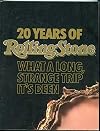
Apologies...old guy story:
Way back in 1987, as Rolling Stone was just hitting its 20-year mark, I was a poor student, not quite 25 yet, finishing up my long-delayed college courses. At the time this book came out, I happened to have just started a four-month student placement on Your Money magazine in Toronto. I was lucky, most of the students were doing their placements for no pay. I was pulling down the princely sum of $100 per month. I don't think it covered the public transit fares I show more paid to go into Toronto five days a week. Getting up at 5:30 am to get in the car by 6:30 to get to the train by 7:00 to get to Toronto by 8:00, to get to the magazine by just before 9:00...then get home somewhere around 6:30 or 7:00 at night. No time for a part-time job.
So, I was broke.
And Rolling Stone puts out this gorgeous book that I wanted badly. By this point, I was a bit of a magazine freak, and read RS as much as I could. But this book was selling for a third of what I was being paid for a month's work. There was no way I could justify buying it, though I walked past a bookstore that displayed it prominently, every day. I heard it calling my name. I never bought it.
Flash forward 38 years, and a much older, now 62-year-old guy, slightly more flush, who never reads RS anymore because the magazine is just not fun anymore, is browsing through a used bookshop in cottage country.
Out of nowhere, my eye catches the "20 Years of Rolling Stone" on the spine. I pull the book down, and it's in pristine condition. I mean...come on...the damn thing was STILL calling my name. I bought it, for the princely sum of $15, or about the equivalent of paying about $5 in 1987 dollars.
It took forty years, but what a deal!
The question is...was the book worth the wait?
It was.
Reading through the thoughts of a mid-twenties Alice Cooper and Michael Jackson, a not-quite iconic Springsteen, the absolutely crazy Keith Moon five years before his too-early death, the not-quite-post-Police already-too-full-of-himself Sting, the strange ramblings of Brando, the relaxed vitriol of Jack Nicholson...fascinating stuff.
But there's the other side of Rolling Stone that they used to do so well. Hunter S. Thompson's ramblings about...well, anything. The story of Karen Silkwood, a year after her suspicious death, the walkthrough of the kidnapping, turning, then capturing of Patty Hearst, Ron Kovic's idealism crushed under the uncaring American bootheel, the terrifying glimpse into Charles Manson's thoughts.
And, the deaths. John Lennon. John Belushi.
This is the America that existed under Nixon and Reagan. The pre-9/11 America. The world before social media. There were still cover-ups (the Kent State shooting investigation, Silkwood), but there was also a greater sense of hope (Haight-Ashbury, Woodstock, Hunter S. Thompson's election coverage).
It was a different world, and one that I'd forgotten much of.
So, overall? I'm glad I got to read a snapshot of the glory years of Rolling Stone forty years after the fact. I think it gives the selected articles and interviews far more weight.
A great read. show less
Way back in 1987, as Rolling Stone was just hitting its 20-year mark, I was a poor student, not quite 25 yet, finishing up my long-delayed college courses. At the time this book came out, I happened to have just started a four-month student placement on Your Money magazine in Toronto. I was lucky, most of the students were doing their placements for no pay. I was pulling down the princely sum of $100 per month. I don't think it covered the public transit fares I show more paid to go into Toronto five days a week. Getting up at 5:30 am to get in the car by 6:30 to get to the train by 7:00 to get to Toronto by 8:00, to get to the magazine by just before 9:00...then get home somewhere around 6:30 or 7:00 at night. No time for a part-time job.
So, I was broke.
And Rolling Stone puts out this gorgeous book that I wanted badly. By this point, I was a bit of a magazine freak, and read RS as much as I could. But this book was selling for a third of what I was being paid for a month's work. There was no way I could justify buying it, though I walked past a bookstore that displayed it prominently, every day. I heard it calling my name. I never bought it.
Flash forward 38 years, and a much older, now 62-year-old guy, slightly more flush, who never reads RS anymore because the magazine is just not fun anymore, is browsing through a used bookshop in cottage country.
Out of nowhere, my eye catches the "20 Years of Rolling Stone" on the spine. I pull the book down, and it's in pristine condition. I mean...come on...the damn thing was STILL calling my name. I bought it, for the princely sum of $15, or about the equivalent of paying about $5 in 1987 dollars.
It took forty years, but what a deal!
The question is...was the book worth the wait?
It was.
Reading through the thoughts of a mid-twenties Alice Cooper and Michael Jackson, a not-quite iconic Springsteen, the absolutely crazy Keith Moon five years before his too-early death, the not-quite-post-Police already-too-full-of-himself Sting, the strange ramblings of Brando, the relaxed vitriol of Jack Nicholson...fascinating stuff.
But there's the other side of Rolling Stone that they used to do so well. Hunter S. Thompson's ramblings about...well, anything. The story of Karen Silkwood, a year after her suspicious death, the walkthrough of the kidnapping, turning, then capturing of Patty Hearst, Ron Kovic's idealism crushed under the uncaring American bootheel, the terrifying glimpse into Charles Manson's thoughts.
And, the deaths. John Lennon. John Belushi.
This is the America that existed under Nixon and Reagan. The pre-9/11 America. The world before social media. There were still cover-ups (the Kent State shooting investigation, Silkwood), but there was also a greater sense of hope (Haight-Ashbury, Woodstock, Hunter S. Thompson's election coverage).
It was a different world, and one that I'd forgotten much of.
So, overall? I'm glad I got to read a snapshot of the glory years of Rolling Stone forty years after the fact. I think it gives the selected articles and interviews far more weight.
A great read. show less
While I wasn't a religious reader, Rolling Stone was definitely a part of my formative high school and college years. Plus, I love music and celebrity lore, so I expected to really like this. But I didn't. I REALLY tried, but I just didn't. Bloated at 554 pages, it does have some interesting history and I was surprised to find out how many of the journalists I knew from elsewhere, got their start at Rolling Stone. But the overwhelming majority of this book is just one big ego trip by Wenner. show more
Is there any rich, powerful and famous person in the entire world that he wasn't "best friends" with? Not to hear him tell it. I tried to give him some leeway because I figured yes, if you founded a magazine like Rolling Stone, of course you're going to rub shoulders with a lot of really cool and of course really rich people. But too many of his anecdotes are just there to let you know how cool he is and you're not.
I gave up at page 400 after an anecdote about his 55th birthday on some obscure mucky muck's yacht (name dropped like we were supposed to know who the guy was), oh and they landed the helicopter on the guy's yacht and then christened the private train that he erected in Panama to carry supplies to the castle he was building. And did he mention that Mick Jagger was there and gave him caviar spoons as a birthday gift. Oh, and the guy whose name you're too much of a peasant to know was dating a Greek princess! Ah hahaha isn't life grand for the 1%! Barf. It was an anecdote that had no purpose other than to impress upon you how amazing his life is. And if it had been one of a couple of similar tales, it might have been okay, an interesting peek into a world that most of us will never know. But the book is laced with similar tales. It could have honestly been 200 pages shorter if even a fraction of these had been removed.
I only wish I'd given myself permission to stop reading sooner. show less
Is there any rich, powerful and famous person in the entire world that he wasn't "best friends" with? Not to hear him tell it. I tried to give him some leeway because I figured yes, if you founded a magazine like Rolling Stone, of course you're going to rub shoulders with a lot of really cool and of course really rich people. But too many of his anecdotes are just there to let you know how cool he is and you're not.
I gave up at page 400 after an anecdote about his 55th birthday on some obscure mucky muck's yacht (name dropped like we were supposed to know who the guy was), oh and they landed the helicopter on the guy's yacht and then christened the private train that he erected in Panama to carry supplies to the castle he was building. And did he mention that Mick Jagger was there and gave him caviar spoons as a birthday gift. Oh, and the guy whose name you're too much of a peasant to know was dating a Greek princess! Ah hahaha isn't life grand for the 1%! Barf. It was an anecdote that had no purpose other than to impress upon you how amazing his life is. And if it had been one of a couple of similar tales, it might have been okay, an interesting peek into a world that most of us will never know. But the book is laced with similar tales. It could have honestly been 200 pages shorter if even a fraction of these had been removed.
I only wish I'd given myself permission to stop reading sooner. show less
This book is a look into the life of a man who came from a life of privilege (his first car out of school was a jaguar). Using his family, and/or prep-school and “San Francisco elite” connections, he went on to create a successful publishing company becoming very rich in the process.
The name dropping is crazy and the ego is over-sized making it difficult to really like the author. He publishes issues about climate change while flying here, there and everywhere in his private plane…to show more concerts, to ski, to party with other rich and famous on their private islands, yachts, or second and third homes, etc. His written concerns over climate change do not compute with his actions. show less
The name dropping is crazy and the ego is over-sized making it difficult to really like the author. He publishes issues about climate change while flying here, there and everywhere in his private plane…to show more concerts, to ski, to party with other rich and famous on their private islands, yachts, or second and third homes, etc. His written concerns over climate change do not compute with his actions. show less
Lists
Bull Tongue (1)
You May Also Like


Associated Authors
Statistics
- Works
- 144
- Also by
- 5
- Members
- 2,033
- Popularity
- #12,643
- Rating
- 3.9
- Reviews
- 24
- ISBNs
- 54
- Languages
- 5
