
Jeff Wignall
Author of The Joy of Digital Photography
Works by Jeff Wignall
Tagged
Common Knowledge
Members
Reviews
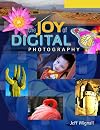
While browsing the library for a good book on photography, I stumbled upon The Joy of Digital Photography. It was one of the newest books the library had on digital photography, so I figured it was worth a try.
The Joy of Digital Photography can be divided into 3 main sections; general orientation & the basics of photography, composition & design, and finally digital editing. The first few chapters cover the basics of photography. The book starts off with the obligatory “digital camera show more orientation” chapter, explaining about megapixel count, resolution, different types of digital cameras, and various camera accessories like tripods, monopods, external flashes and bags. The next few sections address the basics of photography; exposure, depth of field, shutter speed, aperture, ISO and white balance.
After the basics of photography, the focus of the book shifts to design and composition. Some of the design basics include horizon placement within the photo, how to frame the image, and how to add depth to an image. An entire chapter is dedicated to light, explaining how the direction and quality of light will affect images. The next two chapters cover two broad photographic subjects; people (weddings, children, groups, sports, travel, etc.) and nature (mainly landscapes, animals and weather).
Finally, the last chapters focus on the digital aspect of digital photography. Two chapters explain the basics on digital photo editing (cropping, leveling, sharpening, cleaning up scanned images). The final chapter focuses on how to set up your digital darkroom; discussing computer options, organizing your digital library, what to look for in a scanner, and how to decide on photo paper.
As a whole, I really liked this book. I found it to be accessible to those just starting out in digital photography, while still being relevant to those with some digital photography experience. One thing that I really liked was that the author made no assumptions about the reader or the gear they might be using. While Tom Ang’s [b:How to Photograph Absolutely Everything|599028|How to Photograph Absolutely Everything|Tom Ang|http://photo.goodreads.com/books/1176157056s/599028.jpg|585651] covered a broad range of photographic subjects, Ang assumes the reader is using a simple point and shoot digital camera. The recommended camera settings for various subjects are generally given in terms of which semi-automatic camera scene mode to use, with little explanation of why one setting was chosen over another. If the reader has a more advanced camera, or hopes to delve into anything beyond automatic or a pre-selected camera scene mode, they are pretty much on their own. With The Joy of Digital Photography, there is perhaps a slightly smaller range of photographic subjects covered, but the depth of information on design, composition and digital editing more than makes up for that. Overall, I think this is an excellent digital photgraphy reference book; it covers a full spectrum of topics without confusing new photographers or speaking down to more experienced photographers. show less
The Joy of Digital Photography can be divided into 3 main sections; general orientation & the basics of photography, composition & design, and finally digital editing. The first few chapters cover the basics of photography. The book starts off with the obligatory “digital camera show more orientation” chapter, explaining about megapixel count, resolution, different types of digital cameras, and various camera accessories like tripods, monopods, external flashes and bags. The next few sections address the basics of photography; exposure, depth of field, shutter speed, aperture, ISO and white balance.
After the basics of photography, the focus of the book shifts to design and composition. Some of the design basics include horizon placement within the photo, how to frame the image, and how to add depth to an image. An entire chapter is dedicated to light, explaining how the direction and quality of light will affect images. The next two chapters cover two broad photographic subjects; people (weddings, children, groups, sports, travel, etc.) and nature (mainly landscapes, animals and weather).
Finally, the last chapters focus on the digital aspect of digital photography. Two chapters explain the basics on digital photo editing (cropping, leveling, sharpening, cleaning up scanned images). The final chapter focuses on how to set up your digital darkroom; discussing computer options, organizing your digital library, what to look for in a scanner, and how to decide on photo paper.
As a whole, I really liked this book. I found it to be accessible to those just starting out in digital photography, while still being relevant to those with some digital photography experience. One thing that I really liked was that the author made no assumptions about the reader or the gear they might be using. While Tom Ang’s [b:How to Photograph Absolutely Everything|599028|How to Photograph Absolutely Everything|Tom Ang|http://photo.goodreads.com/books/1176157056s/599028.jpg|585651] covered a broad range of photographic subjects, Ang assumes the reader is using a simple point and shoot digital camera. The recommended camera settings for various subjects are generally given in terms of which semi-automatic camera scene mode to use, with little explanation of why one setting was chosen over another. If the reader has a more advanced camera, or hopes to delve into anything beyond automatic or a pre-selected camera scene mode, they are pretty much on their own. With The Joy of Digital Photography, there is perhaps a slightly smaller range of photographic subjects covered, but the depth of information on design, composition and digital editing more than makes up for that. Overall, I think this is an excellent digital photgraphy reference book; it covers a full spectrum of topics without confusing new photographers or speaking down to more experienced photographers. show less
Review first published on my blog: http://memoriesfrombooks.blogspot.com/2013/09/digital-photography-faqs.html
Digital Photography FAQs is a daybook for photographers. It is structured in a question and answer format with a total of 365 questions. The questions are categorized as follows: camera and gear, basic photography techniques, lenses and accessories, and creative shooting techniques. It is aimed towards a beginner photographer.
The positive aspects of this book are that it provides show more succinct, high-level answers to basic photography questions. As such, it can be a good introduction to the topic. The book also includes photographs that illustrate the questions and topics being addressed. Having a visual reference certainly makes a concept easier to understand.
I read this as an ebook edition. I think this book would be better suited to a print edition. The ebook edition, perhaps because of the graphics, takes a long time to load and move through pages.
The biggest issue with this book is the lack of organization and tools that would allow the book to be used as a true reference. Beyond the four main categories, the book has no other organization. The book includes no topical index. The individual questions within each section are not in any particular order. The author even says, "These are delivered in no particular order, so if you're a flip-though-the-pages kind of reader, like me, the format of this book will appeal to you." I suppose I am not that kind of reader, as the format does not appeal to me. show less
Digital Photography FAQs is a daybook for photographers. It is structured in a question and answer format with a total of 365 questions. The questions are categorized as follows: camera and gear, basic photography techniques, lenses and accessories, and creative shooting techniques. It is aimed towards a beginner photographer.
The positive aspects of this book are that it provides show more succinct, high-level answers to basic photography questions. As such, it can be a good introduction to the topic. The book also includes photographs that illustrate the questions and topics being addressed. Having a visual reference certainly makes a concept easier to understand.
I read this as an ebook edition. I think this book would be better suited to a print edition. The ebook edition, perhaps because of the graphics, takes a long time to load and move through pages.
The biggest issue with this book is the lack of organization and tools that would allow the book to be used as a true reference. Beyond the four main categories, the book has no other organization. The book includes no topical index. The individual questions within each section are not in any particular order. The author even says, "These are delivered in no particular order, so if you're a flip-though-the-pages kind of reader, like me, the format of this book will appeal to you." I suppose I am not that kind of reader, as the format does not appeal to me. show less

Een zeer goed boek over de basisbeginselen van de fotografie, op een leuke manier geschreven.
Oct 2, 2011Dutch
You May Also Like


Statistics
- Works
- 14
- Members
- 349
- Popularity
- #68,499
- Rating
- 3.7
- Reviews
- 4
- ISBNs
- 25
- Languages
- 2