
Harold Davis (1) (1953–)
Author of Google Advertising Tools: Cashing in with AdSense, AdWords, and the Google APIs
For other authors named Harold Davis, see the disambiguation page.
About the Author
Harold Davis is a strategic technology consultant, hands-on programmer, and the author of many books
Image credit: photo.net
Works by Harold Davis
Google Advertising Tools: Cashing in with AdSense, AdWords, and the Google APIs (2006) — Author — 103 copies, 2 reviews
The Photographer's Black and White Handbook: Making and Processing Stunning Digital Black and White Photos (2017) 28 copies, 1 review
The Way of the Digital Photographer: Walking the Photoshop post-production path to more creative photography (2013) 12 copies
Monochromatic HDR Photography: Shooting and Processing Black & White High Dynamic Range Photos (2013) 12 copies
The Wi-Fi Experience: Everyone's Guide to 802.11b Wireless Networking (Que-Consumer-Other) (2001) 3 copies
The Photographer's Guide to Yosemite & the High Sierra: Where to Find Perfect Shots and How to Take Them (2008) 3 copies
Lighting and exposure 2 copies
Tagged
Common Knowledge
- Birthdate
- 1953
- Gender
- male
- Occupations
- photographer
writer - Relationships
- Davis, Phyllis (wife)
- Nationality
- USA
- Birthplace
- Princeton, New Jersey, USA
- Places of residence
- Berkeley, California, USA
- Associated Place (for map)
- USA
Members
Reviews
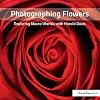
This book is wonderful, even if you don't want to photograph flowers, you will love it! The color photos are extraordinary. Even if you just enjoy the fragility of flowers, admire the individuality of home grown ones, or am amazed at their perfection.
The entire book is a treasure. I am getting to the review later than I planned in doing because I could not refrain from studying the gorgeous colors, shapes and sometimes rhythm of the flowers photo.
It so easy to tell that Harold Davis is show more passionate about photographing flowers Besides the pictures that you would like to study for hours, he tells you everything that you need to learn about photographing flowers. He gives clear and valuable advice on what kind of lens to use, depending on what your purpose is. With knowing that, planning out the photo and picking lighting that enhances the picture, filters to show what you want to concentrate on and the amount of exposure, you can confidently try out photographing flowers. He even shows how he sets up his light box set and recommends the best material for backgrounds for indoor shots.
You would think that a book written by a master artist of a photographer would tend to intimidate you but instead it encourages you! He adds little bits about the history of the different flowers in the book and entertains you with his personal experiences. With this book, I understand how to do the things that I want to try; I appreciate the history of flowers even more and have more information about what to look for when buying photographic equipment.
I doubt that anyone could have written a better book. I recommend it to people even if they just enjoy looking at flowers, much less than photographing them.
I received this book as a part of the Amazon Vine program but that in no way influence my thoughts or feelings in this review. show less
The entire book is a treasure. I am getting to the review later than I planned in doing because I could not refrain from studying the gorgeous colors, shapes and sometimes rhythm of the flowers photo.
It so easy to tell that Harold Davis is show more passionate about photographing flowers Besides the pictures that you would like to study for hours, he tells you everything that you need to learn about photographing flowers. He gives clear and valuable advice on what kind of lens to use, depending on what your purpose is. With knowing that, planning out the photo and picking lighting that enhances the picture, filters to show what you want to concentrate on and the amount of exposure, you can confidently try out photographing flowers. He even shows how he sets up his light box set and recommends the best material for backgrounds for indoor shots.
You would think that a book written by a master artist of a photographer would tend to intimidate you but instead it encourages you! He adds little bits about the history of the different flowers in the book and entertains you with his personal experiences. With this book, I understand how to do the things that I want to try; I appreciate the history of flowers even more and have more information about what to look for when buying photographic equipment.
I doubt that anyone could have written a better book. I recommend it to people even if they just enjoy looking at flowers, much less than photographing them.
I received this book as a part of the Amazon Vine program but that in no way influence my thoughts or feelings in this review. show less
Google Advertising Tools: Cashing in with AdSense and Adwords, 2ed. is one of those books where you take lots of notes. I have been involved with AdWords and AdSense, on a surface level, for a couple of years. So I knew my way around these services. I would say that a third of this book is devoted to screen shots and help with navigation. Which is good, but wasn’t helpful to me. If you are newer to these services then you will love these sections as they are very well pulled together. This show more also means that a full two-thirds of the book was helpful to me.
The author does talk about staying reader-focused and the need for consistently creative and unique content, but most of the ink is spent on the reason/need for sitemaps, tips for good page layouts, techniques, etc. He does a good job explaining the ‘how’ and the ‘why’ all of these things.
I really like the layout of the book which is in three sections:
Making money with a website
Cashing in with Adsense
Working with Adwords
These allow the author to really setup strategies apart from the tools to execute the strategies. In the first section he even talks about non-Google related “affiliate programs” and some Adsense-competitor networks. All in an effort to show you that Google is not the only way. Which I appreciated. It allows for honest context and back of the napkin type metrics. This is something that a lot of these types of books are lacking. It is these real world tips, based on actual data, that can help you build your site and network. I am talking about tips such as:
A daily blog post should have 250-300 words. On average, this gives an optimal mix of human-friendly words and keyword saturation (search engine-friendly words).
If your post/page is over 300 words or if your readers are spending more than a minute on that post/page, then you might want to consider breaking it up which could help with readability and add another chance to display revenue-generating elements.
A good Click-Through-Rate for ads is 1.5% or better. The author recommends troubleshooting anything lower. He also offers tips on how to troubleshoot and tweak page layouts.
I would recommend this book to anyone who needs a solid introduction to the “how” part of monetizing a website. Advanced folks should look elsewhere. If you’re a developer, you’ll be disappointed in the lack of code. In all honesty, if you follow the right blogs and do a few key Google searches you could probably dig a lot of this up on your own. But it’s nice that I didn’t have to spend my weekend digging and learning. I could just spend it learning. I give this book a solid 3 out of 5 stars and have already recommended to two people. show less
The author does talk about staying reader-focused and the need for consistently creative and unique content, but most of the ink is spent on the reason/need for sitemaps, tips for good page layouts, techniques, etc. He does a good job explaining the ‘how’ and the ‘why’ all of these things.
I really like the layout of the book which is in three sections:
Making money with a website
Cashing in with Adsense
Working with Adwords
These allow the author to really setup strategies apart from the tools to execute the strategies. In the first section he even talks about non-Google related “affiliate programs” and some Adsense-competitor networks. All in an effort to show you that Google is not the only way. Which I appreciated. It allows for honest context and back of the napkin type metrics. This is something that a lot of these types of books are lacking. It is these real world tips, based on actual data, that can help you build your site and network. I am talking about tips such as:
A daily blog post should have 250-300 words. On average, this gives an optimal mix of human-friendly words and keyword saturation (search engine-friendly words).
If your post/page is over 300 words or if your readers are spending more than a minute on that post/page, then you might want to consider breaking it up which could help with readability and add another chance to display revenue-generating elements.
A good Click-Through-Rate for ads is 1.5% or better. The author recommends troubleshooting anything lower. He also offers tips on how to troubleshoot and tweak page layouts.
I would recommend this book to anyone who needs a solid introduction to the “how” part of monetizing a website. Advanced folks should look elsewhere. If you’re a developer, you’ll be disappointed in the lack of code. In all honesty, if you follow the right blogs and do a few key Google searches you could probably dig a lot of this up on your own. But it’s nice that I didn’t have to spend my weekend digging and learning. I could just spend it learning. I give this book a solid 3 out of 5 stars and have already recommended to two people. show less

Out from an Ansel Adams photography exhibit, I found this book which makes Mr. Davis' Landscapes art photographies and that of other Landscape artists comprehensible both from a philosophical and from a technical perspective.
Connection with the Tao and imperfections, impermanence of nature are key spiritual aesthetics for Mr. Davis.
The great photographs taken in the mesas of California or the rocky formations of Nevada take the reader on the "experiential" roads travelled more for their show more long arduous adventures than for their destination. In quoting C.P. Cavafy over Odysseus, Davis demystifies his techniques and his efforts capturing the fleeting and evocative lights of his many sceneries. show less
Connection with the Tao and imperfections, impermanence of nature are key spiritual aesthetics for Mr. Davis.
The great photographs taken in the mesas of California or the rocky formations of Nevada take the reader on the "experiential" roads travelled more for their show more long arduous adventures than for their destination. In quoting C.P. Cavafy over Odysseus, Davis demystifies his techniques and his efforts capturing the fleeting and evocative lights of his many sceneries. show less
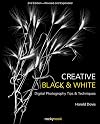
For some reason, GoodReads does not list the second edition of the book, and this is the one that I am reviewing.
The second edition is much-expanded and is good - overall. I like the additional sections on solarization, the pinhole effects etc.
However, I will also say that, when it comes to the sections on image processing, the book is a bit patchy, as the explanations are a bit difficult to follow. However, there are some special effects that I want to experiment with, and for this alone, show more the book is well worth the price
The sections on black and white vision are excellent. show less
The second edition is much-expanded and is good - overall. I like the additional sections on solarization, the pinhole effects etc.
However, I will also say that, when it comes to the sections on image processing, the book is a bit patchy, as the explanations are a bit difficult to follow. However, there are some special effects that I want to experiment with, and for this alone, show more the book is well worth the price
The sections on black and white vision are excellent. show less
You May Also Like


Statistics
- Works
- 49
- Members
- 919
- Popularity
- #27,916
- Rating
- 3.5
- Reviews
- 14
- ISBNs
- 142
- Languages
- 10