
Howard Norman
Author of The Bird Artist
About the Author
Howard Norman was born in Toledo, Ohio, in 1949 and grew up in Grand Rapids, Michigan. He attended Western Michigan University, the Folklore Institute of Indiana University, and the University of Michigan. His work with the Cree Indians created an interest and he then got a job as a translator of show more Native American poems and folktales. He put together a collection of his translations in the book, The Wishing Bone Cycle: Narrative Poems of the Swampy Cree Indians, which was named the co-winner of the Harold Morton Landon Translation Award by the Academy of American Poets. With the Help of a Whiting Award, he has also written The Northern Lights as well as Kiss in the Hotel, Joseph Conrad and Other Stories, and The Bird Artist, which was named one of Time Magazine's Best Five Books of 1994 and won the New England Booksellers Association Prize in Fiction. (Bowker Author Biography) show less
Series
Works by Howard Norman
My Famous Evening: Nova Scotia Sojourns, Diaries, and Preoccupations (Directions) (2004) 71 copies, 2 reviews
In Fond Remembrance of Me: A Memoir of Myth and Uncommon Friendship in the Arctic (2005) 59 copies, 3 reviews
Tales of the Sea 1 copy
Associated Works
A Convergence of Birds: Original Fiction and Poetry Inspired by Joseph Cornell (2001) — Contributor — 207 copies, 2 reviews
When I Was Your Age, Volume Two: Original Stories About Growing Up (1999) — Contributor — 93 copies, 2 reviews
Lafayette Life: Words and Images Since 1928: The History of One Neighborhood School in Washington D.C. (1999) — Introduction, some editions — 2 copies
New World Journal #5 — Translator — 1 copy
Tagged
Common Knowledge
- Canonical name
- Norman, Howard
- Birthdate
- 1949-03-04
- Gender
- male
- Education
- Western Michigan University (graduate)
Indiana University - Occupations
- educator
writer - Awards and honors
- Lannan Literary Award (Fiction, 1996)
Whiting Writers' Award (1985) - Relationships
- Shore, Jane (wife)
- Short biography
- Although his official bio's all state that Howard Norman isn't Canadian, having been born in Toledo, Ohio, and raised in Michigan, he now holds dual citizenship and does consider himself Canadian. I have this directly from Mr. Norman, who I met at a book festival on October 3, 2009. When I mentioned that many people are surprised to learn that he is not Canadian, he said "Oh, but I AM." Good enough for me.
- Nationality
- USA
Canada - Birthplace
- Toledo, Ohio, USA
- Places of residence
- Grand Rapids, Michigan, USA
Toronto, Ontario, Canada
Labrador, Canada
Newfoundland, Canada - Associated Place (for map)
- Canada
Members
Discussions
AMERICAN AUTHORS CHALLENGE--SEPTEMBER 2021---HOWARD NORMAN in 75 Books Challenge for 2021 (August 2024)
The Bird Artist (Bowie's Top 100) in 75 Books Challenge for 2016 (May 2016)
Reviews
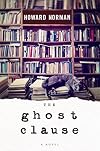
A "friendly" ghost story and a love story all in one. I loved this for its quirkiness and readability and for depicting the lifestyle I secretly want to live: an intellectual true-love partnership in a old, well-worn, story-rich farmhouse in VT. In the "present" of the story, the house is inhabited by Muriel, a translator and NH University professor, her private investigator husband Zach, and the ghost of novelist Simon Inescort. Set in the 90s before technology took off, the most advanced show more thing in the house is an alarm system that keeps registering Simon's unseen presence in the house's library. He inadvertently triggers it at least once a week, despite trying to be very careful. He is an entirely benevolent presence, whose death at age 48 took him and his widow, artist Lorca Pell completely by surprise. This has a little feel of "Our Town" to it for the small VT town plays an important role too, and Simon in his state of "ongoingness" feels nothing but appreciation for the life he lived. Lorca sold the house to the young couple after his death, retaining rights to his cabin and and his grave on a small corner of the property. The house, dating back to 1845, where "every nook and cranny archives time" (164) came with a "ghost clause" (which may or may not be a thing), that stipulates the owner would have to buy it back if there was the presence of a malevolent spirit. Simon is not that. He is observer (and reader and tree-trimmer and cat teaser) only with good intent. Events happen in the town - a missing child case that Zach works on, a book release for Muriel, new life, new chances, all under the watchful eye of Simon. There are literary gems here - Simon was a writer after all and he quotes liberally from (real) writers and poets, but the most pervasive feeling is wonder at life's moments. One blurb calls this "lapidary prose" and truly both the author and main character have polished these moments into shining gems. show less

The Publisher Says: Howard Norman, widely regarded as one of this country's finest novelists, returns to the mesmerizing fictional terrain of his major books—The Bird Artist, The Museum Guard, and The Haunting of L—in this erotically charged and morally complex story.
Seventeen-year-old Wyatt Hillyer is suddenly orphaned when his parents, within hours of each other, jump off two different bridges—the result of their separate involvements with the same compelling neighbor, a Halifax show more switchboard operator and aspiring actress. The suicides cause Wyatt to move to small-town Middle Economy to live with his uncle, aunt, and ravishing cousin Tilda.
Setting in motion the novel's chain of life-altering passions and the wartime perfidy at its core is the arrival of the German student Hans Mohring, carrying only a satchel. Actual historical incidents—including a German U-boat's sinking of the Nova Scotia-Newfoundland ferry Caribou, on which Aunt Constance Hillyer might or might not be traveling—lend intense narrative power to Norman's uncannily layered story.
Wyatt's account of the astonishing—not least to him—events leading up to his fathering of a beloved daughter spills out twenty-one years later. It's a confession that speaks profoundly of the mysteries of human character in wartime and is directed, with both despair and hope, to an audience of one.
An utterly stirring novel. This is Howard Norman at his celebrated best.
I CHECKED THIS BOOK OUT FROM THE LIBRARY. USE THEM OFTEN, THEY LIVE AND DIE ON OUR PATRONAGE.
My Review: When an author of Howard Norman's stature uses the epistolary storytelling technique, the chances of disappointment...always higher when this difficult-to-master form is used...shrink back into insignificance. As expected, then, this read was a master class in what and how to make of the epistles in question.
Wyatt's parents aren't alive as we meet him. I got a strong intimation that he, looking back on a whole family's life pretty passionately (if unhappily) lived, didn't feel they were alive before they each committed suicide for mixed-up love of the same woman. If I had to guess (Author Norman doesn't over-explain anything, ever) I'd say Wyatt's life more complicated than most from the very beginning. His letter to his largely unseen daughter, however, is all about putting forward the facts of her paternal family's life as he recalls them. It felt to me as though Author Norman's telling of the tale was direct and honest; so Wyatt, then, wasn't aware even in retrospect of his life's peculiarly high levels of complexity.
With all the arousal hormones Wyatt's story begins with, and given the fact that he's writing to his twentyish daughter, this is a story pretty much guaranteed to be about the erotic charge that a messy life provides and more importantly about its costs. Wyatt's unrequited love for a person in his family circle who is not a relative is the stuff of life. I suspect it was deeply relatable to anyone who's ever been part of a blended or a found family. The object of his affections, herself an added person (one whose family isn't a birth family), falls madly in love with someone socially inconvenient: A German émigré, and this story's set during World War II. So there's another level of relatability, as what adult has made it this far without an unrequited love?
The problem this inability brings with it, or perhaps the character trait it points up, is that of passivity. Wyatt is not a doer but a done-to. Nothing that happens in his (passive, epistolary) account of his life to the daughter he doesn't know is as a result of his actions. The one truly, damningly awful thing he's involved in, and for which he is now seeking his daughter's forgiveness, is a result of his inaction, his inability to stand for something.
But what he does, this man of inaction, is write the young woman a letter. How typical of him...make an effort but make it ineffectually. What a letter does is enable him to remain inactive yet still offer, as if from behind a wall, an accounting of the young woman in question's heritage. What happens as a result? We never know; Author Norman's story is of Wyatt, not Marlais.
You'll have to decide if that's a deal-maker or -breaker for you. I fall on the line between those poles. I need to feel a story is complete, fulfilling its brief, to really lose myself in it. The musicality of Author Norman's line-by-line creation can draw one along for a good while but there's always that need to have some story pay-off for me. I was not all the way satisfied...I wasn't dissatisfied...there was a strange liminality in this tale of passive inaction's consequences. I would recommend you read the book. I wouldn't recommend it to you, however, of you're in the mood for a propulsive plot-driven thrillride. Does the read repay the effort? It did for me—mostly.
I think Author Norman turned me into Wyatt! show less
Seventeen-year-old Wyatt Hillyer is suddenly orphaned when his parents, within hours of each other, jump off two different bridges—the result of their separate involvements with the same compelling neighbor, a Halifax show more switchboard operator and aspiring actress. The suicides cause Wyatt to move to small-town Middle Economy to live with his uncle, aunt, and ravishing cousin Tilda.
Setting in motion the novel's chain of life-altering passions and the wartime perfidy at its core is the arrival of the German student Hans Mohring, carrying only a satchel. Actual historical incidents—including a German U-boat's sinking of the Nova Scotia-Newfoundland ferry Caribou, on which Aunt Constance Hillyer might or might not be traveling—lend intense narrative power to Norman's uncannily layered story.
Wyatt's account of the astonishing—not least to him—events leading up to his fathering of a beloved daughter spills out twenty-one years later. It's a confession that speaks profoundly of the mysteries of human character in wartime and is directed, with both despair and hope, to an audience of one.
An utterly stirring novel. This is Howard Norman at his celebrated best.
I CHECKED THIS BOOK OUT FROM THE LIBRARY. USE THEM OFTEN, THEY LIVE AND DIE ON OUR PATRONAGE.
My Review: When an author of Howard Norman's stature uses the epistolary storytelling technique, the chances of disappointment...always higher when this difficult-to-master form is used...shrink back into insignificance. As expected, then, this read was a master class in what and how to make of the epistles in question.
Wyatt's parents aren't alive as we meet him. I got a strong intimation that he, looking back on a whole family's life pretty passionately (if unhappily) lived, didn't feel they were alive before they each committed suicide for mixed-up love of the same woman. If I had to guess (Author Norman doesn't over-explain anything, ever) I'd say Wyatt's life more complicated than most from the very beginning. His letter to his largely unseen daughter, however, is all about putting forward the facts of her paternal family's life as he recalls them. It felt to me as though Author Norman's telling of the tale was direct and honest; so Wyatt, then, wasn't aware even in retrospect of his life's peculiarly high levels of complexity.
In The Highland Book of Platitudes, Marlais, there's an entry that reads, "Not all ghosts earn our memory in equal measure." I think about this sometimes. I think especially about the word "earn," because it implies an ongoing willful effort on the part of the dead, so that if you believe the platitude, you have to believe in the afterlife, don't you? Following that line of thought, there seem to be certain people—call them ghosts—with the ability to insinuate themselves into your life with more belligerence and exactitude than others—it's their employment and expertise.
With all the arousal hormones Wyatt's story begins with, and given the fact that he's writing to his twentyish daughter, this is a story pretty much guaranteed to be about the erotic charge that a messy life provides and more importantly about its costs. Wyatt's unrequited love for a person in his family circle who is not a relative is the stuff of life. I suspect it was deeply relatable to anyone who's ever been part of a blended or a found family. The object of his affections, herself an added person (one whose family isn't a birth family), falls madly in love with someone socially inconvenient: A German émigré, and this story's set during World War II. So there's another level of relatability, as what adult has made it this far without an unrequited love?
My whole life, Marlais, I've had difficulty coming up with the right word to use in a given situation, but at least I know what the right word would have been once I hear it.
The problem this inability brings with it, or perhaps the character trait it points up, is that of passivity. Wyatt is not a doer but a done-to. Nothing that happens in his (passive, epistolary) account of his life to the daughter he doesn't know is as a result of his actions. The one truly, damningly awful thing he's involved in, and for which he is now seeking his daughter's forgiveness, is a result of his inaction, his inability to stand for something.
I realize I've sometimes raced over the years like an ice skater fleeing the devil on a frozen river.
–and–
I refuse any longer to have my life defined by what I haven't told you.
But what he does, this man of inaction, is write the young woman a letter. How typical of him...make an effort but make it ineffectually. What a letter does is enable him to remain inactive yet still offer, as if from behind a wall, an accounting of the young woman in question's heritage. What happens as a result? We never know; Author Norman's story is of Wyatt, not Marlais.
You'll have to decide if that's a deal-maker or -breaker for you. I fall on the line between those poles. I need to feel a story is complete, fulfilling its brief, to really lose myself in it. The musicality of Author Norman's line-by-line creation can draw one along for a good while but there's always that need to have some story pay-off for me. I was not all the way satisfied...I wasn't dissatisfied...there was a strange liminality in this tale of passive inaction's consequences. I would recommend you read the book. I wouldn't recommend it to you, however, of you're in the mood for a propulsive plot-driven thrillride. Does the read repay the effort? It did for me—mostly.
I think Author Norman turned me into Wyatt! show less
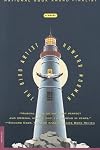
Set amidst the backdrop of Newfoundland in the early twentieth century, The Bird Artist is an interesting read full of writing contradictions which probably shouldn't work yet somehow do. The writing is spare yet the atmosphere of the small coastal town's natural environment is an enveloping combination of the wilds of the natural coastal environment and the suffocating smallness of the local community. Pace of life on the island is slow and the writing reflects this, despite the reader show more finding out in the first paragraph that the protagonist has murdered the lighthouse keeper. It's an interesting juxtaposition; the gravity of the felony versus the unhurried first person narration through a protagonist who seems quietly honest and uncomplicated and at odds with the crime he admits to the reader he has committed.
For some the pace of this book may challenge their attention, but I really enjoyed it. The characters were really well developed - flawed and complex yet at the same time wholly simple and honest in what they're expecting from life. Norman created an an especially wonderful feisty female character who lives by her own rules and morals, to hang with the opinions of the gossiping villagers. A young Helena Bonham Carter would have played a wonderful Margaret if ever they'd made a film of this novel.
Another hit from my personal selections out of Bowie's 100 list. I'll look out for more from this author.
4.5 stars - a great read if you enjoy slow, spare writing with brooding atmosphere. show less
For some the pace of this book may challenge their attention, but I really enjoyed it. The characters were really well developed - flawed and complex yet at the same time wholly simple and honest in what they're expecting from life. Norman created an an especially wonderful feisty female character who lives by her own rules and morals, to hang with the opinions of the gossiping villagers. A young Helena Bonham Carter would have played a wonderful Margaret if ever they'd made a film of this novel.
Another hit from my personal selections out of Bowie's 100 list. I'll look out for more from this author.
4.5 stars - a great read if you enjoy slow, spare writing with brooding atmosphere. show less
From the very first page of The Bird Artist, Howard Norman wants to draw you into the story by having his main character, Fabian Vas, nonchalantly admit that he murdered lighthouse keeper Botho August. The hook is why. Why did seemingly quiet and charming Vas kill August? Why does he admit to it so readily and so casually? Norman will drop other mysteries along the way to keep the reader strung along. Like, why is it risky to write about Fabian's aunt? Fabian lives in Witless Bay, show more Newfoundland. Ir all begins when Fabian befriends town troublemaker Margaret. As a thirteen year old she accidentally killed a man. Soon their relationship blossoms into the "with benefits" type despite his arranged marriage to a distant cousin. Maybe it is a cultural thing, but the curious thing about Fabian is that nothing seems to really faze him. His apprenticeship with bird artist Isaac Sprague is shortlived when Sprague disappears in the spring of 1911. Fabian blames himself for being too much a critic of his mentor's work. When he is moments away from marrying a complete stranger and being arrested for murder almost at the same time, Fabian shows little emotion. His emotion amounts to getting a little nervous when law enforcement shows up. For all of Fabian's calm, Margaret is his exact opposite. She was my favorite character. Motherless and meandering, Margaret sets fire to life's challenges. You end up rooting for their dysfunctional relationship no matter what the cost. show less
Lists
Awards


You May Also Like


Associated Authors
Statistics
- Works
- 31
- Also by
- 9
- Members
- 3,848
- Popularity
- #6,586
- Rating
- 3.6
- Reviews
- 140
- ISBNs
- 152
- Languages
- 6
- Favorited
- 8
