
Paul Roland
Author of The Nazis and the Occult: The Dark Forces Unleashed by the Third Reich
About the Author
Works by Paul Roland
The Dark History of the Occult: Magic, Madness and Murder (Sirius Hidden Histories) (2011) — Author — 52 copies, 1 review
Ghosts and the Spirit World: True cases of hauntings and visitations from the earliest records to the present day (2014) 23 copies
The Nazi Files: Chilling Case Studies of the Perverted Personalities Behind the Third Reich (2014) 20 copies
The Complete Kabbalah Course: Practical Exercises to Reach Your Inner and Upper Worlds (2005) 16 copies
Hitler and His Inner Circle: Chilling Profiles of the Evil Figures Behind the Third Reich (2021) 13 copies
Understanding Dreams: How to Influence, Record and Interpret Dreams (Pyramid Paperbacks) (2005) 4 copies
Os Nazistas E O Ocultismo. As Forcas Negras Desencadeadas Pelo Terceiro Reich (Em Portuguese do Brasil) (2009) 3 copies
Walking Between The Raindrops 3 copies
Ghost: Spectres, poltergeist, apparitions, lieux hantés et autres phénomènes paranormaux (2019) 2 copies
CENAS DE CRIME 2 copies
Tagged
Common Knowledge
- Canonical name
- Roland, Paul
- Birthdate
- 1959-09-06
- Gender
- male
- Occupations
- singer-songwriter
author
journalist
paranormal researcher - Nationality
- UK
- Birthplace
- Kent, England, UK
- Places of residence
- Cambridgeshire, England, UK
Germany - Associated Place (for map)
- England, UK
Members
Reviews

This is a fascinating though sometimes irritating book looking at the evidence for reincarnation through religious and scientific sources and a range of case studies from some intriguing ones that seem to defy rational explanation through to others much less convincing. Nearly the first third of the book is taken up with looking at the attitudes of the major world faiths towards reincarnation (basically, Buddhists and most Hindus accept it, while Christians, Muslims and Jews do not, though show more all three of the Abrahamic religions have a strand in their tradition that does or has accepted it at some point). The author evidently firmly believes in reincarnation and is, in my view, too ready to see events in supposed past lives as the explanation for all manner of psychological and other ills in people's current lives, and the acceptance of reincarnation as a valid phenomenon as being the cure for these ills in one's current life. His conclusion is the rather broadbrush and over optimistically naive one that if only everyone believed in reincarnation then all prejudice and hatred would disappear, as everyone would know that they had been reincarnated, or might in future be reincarnated, as someone of a different religion, creed, colour or sex. I am afraid I am not at all sure, even if reincarnation were widely accepted, that such prejudices would still not be present in many people looking for such factors as an excuse to hate the "other" in this life. That said, there is definitely a pleasant karmic thought that Nick Griffin or the EDL might be reincarnated as Muslims in some future life!
Generalities aside, what about the specific cases cited? I could have done with fewer, but more in depth cases, though, that said, the range given here is very wide. I find the ones involving young children particularly convincing when they have talked offhandedly, consistently and in detail about people and places in their past lives they could not have plausibly experienced in this one. Cases involving adults are often more problematic as the power of auto suggestion and buried memories from written or visual material seen earlier in life is clearly much greater. Even here, though, there is sometimes a wealth of detail about minor aspects of past lives that has been verified by researchers through looking through arcane records to which the subject could not plausibly have had access. What often is more convincing is the sheer ordinariness of many of the accounts of past lives; they don't all claim to be famous people (though one Swedish girl claimed in the 1950s to be the reincarnation of Anne Frank, but before the latter's diary was published and her name became well known). Some of the case studies involving members of the medical profession and near death experiences are also very intriguing and difficult to account for rationally. On the other hand, the accounts by famous people, e.g. General Patton, Elton John and Brian May of past lives are often rather generic and unconvincing and could have come from any number of other sources.
In sum, an interesting read for anyone with an open mind. I leave the book as I found it, not wholly convinced either way, but open to the fact that there are some human experiences that certainly defy conventional explanation. 3.5/5 show less
Generalities aside, what about the specific cases cited? I could have done with fewer, but more in depth cases, though, that said, the range given here is very wide. I find the ones involving young children particularly convincing when they have talked offhandedly, consistently and in detail about people and places in their past lives they could not have plausibly experienced in this one. Cases involving adults are often more problematic as the power of auto suggestion and buried memories from written or visual material seen earlier in life is clearly much greater. Even here, though, there is sometimes a wealth of detail about minor aspects of past lives that has been verified by researchers through looking through arcane records to which the subject could not plausibly have had access. What often is more convincing is the sheer ordinariness of many of the accounts of past lives; they don't all claim to be famous people (though one Swedish girl claimed in the 1950s to be the reincarnation of Anne Frank, but before the latter's diary was published and her name became well known). Some of the case studies involving members of the medical profession and near death experiences are also very intriguing and difficult to account for rationally. On the other hand, the accounts by famous people, e.g. General Patton, Elton John and Brian May of past lives are often rather generic and unconvincing and could have come from any number of other sources.
In sum, an interesting read for anyone with an open mind. I leave the book as I found it, not wholly convinced either way, but open to the fact that there are some human experiences that certainly defy conventional explanation. 3.5/5 show less
The Complete Book of Ghosts: A Fascinating Exploration of the Spirit World, From Apparitions to Haunted Places by Paul Roland
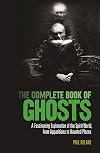
This book is titled a complete book of ghosts but that is a misnomer. It is in fact an anthology from Roland’s other works all tied together under ghosts, haunted places and apparitions. As such, it isn’t an original work but takes various points of view to each of the nine chapters. There is an Introduction and Afterword, as well. There are more than a few noteworthy items in the book. Unfortunately, it is centered around Roland’s own idiosyncratic understanding of the paranormal show more which is that ghosts or ghostlike entities are in need of interpretation. For some reason Roland thinks they are mostly harmless to humans. Roland says that ghosts are really part of a larger cosmic process of reincarnation. This is described by Roland in the Introduction: “The astral body (also known as the etheric or dream body) is the matrix of energy which is effectively a blueprint for the physical form we assume on entering this material dimension at birth.” He believes in a Hindu/Buddhist conception of karma as the reason for ghostly apparitions. Ghosts, he says, are spirits migrating toward further detachment from the world of pain and sadness. It’s hard to believe someone would write this, let alone believe this. This is called dualism and by necessity a person must choose one over the other. Body or soul? In dualism, the there is an implicit prejudice of soul over body, so it is not a real choice. Christianity has no dualism, except where it has been warped by erroneous opinion. The body is not evil, and never is. Roland tries to say that ghosts are made of ether (the quintessence, not made of fire, air, earth, or water) which is the same as saying they are material beings that haven’t fully evaporated yet. Which is another way of saying they are figments of people’s imagination or projection from the subconscious of the person seeing the apparition. Overall the book is disappointing for this reason. There is a large section on haunted England which is true, as records are kept intact since before the Middle Ages (York, Edinburgh, Glastonbury). Roland says there was a Jewish cemetery where the part of the Dodger Stadium parking lot is today. This is incorrect but there was a cemetery nearby where Cathedral High School now stands. The stories of excavating coffin vaults happened there. He says there are Hopi legends of Lizard People living underground there as well. I’ve never heard of those stories, but they were supposed to be at the edge of LA’s Chinatown according to reporting in old tabloid newspapers. Jim Morrison named himself the Lizard King before he went away to Paris. One of the funnier scenes is the reported apparition of C. S. Lewis to Anglican Canon Phillips sitting in a chair with an encouraging message. Tombstone and Bisbee, Arizona are mentioned as sites of unusual folklore. Bisbee is a tiny mining town which still exists. Marilyn Monroe has fans coming to see her possibly appear in a mirror at The Roosevelt Hotel in LA. I’ve never seen the mirror myself but it’s a tourist attraction.
The whole book begins with the most authoritative ghost episode in history, the calling of the prophet Samuel from the dead. Without this reference any book about spirits is worthless. The danger of this type of divination by necromancy is forbidden by the 1st commandment but Roland says it is only a moral tale intended to show that the Witch of Endor sympathetically gave a cooked animal for Saul to eat afterwards. This book encourages people to be interested in ghosts and to envy people who claim to be mediums, clairvoyants, sensitives, or psychics. This is the wrong message to give anyone. Photos, Index, 443pps. show less
The whole book begins with the most authoritative ghost episode in history, the calling of the prophet Samuel from the dead. Without this reference any book about spirits is worthless. The danger of this type of divination by necromancy is forbidden by the 1st commandment but Roland says it is only a moral tale intended to show that the Witch of Endor sympathetically gave a cooked animal for Saul to eat afterwards. This book encourages people to be interested in ghosts and to envy people who claim to be mediums, clairvoyants, sensitives, or psychics. This is the wrong message to give anyone. Photos, Index, 443pps. show less
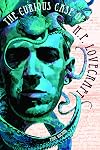
‘The Curious Case Of H.P. Lovecraft’ is both a biography and a literary analysis of the famous horror writer and his works. The facts of his life are shown and so are the plots of the stories, complete with commentary on the language used, the human characters and the non-human creatures. Writer Paul Roland also gives some idea of a tale’s success, both commercially and as art. Poor old H.P. had little commercial success in his lifetime but is well regarded as an artist show more posthumously.
Howard Phillips Lovecraft was born on 20th August 1890 into a reasonably wealthy family in Providence, Rhode Island, on the east coast of the United States. A spoilt childhood meant that he grew up believing he was entitled to the leisurely life of a gentleman. Unfortunately, his father died young and bad investments were made with the family fortune, which came from his mother’s side anyway. It dwindled slowly enough that he could just about survive on it and his meagre literary earnings helped a little. Luckily, he didn’t drink alcohol or take drugs and ate hardly anything.
His mother was of a nervous disposition and mollycoddled him. At the same time, she convinced him he was ugly. Lovecraft was very intelligent but inclined to be solitary as he found the raucous behaviour of other children strange. He read voraciously in his grandfather’s extensive library and learned to love Greek legends, ‘The Arabian Nights’ and the works of Lord Dunsany. He spent a lot of time on the Poe. Arthur Machen and M.R. James were significant influences. Perhaps it was his tastes in literature that led to his wild dreams of ‘night gaunts’ with flapping black wings that carried him over ancient, deserted cities abandoned by old gods or maybe he would have had them anyway. At any rate, he was not your average Joe.
A woman married him. I put it that way because he was not especially interested in ladies and she chased him, all the way to the altar in the end. Sonia Haft-Greene (1883-1972) was successful in the fashion industry, earning $10,000 dollars a year and was happy to keep Lovecraft in the style to which he was accustomed or better, while his talent flourished. Sonia loved him and believed he was a genius who would one day be recognised. She loved him even though she was a Jew and he was openly anti-Semitic. A remarkable woman and very attractive, too, by all accounts. Unfortunately, she fell on hard times and he could not get a job. When she had to move to Chicago to work, he stayed in New York for a while but soon enough moved back to Providence to live with his aunts. The separation became permanent. He didn’t seem to mind much. A strange character, possibly manic-depressive and almost certainly autistic. Yet he was a good friend to many, generous with his time and talent and even with his limited funds. He was also a gifted writer, as the many extracts herein demonstrate. I was pleased to read that my favourite Lovecraft story, ‘The Colour Out Of Space’, was also his favourite Lovecraft story. Clearly, he had good taste.
This is a wonderful book. The writing is informative and elegant and it’s obvious that Paul Roland is a huge fan. The appendices are nearly as good as the main text and include Lovecraft’s thoughts on how to write weird fiction and an essay about her time with him by his wife, Sonia. There is also an excellent section on Lovecraft adaptations in film, games and graphic novels with the best of each genre recommended by Roland. Chasing them all up might get expensive but I certainly intend to check out some. That said, the original stories are the best of Lovecraft and happily, I have them all.
When I finished this biography, I started reading one about Heinlein, a competent, confident successful man of his time, at the top of his chosen field of fiction for decades. One can hardly imagine two personalities more different than Heinlein and Lovecraft but I suspect that in a hundred years time Robert A. will be largely forgotten and H.P. will still be in print. Hell, he might even be on the school curriculum.
Eamonn Murphy
This review first appeared at https://www.sfcrowsnest.info/ show less
Howard Phillips Lovecraft was born on 20th August 1890 into a reasonably wealthy family in Providence, Rhode Island, on the east coast of the United States. A spoilt childhood meant that he grew up believing he was entitled to the leisurely life of a gentleman. Unfortunately, his father died young and bad investments were made with the family fortune, which came from his mother’s side anyway. It dwindled slowly enough that he could just about survive on it and his meagre literary earnings helped a little. Luckily, he didn’t drink alcohol or take drugs and ate hardly anything.
His mother was of a nervous disposition and mollycoddled him. At the same time, she convinced him he was ugly. Lovecraft was very intelligent but inclined to be solitary as he found the raucous behaviour of other children strange. He read voraciously in his grandfather’s extensive library and learned to love Greek legends, ‘The Arabian Nights’ and the works of Lord Dunsany. He spent a lot of time on the Poe. Arthur Machen and M.R. James were significant influences. Perhaps it was his tastes in literature that led to his wild dreams of ‘night gaunts’ with flapping black wings that carried him over ancient, deserted cities abandoned by old gods or maybe he would have had them anyway. At any rate, he was not your average Joe.
A woman married him. I put it that way because he was not especially interested in ladies and she chased him, all the way to the altar in the end. Sonia Haft-Greene (1883-1972) was successful in the fashion industry, earning $10,000 dollars a year and was happy to keep Lovecraft in the style to which he was accustomed or better, while his talent flourished. Sonia loved him and believed he was a genius who would one day be recognised. She loved him even though she was a Jew and he was openly anti-Semitic. A remarkable woman and very attractive, too, by all accounts. Unfortunately, she fell on hard times and he could not get a job. When she had to move to Chicago to work, he stayed in New York for a while but soon enough moved back to Providence to live with his aunts. The separation became permanent. He didn’t seem to mind much. A strange character, possibly manic-depressive and almost certainly autistic. Yet he was a good friend to many, generous with his time and talent and even with his limited funds. He was also a gifted writer, as the many extracts herein demonstrate. I was pleased to read that my favourite Lovecraft story, ‘The Colour Out Of Space’, was also his favourite Lovecraft story. Clearly, he had good taste.
This is a wonderful book. The writing is informative and elegant and it’s obvious that Paul Roland is a huge fan. The appendices are nearly as good as the main text and include Lovecraft’s thoughts on how to write weird fiction and an essay about her time with him by his wife, Sonia. There is also an excellent section on Lovecraft adaptations in film, games and graphic novels with the best of each genre recommended by Roland. Chasing them all up might get expensive but I certainly intend to check out some. That said, the original stories are the best of Lovecraft and happily, I have them all.
When I finished this biography, I started reading one about Heinlein, a competent, confident successful man of his time, at the top of his chosen field of fiction for decades. One can hardly imagine two personalities more different than Heinlein and Lovecraft but I suspect that in a hundred years time Robert A. will be largely forgotten and H.P. will still be in print. Hell, he might even be on the school curriculum.
Eamonn Murphy
This review first appeared at https://www.sfcrowsnest.info/ show less

A fairly short (256pp) biography of Lovecraft, which in its later parts tends to lose sight of the man in favour of analysis of his work. The perhaps most notable thing about it is that Roland is some sort of occultist, which colours his interpretations of his subject's life and work. In particular, he takes Lovecraft's vivid dreams more seriously than Lovecraft himself ever did. More amusingly, he seems to take seriously the idea that contemplating demons too intently may conjure them into show more actual being. If so, a miracle that Lovecraft died of cancer rather than being torn apart by an invisible assailant like reportedly was Abdul Alhazred.
Includes an account of their life together by Sonia, Lovecraft's onetime wife, a piece by Lovecraft about how to write a weird tale, and his fictional essay "The History of the Necronomicon". show less
Includes an account of their life together by Sonia, Lovecraft's onetime wife, a piece by Lovecraft about how to write a weird tale, and his fictional essay "The History of the Necronomicon". show less
Lists
Holocaust (1)
You May Also Like


Statistics
- Works
- 74
- Members
- 1,710
- Popularity
- #15,008
- Rating
- 3.3
- Reviews
- 21
- ISBNs
- 262
- Languages
- 16