
Caryl Férey
Author of Zulu
About the Author
Disambiguation Notice:
(fre) Probleme CK : Né le 1er juin 1967
Series
Works by Caryl Férey
Comment devenir écrivain quand on vient de la grande plouquerie internationale (2013) 5 copies, 1 review
Le Steve McQueen 3 copies
Grindadráp 3 copies
Lëd 1 copy
Lëd 1 copy
Paz (French Edition) 1 copy
Tagged
Common Knowledge
- Canonical name
- Férey, Caryl
- Birthdate
- 1967-06-01
- Gender
- male
- Education
- Baccalauréat
- Nationality
- France
- Birthplace
- Caen, Calvados, Normandie, France
- Places of residence
- Montfort-sur-Meu, Ille-et-Villaine, Bretagne, France
Caen, Calvados, Normandie, France - Map Location
- France
- Disambiguation notice
- Probleme CK : Né le 1er juin 1967
- Associated Place (for map)
- France
Members
Reviews
Zulu by Caryl Ferey

Oh geez.... oh crap.... this was quite the intense noir thriller ride! Having previously read Ferey's Utu, a noir crime novel set in New Zealand, I thought I had an idea of what I was in for with this one. I should mention that I don't do well with hard core violence or pretty much anything produced by Quentin Tarantino but I have to say, Ferey even blew away my expectations with this one, producing a fascinating, A page-turning story that gripped my attention to the very end. Yes, some of show more the violence was a little hard - okay, really darn difficult - for me to take. That beach scene was OMG bad. I found myself putting the book down more than a couple of times and walking away for 20 minutes, just to let me digest what I had just read and prep myself for potential further uneasiness. Wow. Just Wow. Some of the graphic violence depicted is really intense - which some readers may wish to avoid - but if you do, you will be missing out on a spectacular crime noir read.
Ferey digs deep and really brings home social criticism of the post-apartheid landscape, a place still very much heaving with violence, drug lords and overall corruption. Seriously, after reading this, I would be horrified to visit Cape Town. Ferey has done such an amazing job showing the underbelly of the playground for the rich and the shocking destitution of the shanty townships. Ferey wrote this story in real time - against the looming backdrop of the 2010 World Cup that would take place in 2 years time, post publication. The South African apartheid was both political and racial. This story focuses on the multicultural nature of South Africa and the myriad of opportunists that flooded the region, morals be damned. I can totally see why this one was the 2008 winner of the French Grand Prix for Best Crime Novel. A worthy win, IMO. show less
Ferey digs deep and really brings home social criticism of the post-apartheid landscape, a place still very much heaving with violence, drug lords and overall corruption. Seriously, after reading this, I would be horrified to visit Cape Town. Ferey has done such an amazing job showing the underbelly of the playground for the rich and the shocking destitution of the shanty townships. Ferey wrote this story in real time - against the looming backdrop of the 2010 World Cup that would take place in 2 years time, post publication. The South African apartheid was both political and racial. This story focuses on the multicultural nature of South Africa and the myriad of opportunists that flooded the region, morals be damned. I can totally see why this one was the 2008 winner of the French Grand Prix for Best Crime Novel. A worthy win, IMO. show less
Utu by Caryl Ferey
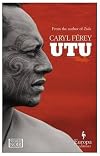
Utu means “revenge” in the Maori language and revenge is certainly at the crux of this police procedural by French novelist Caryl Férey. When disgraced New Zealand detective Paul Osborne—self medicating on booze and drugs in Sydney, Australia—learns that Jack Fitzgerald, his only friend in the Auckland force, has committed suicide in the middle of an investigation involving the Maori community, he agrees to return home to pick up where his friend left off. A specialist in Maori show more culture, Osborne does not believe that Fitzgerald killed himself and once established in Auckland sets out to prove it, doing whatever it takes. Osborne has fixations other than Fitzgerald and getting high, one of which is Hana, a Maori girl he grew up next door to whom he savagely betrayed when she failed to return his affections and whom, as the investigation proceeds, he fears has been drawn into a militant Maori sect. The story is complex and involves official corruption, mass graves, drug use, sado-masochistic sex, grisly Maori ritual killing, and a great deal of brutality, mostly on the part of Osborne. This is a problem because Férey wants us to sympathize with Osborne on his quest to prove Fitzgerald’s death was no suicide, to save Hana, and to get to the bottom of a mystery that as we turn the pages claims an astounding number of lives. And yet he makes his hero not just a compulsive boozer and drug addict but also something of a sociopath who hurts others unrepentantly and uses them to achieve questionable ends without giving much thought to what happens to them. This, along with the unremitting violence that fills page after page of this long narrative, finally has a deadening effect on the reader, who might very well continue turning pages, but not because of any twinges of compassion for a protagonist whose bad behaviour in the end has made him loathsome. show less
Zulu by Caryl Ferey
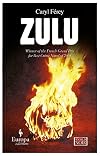
Unbelievably violent, amazingly confrontational, searingly honest and profoundly emotional, ZULU is one of those books that you may have to read through spread fingers, but it is almost impossible to put this book down until it screeches to an ending that will make you shudder.
This is noir, critical, brutal writing at it's absolute best. The "Zulu" of the title refers not so much to the tribe as a whole, but to Cape Town homicide captain Ali Neuman. Heading up the investigation into the show more death of a young woman whose body is found with a crushed skull, Neuman accepts that his job must sometimes mean that he's put in difficult situations. His profound belief in the job he does comes from his childhood - when he was a young boy he was forced to watch the ritualised murders of his father and brother. He grew up with an overwhelming desire to put an end to the lawlessness that plagues his country. Regardless of other people's reactions to him or the colour of his skin.
There's nothing particularly uncommon about the idea that a central protagonist is fighting his own demons, or even battling against unsympathetic or antagonist authorities. What is different in the portrayal of these elements in ZULU is the context. Neuman's demons are the violent murders of his brother and father; the political complications of South African society; the appalling violence and disadvantage of the townships; attacks on his elderly mother. Murder rates that are simply breathtaking; AIDS; desperation; the disregard for life - it's all laid bare, raw and yet, there's also some sense of poignancy. There's love, affection, regard and concern for others. There's even humour and acceptance. Put all of that into a book that is written with a cynical, forthright style that is absolutely no holds barred. Then add more ways of killing and maiming and hurting people than even in your worst moments you couldn't have dreamed up and build the action and the reader's interest into a really interesting and likeable central protagonist. Then tear the rule book up and add a twist at the end that will just blow some readers out of the water, and what you've got is an intelligent, thought-provoking, frightening, fascinating and unputdownable book about a society that is still dealing with the impacts of Apartheid and profound societal upheaval.
ZULU isn't a book that is going to do much for the South African tourism industry, but it is a book that simply took my breath away. show less
This is noir, critical, brutal writing at it's absolute best. The "Zulu" of the title refers not so much to the tribe as a whole, but to Cape Town homicide captain Ali Neuman. Heading up the investigation into the show more death of a young woman whose body is found with a crushed skull, Neuman accepts that his job must sometimes mean that he's put in difficult situations. His profound belief in the job he does comes from his childhood - when he was a young boy he was forced to watch the ritualised murders of his father and brother. He grew up with an overwhelming desire to put an end to the lawlessness that plagues his country. Regardless of other people's reactions to him or the colour of his skin.
There's nothing particularly uncommon about the idea that a central protagonist is fighting his own demons, or even battling against unsympathetic or antagonist authorities. What is different in the portrayal of these elements in ZULU is the context. Neuman's demons are the violent murders of his brother and father; the political complications of South African society; the appalling violence and disadvantage of the townships; attacks on his elderly mother. Murder rates that are simply breathtaking; AIDS; desperation; the disregard for life - it's all laid bare, raw and yet, there's also some sense of poignancy. There's love, affection, regard and concern for others. There's even humour and acceptance. Put all of that into a book that is written with a cynical, forthright style that is absolutely no holds barred. Then add more ways of killing and maiming and hurting people than even in your worst moments you couldn't have dreamed up and build the action and the reader's interest into a really interesting and likeable central protagonist. Then tear the rule book up and add a twist at the end that will just blow some readers out of the water, and what you've got is an intelligent, thought-provoking, frightening, fascinating and unputdownable book about a society that is still dealing with the impacts of Apartheid and profound societal upheaval.
ZULU isn't a book that is going to do much for the South African tourism industry, but it is a book that simply took my breath away. show less
Utu by Caryl Ferey

Billed by the publishers as part of their "World Noir" category of books, I found myself drawn into the dark, gritty, unflinching story. Osbourne (our cop and leading character) is anything but likeable. He is rude, obnoxious and travels with an overnight bag filled with drug paraphernalia - speed, opium, grass, cocaine, acid, PCP, amphetamines, morphine, ecstasy and even some heroin - not clothing and toiletries like a 'normal' human being. Osbourne also suffers from periods of blackouts - show more probably caused by the ongoing chemical cocktail he subjects his body to - which makes discovering what is going on even trickier, when Osbourne comes to in settings that would disconcert if not totally freak out most people. The story is somewhat sparse on scenery descriptions, but more than makes up for it by carrying and maintaining an overpowering feeling of negative emotions. Dark, troubling emotions. Nasty emotions. The plot is well managed and I really appreciated how Osbourne would, from time to time, tally all of the evidence like a checklist, to see what was missing or what didn't add up. That helped me as much as it helped him! The reason I read this one was for the Maori angle of the story. The explanations of Maori culture, and the reason behind the choice of "Utu", a Maori term for revenge, as the title gives this otherwise run of the mill Noir crime story a different angle for me to appreciate the story from. Some of the Maori language used through out the story left me a little confused (not all was translated for the reader) but that wasn't a hindrance to following the story.
I should probably mention that according to LT, UTU is book two in the Jack Fitzgerald series, book one being Haka. I have not been able to find Haka translated into the English language anywhere, but I think it is safe to say that the two books are probably only connected by the New Zealand Noir crime setting and reference to the character Jack Fitzgerald.... kind of hard to have a two book series if your main character is dead before book two even starts.
Overall, a solid read that I flew through, considering the page count, and will be on the lookout for more English translations of Férey's works. show less
I should probably mention that according to LT, UTU is book two in the Jack Fitzgerald series, book one being Haka. I have not been able to find Haka translated into the English language anywhere, but I think it is safe to say that the two books are probably only connected by the New Zealand Noir crime setting and reference to the character Jack Fitzgerald.... kind of hard to have a two book series if your main character is dead before book two even starts.
Overall, a solid read that I flew through, considering the page count, and will be on the lookout for more English translations of Férey's works. show less
Awards


You May Also Like


Associated Authors
Statistics
- Works
- 50
- Members
- 805
- Popularity
- #31,684
- Rating
- 3.7
- Reviews
- 28
- ISBNs
- 120
- Languages
- 12

