
Hedi Fried (1924–2022)
Author of Questions I Am Asked About The Holocaust
About the Author
Image credit: Hédi Fried
Works by Hedi Fried
Tagged
Common Knowledge
- Legal name
- Fried, Hédi
- Other names
- Szmuk, Hédi (birth)
- Birthdate
- 1924-06-15
- Date of death
- 2022-11-20
- Gender
- female
- Occupations
- psychologist
teacher - Awards and honors
- Natur och Kulturs kulturpris (1998)
Illis Quorum (1998)
Olof Palme Prize (2017) - Short biography
- Hédi Fried was born to a Jewish family in the small town of Sighet in northern Transylvania, then part of Hungary*, now Romania. During World War II, she and her parents and younger sister Livi, along with other Jews, were forced into a ghetto. At age 20, she was deported to the Nazi concentration camps of Auschwitz and Bergen-Belsen. She survived to be liberated in 1945 and was reunited with Livi. She married another survivor from her hometown with whom she would have three sons. With her sister, the couple moved to Sweden, where Hédi became a psychologist, teacher, and writer. She is a tireless witness to the story of the Holocaust, travelling the world to give talks. Her books include Fragments of a Life (1992), Back to Life (1995), The Road to Auschwitz (1996), and Pendulum of Life (2003). In 1998, she received the Natur och Kulturs Kulturpris for her literary accomplishments and the Swedish government awarded her the Illis Quorum Medal for her humanitarian work.
Sighet belonged to Romania from 1920-1940, it was Hungarian from 1940 till 1946. So, Sighet was part of Romania in 1924. - Nationality
- Sweden
- Birthplace
- Sighet, Romania
- Places of residence
- Stockholm, Sweden
- Associated Place (for map)
- Sweden
Members
Reviews
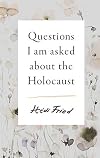
The generation who lived through the atrocities of WWII is aging and dwindling. Their stories are too important to disappear with them because they remind us of the evil man is capable of, the horrific tragedy of genocide, and ultimately of the resilience and hope of the human spirit. They give us first person insights that personalize the abstract, making the truth immediate. It is impossible to look away in the face of such stories. Hedi Fried has spent years teaching young people about show more the Holocaust and her experiences in Auschwitz and other labor camps. In Questions I Am Asked About the Holocaust, she has gathered common questions and her answers to them together in one place, addressing the inhumanity of what was done to millions of people, the motivations behind this evil, and how she lives her life now with such horror in her past.
Fried has previously written an autobiography so this memoir is very different, both in form and in function. This is meant as a teaching tool, an aide to ensure that something like the Holocaust can never happen again to anyone anywhere. It is set up in a question and answer format. The questions are pretty basic and the short answers are interesting and informative. Sometimes there isn't an answer, per se, but only speculation and guesswork, especially for the more philosophical questions. Questions range from "Were you always hungry?" to "Did you dream at night?" to "How could an entire people get behind Hitler?" and "Do you hate the Germans?" The answers are easily understood and processed by younger readers. They are honest and unflinching and they boil down Fried's experiences to their very essence without needing to describe every detail to get the point across.
The questions and answers range across Fried's entire life, drawing a picture of her family's existence before the war to contrast with what they endured during the war. She shares her purpose in life now, finding her voice as a way to reconcile surviving when so many others didn't. While it is not the last question in the book, one that really resonates is "Are you able to forgive?" combined with its answer, "This is a question I've thought about often, until I realised that you do not have to think in those terms. What has been done may not be undone, time cannot be turned back, those who are gone will never come again. Today we have to look to the future. What we can do today is work to make sure that it never happens again." Words we would all do to remember forever. This is not a traditionally written memoir and it is clearly geared towards younger readers. The format makes it easy to dip and out of but also easy to set aside for a while. It is simply written and described and there's no linear narrative but as one woman's first person experiences and feelings, it is invaluable. show less
Fried has previously written an autobiography so this memoir is very different, both in form and in function. This is meant as a teaching tool, an aide to ensure that something like the Holocaust can never happen again to anyone anywhere. It is set up in a question and answer format. The questions are pretty basic and the short answers are interesting and informative. Sometimes there isn't an answer, per se, but only speculation and guesswork, especially for the more philosophical questions. Questions range from "Were you always hungry?" to "Did you dream at night?" to "How could an entire people get behind Hitler?" and "Do you hate the Germans?" The answers are easily understood and processed by younger readers. They are honest and unflinching and they boil down Fried's experiences to their very essence without needing to describe every detail to get the point across.
The questions and answers range across Fried's entire life, drawing a picture of her family's existence before the war to contrast with what they endured during the war. She shares her purpose in life now, finding her voice as a way to reconcile surviving when so many others didn't. While it is not the last question in the book, one that really resonates is "Are you able to forgive?" combined with its answer, "This is a question I've thought about often, until I realised that you do not have to think in those terms. What has been done may not be undone, time cannot be turned back, those who are gone will never come again. Today we have to look to the future. What we can do today is work to make sure that it never happens again." Words we would all do to remember forever. This is not a traditionally written memoir and it is clearly geared towards younger readers. The format makes it easy to dip and out of but also easy to set aside for a while. It is simply written and described and there's no linear narrative but as one woman's first person experiences and feelings, it is invaluable. show less
This was an extraordinarily emotionally moving book which I read through in one sitting. All questions were fair game to this author. All answers were told simply so that the reader could easily understand what she felt through the experiences she had in her lifetime. The author does not shy away from talking about aging, death, and the current start of affairs in our world where we now see increasing intolerance among people. I found this book very inspirational and stopped many times to show more write down the words of Hedi Fried as well as other notable individuals she quoted throughout her book, show less
 This review was written for LibraryThing Early Reviewers.
This is an excellent little primer aimed at young people to educate them about the Holocaust. Fried, an Auschwitz survivor, is a psychologist who has lived in Sweden for most of her adult life. This book is a result of her many years of lecturing at schools. It's a quick, enlightening and often moving read about one of the darkest chapters in human history, and the language is simple and age appropriate (translated from the Swedish). It's good enough that I have passed it along to a young show more friend. I would recommend it highly for ages 12 and up.
- Tim Bazzett, author of the memoir, BOOKLOVER show less
- Tim Bazzett, author of the memoir, BOOKLOVER show less
This review was written for LibraryThing Early Reviewers.
A detailed book with answers to questions asked to Hedi, who is a survival of the Holocaust. Hedi is truly a remarkable woman. For many, talking about their survival from the Holocaust is very difficult to share with others or to even think about that terrible experience. Hedi has taken her experience at the labour camps for her to spread awareness to others so that history doesn't repeat it self. She has made many presentations at schools about her survival and how she coped to find her show more self. This book really goes into extensive details on Hedi's time at the labour camps, her new life after and the person she became. I highly recommend this book. We need to make sure this never happens to anyone ever again. show less
This review was written for LibraryThing Early Reviewers.Lists
Awards


You May Also Like


Associated Authors
Statistics
- Works
- 9
- Members
- 216
- Popularity
- #103,223
- Rating
- 4.3
- Reviews
- 23
- ISBNs
- 43
- Languages
- 8
