
Tadeusz Borowski (1922–1951)
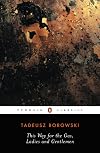
Author of This Way for the Gas, Ladies and Gentlemen
About the Author
Image credit: Via Wikipedia
Works by Tadeusz Borowski
Poezje 3 copies
Selected Poems 1 copy
Dzien na Harmenzach 1 copy
Śmierć Schillingera 1 copy
Ludzie, którzy szli 1 copy
Associated Works
The Story and Its Writer: An Introduction to Short Fiction (1976) — Contributor — 1,218 copies, 3 reviews
The World of the Short Story: A 20th Century Collection (1986) — Contributor — 513 copies, 4 reviews
The Art of the Tale: An International Anthology of Short Stories (1986) — Contributor — 383 copies, 3 reviews
Against Forgetting: Twentieth-Century Poetry of Witness (1993) — Contributor — 377 copies, 2 reviews
Tagged
Common Knowledge
- Canonical name
- Borowski, Tadeusz
- Birthdate
- 1922-11-12
- Date of death
- 1951-07-01
- Gender
- male
- Education
- Warsaw University, Poland
- Occupations
- political journalist
memoirist
poet
short story writer - Short biography
- Tadeusz Borowski was born in Soviet Ukraine of Polish parents in 1922. His parents spent most of his youth in Soviet prison camps. He survived Auschwitz and Dachau, but committed suicide in Warsaw in 1951. He started writing poetry during World War II, and published an underground collection called Gdziekolwiek ziemia (Wherever the Earth) in 1942. After the war, he published the memoir Byliśmy w Oświęcimiu (We Were in Auschwitz, 1946) with Krystyn Olszewski and Janusz Nel Siedlecki. He also wrote two collections of short stories, Pożegnanie z Marią (Farewell to Maria, 1948) and Kamienny świat (The World of Stone, 1948). Both collections appear in the English translation, This Way for the Gas, Ladies and Gentlemen, and Other Stories (1967).
- Nationality
- Poland
- Birthplace
- Zhytomyr, Ukraine
- Places of residence
- Ukraine (birth)
Munich, Bavaria, Germany
Warsaw, Poland - Place of death
- Warsaw, Poland
- Burial location
- Powązki Cemetery, Warsaw, Poland
- Map Location
- Poland
Members
Reviews
Famous testimony by a Polish poet on his experiences in Auschwitz concentration camp, revealing a quite cynical view on survivors (survivors are seen as near criminals – if you would not pursue and exploit some advantage, you could not have survived the camp). And don’t we love it?
Borowski writes about the ‘Canada’ labour gang that helps unloading newly arrived trains as a kind of elite unit that is eagerly awaiting new booty. There are also some notable lessons or observations show more mentioned in Borowski’s tales. In one, Borowski observes that hope can be equally powerful for life (survival) as for destruction. ‘Hope (…) makes people go without a murmur to the gas chambers, keeps them from risking a revolt, (…), makes mothers renounce their children, or wives sell their bodies for bread…’. In another instance, Borowski comments on the role of slaves in building the edifices of civilization (pyramids and concentration camps) pointing at the complicit role of victims, but: ‘There can be no beauty if it is paid by human injustice, nor truth that passes over injustice in silence, nor moral virtue that condones it.’ Borowski is also painfully open and blunt about the reasons why some survived the camps: ‘But how did it happen that you survived? … Tell, then, how you bought places in the hospital, easy posts, how you shoved the Moslems into the oven…’. show less
Borowski writes about the ‘Canada’ labour gang that helps unloading newly arrived trains as a kind of elite unit that is eagerly awaiting new booty. There are also some notable lessons or observations show more mentioned in Borowski’s tales. In one, Borowski observes that hope can be equally powerful for life (survival) as for destruction. ‘Hope (…) makes people go without a murmur to the gas chambers, keeps them from risking a revolt, (…), makes mothers renounce their children, or wives sell their bodies for bread…’. In another instance, Borowski comments on the role of slaves in building the edifices of civilization (pyramids and concentration camps) pointing at the complicit role of victims, but: ‘There can be no beauty if it is paid by human injustice, nor truth that passes over injustice in silence, nor moral virtue that condones it.’ Borowski is also painfully open and blunt about the reasons why some survived the camps: ‘But how did it happen that you survived? … Tell, then, how you bought places in the hospital, easy posts, how you shoved the Moslems into the oven…’. show less
A week ago I was talking to a friend about the 10-hour documentary Shoah when she gave me a link. I clicked on it. The headline read "Holocaust Study: Two-thirds of millennials don't know what Auschwitz is" (here). Although this study focused on American millennials I still found it alarming. This same headline took me back years ago, in school, where our curriculum did not include much discussion about WWII and the Holocaust was barely even mentioned. If I didn’t initiate seeking books, show more films, and documentaries I wouldn't know the bigger picture. It was a gruesome thought. This headline, more so. Has the school curriculum of kids today worsened? How can anyone not know about one of the most horrific atrocities committed on mankind? We should avoid forgetting. What with all the political tension around the world and the worrying rise of neo-fascism; the small scale genocidal horrors the media don’t bat their eyelashes on; forgetting may make history repeat itself.
"We are as insensitive as trees, as stones. And we remain as numb as trees when they are being cut down, or stones when they are being crushed."
Borowski, the author of the haunting This Way For The Gas, Ladies and Gentlemen (originally published in 1946), took his own life in 1951 by inhaling gas from a stove. This book is comprised of twelve short stories inspired by his own experiences in Auschwitz. But this collection does not stop there. It tells and also lingers in its aftermath (The January Offensive, A Visit, and The World of Stone); the struggle to pick-up fragments of a life and learning, trying to live in the after. There is an observable distance in Borowski's prose yet the ache is palpable; it surrounds then grips you. For that, it is a very difficult book to read. There are times when I had to take a break because the images and the ambiance it forms in your head are more vivid than the films about the Holocaust: pile of corpses, the Jews entering the gas chambers to their deaths, people shoveling these corpses, burning them then the smoke rising from the crematorium, et cetera, et cetera; they stay with you. To some extent, I can wrap my head around the "reasons" leading to Borowski's death.
"A dream, you see, is not necessarily visual. It may be an emotional experience in which there is depth and where one feels the weight of an object and the warmth of a body..."
But this book is more than that. It is also a piece of history as it is a memory. With the memories of before clinging in the spaces between its sentences, its hope is cautious and wary of its dangers (** "Despite the madness of war, we lived for a world that would be different. For a better world to come when all this is over. And perhaps even our being here is a step towards that world. Do you really think, that the rights of man will be restored again, we could stand the concentration camp even for one day? It is that very hope that makes people go without a murmur to the gas chambers, keeps them from risking a revolt, paralyses them into numb inactivity. It is hope that breaks down family ties, makes mothers renounce their children, or wives sell their bodies for bread, or husbands kill. It is hope that compels man to hold on to one more day of life, because that day may be the day of liberation. Ah, and not even the hope for a different, better world, but simply for life, a life of peace and rest. Never before in the history of mankind has hope been stronger than man, but never also has it done so much harm as it has in this war, in this concentration camp. We were never taught how to give up hope, and this is why today we perish in gas chambers." p122) yet giving with its tenderness through rare glimpses (** "I think about these things and smile condescendingly when people speak to me of morality, of law, of tradition, of obligation...Or when they discard all tenderness and sentiment and, shaking their fists, proclaim this the age of toughness. I smile and I think that one human being must always be discovering another — through love. And that this is the most important thing on earth, and the most lasting." p143).
These are carefully-crafted, painful stories about the reality of the concentration camps, of oppression and utmost cruelty mankind itself is capable of. Some of them brought tears to my eyes; its indubitable significance and moving remembrance hammered my heart and soul into thin strips of despair whilst my mind reels at the circumstances of the present. Highly recommended to everyone. A place to start with never forgetting. show less
"We are as insensitive as trees, as stones. And we remain as numb as trees when they are being cut down, or stones when they are being crushed."
Borowski, the author of the haunting This Way For The Gas, Ladies and Gentlemen (originally published in 1946), took his own life in 1951 by inhaling gas from a stove. This book is comprised of twelve short stories inspired by his own experiences in Auschwitz. But this collection does not stop there. It tells and also lingers in its aftermath (The January Offensive, A Visit, and The World of Stone); the struggle to pick-up fragments of a life and learning, trying to live in the after. There is an observable distance in Borowski's prose yet the ache is palpable; it surrounds then grips you. For that, it is a very difficult book to read. There are times when I had to take a break because the images and the ambiance it forms in your head are more vivid than the films about the Holocaust: pile of corpses, the Jews entering the gas chambers to their deaths, people shoveling these corpses, burning them then the smoke rising from the crematorium, et cetera, et cetera; they stay with you. To some extent, I can wrap my head around the "reasons" leading to Borowski's death.
"A dream, you see, is not necessarily visual. It may be an emotional experience in which there is depth and where one feels the weight of an object and the warmth of a body..."
But this book is more than that. It is also a piece of history as it is a memory. With the memories of before clinging in the spaces between its sentences, its hope is cautious and wary of its dangers (** "Despite the madness of war, we lived for a world that would be different. For a better world to come when all this is over. And perhaps even our being here is a step towards that world. Do you really think, that the rights of man will be restored again, we could stand the concentration camp even for one day? It is that very hope that makes people go without a murmur to the gas chambers, keeps them from risking a revolt, paralyses them into numb inactivity. It is hope that breaks down family ties, makes mothers renounce their children, or wives sell their bodies for bread, or husbands kill. It is hope that compels man to hold on to one more day of life, because that day may be the day of liberation. Ah, and not even the hope for a different, better world, but simply for life, a life of peace and rest. Never before in the history of mankind has hope been stronger than man, but never also has it done so much harm as it has in this war, in this concentration camp. We were never taught how to give up hope, and this is why today we perish in gas chambers." p122) yet giving with its tenderness through rare glimpses (** "I think about these things and smile condescendingly when people speak to me of morality, of law, of tradition, of obligation...Or when they discard all tenderness and sentiment and, shaking their fists, proclaim this the age of toughness. I smile and I think that one human being must always be discovering another — through love. And that this is the most important thing on earth, and the most lasting." p143).
These are carefully-crafted, painful stories about the reality of the concentration camps, of oppression and utmost cruelty mankind itself is capable of. Some of them brought tears to my eyes; its indubitable significance and moving remembrance hammered my heart and soul into thin strips of despair whilst my mind reels at the circumstances of the present. Highly recommended to everyone. A place to start with never forgetting. show less
This is a grim little book. It is best described as a few fictional stories and some short pieces, not quite stories sometimes, primarily about life in Auschwitz/Birkenau from the first person perspective of one of the camp's non-Jewish inmates (this is important). As a non-Jew the narrator's lot is considerably better than most, while still being abominable.
The stories are plainly told, matter of fact almost, without much commentary on the situation, etc. The author's approach is very show more effective at communicating the eerie everyday-ness of concentration camp life: "just another day unloading 3 or 4 trains of people for the gas chambers." Borowski lets the context, the very seeming ordinariness of these dreadful experiences, emphasize the appalling nature of the tasks and situations. And in the end everybody is just getting by as best they can.
A recurring theme is the docility of the people being herded to their doom. After all, people had nothing to lose by attempting to attack their executioners. Why didn't they? Borowski details people taking their last feeble possessions with them as they wait in line to be gassed. Why? What feeble hope was there? Each one seems to feel that however unlikely they are going to be saved somehow. And we are horrified because we know they will not be.
In one poignant scene, made all the more striking by being the lone example in the book, a young woman surprises her lecherous oppressor on the Auschwitz train unloading ramp by striking him and taking his gun. She shoots him and of course is shot, but none of the people surrounding her that already know they are being herded to their death, rise up with her. They ignore it, avert their gaze; not wanting to get involved.
Why do we read books like this? I don't buy the: "it's my duty to read this so it doesn't happen again." BS. There is some dirty little voyeur aspect to fiction or non-fiction like this. Death camp stories. True stories. People like this stuff. They want to read it; wish there was more of it. We tell ourselves it's okay because it really happened that way, it's history, and we need to see it, but if we were JUST making this up for fun we would be called more than sick little pornographers. We are peeking into other people's torment and death like a peep show nightmare. Which is what real horror is all about, I guess.
So, on that happy note, if you are interested in reading about what it was like in the death camps and how people manage to live their lives under the most appallingly unimaginable conditions, this should be right up your alley.... show less
The stories are plainly told, matter of fact almost, without much commentary on the situation, etc. The author's approach is very show more effective at communicating the eerie everyday-ness of concentration camp life: "just another day unloading 3 or 4 trains of people for the gas chambers." Borowski lets the context, the very seeming ordinariness of these dreadful experiences, emphasize the appalling nature of the tasks and situations. And in the end everybody is just getting by as best they can.
A recurring theme is the docility of the people being herded to their doom. After all, people had nothing to lose by attempting to attack their executioners. Why didn't they? Borowski details people taking their last feeble possessions with them as they wait in line to be gassed. Why? What feeble hope was there? Each one seems to feel that however unlikely they are going to be saved somehow. And we are horrified because we know they will not be.
In one poignant scene, made all the more striking by being the lone example in the book, a young woman surprises her lecherous oppressor on the Auschwitz train unloading ramp by striking him and taking his gun. She shoots him and of course is shot, but none of the people surrounding her that already know they are being herded to their death, rise up with her. They ignore it, avert their gaze; not wanting to get involved.
Why do we read books like this? I don't buy the: "it's my duty to read this so it doesn't happen again." BS. There is some dirty little voyeur aspect to fiction or non-fiction like this. Death camp stories. True stories. People like this stuff. They want to read it; wish there was more of it. We tell ourselves it's okay because it really happened that way, it's history, and we need to see it, but if we were JUST making this up for fun we would be called more than sick little pornographers. We are peeking into other people's torment and death like a peep show nightmare. Which is what real horror is all about, I guess.
So, on that happy note, if you are interested in reading about what it was like in the death camps and how people manage to live their lives under the most appallingly unimaginable conditions, this should be right up your alley.... show less
Borowski was imprisoned in Auschwitz, an experience that gave rise to this collection of essays. He was a political prisoner (an 'Aryan') rather than being Jewish, and Aryan prisoners had a relatively easier time in the latter years of the camp. As the extermination of Jewish prisoners gathered pace, the Aryans were not being systematically killed, were allowed parcels from the outside, liaisons with women, and were not subject to the starvation and disease of others. They were still show more brutalised and murdered, but the prospect of survival was realer for them. They were also given privileged jobs, which included unloading the cattle trucks and sending incoming prisoners to the gas chambers. It is this aspect that Borowski writes about, with his protagonists being both victims and killers. They did what they were forced to, and did it uncomplainingly in order to stay alive, and even grew accustomed to their roles. However, feelings of responsibility and guilt were never far from the surface. This collection captures those feelings brilliantly. It is harrowing and brutal, challenging the readers’ ideas of justice, guilt and morality. It is beautifully written, and makes an interesting counterpoint to the other holocaust literature I have read which is largely from the perspective of Jewish prisoners. show less
Lists
Awards


You May Also Like


Associated Authors
Statistics
- Works
- 19
- Also by
- 6
- Members
- 1,960
- Popularity
- #13,118
- Rating
- 4.1
- Reviews
- 37
- ISBNs
- 60
- Languages
- 13
- Favorited
- 9