
Jerzy Andrzejewski (1909–1983)
Author of Ashes and Diamonds
About the Author
Series
Works by Jerzy Andrzejewski
Noc 2 copies
Z dnia na dzień: 1976-1979 2 copies
Popel a démant (1957) 1 copy
Noc 1 copy
Z dnia na dzień : 1972-1975 1 copy
Zdruzgotina 1 copy
Niby gaj i inne opowiadania 1 copy
Associated Works
Tagged
Common Knowledge
- Canonical name
- Andrzejewski, Jerzy
- Birthdate
- 1909-08-19
- Date of death
- 1983-04-19
- Gender
- male
- Occupations
- novelist
- Awards and honors
- Order of Polonia Restituta
- Nationality
- Poland
- Places of residence
- Warsaw, Poland
- Associated Place (for map)
- Warsaw, Poland
Members
Reviews
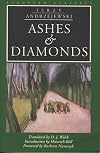
I love stories set on the cusp of something, or at a shift in the currents of history — that sense of "things are gonna change, I can feel it". The time right before or after the start of a war is one such setting, but novels about the outbreak of peace are less common. Ashes and Diamonds covers the days immediately before and after Germany's surrender in 1945, as they transpire in a mid-size town in southern Poland. Turns out, the end of the war is yesterday's news. Everyone's known it show more was over for a while; what concerns people now is how the future under Soviet influence will pan out. Party-loyal communists contend with a partisan resistance and with disillusioned leftists wary of Stalin, while the aristocracy prepares to bug out for England or America and everyone mourns their dead loved ones and tries to pick up the pieces of their lives and/or take advantage of the post-war power vacuum.
Another thing I love is extended, riotous, multifaceted dinner party or social gathering scenes, and Ashes and Diamonds has one of those at its heart. The Communist Party party at the Metropole takes up maybe 1/3 of the book, but I'd have happily spent longer at it, roaming from one end of the banqueting table to the other and out into the hotel lounge and restaurant, the lavatories, the kitchen, guided by Andrzjewski's restless, cinematic way of seeing. There's one sequence that reads like a consummate dolly shot as we follow the maître d' around the hotel, eavesdropping on small-scale comedies and tragedies as we go. For a 240-page novel, Ashes and Diamonds has a copious cast, but none of them are superfluous to the book's examination of societal PTSD and the diversity of desperate, creative individual responses to it. There's vodka of course, and scheming and gossip, but also private agonies like the guilt of doormat-turned-camp-orderly Kossecki, whose argument that peacetime wipes clean all the depravities of war is uncomfortably convincing. There's love — the post-coital conversation between the assassin Chelmnicki and the hotel barmaid, while Chelmnicki's soon-t0-be-victim bumps around in the room next door. And there's drunken Polish merrymaking, in the form of the crazed Polonaise put on impromptu at the end of the evening, in which the unlikeliest partners take to the floor in a parade of antipathies. But for me the most disturbing of the book's many plots is the conspiracy of children, the war kids taking to cold-blooded banditry and murder while their parents fuss about ideology and morality. show less
Another thing I love is extended, riotous, multifaceted dinner party or social gathering scenes, and Ashes and Diamonds has one of those at its heart. The Communist Party party at the Metropole takes up maybe 1/3 of the book, but I'd have happily spent longer at it, roaming from one end of the banqueting table to the other and out into the hotel lounge and restaurant, the lavatories, the kitchen, guided by Andrzjewski's restless, cinematic way of seeing. There's one sequence that reads like a consummate dolly shot as we follow the maître d' around the hotel, eavesdropping on small-scale comedies and tragedies as we go. For a 240-page novel, Ashes and Diamonds has a copious cast, but none of them are superfluous to the book's examination of societal PTSD and the diversity of desperate, creative individual responses to it. There's vodka of course, and scheming and gossip, but also private agonies like the guilt of doormat-turned-camp-orderly Kossecki, whose argument that peacetime wipes clean all the depravities of war is uncomfortably convincing. There's love — the post-coital conversation between the assassin Chelmnicki and the hotel barmaid, while Chelmnicki's soon-t0-be-victim bumps around in the room next door. And there's drunken Polish merrymaking, in the form of the crazed Polonaise put on impromptu at the end of the evening, in which the unlikeliest partners take to the floor in a parade of antipathies. But for me the most disturbing of the book's many plots is the conspiracy of children, the war kids taking to cold-blooded banditry and murder while their parents fuss about ideology and morality. show less
This was a very interesting look at Poland in the last days of WWII. Present are people to represent many of the different factions that have emerged from the war. There are those who want an independent Poland, those who are Communist and don't fear the Russian model (and perhaps occupation), those who are young nihilists who only know terror, and those too damaged by the war to care anymore.
The book deals with the nonsensical killing that is still happening. There is an accidental murder show more of the wrong people, the murder of a young man by his friends when he refuses to give them money towards their terrorist causes, and the assassination of a prominent Communist. All this murder in the last days of a war that already killed so many - it's dark and horrifying. Some of the characters realize it and some just don't know any other way to live anymore. I think the group of young people who grew into young adulthood during the war are the most hopeless case. It's sad to see them not knowing how to act besides as terrorists, but I think Andrzejewski's point is that it's a side effect of growing up during a war full of atrocities. Another important character was the man who was in a concentration camp and survives by becoming an orderly and beating the other prisoners. He justifies his actions by saying that acting one way in war to survive does not mean you'll still be a bad person when circumstances are different. It's a disturbing thing to think about.
The book has a lot of characters and is somewhat chaotic, reflecting the times, but I found it a great read. It opened up a lot of thoughts about what happens in a country that has been ravaged by war in the end days of the war. There wasn't any relief or happiness here as you might expect. It was all confusion and more killing and people so damaged they don't even know how to move on and don't trust that there is anything to move on to. For all that, it isn't a relentlessly depressing book to read. Andrzejewski tells his story in a matter-of-fact way and has some beautifully phrased sentiments - I found it thoughtful and enlightening. show less
The book deals with the nonsensical killing that is still happening. There is an accidental murder show more of the wrong people, the murder of a young man by his friends when he refuses to give them money towards their terrorist causes, and the assassination of a prominent Communist. All this murder in the last days of a war that already killed so many - it's dark and horrifying. Some of the characters realize it and some just don't know any other way to live anymore. I think the group of young people who grew into young adulthood during the war are the most hopeless case. It's sad to see them not knowing how to act besides as terrorists, but I think Andrzejewski's point is that it's a side effect of growing up during a war full of atrocities. Another important character was the man who was in a concentration camp and survives by becoming an orderly and beating the other prisoners. He justifies his actions by saying that acting one way in war to survive does not mean you'll still be a bad person when circumstances are different. It's a disturbing thing to think about.
The book has a lot of characters and is somewhat chaotic, reflecting the times, but I found it a great read. It opened up a lot of thoughts about what happens in a country that has been ravaged by war in the end days of the war. There wasn't any relief or happiness here as you might expect. It was all confusion and more killing and people so damaged they don't even know how to move on and don't trust that there is anything to move on to. For all that, it isn't a relentlessly depressing book to read. Andrzejewski tells his story in a matter-of-fact way and has some beautifully phrased sentiments - I found it thoughtful and enlightening. show less
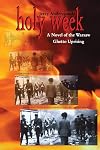
This is a beautifully structured story, put together in the manner of Steinbeck, each part sliding smoothly into the next. It's very short, but packs a lot of action into its 120-odd pages. I also believe it's one of the more realistic novels I've read about the Holocaust. The author doesn't try to make a hero out of anyone, not even the Jewish woman whose plight drives the plot. None of the characters here -- Jews, Poles, Germans -- come off well. They are all selfish even when they try not show more to be. Irena is bitter and abrasive, and Jan is weak. But I think that's how people would really be in wartime, in an overcrowded city occupied by a foreign power, where you have a hard time of it even getting enough to eat.
I would recommend this book to anyone interested in the Holocaust. In fact, I would probably put it on my top ten list of Holocaust novels. It's short as I said, and written simply, so a novice would not be intimidated by it. I also think it could be very easily adapted for the stage -- in fact, I ended up writing a short play based on the story. show less
I would recommend this book to anyone interested in the Holocaust. In fact, I would probably put it on my top ten list of Holocaust novels. It's short as I said, and written simply, so a novice would not be intimidated by it. I also think it could be very easily adapted for the stage -- in fact, I ended up writing a short play based on the story. show less
A better title for this book might be “Ashes and Ashes”, but although it is rather depressing, it is also an impressive, excellent read. It is all the more impressive that the book was published in 1948, and although there is a lot that goes unspoken (the actions of the Polish partisans and the uneasy relations with the Soviet Union are mentioned in sideways fashion), it is not difficult to see the start of the conflicts and changes that would affect Poland for the next several decades. show more The book takes places over the course of a few days before and after the end of World War II in the Polish town of Ostrowiec. Unlike, say, the U.S., where the end of WWII meant celebrations, a return to normalcy and triumph over Nazis, Poland after the war was devastated. 25% of the population had been killed, they had been overrun by both the Nazis and Soviets, some of the most notorious concentration camps were located on Polish soil, and the Soviet encroachment was already becoming apparent.
The author follows several related and intersecting characters. There’s an assassination plot, a murder, plotting by various radical groups, political machinations and infighting, and a Communist meeting at the local hotel where many of the characters come to talk, drink and party hedonistically. Andrzejewski portrays his characters sympathetically – at least at first. Gradually, some of their backstories become clearer, and many are shown to be morally gray, compromised, scarily sociopathic, naïve or going down a dangerous path. As many are related, the reader knows why certain characters are acting in puzzling ways which baffle their friends and family. For example, the Kossecki family has reunited after the privations of the war, but they are all in their own isolated misery. Mrs. Kossecki had to hold down their home during the war and longs for their contented, successful pre-war life. She doesn’t understand her husband, newly returned from the camps, or her two sons, Alek and Andrew, who are both radicalized in different ways. Michael Chelmicki, a recent arrival, is taking on an assignment for his shadowy group, but over the course of a couple days finds himself at odds with his friends. Szczuka, a loyal Communist in town for the meeting, can’t communicate with his in-laws, members of the local aristocracy who are carrying on as though it were the pre-war days, and realizes there is an unbridgeable gap between him and his old friend, an upright Socialist.
Besides the inevitably depressing subject matter (murders, people dead or returning from concentration camps), the grey, defeated atmosphere of the book is rather depressing. There’s a sense of emptiness and loss – they sacrificed and lost so much for a present that feels hollow and hopeless. The partisans and radical groups now have no clear goal. Regaining things that they lost seems like an insurmountable task to many of the characters. Those who seem the least affected are the wealthy who have a strong streak of denial, and some selfish, ruthless characters who see the loss of many structures as an opportunity for themselves. Even when the end of the war is announced, the population can barely be bothered to note it – it is just another day and they still have to struggle to survive. It doesn’t help knowing what will happen in the future. (Andrzejewski portrays several of the Communists sympathetically – although others are scheming and selfish – but the introduction notes that the pre-war purges would have likely selected for the scheming and selfish.)
The two introductions in my copy, by Northwestern University Press, were very helpful. They also add in a couple excised passages. However, the names remain anglicized – for example, Maciek is changed to Michael, which was a bit annoying. show less
The author follows several related and intersecting characters. There’s an assassination plot, a murder, plotting by various radical groups, political machinations and infighting, and a Communist meeting at the local hotel where many of the characters come to talk, drink and party hedonistically. Andrzejewski portrays his characters sympathetically – at least at first. Gradually, some of their backstories become clearer, and many are shown to be morally gray, compromised, scarily sociopathic, naïve or going down a dangerous path. As many are related, the reader knows why certain characters are acting in puzzling ways which baffle their friends and family. For example, the Kossecki family has reunited after the privations of the war, but they are all in their own isolated misery. Mrs. Kossecki had to hold down their home during the war and longs for their contented, successful pre-war life. She doesn’t understand her husband, newly returned from the camps, or her two sons, Alek and Andrew, who are both radicalized in different ways. Michael Chelmicki, a recent arrival, is taking on an assignment for his shadowy group, but over the course of a couple days finds himself at odds with his friends. Szczuka, a loyal Communist in town for the meeting, can’t communicate with his in-laws, members of the local aristocracy who are carrying on as though it were the pre-war days, and realizes there is an unbridgeable gap between him and his old friend, an upright Socialist.
Besides the inevitably depressing subject matter (murders, people dead or returning from concentration camps), the grey, defeated atmosphere of the book is rather depressing. There’s a sense of emptiness and loss – they sacrificed and lost so much for a present that feels hollow and hopeless. The partisans and radical groups now have no clear goal. Regaining things that they lost seems like an insurmountable task to many of the characters. Those who seem the least affected are the wealthy who have a strong streak of denial, and some selfish, ruthless characters who see the loss of many structures as an opportunity for themselves. Even when the end of the war is announced, the population can barely be bothered to note it – it is just another day and they still have to struggle to survive. It doesn’t help knowing what will happen in the future. (Andrzejewski portrays several of the Communists sympathetically – although others are scheming and selfish – but the introduction notes that the pre-war purges would have likely selected for the scheming and selfish.)
The two introductions in my copy, by Northwestern University Press, were very helpful. They also add in a couple excised passages. However, the names remain anglicized – for example, Maciek is changed to Michael, which was a bit annoying. show less
Lists
Awards


You May Also Like


Associated Authors
Statistics
- Works
- 45
- Also by
- 1
- Members
- 748
- Popularity
- #33,982
- Rating
- 3.7
- Reviews
- 16
- ISBNs
- 96
- Languages
- 12
- Favorited
- 4