
Thomas Buergenthal (1934–2023)
Author of A Lucky Child: A Memoir of Surviving Auschwitz as a Young Boy
About the Author
Image credit: Courtesy of Allen & Unwin.
Works by Thomas Buergenthal
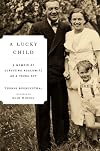
A Lucky Child: A Memoir of Surviving Auschwitz as a Young Boy {expanded edition} (2015) 162 copies, 2 reviews
Contemporary issues in international law : essays in honor of Louis B. Sohn (1984) — Editor — 1 copy
Tagged
Common Knowledge
- Birthdate
- 1934-05-11
- Date of death
- 2023-05-29
- Gender
- male
- Education
- Bethany College
New York University Law School
Harvard Law School - Occupations
- lawyer
law school professor
jurist
Holocaust survivor
memoirist - Organizations
- International Court of Justice
George Washington University Law School - Awards and honors
- Gruber Prize for Justice (2008)
Order of Merit of the Federal Republic of Germany (Grand Cross, 2016) - Short biography
- Thomas Buergenthal er dommer i Den internasjonale domstolen i Haag og en av verdens fremste internasjonale jurister og menneskerettsforkjempere.
Thomas Buergenthal er født i 1934 i den slovakiske landsbyen Lubochna. Etter krigen studerte han jus ved New York University og Harvard, der han spesialiserte seg på internasjonal rett og menneskerettigheter. Han har vært professor ved en rekke velrenommerte universiteter, han har hatt en rekke høye akademiske verv og mottatt mange priser. Fra 1979 til 1991 var han dommer i den Inter-amerikanske domstolen for menneskerettigheter i Costa Rica. Fra 1992 til 1993 var han medlem av FNs sannhetskommisjon for El Salvador. Mellom 1995 og 1999 satt han i FNs menneskerettighetskomite. Fra år 2000 er han dommer i Den internasjonale domstolen i Haag. Han har skrevet en rekke bøker og artikler om internasjonal rett og menneskerettigheter.
Thomas Buergenthal was born to a German Jewish family that had moved to Lubochna, Czechoslovakia to try to escape the Nazi regime in Germany. His parents were Gerda (Silbergleit) and Mundek Buergenthal, a lawyer-banker. In 1938, Slovak soldiers who sided with Hitler took over the family's small hotel and the Buergenthals fled to the nearby city of Zilina, where they stayed until Thomas was five years old. Then his father took them across the border into Poland. On September 1, 1939, they boarded a train heading for a boat they hoped would take them to England. But that day, the German Army invaded Poland, and their train was bombed. Joining other refugees, they walked north to Kielce, Poland. Buergenthal spent his childhood in the Kielce Ghetto and in the Nazi concentration camps at Auschwitz and Sachsenhausen. With the help of a few adults, he survived to be liberated by the Red Army in 1945. His father and grandparents died in the Holocaust. After the war, he was smuggled out of eastern Europe to Germany, where he was reunited with his mother. In 1952, at age 17, he went to the USA and studied law at New York University and Harvard University, specializing in international law and human rights. He became a professor of law at a number of prestigious universities, the dean of Washington College of Law at American University, and one of the world's foremost international lawyers and defenders of human rights. From 1979 to 1991, he was a judge of the Inter-American Human Rights Court in Costa Rica. From 1992 to 1993, he was a member of the United Nations Truth Commission for El Salvador. Between 1995 and 1999, he was on the U.N. Human Rights Committee. From 2000 to 2010, he served a judge in the International Court of Justice in The Hague. He wrote a number of foundational books and articles on international law and human rights. His memoir, A Lucky Child: A Memoir of Surviving Auschwitz as a Young Boy, was published in 2009. - Nationality
- Czechoslovakia
Slovakia - Birthplace
- Ľubochňa, Czechoslovakia
- Places of residence
- Kielce, Poland
Lubochna, Slovakia
Members
Reviews
This memoir was a gripping read. The story of Buergenthal's survival, against all odds, in the Nazi death camps, is told in a measured tone. Mr. Buergenthal waited many years to write his story because he wanted to distance himself from the painful events he describes. The distance that he achieves helps his narrative in the sense that we receive it intellectually rather than emotionally. To perceive the events of the Nazi era without drama is to perceive anew the horrors that were show more perpetrated in that time. I was especially moved by Mr. Buergenthal's realization that his survival was entirely due to luck. Although his parents prepared him to take advantage of any opportunities to survive that came his way, luck was the determining factor time and again in the story of his survival. His experiences as a child during the war determined his future career and Mr. Buergenthal devoted his career to the protection of human rights. He takes the opportunity in his book to remind the reader that human rights violations still occur, despite the many lessons our society has had, and that we all need to be vigilant on behalf of the rights of human beings everywhere. I highly recommend this book. show less
 This review was written for LibraryThing Early Reviewers.
I have read many memoirs of Jews who survived the Holocaust, but this one stands out in my mind, although I can't quite put my finger on why. It may be his extreme youth and the extraordinary fact of his having survived Auschwitz at the age of ten, even after losing the protective presence of both parents. It may be the unusual fate of the boy after his release from the camps: becoming a mascot of the Polish army and the miracle of being reunited with a family member thought perished. Or show more maybe it is simply the tone of the book, measured, thoughful, and reflective on the events that shaped his illustrious career as an international human rights judge. I think perhaps it may simply be the innocent joy and beauty present in the face of the little boy captured in photos with his parents that are included in the book. If this epitome of youthful exuberance and simple childish joy can be treated so callously and cruelly, with casual disdain, than how can we hope to avert less obvious evil?
"They have forced me to reflect on what it is that allows or compels human beings to commit such cruel and brutal crimes. It frightens me terribly that the individuals committing these acts are for the most part not sadists, but ordinary people who go home in the evening to their families, washing their hands before sitting down to dinner, as if what they had been doing was just a job like any other. If we humans can so easily wash the blood of our fellow humans off our hands, then what hope is there for sparing future generations from a repeat of th genocides and mass killings of the past?" show less
"They have forced me to reflect on what it is that allows or compels human beings to commit such cruel and brutal crimes. It frightens me terribly that the individuals committing these acts are for the most part not sadists, but ordinary people who go home in the evening to their families, washing their hands before sitting down to dinner, as if what they had been doing was just a job like any other. If we humans can so easily wash the blood of our fellow humans off our hands, then what hope is there for sparing future generations from a repeat of th genocides and mass killings of the past?" show less
This review was written for LibraryThing Early Reviewers.Thomas Buergenthal’s dispassionate memoir A Lucky Child is not just the story of concentration camps and hunger, the death march and frost-bitten toes later amputated, but also the story of learning to ride a bicycle, sneaking a drink of milk, and friends such as Michael, Janek and Odd Nansen. Buergenthal recounts two experiences in a train station in Berlin: a woman exclaiming “It stinks again of Jews” and a SS guard who shared a warm drink of coffee. He ponders the hatred of one and show more the compassion of the other and draws the conclusion that generalizations do not help us understand or explain the Holocaust or any of the other genocides or mass murders of more recent times. Now a judge at the International Court of Justice in The Hague, Buergenthal determined that the past would not have destructive but rather an inspirational effect on his life. A Lucky Child is an exceptional book, written with simplicity and clarity. show less
This review was written for LibraryThing Early Reviewers.This is a Holocaust memoir with a different twist. The author is now the American judge at the International Court of Justice (aka the World Court of the United Nations) in The Hague, Netherlands. He writes about the events in the book 55-60 years after they happened, looking back at his life at ages 4 to 17. The passage of time, and what Buergenthal did with his life in the interim, gives the memoir a perspective that is unique in Holocaust literature.
Thomas Buergenthal writes of the time show more his Jewish family spent in then-Czechoslovakia and Poland trying to stay ahead of the Nazis in late 1938 – early 1939. They finally received hard-to-get visas to travel to England – the day Hitler invades Poland. They wind up in the Jewish ghetto in Kielce and later in a couple labor camps. His Polish father and German mother—and Thomas--often use their wits to escape dangerous situations.
In July 1944, when Thomas is ten, his family is sent to Auschwitz. It was unusual for children not to be killed immediately upon arrival there, but as Thomas arrives with others from the labor camp, it is assumed he can work. He and his father are separated from his mother upon arrival, and Thomas from his father a few months later. Thomas survives the Auschwitz Death Transport, marching for three days in freezing temperatures 70 kilometers, where he was herded into an open train car for the ride to the Sachsenhausen concentration camp in Germany. Thomas again survives until the liberation, becomes a mascot of the Polish Army, spends some time in a Polish orphanage, and is finally reunited with his mother in Germany 18 months after the end of the war. The story ends with Thomas emigrating to the United States at the age of 17.
The book is enhanced by a two-page map showing all the locations in the story, as well as numerous black-and-white photographs of the author, his parents, and his maternal grandparents (who also died in the Holocaust), and other memorabilia. That the photographs even exist is an example of individual humanity given in the book. Thomas’ grandparents left a suitcase with a neighbor in Germany when they were deported. “’We were always afraid that the Nazis would find it and punish us, but we promised your parents we’d hide it, and we did.’” For Thomas’ mother, this suitcase was “a treasure trove. All her family pictures, including photos of her parents, my father, and me, had been lost in the camps. Erased with the destruction of these pictures, it seemed to her, was proof that her family had ever existed.” (page 156)
By looking back at these events from so many years later, Buergenthal is able both to describe them dispassionately, through the filter of his life experiences, and tie his career and observations about human rights back to these events in his childhood. For this reason, I think this Holocaust memoir would be especially valuable for teens and young adults to read.
Also reviewed at Bookin' It. show less
Thomas Buergenthal writes of the time show more his Jewish family spent in then-Czechoslovakia and Poland trying to stay ahead of the Nazis in late 1938 – early 1939. They finally received hard-to-get visas to travel to England – the day Hitler invades Poland. They wind up in the Jewish ghetto in Kielce and later in a couple labor camps. His Polish father and German mother—and Thomas--often use their wits to escape dangerous situations.
In July 1944, when Thomas is ten, his family is sent to Auschwitz. It was unusual for children not to be killed immediately upon arrival there, but as Thomas arrives with others from the labor camp, it is assumed he can work. He and his father are separated from his mother upon arrival, and Thomas from his father a few months later. Thomas survives the Auschwitz Death Transport, marching for three days in freezing temperatures 70 kilometers, where he was herded into an open train car for the ride to the Sachsenhausen concentration camp in Germany. Thomas again survives until the liberation, becomes a mascot of the Polish Army, spends some time in a Polish orphanage, and is finally reunited with his mother in Germany 18 months after the end of the war. The story ends with Thomas emigrating to the United States at the age of 17.
The book is enhanced by a two-page map showing all the locations in the story, as well as numerous black-and-white photographs of the author, his parents, and his maternal grandparents (who also died in the Holocaust), and other memorabilia. That the photographs even exist is an example of individual humanity given in the book. Thomas’ grandparents left a suitcase with a neighbor in Germany when they were deported. “’We were always afraid that the Nazis would find it and punish us, but we promised your parents we’d hide it, and we did.’” For Thomas’ mother, this suitcase was “a treasure trove. All her family pictures, including photos of her parents, my father, and me, had been lost in the camps. Erased with the destruction of these pictures, it seemed to her, was proof that her family had ever existed.” (page 156)
By looking back at these events from so many years later, Buergenthal is able both to describe them dispassionately, through the filter of his life experiences, and tie his career and observations about human rights back to these events in his childhood. For this reason, I think this Holocaust memoir would be especially valuable for teens and young adults to read.
Also reviewed at Bookin' It. show less
This review was written for LibraryThing Early Reviewers.Lists
Awards


You May Also Like


Associated Authors
Statistics
- Works
- 14
- Members
- 1,108
- Popularity
- #23,191
- Rating
- 4.1
- Reviews
- 44
- ISBNs
- 65
- Languages
- 7
- Favorited
- 1
