
Lionel Fanthorpe
Author of Secrets of Rennes le Chateau
About the Author
Image credit: author's website
Series
Works by Lionel Fanthorpe
The Oak Island Mystery: The Secret of the World's Greatest Treasure Hunt (1996) 38 copies, 2 reviews
Unsolved Mysteries Of The Sea - Eye-opening Exploration Of Lost Lands, Phantom Ships, And Denizens Of The Deep (2004) 38 copies
Doomed World 3 copies
Flame Mass 2 copies
Negative Minus 2 copies
Supernatural Stories No. 20 1 copy
The Devil from the Deep 1 copy
Graveyard Of THe Damned 1 copy
The Grip Of Fear 1 copy
Down the badger hole 1 copy
Supernatural Stories No. 89 1 copy
Spencer's Metric and Decimal Guidebook - A handbook of essential facts and information the metric system fully described and illustrated (1970) 1 copy, 1 review
Le manoir des tortures 1 copy
PHENOMENA X 1 copy
Neuron World 1 copy
Supernatural Stories No. 85 1 copy
THE IMMORTALS 1 copy
Force 97X 1 copy
Edge of eternity 1 copy
A Pattern of Pyramids 1 copy
I canali di Marte 1 copy
Associated Works
Tagged
Common Knowledge
- Legal name
- Fanthorpe, Robert Lionel
- Other names
- Fanthorpe, R. L.
Fanthorpe, R. Lionel - Birthdate
- 1935-02-09
- Gender
- male
- Occupations
- priest (Anglican)
- Organizations
- Mensa
- Relationships
- Fanthorpe, Patricia (wife)
- Nationality
- UK
- Places of residence
- Dereham, Norfolk, UK
Roath, Cardiff, South Wales, UK - Associated Place (for map)
- UK
Members
Reviews
Spencer's Metric and Decimal Guidebook - A handbook of essential facts and information the metric system fully described and illustrated by R. L Fanthorpe

Co-published by W.H. Farrar, and the Reverend Robert Lionel Fanthorpe. Yes, the same Reverend Robert Lionel Fanthorpe of Fortean TV, President of the British UFO Research Association and the Association for the Scientific Study of Anomalous Phenomena. As well as arguably the best worst Sci-Fi author of all time.
So, who you may wonder is 'Spencer'?
Well, that would simply be John Spencer & Co. (Publishers) Ltd. Mystery solved. No need for further supernatural investigation - sorry Lional. ;)
A show more more pertinent question should be: why would anyone be reading a handbook of essential facts and information on the metric system 47 years after it was introduced to the U.K. ?
Well, like many things that most people take for granted today, we stop questioning why something is or even why it exists because it becomes so much a part of everyday life that it seems to fade into the background and become invisible.
I was just old enough to remember decimalisation and grew up with the term New Pence. Practically, what this meant for me personally was brand new school books, as all the old ones with any reference to shillings and the old familiar imperial coinage were thrown out. I also inherited lots of 'real' coinage to play with as more and more stashes were discovered around the house, down the backs of sofas and in stick-pin jars after decimal day when they became worthless literally over night. Great news for pirate games!
Reading this book today (following yet another recent change in the currency of the U.K.), I re-discovered some interesting fact which I'd given virtually no thought to in all the time I'd been using the new decimal currency over the past forty years. For instance; the bronze coinage had a direct weight/value relationship: 2p is twice the weight of 1p and four times the weight of 1/2p. This kind of relationship was not applicable to pennies and halfpennies in the old £ s d coinage. The 5p and 10p cupro-nickel coins also had a weight/value relationship to each other. I think that, although the 50p did not have such a weight/value relationship to the round 5p and 10p that its heptagon shape was significant because by the time the 20p was introduced many years after this book was published it likely also had a weight/value relationship to it's heptagonal partner the 50p.
Practically. What this meant was that mixed lots of like coinage regardless of value could now be simply weighed instead of individually counted out. A big step towards automation without the need for dedicated or sophisticated counting machinery. You could count up bags of money at home on a set of good quality kitchen scales!
There are lots of other historical anecdotes on the history of British current going back to King Ine (688-726) who first coined the word 'penny'.
I also didn't know that not France, but in fact the United States was the first modern country to decimalise its currency in 1792, a year before France, and 72 years before the next group of nations Belgium, Italy and Switzerland changed over in 1865. By the end of the nineteenth century most European countries had adopted decimal systems; with another round of changes following World War II. The United Kingdom with all it's traditions and unique ways, lagging behind as usual and almost making it till the 21st century before finally conceding to pressure from the rest of the economic world.
It is as much a fascinating history book as it it a guide to the big D-day change over. But, if you were ever curious about the relationship between £, s, and d, this book explains clearly that too.
There is also information on how inches will be replaced by centimetres and miles to kilometres - LOL!
I guess England hasn't finished going through D-day quite yet; nor for that matter has the progressively advanced United States. Poor shame America - you were so close to showing the other nations up too! show less
So, who you may wonder is 'Spencer'?
Well, that would simply be John Spencer & Co. (Publishers) Ltd. Mystery solved. No need for further supernatural investigation - sorry Lional. ;)
A show more more pertinent question should be: why would anyone be reading a handbook of essential facts and information on the metric system 47 years after it was introduced to the U.K. ?
Well, like many things that most people take for granted today, we stop questioning why something is or even why it exists because it becomes so much a part of everyday life that it seems to fade into the background and become invisible.
I was just old enough to remember decimalisation and grew up with the term New Pence. Practically, what this meant for me personally was brand new school books, as all the old ones with any reference to shillings and the old familiar imperial coinage were thrown out. I also inherited lots of 'real' coinage to play with as more and more stashes were discovered around the house, down the backs of sofas and in stick-pin jars after decimal day when they became worthless literally over night. Great news for pirate games!
Reading this book today (following yet another recent change in the currency of the U.K.), I re-discovered some interesting fact which I'd given virtually no thought to in all the time I'd been using the new decimal currency over the past forty years. For instance; the bronze coinage had a direct weight/value relationship: 2p is twice the weight of 1p and four times the weight of 1/2p. This kind of relationship was not applicable to pennies and halfpennies in the old £ s d coinage. The 5p and 10p cupro-nickel coins also had a weight/value relationship to each other. I think that, although the 50p did not have such a weight/value relationship to the round 5p and 10p that its heptagon shape was significant because by the time the 20p was introduced many years after this book was published it likely also had a weight/value relationship to it's heptagonal partner the 50p.
Practically. What this meant was that mixed lots of like coinage regardless of value could now be simply weighed instead of individually counted out. A big step towards automation without the need for dedicated or sophisticated counting machinery. You could count up bags of money at home on a set of good quality kitchen scales!
There are lots of other historical anecdotes on the history of British current going back to King Ine (688-726) who first coined the word 'penny'.
I also didn't know that not France, but in fact the United States was the first modern country to decimalise its currency in 1792, a year before France, and 72 years before the next group of nations Belgium, Italy and Switzerland changed over in 1865. By the end of the nineteenth century most European countries had adopted decimal systems; with another round of changes following World War II. The United Kingdom with all it's traditions and unique ways, lagging behind as usual and almost making it till the 21st century before finally conceding to pressure from the rest of the economic world.
It is as much a fascinating history book as it it a guide to the big D-day change over. But, if you were ever curious about the relationship between £, s, and d, this book explains clearly that too.
There is also information on how inches will be replaced by centimetres and miles to kilometres - LOL!
I guess England hasn't finished going through D-day quite yet; nor for that matter has the progressively advanced United States. Poor shame America - you were so close to showing the other nations up too! show less
The Oak Island Mystery: The Secret of the World's Greatest Treasure Hunt (Mysteries and Secrets, 1) by Lionel Fanthorpe

Not bad. A good basic history of the work that has been done on the island and the main theories around the mystery. A bit short and would like a bit more detail but well written.
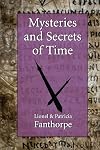
I bought the book since I thought it was a scientific approach, but it is a collection of paranormal and meta-physical experiences. Not bad, but to take with some salt...
A well written, detailed history of this enduring mystery, with FDR mentioned.
You May Also Like


Associated Authors
Statistics
- Works
- 64
- Also by
- 5
- Members
- 518
- Popularity
- #47,944
- Rating
- 3.8
- Reviews
- 4
- ISBNs
- 86
- Languages
- 5