
Rudi Fuchs
Author of Dutch Painting
About the Author
Series
Works by Rudi Fuchs
Flemish and Dutch Painting: From Van Gogh, Ensor, Magritte, Mondrian to Contemporary Artists (1997) 19 copies
Documenta 7. 2 3 copies
Walter Pichler : tekeningen : beelden : gebouwen : [tentoonstellingen], Stedelijk Museum Amsterdam, 22.februari-26. april 1998 (1998) 3 copies
Standing sculpture : [cat. exp., Castello di Rivoli, 17 dicembre 1987-30 aprile 1988] (1987) 3 copies
Things Which Happen Again 2 copies
Ellsworth Kelly : bloemlezing 2 copies
Auke De Vries - an Alphabet of Nature. Sculptures, Drawings, Public Works 1960-2011: sculptures, Drawings and Work in Public Space (2012) 2 copies, 1 review
David van de Kop 1 copy
Varianten: Abstrakt-Geometrische Kunst in Nederland (Variations: Abstract-Geometric Art in the Netherlands) (1973) 1 copy
Clara 1 copy
Bob Bonies 1 copy
Isa Genzken, Gerhard Richter 1 copy
Bert Hermens 1 copy
Associated Works
100 X Photo: 100 Photographs from the Collection of the Stedelijk Museum Amsterdam (1996) — Introduction — 22 copies, 1 review
Tagged
Common Knowledge
- Canonical name
- Fuchs, Rudi
- Legal name
- Fuchs, Rudolf Herman
- Birthdate
- 1942
- Gender
- male
- Occupations
- art historian
museum director - Organizations
- Stedelijk Museum Amsterdam
- Relationships
- Maaren, Nelleke van (wife)
- Nationality
- Netherlands
- Associated Place (for map)
- Netherlands
Members
Reviews
Archivos de una actitud - With a Probability of Being Seen. Dorothee and Konrad Fischer by Rudi Fuchs
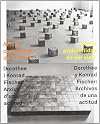
Spanish Edition
Konrad Fischer (1939–1996) wrote art history in 1967 with the gallery he opened in Düsseldorf, especially in promoting minimalist and conceptual art. Many artists who today have international standing were able to present their first ever solo exhibition or their European debut in his gallery at the time. This publication honors Konrad Fischer’s life achievements as a gallerist and curator and also as an artist. The unique collection that Konrad Fischer, together with show more his wife Dorothee, assembled is introduced here comprehensively for the first time, as well as works by Carl Andre, On Kawara, Richard Long, Sol LeWitt, Mario Merz, Bruce Nauman, Robert Ryman and Thomas Schütte.
With a Probability of Being Seen. Dorothee and Konrad Fischer: Archives of an Attitude focuses primarily on the personality of Konrad Fischer - as a painter, as an exhibition maker and as a gallery owner. The influence of this key figure in the development of contemporary art from the 1960s to the 1990s is presented in the exhibition in three ways: through his own works, through archived documents and through the works of his artists, which he collected together with his wife Dorothee. Numerous documents and photographs, shown in public for the first time, convey a richly faceted picture of Konrad Fischer's activities and a captivating panorama of this great period of contemporary art in the Rhineland. This collection, too, testifies to the consistent attitude that characterised Konrad Fischer, an attitude that cannot be readily explained or quantified in material terms. show less
Konrad Fischer (1939–1996) wrote art history in 1967 with the gallery he opened in Düsseldorf, especially in promoting minimalist and conceptual art. Many artists who today have international standing were able to present their first ever solo exhibition or their European debut in his gallery at the time. This publication honors Konrad Fischer’s life achievements as a gallerist and curator and also as an artist. The unique collection that Konrad Fischer, together with show more his wife Dorothee, assembled is introduced here comprehensively for the first time, as well as works by Carl Andre, On Kawara, Richard Long, Sol LeWitt, Mario Merz, Bruce Nauman, Robert Ryman and Thomas Schütte.
With a Probability of Being Seen. Dorothee and Konrad Fischer: Archives of an Attitude focuses primarily on the personality of Konrad Fischer - as a painter, as an exhibition maker and as a gallery owner. The influence of this key figure in the development of contemporary art from the 1960s to the 1990s is presented in the exhibition in three ways: through his own works, through archived documents and through the works of his artists, which he collected together with his wife Dorothee. Numerous documents and photographs, shown in public for the first time, convey a richly faceted picture of Konrad Fischer's activities and a captivating panorama of this great period of contemporary art in the Rhineland. This collection, too, testifies to the consistent attitude that characterised Konrad Fischer, an attitude that cannot be readily explained or quantified in material terms. show less

f there is one artist for whom life and art overlap, that is certainly Tracey Emin. For the last decade she has created a furore in often sensational ways with work in which an outspoken autobiographical element predominates.
This exhibition is a real test case, both for the artist and the Museum: is Emin's work "museal" enough? Is the Stedelijk, even though it is the first museum in the world to present a survey of her oeuvre, 'too late', or should it have waited until Emin became a 'modern show more classic'? Should artists like this be shown earlier in the new Stedelijk, or on the contrary, later? What is certain is that a wide public will have a chance to become acquainted with the work of this famous 'Young British Artist'.
The Stedelijk is continuing a tradition with this exhibition, which follows the acquisition of a neon work by Emin earlier this year. The Museum has frequently followed developments in British art, which often has a personal and frank character. For years now Gilbert & George, for instance, have been amply represented in the Stedelijk collection. Among the works added to the collection over the last decade were David Robilliard's painted cries from the heart, and recently also the strongly personally-coloured photography of Sam Taylor Wood. In the visual artists, Emin is one of the artists who has most strongly defined the image of this genre over the last decade. It began with her controversial performances in which, among other things, she had herself locked in naked in order to paint a series of works, straight from the heart. The installation which resulted from this, Exorcism of the Last Painting I ever made (1997), is included in this overview. Her youth and her explorations in the area of sex are amply present in various works, including the controversial installation Everyone I have ever slept with. The work includes the names of everyone with whom Emin ever shared a bed.
Emin's oeuvre cannot be seen apart from the course of her life. Personal events are processed into installations, performances, video works, textile text works, neons, prints, photographs and drawings. But Emin is also the artist who, together with her colleague Sarah Lucas, ran a shop for a long period in 1993 with self-made objects. Later she opened the Tracey Emin Museum, where, as well as being director and guard, she was also the only one to show. She shut it down when too many art academy classes came on tour, and it gradually was becoming too far outside "ordinary" life.
Emin's presence will be felt particularly in the eight video works being shown. Her text works, in the form of quilts and neons, will also be emphatically present. Intimate drawings with a personal signature betray her fascination for Munch and Schiele. show less
This exhibition is a real test case, both for the artist and the Museum: is Emin's work "museal" enough? Is the Stedelijk, even though it is the first museum in the world to present a survey of her oeuvre, 'too late', or should it have waited until Emin became a 'modern show more classic'? Should artists like this be shown earlier in the new Stedelijk, or on the contrary, later? What is certain is that a wide public will have a chance to become acquainted with the work of this famous 'Young British Artist'.
The Stedelijk is continuing a tradition with this exhibition, which follows the acquisition of a neon work by Emin earlier this year. The Museum has frequently followed developments in British art, which often has a personal and frank character. For years now Gilbert & George, for instance, have been amply represented in the Stedelijk collection. Among the works added to the collection over the last decade were David Robilliard's painted cries from the heart, and recently also the strongly personally-coloured photography of Sam Taylor Wood. In the visual artists, Emin is one of the artists who has most strongly defined the image of this genre over the last decade. It began with her controversial performances in which, among other things, she had herself locked in naked in order to paint a series of works, straight from the heart. The installation which resulted from this, Exorcism of the Last Painting I ever made (1997), is included in this overview. Her youth and her explorations in the area of sex are amply present in various works, including the controversial installation Everyone I have ever slept with. The work includes the names of everyone with whom Emin ever shared a bed.
Emin's oeuvre cannot be seen apart from the course of her life. Personal events are processed into installations, performances, video works, textile text works, neons, prints, photographs and drawings. But Emin is also the artist who, together with her colleague Sarah Lucas, ran a shop for a long period in 1993 with self-made objects. Later she opened the Tracey Emin Museum, where, as well as being director and guard, she was also the only one to show. She shut it down when too many art academy classes came on tour, and it gradually was becoming too far outside "ordinary" life.
Emin's presence will be felt particularly in the eight video works being shown. Her text works, in the form of quilts and neons, will also be emphatically present. Intimate drawings with a personal signature betray her fascination for Munch and Schiele. show less
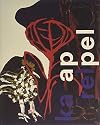
Karel Appel was unquestionably one of the most influential artists of the twentieth century, helping to define one of its chief features: "If I paint like a barbarian, it's because we live in a barbarous age," he once famously declared. This catalogue of an exhibition at the Stedelijk Museum shows that he was still going strong in the last decade of his life, presenting a selection of the artist's paintings, sculptures and works on paper from his final phase.
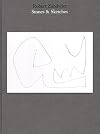
For the first time Dutch painter Robert Zandvliet presents a selection of drawings and sketches made as studies for his paintings. Besides numerous drawings, the book also offers a selection of paintings from recent decades, as well as a new series, Seven Stones. The drawings and older works give a clear indication of the path Zandvliet has followed since the 1990s in his search for pure form and composition through an uncompromising approach to his work. With Seven Stones, Zandvliet show more ventures into new territory where not only does he attempt to produce good paintings, but he also tries to fathom why specific forms have such a great impact on him personally. show less
You May Also Like


Associated Authors
Statistics
- Works
- 128
- Also by
- 8
- Members
- 704
- Popularity
- #35,973
- Rating
- 3.7
- Reviews
- 16
- ISBNs
- 96
- Languages
- 5