
Stephan Füssel
Author of Cities of the World
About the Author
Stephan Fussel occupies the Gutenberg Chair at Mainz University, and is Director of the Institute for Book Studies there.
Works by Stephan Füssel
St©Þdte der Welt Kupferstiche revolutionieren das Weltbild : 230 kolorierte Tafeln, 1572-1617 (2015) 5 copies
Gutenberg-Jahrbuch 87 (2012): Im Auftrag Der Gutenberg-Gesellschaft (German Edition) (2012) 5 copies
The Most Beautiful Bibles 4 copies
Gutenberg-Jahrbuch 86 (2011): Herausgegeben Von Stephan Fussel Im Auftrag Der Gutenberg-Gesellschaft (German Edition) (2011) 4 copies
Gutenberg-Jahrbuch 89 (2014): Im Auftrag der Gutenberg-Gesellschaft (Jahrbuch der Gutenberg-Gesellschaft, Band 89) (2014) 4 copies
Gutenberg-Jahrbuch 90 (2015): Im Auftrag der Gutenberg-Gesellschaft (Jahrbuch der Gutenberg-Gesellschaft, Band 90) (2015) 3 copies
Gutenberg-Jahrbuch 91 (2016): Im Auftrag der Gutenberg-Gesellschaft (Jahrbuch der Gutenberg-Gesellschaft, Band 91) (2016) 3 copies
Gutenberg-Jahrbuch 88 (2013): Im Auftrag der Gutenberg-Gesellschaft (Jahrbuch der Gutenberg-Gesellschaft, Band 88) (2013) 3 copies
Meilensteine buchwissenschaftlicher Forschung ein Reader zentraler Quellen und Materialien (2017) 2 copies
Ungeöffnete Königsgräber: Chancen und Nutzen von Verlagsarchiven (Mainzer Studien Zur Buchwissenschaft) (German Edition) (2013) 2 copies
Die Geschichte der Volksbibliothek Göttingen : 80 Jahre Stadtbibliothek Göttingen 1897-1977 (1977) 2 copies
Gutenberg-Jahrbuch (90) 2015 1 copy
Gutenberg-Jahrbuch 82 (2007) 1 copy
Gutenberg-Jahrbuch 79 (2004) 1 copy
Gutenberg-Jahrbuch 73 (1998) 1 copy
Associated Works
Tagged
Common Knowledge
- Canonical name
- Füssel, Stephan
- Birthdate
- 1952-03-24
- Gender
- male
- Education
- Georg-August University
University of Göttingen (Ph.D|1983)
University of Regensburg (hab. 1992) - Occupations
- Buchwissenschaftler
- Organizations
- Mainz University
Institut für Buchwissenschaft
International Gutenberg Society
Johannes Gutenberg University - Awards and honors
- Carl Sonnenschein Prize (1983)
- Nationality
- Germany
- Birthplace
- Hildesheim, Niedersachsen, Deutschland
- Associated Place (for map)
- Germany
Members
Discussions
OT: Letterpress printing a replica of the Gutenberg Bible...maybe in Fine Press Forum (November 2023)
Reviews

Note: this review contains spoilers for versions of Faust by this unknown author, Marlowe and Goethe. That's a lot of spoilers. Proceed at your own risk, as the devil would say.
Well, if I was going to make a deal with the devil, I would use it to nail Helen of Troy too. As far as as deals go, that seems reasonable.
This is much more readable than I thought it'd be. I expected a pretty lame, dry, preachy text. Shit's from like 1585, after all, and I'm a big fan of Marlowe's show more [b:retelling|27803|The Jew of Malta |Christopher Marlowe|http://d.gr-assets.com/books/1328865708s/27803.jpg|1918579] from 1604. I thought it'd be a tract. Instead, we start right off with some pretty great prose:-
It's dirty, too! There's a long stretch in the middle that reminds me of nothing so much as Boccaccio - just a series of bawdy stories. Marlowe repeats these in his version, but this author is more explicit than Marlowe or Shakespeare tended to get. I'm not sure it was influenced by the Decameron (1350), since the author appears not to have read Dante's [b:Inferno|15645|Inferno (The Divine Comedy, #1)|Dante Alighieri|http://d.gr-assets.com/books/1333579470s/15645.jpg|2377563] (1310) (or anyway, he didn't like it). But check this passage out, regarding a man who's married a woman who believes her husband, unfortunately living and a friend of Faust's, is dead:
Our author has clearly read [b:Lucretius,|195769|The Way Things Are The De Rerum Natura|Titus Lucretius Carus|http://d.gr-assets.com/books/1355909337s/195769.jpg|189338] anyway. He gets into the whole attacking Epicureans thing that (as I learned from The Swerve) was all the rage for a while: "He lived thus day in and day out like an Epicure - or like a sow." (BTW: his guesses about astronomy are not as good as Lucretius', but at least he gets that the sun is wicked big. Sup Giordano Bruno?)
I had been under the impression that the whole fall of Lucifer thing had been invented by Milton (1667), but apparently that's not true since the Faust author is tackling it almost 100 years previous. When did this pop up, anyone know?
There's also a distinct influence here on [b:The Merchant of Venice|24128|The Merchant of Venice|William Shakespeare|http://d.gr-assets.com/books/1327871054s/24128.jpg|2682703] Faust pranks a Jew, mentioning casually that "Jews are enemies to us Christians, anyhow" - although this episode has nowhere near the rabid anti-Semitism that [b:Jew of Malta|27803|The Jew of Malta |Christopher Marlowe|http://d.gr-assets.com/books/1328865708s/27803.jpg|1918579] does - and here's how that prank goes:
Anyway, many comic hijinks ensue - some featuring, bizarrely, Faust as what feels like a traveling moralist, as when he rewards the uncharitable peasant with a lesson and the scattering of wheels - that's kinda Jesus, ain't it? - and then Faust gets his comeuppance, which is great because in too many retellings of the Faust myth (fucking Goethe, man), Faust gets redemption at the last minute, and that ain't how that works in my ideal telling of this story. I like Faust to be a tragedy, like this:
Goethe's version of Faust is super crazy difficult, and I think it runs off the rails pretty significantly. And again, in the end of Goethe's vision Faust is saved, and that's just not as satisfying to me. Marlowe's version is still definitive in my eyes. (I prefer the shorter, punchier A text.) The plot is more or less the same, but the language is really something in Marlowe's.
But this is good, man. It's good reading. I'm down for it. show less
Well, if I was going to make a deal with the devil, I would use it to nail Helen of Troy too. As far as as deals go, that seems reasonable.
This is much more readable than I thought it'd be. I expected a pretty lame, dry, preachy text. Shit's from like 1585, after all, and I'm a big fan of Marlowe's show more [b:retelling|27803|The Jew of Malta |Christopher Marlowe|http://d.gr-assets.com/books/1328865708s/27803.jpg|1918579] from 1604. I thought it'd be a tract. Instead, we start right off with some pretty great prose:-
Why, if [the damned] could be given the hope of dipping water day by day from the sea at the sea shore until the sea were dry, then that would be a redemption. Or if there were a sandheap as high as Heaven from which a bird coming every other year might bear away but one little grain at a time, and they would be saved after the whole heap were consumed, then that would be a hope. But God will never take any thought of them. They will lie in Hell like unto the bones of the dead...There will come a time when the mountains will collapse, and when all the stones at the bottom of the sea are dry, and all the raindrops have washed the earth away. It is possible to conceive of an elephant or a camel entering into a needle's eye, or of counting all the raindrops. But there is no conceiving of a time for hope in Hell.That is some pretty fire-and-brimstone shit right there, man. Plus: [b:Phantom Tollbooth|378|The Phantom Tollbooth|Norton Juster|http://d.gr-assets.com/books/1320476717s/378.jpg|1782584] reference! Balls!
It's dirty, too! There's a long stretch in the middle that reminds me of nothing so much as Boccaccio - just a series of bawdy stories. Marlowe repeats these in his version, but this author is more explicit than Marlowe or Shakespeare tended to get. I'm not sure it was influenced by the Decameron (1350), since the author appears not to have read Dante's [b:Inferno|15645|Inferno (The Divine Comedy, #1)|Dante Alighieri|http://d.gr-assets.com/books/1333579470s/15645.jpg|2377563] (1310) (or anyway, he didn't like it). But check this passage out, regarding a man who's married a woman who believes her husband, unfortunately living and a friend of Faust's, is dead:
The hour of consummation arrived. The nobleman disrobed and went out to cast his water. It was then that Mephistophelis did use his art, for when the man came in and leapt into Sabina's arms to enjoy the fruits of love, when they hoisted their shirts and squeezed close together, it was all to no avail. The good lady, seeing that he did not want on and was hesitating, did reach out herself for the tool, wishing to help him, but she could achieve naught, and the night wore on in mere grasping, wriggling, and squeezing. This did cause the lady to grieve and to think on her previous husband whom she thought to be dead, for he had rightly known how to tousle her.That's some Boccaccio shit if I ever read it, man.
Our author has clearly read [b:Lucretius,|195769|The Way Things Are The De Rerum Natura|Titus Lucretius Carus|http://d.gr-assets.com/books/1355909337s/195769.jpg|189338] anyway. He gets into the whole attacking Epicureans thing that (as I learned from The Swerve) was all the rage for a while: "He lived thus day in and day out like an Epicure - or like a sow." (BTW: his guesses about astronomy are not as good as Lucretius', but at least he gets that the sun is wicked big. Sup Giordano Bruno?)
I had been under the impression that the whole fall of Lucifer thing had been invented by Milton (1667), but apparently that's not true since the Faust author is tackling it almost 100 years previous. When did this pop up, anyone know?
There's also a distinct influence here on [b:The Merchant of Venice|24128|The Merchant of Venice|William Shakespeare|http://d.gr-assets.com/books/1327871054s/24128.jpg|2682703] Faust pranks a Jew, mentioning casually that "Jews are enemies to us Christians, anyhow" - although this episode has nowhere near the rabid anti-Semitism that [b:Jew of Malta|27803|The Jew of Malta |Christopher Marlowe|http://d.gr-assets.com/books/1328865708s/27803.jpg|1918579] does - and here's how that prank goes:
Jew, I have no money. I can raise no money. But this I will do. From my body I will amputate a member, be it arm or leg, and give it to thee in pawn - but it must be returned so soon as I am in money again.The setting is different, but there's no way this isn't the birth of Shakespeare's pound of flesh.
Anyway, many comic hijinks ensue - some featuring, bizarrely, Faust as what feels like a traveling moralist, as when he rewards the uncharitable peasant with a lesson and the scattering of wheels - that's kinda Jesus, ain't it? - and then Faust gets his comeuppance, which is great because in too many retellings of the Faust myth (fucking Goethe, man), Faust gets redemption at the last minute, and that ain't how that works in my ideal telling of this story. I like Faust to be a tragedy, like this:
The parlor was full of blood. Brain clave unto the walls where the Fiend had dashed him from one to the other. Here lay his eyes. here a few teeth...When they came out to the dung heap, here they found his corpse. It was monstrous to behold, for head and limbs were still twitching.There's some proper gore, dude! Nice!
Goethe's version of Faust is super crazy difficult, and I think it runs off the rails pretty significantly. And again, in the end of Goethe's vision Faust is saved, and that's just not as satisfying to me. Marlowe's version is still definitive in my eyes. (I prefer the shorter, punchier A text.) The plot is more or less the same, but the language is really something in Marlowe's.
But this is good, man. It's good reading. I'm down for it. show less
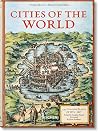
The title is not fair with the content, since mainly present images from cities of Europe/Germany. I was expecting more cities from other parts of the world. For the cities actually presented in the book, the reader can travel to the old ages, and it will be better, if the reader know the city as is today...
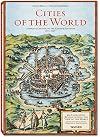
I have read about this book for many years, saw samples of what was in it in b/w, and the old version that I saw was too expensive for me at the time. When I saw a new version on Amazon I snapped it up. A Taschen book, glorious color, 2 page spreads, a historical treasure.

REENACTORS VIEWPOINT: 1534 for images, content is biblical Book #1 (repro): Wow...no wonder people freaked out when the presses opened in Germany. This book is beautiful, a complete photographic facsimilie of the original text. Book #2: Guide Book - does a wonderful job of an overview of the repro and it's origins
You May Also Like


Associated Authors
Statistics
- Works
- 75
- Also by
- 1
- Members
- 896
- Popularity
- #28,592
- Rating
- 4.4
- Reviews
- 8
- ISBNs
- 109
- Languages
- 7