
Beatrice Fontanel
Author of The Penguin (Animal Close-Ups)
About the Author
Image credit: Beatrice Fontanel
Works by Beatrice Fontanel
Musical Instruments: From Flutes Carved of Bone, to Lutes, to Modern Electric Guitars (1993) 164 copies
Le petit musée de Picasso (Albums documentaires - Les livres-coffrets) (French Edition) (2015) 3 copies
Viaggi nel tempo, romani 2 copies
La voix des masques (French Edition) 2 copies
A l'école arc-en-ciel 2 copies
Ciels - Collection Mini-Art 1 copy
Co wiesz o dinozaurach? 1 copy
Bouwkunst 1 copy
Tagged
Common Knowledge
- Canonical name
- Fontanel, Beatrice
- Legal name
- Fontanel, Béatrice
- Birthdate
- 1957-08-11
- Gender
- female
- Occupations
- Auteur
Journaliste - Short biography
- Béatrice Fontanel est iconographe et auteur de nombreux livres illustrés consacrés à la vie quotidienne, de plusieurs ouvrages de fiction et de recueils de poèmes.
Après des études de lettres, et une maîtrise sur l'écrivain argentin Julio Cortázar, elle devient journaliste à Bayard Presse.
Elle est l'auteur d'une centaine d'ouvrages destinés aux adultes et aux enfants, parmi lesquels: Mozart (2006), L'histoire de France dessinée, Mon copain Bogueugueu (Gallimard Jeunesse, 2006), La Parade des musiciens, Mathilde et les petits papiers (Actes Sud Junior, 2003), Ma première histoire de l'Art (Palette, 2009), Grand Corbeau (Sarbacane, 2007).
Elle a également publié deux recueils de poésie, La Ménagère cannibale (Seuil, 2003) et Éloge des nuages (La Martinière, 2005).
En 2009, elle obtient le prix du Premier roman du Doubs et le prix Jean d'Heurs du roman historique puis, en 2010, le prix Claude-Farrère de l'écrivain combattant, pour "L'Homme barbelé".
Elle vit aujourd'hui à Montparnasse. - Nationality
- France
- Birthplace
- Casablanca, Maroc
- Places of residence
- Montparnasse, Paris, France
- Map Location
- France
- Associated Place (for map)
- France
Members
Reviews
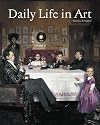
A fascinating combination of art history and sociology. Paintings can be an amazing visual documentary of human lives as they have been in various places and eras.

This book is rich in information. I was impressed by the way the author jumped onto both sides of the fence regaurding the very scandelous topic of body modification, giving facts with little opinion.
The illustrations were breathtaking and not overbearing. A lovely read.
The illustrations were breathtaking and not overbearing. A lovely read.

Fontanel describes the life of a penguin over the course of a year, from finding a mate to hatching chicks. She also addresses different kinds of penguins and how scientists have studied them at the end of the book.

From Kirkus Reviews
Don't let the title mislead you. This is not another gathering of cute baby photographs. It is instead a stunning visual survey of the ways in which babies in traditional cultures (in the Americas, Asia, and Africa, primarily) are fed, dressed, carried, and treated. Fontanel and d'Harcourt (who also collaborated on Babies: History, Art and Folklore, 1997) provide informed, sympathetic captions to extraordinary photographs depicting such things as babies being ritually show more massaged; wrapped in swaddling cloths; adorned with pigments and dressed in often brilliantly colored ritual clothes to bring good fortune; carried, in baskets, net bags, and slings, on backs and in the arms of siblings or parents; and fed. Several points are inescapable: in traditional cultures, babies go where their parents goto the fields, to market, on visits. They are present almost from birth in the essential routines of these cultures. And in more traditional cultures babies are more immediately and closely integrated into society, with a greater variety of family and friends assuming some responsibility for care and protection. The range of cultures depicted (from the Kayapo of the Amazon to nomads in Tibet) is wide, and the photographs sharp, brilliant, and fascinating. -- Copyright ©1998, Kirkus Associates, LP. All rights reserved. show less
Don't let the title mislead you. This is not another gathering of cute baby photographs. It is instead a stunning visual survey of the ways in which babies in traditional cultures (in the Americas, Asia, and Africa, primarily) are fed, dressed, carried, and treated. Fontanel and d'Harcourt (who also collaborated on Babies: History, Art and Folklore, 1997) provide informed, sympathetic captions to extraordinary photographs depicting such things as babies being ritually show more massaged; wrapped in swaddling cloths; adorned with pigments and dressed in often brilliantly colored ritual clothes to bring good fortune; carried, in baskets, net bags, and slings, on backs and in the arms of siblings or parents; and fed. Several points are inescapable: in traditional cultures, babies go where their parents goto the fields, to market, on visits. They are present almost from birth in the essential routines of these cultures. And in more traditional cultures babies are more immediately and closely integrated into society, with a greater variety of family and friends assuming some responsibility for care and protection. The range of cultures depicted (from the Kayapo of the Amazon to nomads in Tibet) is wide, and the photographs sharp, brilliant, and fascinating. -- Copyright ©1998, Kirkus Associates, LP. All rights reserved. show less
Awards


You May Also Like


Associated Authors
Statistics
- Works
- 91
- Members
- 1,140
- Popularity
- #22,523
- Rating
- 3.9
- Reviews
- 9
- ISBNs
- 139
- Languages
- 9