
Robert Gellately
Author of Lenin, Stalin, and Hitler: The Age of Social Catastrophe
About the Author
Works by Robert Gellately
Accusatory Practices: Denunciation in Modern European History, 1789-1989 (Studies in European History from the Journal of Modern History) (1997) — Editor — 17 copies, 1 review
Pal achter Hitler 1 copy
Hitler's True Believers 1 copy
Associated Works
Tagged
Common Knowledge
- Canonical name
- Gellately, Robert
- Other names
- Gellately, R.
- Birthdate
- 1943
- Gender
- male
- Education
- London School of Economics and Political Science (Ph.D)
Memorial University of Newfoundland (BA|B.Ed|MA) - Occupations
- professor
historian - Organizations
- Florida State University
Clark University
University of Western Ontario
Cornell University - Relationships
- Goldensohn, Leon (author)
- Nationality
- Canada
- Birthplace
- St. John's, Newfoundland, Canada
- Associated Place (for map)
- Newfoundland, Canada
Members
Reviews

This is a phenomenal book. Really gets into the social dynamics of why Germans thought the way they did and acquiesed to the things they did. National Socialism just tapped into the thinking that was already in the open. One of the highlights of this book was defining the "socialism" part of National Socialism. How it was very distinct from the Communist/Marxist usage of the term. In essence, it was Nationalism and Socialism (ie. catering to the needs of "Germans") and opposed strongly to show more universal brotherhood or general class consciousness. It was opposed to Jewish capitalism but not so much German capitalism. Actually, there is a ton of interesting material in this book. show less
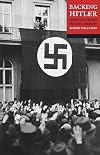
Germans welcomed Hitler’s ascension to power in January 1933 when the Great Depression was ravaging Germany. People lost money, jobs and, for those who suicided, their lives. The Weimar Republic, proclaimed in 1919, was borne out of revolution and wasn’t supported by most of the major political parties. The democratic government seemed powerless to stop the suffering. Gellately argues the promise of stability, harmony and prosperity fulfilled the yearning of many Germans.
The Nazis show more governed Germany through consensus and coercion. Germans knew their government was brutal – from the outset. Gellately’s intensive research of local, regional and national newspapers shows they reported the regime’s brutality, albeit in a positive light. Concentration camps were to rehabilitate hardened criminals by giving them a regime of discipline and work. The previous government was soft on crime but now criminals were off the streets.
Gellately draws on the diaries of Jew Victor Klemperer who wrote people looked the other way as authorities deprived Jews of rights and, ultimately, life.
Gellately is among the many historians who deems the Weimar Republic a failure. The argument’s flaw is millions of Germans voted for republican-supporting parties up to and including the last free election in November 1932. These were the same people whose lives were decimated by the economic crisis, yet they held true to the republic’s democratic and human rights ideals.
Backing Hitler is a comprehensive account of the lead-up to Hitler’s appointment as Chancellor of Germany and beyond. It’s easy to judge Germans for looking the other way but today it isn’t just fascist governments denying human rights and dispensing cruelty. Democratic governments also are administering similar policies of cruelty, exclusion and punishment of the innocent. Some of these countries were among the Allies during World War Two. show less
The Nazis show more governed Germany through consensus and coercion. Germans knew their government was brutal – from the outset. Gellately’s intensive research of local, regional and national newspapers shows they reported the regime’s brutality, albeit in a positive light. Concentration camps were to rehabilitate hardened criminals by giving them a regime of discipline and work. The previous government was soft on crime but now criminals were off the streets.
Gellately draws on the diaries of Jew Victor Klemperer who wrote people looked the other way as authorities deprived Jews of rights and, ultimately, life.
Gellately is among the many historians who deems the Weimar Republic a failure. The argument’s flaw is millions of Germans voted for republican-supporting parties up to and including the last free election in November 1932. These were the same people whose lives were decimated by the economic crisis, yet they held true to the republic’s democratic and human rights ideals.
Backing Hitler is a comprehensive account of the lead-up to Hitler’s appointment as Chancellor of Germany and beyond. It’s easy to judge Germans for looking the other way but today it isn’t just fascist governments denying human rights and dispensing cruelty. Democratic governments also are administering similar policies of cruelty, exclusion and punishment of the innocent. Some of these countries were among the Allies during World War Two. show less
This is an excellent, though small, collection of essays by historians about a fascinating topic: "denunciation." The editors define denunciation here as citizens or subjects providing spontaneous information to the state or another authority with the goal of having the state enact punishment on another person. This is a carefully-tailored definition that serves the editor's purposes well: it narrows the scope to a narrow range of activity that nonetheless varies significantly in terms of show more purpose and effect across at least the few European societies included.
This is also a nice way of using a specific topic as a prism to explore some general societal differences between tsarist Russia, Soviet Russia, Nazi Germany and communist Germany. (There are also essays on the French revolution and the Catholic Church which are unfortunately less interesting as points of comparison.)
The essays and methodologies vary from historian to historian, but all were illuminating. I only wish this topic were explored across more times and places -- Maoist China and McCartyism in the United States are obvious comparison points! show less
This is also a nice way of using a specific topic as a prism to explore some general societal differences between tsarist Russia, Soviet Russia, Nazi Germany and communist Germany. (There are also essays on the French revolution and the Catholic Church which are unfortunately less interesting as points of comparison.)
The essays and methodologies vary from historian to historian, but all were illuminating. I only wish this topic were explored across more times and places -- Maoist China and McCartyism in the United States are obvious comparison points! show less
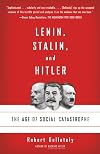
Knowing my strange fondness for reading about the USSR, my son gave me this book for Christmas (maybe he wants to borrow it now?). The book linked Leninism, Stalinism and Nazism in a way I have not seen it before. Rather than residing in my mind as disparate pieces of history, I saw how Nazi Germany and the newly formed USSR worked together until the initial attacks on Russia. It interested me to see how the enemies (USSR and Germany in WWII), worked together in exterminating the Jews. It show more was fascinating to see how philosophically closer to each other they were than I had previously thought: the racism (fascism) of the Nazis was not so far from the intolerance executed in the USSR by both Lenin and Stalin. It is the only book where I have found focused attention on the importance of Lenin, both his craft (state and otherwise) and his personal ideology. For history buffs, enjoyable! For me, highly enlightening and thought-provoking. show less
Lists
You May Also Like


Associated Authors
Statistics
- Works
- 14
- Also by
- 1
- Members
- 1,102
- Popularity
- #23,318
- Rating
- 3.8
- Reviews
- 17
- ISBNs
- 63
- Languages
- 9
- Favorited
- 1
