
P. G. W. Glare
Author of Oxford Latin Dictionary
About the Author
Works by P. G. W. Glare
Associated Works
Tagged
Common Knowledge
- Canonical name
- Glare, P. G. W.
- Legal name
- Glare, Peter Geoffrey William
- Birthdate
- 1924
- Gender
- male
- Education
- University of Cambridge (BA|1949; MA|1954)
- Occupations
- lexicographer
- Organizations
- St. Cross College, Oxford University
- Short biography
- "He joined the staff of the Oxford Latin Dictionary in 1950, and was Editor from 1955 until the completion of the work in 1982. Since then he has been engaged on a revised and enlarged Supplement to Liddell and Scott's Greek-English Lexicon."
- Nationality
- UK
- Associated Place (for map)
- UK
Members
Reviews
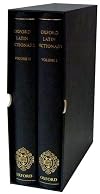
Is this the loveliest book of all time? Conceived in the 1870s, the OLD was finally commissioned in 1924 and commenced work in 1933. The final fascicle was not published until 1982. The OLD is controversial among some because of the decision to limit texts to those written before the year 200 (i.e. the Classical Latin era) but I think the line had to be drawn somewhere. As a work that covers around 40,000 words, from the most common to the hapax legomenon (words that only appear once in the show more surviving texts of a language), it's all here. A bulky volume that costs a heckuva lot, but if you love that Classicist in your life, what better? show less
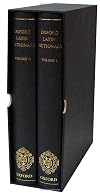
The Oxford Latin Dictionary 2nd Edition
A comprehensive Latin dictionary will never vary greatly in format since
the purpose of such a work remains the same. Yet there are many
features of the second edition of the Oxford Latin Dictionary which set it
apart from the rest.
The first is the detail of the information given about each Latin word. The
guide to the dictionary sets out clearly the components which are cited,
making this not only a thorough work for a Classicist but also accessible
for a show more non-Classicist. The principal parts of verbs are given in full,
including the second principal part which many other dictionaries choose
to omit. Adjectives are given in their positive, comparative and
superlative forms, something which is not found in other dictionaries
such as that of Lewis and Short.
The components of compound words are stated clearly in brackets after
the headword, rather than merely hyphenated as in other dictionaries,
and this will allow for greater ease of use and cross-referencing by those
interested in the origin of the word. The etymology from Greek words is
also clear and simple.
The revision of thousands of the English translations has also brought
Classical Latin up to date with the modern world in a less verbose
fashion. For example, the noun ‘decoctor’ is cited as meaning ‘an
insolvent person’ or ‘a defaulting debtor’. Reference to a much less
modern edition of a Latin dictionary cites this less concisely as ‘one who
has squandered his own or another’s property’!
The layout of citations for each word is far more user friendly than other
dictionaries, with the different senses and subsenses carefully separated
into distinct paragraphs. This enables the user to find a citation easily,
without the need to work through all the possible options laid out in a
single list.
The binding of the new edition in two volumes allows for much greater
ease of use. The print is large and clear, making it easy to examine the
citations from classical sources. Gone are the days of the Classicist
squinting over a dictionary to find a rarely used example from classical
literature.
One note of reservation is that The Oxford Latin Dictionary has chosen
to follow the more current use of writing the letter ‘v’ in Latin words as a
‘u’. This is generally common practice in the modern day and will be
familiar to any Classicist. However, for a non-Classicist using the OLD
for quick reference, it may not be immediately clear when a ‘u’ should be
read as such or should be taken as a ‘v’, and this is not stated in the
‘Conventions Used in the Text’ (page xxxiii – xxxiv). Yet in the indication
of components of compound words in brackets, where capital letters are
used, the ‘u’ is always stated as ‘V’.
This point aside, the 2nd edition of the Oxford Latin Dictionary should
certainly be regarded as the essential tool for anyone interested in the
advanced study of Latin, whether language or literature, and would
undoubtedly be the clearest, most comprehensive and accessible Latin
dictionary for academic, research and reference libraries.
Judith Morton
Head of Classics
Moreton Hall School show less
A comprehensive Latin dictionary will never vary greatly in format since
the purpose of such a work remains the same. Yet there are many
features of the second edition of the Oxford Latin Dictionary which set it
apart from the rest.
The first is the detail of the information given about each Latin word. The
guide to the dictionary sets out clearly the components which are cited,
making this not only a thorough work for a Classicist but also accessible
for a show more non-Classicist. The principal parts of verbs are given in full,
including the second principal part which many other dictionaries choose
to omit. Adjectives are given in their positive, comparative and
superlative forms, something which is not found in other dictionaries
such as that of Lewis and Short.
The components of compound words are stated clearly in brackets after
the headword, rather than merely hyphenated as in other dictionaries,
and this will allow for greater ease of use and cross-referencing by those
interested in the origin of the word. The etymology from Greek words is
also clear and simple.
The revision of thousands of the English translations has also brought
Classical Latin up to date with the modern world in a less verbose
fashion. For example, the noun ‘decoctor’ is cited as meaning ‘an
insolvent person’ or ‘a defaulting debtor’. Reference to a much less
modern edition of a Latin dictionary cites this less concisely as ‘one who
has squandered his own or another’s property’!
The layout of citations for each word is far more user friendly than other
dictionaries, with the different senses and subsenses carefully separated
into distinct paragraphs. This enables the user to find a citation easily,
without the need to work through all the possible options laid out in a
single list.
The binding of the new edition in two volumes allows for much greater
ease of use. The print is large and clear, making it easy to examine the
citations from classical sources. Gone are the days of the Classicist
squinting over a dictionary to find a rarely used example from classical
literature.
One note of reservation is that The Oxford Latin Dictionary has chosen
to follow the more current use of writing the letter ‘v’ in Latin words as a
‘u’. This is generally common practice in the modern day and will be
familiar to any Classicist. However, for a non-Classicist using the OLD
for quick reference, it may not be immediately clear when a ‘u’ should be
read as such or should be taken as a ‘v’, and this is not stated in the
‘Conventions Used in the Text’ (page xxxiii – xxxiv). Yet in the indication
of components of compound words in brackets, where capital letters are
used, the ‘u’ is always stated as ‘V’.
This point aside, the 2nd edition of the Oxford Latin Dictionary should
certainly be regarded as the essential tool for anyone interested in the
advanced study of Latin, whether language or literature, and would
undoubtedly be the clearest, most comprehensive and accessible Latin
dictionary for academic, research and reference libraries.
Judith Morton
Head of Classics
Moreton Hall School show less
A first-class reference that every Latinist should have on the shelf.
Follows the Oxford English Dictionary layout. Does not contain a compilation of Mottoes and Phrases.
You May Also Like


Associated Authors
Statistics
- Works
- 4
- Also by
- 1
- Members
- 454
- Popularity
- #54,063
- Rating
- 4.8
- Reviews
- 12
- ISBNs
- 9
- Languages
- 2