

Theodora Goss
Author of The Strange Case of the Alchemist's Daughter
About the Author
Series
Works by Theodora Goss
Voices from Fairyland: The Fantastical Poems of Mary Coleridge, Charlotte Mew, and Sylvia Townsend Warner (2008) — Editor; Contributor — 12 copies
England under the White Witch 4 copies
Singing of Mount Abora 4 copies
Fair Ladies 3 copies
Pip and the Fairies [short story] 3 copies
The Rapid Advance of Sorrow 3 copies
Pug 3 copies
Tails of Wonder 3 copies
Child-Empress of Mars 3 copies
The Puma 2 copies
The Wings of Meister Wilhelm 2 copies
Simyacının Kızının Tuhaf Hikayesi 2 copies
Theodora Goss (Works) 1 copy
Lily, with Clouds 1 copy
A Statement In The Case 1 copy
How to become a sea witch 1 copy
Sleeping With Bears 1 copy
Her Mother's Ghosts 1 copy
Lessons with Miss Gray 1 copy
Csilla's Story 1 copy
Woola’s Song 1 copy
Christopher Raven 1 copy
Miss Emily Gray 1 copy
Catherine And The Satyr 1 copy
Associated Works
The Mad Scientist's Guide to World Domination: Original Short Fiction for the Modern Evil Genius (2013) — Contributor — 433 copies, 22 reviews
Queen Victoria's Book of Spells: An Anthology of Gaslamp Fantasy (2013) — Contributor — 399 copies, 18 reviews
The Year's Best Fantasy & Horror 2006: 19th Annual Collection (2006) — Contributor — 244 copies, 4 reviews
The Year's Best Fantasy and Horror: Seventeenth Annual Collection (2004) — Contributor — 241 copies, 9 reviews
The Year's Best Fantasy and Horror: Sixteenth Annual Collection (2003) — Contributor — 240 copies, 2 reviews
The Year's Best Fantasy and Horror: Eighteenth Annual Collection (2005) — Contributor — 231 copies, 5 reviews
Ghosts by Gaslight: Stories of Steampunk and Supernatural Suspense (2011) — Contributor — 220 copies, 8 reviews
The Best Science Fiction and Fantasy of the Year, Volume 2 (2008) — Contributor — 177 copies, 4 reviews
Oz Reimagined: New Tales from the Emerald City and Beyond (2013) — Contributor — 166 copies, 12 reviews
The Best Science Fiction and Fantasy of the Year, Volume 5 (2011) — Contributor — 165 copies, 4 reviews
The Best Science Fiction and Fantasy of the Year, Volume 7 (2013) — Contributor — 154 copies, 3 reviews
The Year's Best Science Fiction and Fantasy for Teens: First Annual Collection (Year's Best Science Fiction & Fantasy for Teens) (2005) — Contributor — 84 copies, 2 reviews
The Best Science Fiction and Fantasy of the Year, Volume 9 (2015) — Contributor — 73 copies, 3 reviews
The Long List Anthology Volume 3: More Stories from the Hugo Award Nomination List (2017) — Contributor — 59 copies
The Best Science Fiction and Fantasy of the Year, Volume 12 (2018) — Contributor — 47 copies, 2 reviews
Fantasy Fiction: A Writer's Guide and Anthology (Bloomsbury Writer's Guides and Anthologies) (2024) — Contributor — 2 copies
Lady Churchill's Rosebud Wristlet No. 8 — Contributor — 1 copy
Tagged
Common Knowledge
- Birthdate
- 1968-09-30
- Gender
- female
- Education
- Harvard Law School
University of Virginia - Occupations
- professor (Boston University)
writer - Organizations
- Boston University
- Agent
- Barry Goldblatt
- Nationality
- Hungary (birth)
USA - Birthplace
- Budapest, Hungary
- Places of residence
- Milan, Italy
Washington, D.C., USA
Boston, Massachusetts, USA
Members
Reviews
The Strange Case of the Alchemist's Daughter (1) (The Extraordinary Adventures of the Athena Club) by Theodora Goss
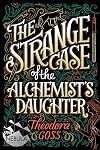
The first thing you need to know about The Strange Case of the Alchemist’s Daughter is how much fun reading it is – especially if you grew up on books like Mary Shelley’s Frankenstein, Robert Louis Stevenson’s Strange Case of Dr. Jekyll and Mr. Hyde, or The Island of Doctor Moreau by H.G. Wells. Frankenstein was published in 1818, so Shelley may have been a little ahead of her time, but there is no doubt that Victorian society was fascinated by books like hers and the other two show more mentioned (published in 1886 and 1896, respectively).
Two hundred years after the first appearance of Frankenstein’s monster, Theodora Goss has written a mashup novel that includes these three mad scientists and others like them. The men have formed a secret society, and they continue to experiment on living creatures (and dead ones) to see just what new kind of being they can create. Now, it seems that no one can stop them but their own daughters, most of whom themselves have been drastically altered by their own fathers into something no human was ever intended to be – oh, and Sherlock Holmes and Dr. Watson. Let’s not forget those two.
Other than Holmes and Watson, the main characters of the novel are Mary Jekyll, her sister Diana Hyde, Beatrice Rappaccini, Catherin Moreau, and Justine Frankenstein. One of them has a breath so poisonous that it kills anything that comes too close, one is a cross between a panther and a human, one has been reanimated and physically enhanced after having been hanged to death, one is a rebellious teen, and the other matches wits with Mr. Holmes with relative ease. At first, it is sheer necessity that forces the women team up in order to fight those who want so badly to return them to their fathers’ laboratories. But soon enough, something funny begins to happen: the women become a family of sisters more than capable of taking care of themselves. So that’s what they do.
The audiobook version of The Strange Case of the Alchemist’s Daughter is read by Kate Reading (is that the perfect name for an audiobook narrator, or what?). Reading is a veteran of numerous audiobooks in the fantasy genre, such as Robert Jordan’s Wheel of Time series, so she is probably already familiar to many fantasy fans. Her skill of using multiple accents and voice-variations to individualize so many main characters is exceptional, and adds to the fun.
Bottom Line: Readers looking to escape the horrors of 2020 for a few hours will not go wrong by choosing Theodora Goss’s The Strange Case of the Alchemist’s Daughter as a temporary diversion. show less
Two hundred years after the first appearance of Frankenstein’s monster, Theodora Goss has written a mashup novel that includes these three mad scientists and others like them. The men have formed a secret society, and they continue to experiment on living creatures (and dead ones) to see just what new kind of being they can create. Now, it seems that no one can stop them but their own daughters, most of whom themselves have been drastically altered by their own fathers into something no human was ever intended to be – oh, and Sherlock Holmes and Dr. Watson. Let’s not forget those two.
Other than Holmes and Watson, the main characters of the novel are Mary Jekyll, her sister Diana Hyde, Beatrice Rappaccini, Catherin Moreau, and Justine Frankenstein. One of them has a breath so poisonous that it kills anything that comes too close, one is a cross between a panther and a human, one has been reanimated and physically enhanced after having been hanged to death, one is a rebellious teen, and the other matches wits with Mr. Holmes with relative ease. At first, it is sheer necessity that forces the women team up in order to fight those who want so badly to return them to their fathers’ laboratories. But soon enough, something funny begins to happen: the women become a family of sisters more than capable of taking care of themselves. So that’s what they do.
The audiobook version of The Strange Case of the Alchemist’s Daughter is read by Kate Reading (is that the perfect name for an audiobook narrator, or what?). Reading is a veteran of numerous audiobooks in the fantasy genre, such as Robert Jordan’s Wheel of Time series, so she is probably already familiar to many fantasy fans. Her skill of using multiple accents and voice-variations to individualize so many main characters is exceptional, and adds to the fun.
Bottom Line: Readers looking to escape the horrors of 2020 for a few hours will not go wrong by choosing Theodora Goss’s The Strange Case of the Alchemist’s Daughter as a temporary diversion. show less
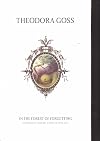
This is the kind of mythopoeic fiction I like. A collection of quite short stories, but they pack a lot in to their brief length.
"The Rose in Twelve Petals"
A fractured retelling of 'Sleeping Beauty' (or, 'Briar Rose'), in a dozen brief vignettes, set in a more concrete version of Europe than the usual fairy-tale fare.
"Professor Berkowitz Stands on the Threshold"
A not-very-successful professor and a French poet, both with hidden talents, are summoned by a mysterious figure to an show more interstitial place-between-the-worlds, and offered a choice. Why does the professor make the choice he does? I'm still not sure.
"The Rapid Advance of Sorrow"
A poetic, surreal piece on the theme of trying to have a relationship with a revolutionary.
"Lily, With Clouds"
Two sisters, long estranged. One conventional, the other the lover of artists. The latter's terminal cancer brings them back together one last time. Closure or understanding may not be possible, but the meeting will leave its mark.
"Miss Emily Gray"
Emily Gray features in several of Goss' stories - and I want more of her! I LOVE this morally ambiguous Mary Poppins figure who, here, shows up as a young girl's governess - and grants wishes in a quite unexpected way.
"In the Forest of Forgetting"
This title story is actually probably my least favorite piece in the book. A fairy-tale allegory that is explicitly about a woman dying of cancer; I felt it would've been more effective if it were more subtle.
"Sleeping With Bears"
Another allegory, which compares men to bears - but this one is done with a deft touch, and wry humor.
"Letters from Budapest"
A spooky and lovely Hungarian vampire story about an undead artist who suck talented young men dry. Reminded me a bit of Tanith Lee.
"The Wings of Meister Wilhelm"
One of the more powerful pieces I've read about the tragedy of European anti-semitism, and a beautiful story of a young girl, her violin instructor, and his impossible dream.
"Conrad"
Another Emily Gray story! Here, as a nurse, she's a powerful if mysterious advocate for a young boy whose own family is trying to poison him.
"A Statement in the Case"
The 'case' is question is the possible arson of a pharmacy - and the witness in question admits that he was drunk and that he might not have seen exactly what he believes that he saw.
"Death Comes for Ervina"
An elderly former ballerina receives a visit from an old lover, and reminisces about her complicated past.
"The Belt"
"I will tell you... that every fairy tale has a moral. The moral of my story may be that love is a constraint, as strong as any belt. And this is certainly true, which makes it a good moral. Or it may be that we are all constrained in some way, either in our bodies, or in our hearts and minds... Or perhaps my moral is that a desire for freedom is stronger than love or pity. That is a wicked moral, or so the Church has taught us. But I do not know which moral is the correct one. And that is also the way of a fairy story." (And that is why I have realized that I love Theodora Goss.)
"Phalaenopsis"
A truly creepy and horrific story about a monastery where all the monks are blind. Or maybe it is an inspiring and uplifting story of spiritual triumph. I'm picking the former, but others will probably think the latter.
"Pip and the Fairies"
'Pip''s mother featured her as the title character in a series of books for children, which have made her a kind of minor celebrity, as the books have achieved a classic fame. But, thinking back, she wonders if the stories that she told her mother about her adventures with the magical folk were true...
"Lessons With Miss Gray"
Yay! Emily Gray again! Here, she offers three girls lessons in witchcraft. It's their obsession, for a summer... show less
"The Rose in Twelve Petals"
A fractured retelling of 'Sleeping Beauty' (or, 'Briar Rose'), in a dozen brief vignettes, set in a more concrete version of Europe than the usual fairy-tale fare.
"Professor Berkowitz Stands on the Threshold"
A not-very-successful professor and a French poet, both with hidden talents, are summoned by a mysterious figure to an show more interstitial place-between-the-worlds, and offered a choice. Why does the professor make the choice he does? I'm still not sure.
"The Rapid Advance of Sorrow"
A poetic, surreal piece on the theme of trying to have a relationship with a revolutionary.
"Lily, With Clouds"
Two sisters, long estranged. One conventional, the other the lover of artists. The latter's terminal cancer brings them back together one last time. Closure or understanding may not be possible, but the meeting will leave its mark.
"Miss Emily Gray"
Emily Gray features in several of Goss' stories - and I want more of her! I LOVE this morally ambiguous Mary Poppins figure who, here, shows up as a young girl's governess - and grants wishes in a quite unexpected way.
"In the Forest of Forgetting"
This title story is actually probably my least favorite piece in the book. A fairy-tale allegory that is explicitly about a woman dying of cancer; I felt it would've been more effective if it were more subtle.
"Sleeping With Bears"
Another allegory, which compares men to bears - but this one is done with a deft touch, and wry humor.
"Letters from Budapest"
A spooky and lovely Hungarian vampire story about an undead artist who suck talented young men dry. Reminded me a bit of Tanith Lee.
"The Wings of Meister Wilhelm"
One of the more powerful pieces I've read about the tragedy of European anti-semitism, and a beautiful story of a young girl, her violin instructor, and his impossible dream.
"Conrad"
Another Emily Gray story! Here, as a nurse, she's a powerful if mysterious advocate for a young boy whose own family is trying to poison him.
"A Statement in the Case"
The 'case' is question is the possible arson of a pharmacy - and the witness in question admits that he was drunk and that he might not have seen exactly what he believes that he saw.
"Death Comes for Ervina"
An elderly former ballerina receives a visit from an old lover, and reminisces about her complicated past.
"The Belt"
"I will tell you... that every fairy tale has a moral. The moral of my story may be that love is a constraint, as strong as any belt. And this is certainly true, which makes it a good moral. Or it may be that we are all constrained in some way, either in our bodies, or in our hearts and minds... Or perhaps my moral is that a desire for freedom is stronger than love or pity. That is a wicked moral, or so the Church has taught us. But I do not know which moral is the correct one. And that is also the way of a fairy story." (And that is why I have realized that I love Theodora Goss.)
"Phalaenopsis"
A truly creepy and horrific story about a monastery where all the monks are blind. Or maybe it is an inspiring and uplifting story of spiritual triumph. I'm picking the former, but others will probably think the latter.
"Pip and the Fairies"
'Pip''s mother featured her as the title character in a series of books for children, which have made her a kind of minor celebrity, as the books have achieved a classic fame. But, thinking back, she wonders if the stories that she told her mother about her adventures with the magical folk were true...
"Lessons With Miss Gray"
Yay! Emily Gray again! Here, she offers three girls lessons in witchcraft. It's their obsession, for a summer... show less
The Strange Case of the Alchemist's Daughter (Volume 1) (The Extraordinary Adventures of the Athena Club, Band 1) by Theodora Goss
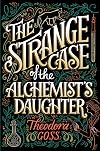
This was a totally charming tale! I loved how Goss wove together so many of the old familiar monster tales - Dr. Jekyll and Mr. Hyde, The Island of Dr. Moreau, Frankenstein, and more - and wrapped it all up in a Sherlock Holmes story, but all the while centering the women of the story. I’m looking forward to the next installment!

A mystery set in the late 19th century, in which most of the characters are borrowed from, or are the offspring of characters from, 19th century Gothic and mystery fiction.
After her mother dies, Mary Jekyll decides to improve her financial situation by finding her father’s murderer, Mr Hyde, and claiming the reward. Instead she finds herself saddled with Hyde’s high spirited teenaged daughter, becomes involved in Sherlock Holmes’ investigation into murder of girls in Whitechapel, and show more invites several women who are the result of monstrous experimentation to join her household...
The relationships between the girls and women of Mary’s household are at the centre of this story. Together they set about unravelling the mystery about the Société de Alchimistes - and then they write their story. The story told predominantly from Mary’s point of view, but is being written by Catherine, with interruptions from the others. These women, who are denied a voice in their original narratives, here get to argue about how their story is told and offer commentary on the act of storytelling.
I read most of the stories The Strange Case draws upon when I was at university, and I was delighted to see them all woven together like this. It’s all very meta in a way I really appreciated. I also liked the way Holmes appears in, but does not dominate, the story.
No wonder men did not want women to wear bloomers. What could women accomplish if they did not have to continually mind their skirts, keep them from dragging in the mud or getting trampled on the steps of an omnibus? If they had pockets! With pockets, women could conquer the world! And yet she felt, too, as though in putting on men’s clothes, she had lost a part of herself. It was a confusing sensation. show less
After her mother dies, Mary Jekyll decides to improve her financial situation by finding her father’s murderer, Mr Hyde, and claiming the reward. Instead she finds herself saddled with Hyde’s high spirited teenaged daughter, becomes involved in Sherlock Holmes’ investigation into murder of girls in Whitechapel, and show more invites several women who are the result of monstrous experimentation to join her household...
The relationships between the girls and women of Mary’s household are at the centre of this story. Together they set about unravelling the mystery about the Société de Alchimistes - and then they write their story. The story told predominantly from Mary’s point of view, but is being written by Catherine, with interruptions from the others. These women, who are denied a voice in their original narratives, here get to argue about how their story is told and offer commentary on the act of storytelling.
I read most of the stories The Strange Case draws upon when I was at university, and I was delighted to see them all woven together like this. It’s all very meta in a way I really appreciated. I also liked the way Holmes appears in, but does not dominate, the story.
No wonder men did not want women to wear bloomers. What could women accomplish if they did not have to continually mind their skirts, keep them from dragging in the mud or getting trampled on the steps of an omnibus? If they had pockets! With pockets, women could conquer the world! And yet she felt, too, as though in putting on men’s clothes, she had lost a part of herself. It was a confusing sensation. show less
Lists
Awards


You May Also Like


Associated Authors
Statistics
- Works
- 51
- Also by
- 104
- Members
- 4,357
- Popularity
- #5,754
- Rating
- 3.7
- Reviews
- 221
- ISBNs
- 62
- Languages
- 4
- Favorited
- 11


