
Christopher K. Germer PhD
Author of The Mindful Path to Self-Compassion: Freeing Yourself from Destructive Thoughts and Emotions
About the Author
Works by Christopher K. Germer PhD
The Mindful Path to Self-Compassion: Freeing Yourself from Destructive Thoughts and Emotions (2009) 431 copies, 8 reviews
L'autocompassion : Une méthode pour se libérer des pensées et des émotions qui nous font du mal (2013) 3 copies
Tagged
Common Knowledge
- Gender
- male
Members
Reviews
The Mindful Path to Self-Compassion: Freeing Yourself from Destructive Thoughts and Emotions by Christopher K. Germer
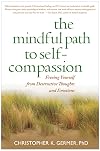
I picked up The Mindful Path to Self-Compassion mostly because its cover is very similar to the cover of The Mindful Way through Depression, which I'd recently read and enjoyed. Despite the similar cover, similar title (and subtitle), and similar subject, the approach is pretty different between the two books. Both seek to help readers approach our negative emotions and patterns of thought differently, but where The Mindful Way through Depression outlines a specific, eight-week program of show more mindfulness meditation combined with cognitive-behavioral techniques, The Mindful Path to Self-Compassion is less structured and less specific in its recommendations. It's more a book full of suggestions, which I see as both an asset and a detriment.
The first half of the book offers a description of mindfulness meditation and the studied benefits, while the second half focuses on metta, or self-compassion meditation, which is the core of the practice. Germer offers scripts as guidance for different ways of using both types of meditation, but there's no specific protocol to follow so one can make the practice one's own. Germer explains that it's most effective to practice metta both informally in one's daily life and formally in a sitting practice, but any practice, he assures readers, is better than none.
On the one hand, I like the flexibility that Germer's book offers, especially since one of the biggest barriers to meditation practice for me is finding the time to do it. But this flexible approach also requires me to envision and put into place my own practice rather than just following someone else's set schedule, which throws up another barrier to my actually doing the practice.
The book could have been shorter by about half, and some of the examples were a little weird to me (I've got a low tolerance for case studies from a therapist's own practice; it kind of makes me feel creepy and smacks of anecdotal vs scientific evidence) but still, I enjoyed the book quite a bit. There were some specific insights that lit the light bulb above my head and have shifted the way I see conflicts and my reactions of anger in daily life, and I feel enthusiastic about my ability to actually design a daily practice that I might be able to keep up. show less
The first half of the book offers a description of mindfulness meditation and the studied benefits, while the second half focuses on metta, or self-compassion meditation, which is the core of the practice. Germer offers scripts as guidance for different ways of using both types of meditation, but there's no specific protocol to follow so one can make the practice one's own. Germer explains that it's most effective to practice metta both informally in one's daily life and formally in a sitting practice, but any practice, he assures readers, is better than none.
On the one hand, I like the flexibility that Germer's book offers, especially since one of the biggest barriers to meditation practice for me is finding the time to do it. But this flexible approach also requires me to envision and put into place my own practice rather than just following someone else's set schedule, which throws up another barrier to my actually doing the practice.
The book could have been shorter by about half, and some of the examples were a little weird to me (I've got a low tolerance for case studies from a therapist's own practice; it kind of makes me feel creepy and smacks of anecdotal vs scientific evidence) but still, I enjoyed the book quite a bit. There were some specific insights that lit the light bulb above my head and have shifted the way I see conflicts and my reactions of anger in daily life, and I feel enthusiastic about my ability to actually design a daily practice that I might be able to keep up. show less
The Mindful Path to Self-Compassion: Freeing Yourself from Destructive Thoughts and Emotions by Christopher K. Germer
For years people have been telling me that I should meditate. and for years that meant nothing to me - in that I couldn't even picture what that would be/mean (even having grown up around Buddhists). In a moment of need, I started googling books on mindfulness and guess what was at the top of these lists? This book which someone had already given me.
I dug it out of my book shelves and jumped in. It was the first time that I felt like I had practical instructions and explanations for what show more mindfulness and mediation WAS and HOW to just start doing it. While I still struggle with anxiety, this book has shown me the safe place that is within my own mind and helped me find the edge between how I FEEL vs my actual self. Just a little bit of space from my emotions. show less
I dug it out of my book shelves and jumped in. It was the first time that I felt like I had practical instructions and explanations for what show more mindfulness and mediation WAS and HOW to just start doing it. While I still struggle with anxiety, this book has shown me the safe place that is within my own mind and helped me find the edge between how I FEEL vs my actual self. Just a little bit of space from my emotions. show less
The Mindful Path to Self-Compassion: Freeing Yourself from Destructive Thoughts and Emotions by Christopher K. Germer
The Mindful Path to Self-Compassion: Freeing Yourself from Destructive Thoughts and Emotions by Christopher K. Germer, PhD focuses on mindfulness in a way that gently glides into self-compassion. Germer weaves his personal and professional experience using mindfulness to get to self-compassion with research into self-compassion in a way that is easy to read and makes both mindfulness and self-compassion feel approachable. He includes exercises and meditations to demonstrate the effectiveness show more of mindfulness on self-compassion. I really like that Germer explains that self-compassion isn't a self-help goal but a continuous journey that sometimes brings up pain while helping one to heal in a way that encourages and inspires one to pursue embracing self-compassion. The Mindful Path to Self-Compassion helped me with my own journey to strengthen my mindfulness and my self-compassion. show less
The Mindful Path to Self-Compassion: Freeing Yourself from Destructive Thoughts and Emotions by Christopher K. Germer
This seems to be a western-reader's book on meditation. It's full of psychological studies, statistics, and tiny little meditation exercises meant to trick you into not being such an asshole (to yourself and everyone else).
I have always loved the promise of meditation, but it has also always seemed a little bit like believing in unicorns. I did my time believing in unicorns, and it got me nowhere. But statistics, psychiatric and medical studies? Those I can get behind.
And - so far, so good.
I have always loved the promise of meditation, but it has also always seemed a little bit like believing in unicorns. I did my time believing in unicorns, and it got me nowhere. But statistics, psychiatric and medical studies? Those I can get behind.
And - so far, so good.
You May Also Like


Associated Authors
Statistics
- Works
- 15
- Members
- 658
- Popularity
- #38,342
- Rating
- 4.0
- Reviews
- 9
- ISBNs
- 35
- Languages
- 8