
José Martí (1853–1895)
Author of Selected Writings
About the Author
Marti is a symbol of Cuban independence, for he campaigned throughout his life for its liberation and finally died in the war against Spain. He was also an important literary figure and one of the founders of modernism. Rejecting the elaborate aestheticism of many modernists, he wrote in a simpler show more style based largely on folk poetry, as in "Ismaelillo" and "Versos Sencillos." Much of his poetry deals with the struggle for freedom and his political and emotional exile from his homeland. He was also an accomplished prose stylist in a much more intricate fashion and influenced the later development of the short story and essay. His writings, now collected, many of which were originally published in newspapers, are essential for an understanding of the Spanish American independence process. (Bowker Author Biography) show less
Image credit: wikipedia
Series
Works by José Martí
Our America: Writings on Latin America and the Struggle for Cuban Independence (1973) 56 copies, 2 reviews
On education : articles on educational theory and pedagogy, and writings for children from The age of gold (1853) 14 copies
On Art and Literature: Critical Writings by José Martí (Monthly Review Press Classic Titles) (1999) 13 copies
Del Bravo a Magallanes / From Bravo to Magallanes: Textos Sobre Nuestra America / Text About Our America (Spanish Edition) (2011) 3 copies
Nuestra América 3 copies
La Edad de Oro: publicación mensual de recreo e instrucción dedicada a los niños de América. (Spanish Edition) (2011) 3 copies
La Edad de Oro para ninos- incluye CD ROM (Intemporales. Serie Mayor) (Spanish Edition) (2005) 3 copies
Mi verso 2 copies
Tres héroes 2 copies
El pensamiento Martiano: Diccionario 2 copies
José Martí: Pensamientos (selección) 2 copies
Antología mínima 2 copies
La esperanza del mundo: Los mejores poemas y cuentos para niños de José Martí (Infantil-Juvenil) (Spanish Edition) (2013) 2 copies
Three documents 2 copies
Páginas Inolvidables 2 copies
Textos americanos 2 copies
Little Finger 2 copies
Ideas políticas y sociales 2 copies
Idade de Ouro, A 2 copies
Nuestra Améríca 1 copy
Moncada 1 copy
Atlas jose marti 1 copy
Obra Poética - José Martí 1 copy
Nossa América 1 copy
Los vencidos de la Luz 1 copy
Espíritu de América 1 copy
José Martí - Diarios 1 copy
Marti por Marti 1 copy
Hombres: v.6 1 copy
Versos Del Alma 1 copy
Stories about Elephants 1 copy
Páginas ineditas o dispersas 1 copy
Diarios 1895 1 copy
MIS VERSOS 1 copy
Poesias Completas I 1 copy
Cartas de Amistad 1 copy
Obras completas 1-25 1 copy
La edad de oro (2,3,4) 1 copy
NEUVAS CARTAS DE NUEVA YORK 1 copy
Sobre España 1 copy
La revolución de 1868 1 copy
Lecturas para niños 1 copy
Nuestra America 1 copy
Paginas 1 copy
Último diario 1 copy
Critica letteraria 1 copy
La cuestión racial 1 copy
Escritos Sobre Educacion 1 copy
Obras Escogidas - Tomo 3 1 copy
Sección Poética — Contributor — 1 copy
José Martí Apuntes Inéditos 1 copy
Lectura en Steck Hall 1 copy
Obras Completas. Patria 1 copy
Jose Marti 1 copy
Versos de amor : (inéditos) 1 copy
Escenas Norteamericanas 1 copy
Martí por Martí 1 copy
Páginas de José Martí 1 copy
Vindicación de Cuba 1 copy
Moncada 1 copy
Jose Marti Obras Completas 1 copy
Escenas extraordinarias 1 copy
José Martí's The Golden Age 1 copy
El indio de nuestra América 1 copy
Marti : estudio y antologia 1 copy
La clara voz de México 1 copy
Poesias 1 copy
Patria 1 copy
PAGINAS DE JOSE MARTI 1 copy
Obras Poeticas 1 copy
Martí 1 copy
Con Todo el Sol el Papel 1 copy
Versos 1 copy
Ideario separatista 1 copy
Mis propias palabras 1 copy
Obras completas 1 copy
Jose Marti.diarios De Campana.1895-1897,guerra Cubano Hispano Norteamericana,edicion Anotada Por Mayra Beatriz Martinez. (2014) 1 copy
Martí on the U.S.A 1 copy
Cuba Politica Y Revolucion Discursos Revolucionarios Hombres José Martí Obras Completas Volume 4 1963 La Habana (1963) 1 copy
José Martí, Obras escogidas 1 copy
Obras Completas, Tomo I 1 copy
Obras Completas. Volumen II 1 copy
Mis versos 1 copy
Nossa América : Antologia 1 copy
Bebé y el señor Don Pomposo 1 copy
Los dos príncipes 1 copy
Poemas esenciales 1 copy
Marti. Cuba. V. I 1 copy
Martí. Cuba. V.II 1 copy
Martí. Hombres. V. VI 1 copy
Martí. Cuba. V. XV. 1 copy
Pensamiento Martiano 1 copy
Páginas de José Martí. 1 copy
Obras Completas. Cuba Vol. 2 1 copy
Obras Completas. Libertad 1 copy
Obras Completas. Lira íntima 1 copy
Associated Works
The Mark Twain Anthology: Great Writers on His Life and Work (2010) — Contributor — 160 copies, 1 review
Writing New York: A Literary Anthology (Expanded 10th-Anniversary Edition) (2008) — Contributor — 102 copies, 1 review
The Heath Anthology of American Literature, Concise Edition (2003) — Contributor — 74 copies, 1 review
The Serpent and the Fire: Poetries of the Americas from Origins to Present (2024) — Contributor — 18 copies
Tagged
Common Knowledge
- Canonical name
- Martí, José
- Legal name
- Martí y Perez, José Julian
- Birthdate
- 1853-01-28
- Date of death
- 1895-05-19
- Gender
- male
- Education
- University of Zaragoza
- Occupations
- poet
essayist
politician
journalist - Cause of death
- war (shot in battle during Cuban War of Independence)
- Nationality
- Cuba
- Birthplace
- Havana, Cuba
- Places of residence
- Havana, Cuba (birth)
Dos Rios, Cuba (death)
Spain
Venezuela
New York, New York, USA
Guatemala - Place of death
- Dos Ríos, Cuba
- Burial location
- Cementerio de Santa Ifigenia, Santiago de Cuba, Cuba
- Associated Place (for map)
- Cuba
Members
Reviews

At the age of seventeen, José Martí was sentenced to six years’ forced labour by the Spanish colonial authorities, for drafting a letter attacking as an apostate a Cuban classmate who had enlisted as an officer in the Spanish army. Martí’s friends were eventually able to get the sentence commuted to exile in view of his youth and frail health, but not before he had suffered permanent damage to his health in the appalling conditions of the quarries.
Twenty-five years later, in 1895, he show more was killed fighting against Spain in the Cuban War of Independence. In between times, he had become a well-known modernist poet and playwright as well as a tireless political activist and journalist, attacking colonialism, the Catholic Church, slavery, capitalism, racism and the oppression of women, but above all promoting the cause of Cuban independence, both against Spain and against the threat of a new hegemony from the United States.
In this anthology, Andrés Sorel gives us a potted biography of the political Martí, as well as a broad selection of his writings right through from his account of his experiences as a political prisoner to his last, unfinished letter from camp and the final entries in his diaries. We only get a very thin selection of his more literary works, but these do include the one line of his verse most English-speaking readers will remember (thanks to Pete Seeger) — “Yo soy un hombre sincero”.
It’s fascinating to see how well Martí lived up to (or rather gave us a model for) the 20th century ideal of the revolutionary. Apart from looking more like Marcel Proust than Che Guevara, that is. The bulk of his political ideas could have been shifted fifty years on in time without anyone spotting a major incongruity. It’s hard to disagree with his arguments. Reading his essays and speeches back to back is a little tiring, though: there’s only so much exalted rhetoric you can take in at one go, and Martí clearly lived in a permanent state of rhetorical excitement. But plenty of other Cubans since have exhibited the same fault. More disturbing in the field diaries is the calm way in which he goes from lyrical descriptions of Cuban landscape and peasants to cold reports of courts martial and firing squads. Revolutionaries can’t afford to be nice people. show less
Twenty-five years later, in 1895, he show more was killed fighting against Spain in the Cuban War of Independence. In between times, he had become a well-known modernist poet and playwright as well as a tireless political activist and journalist, attacking colonialism, the Catholic Church, slavery, capitalism, racism and the oppression of women, but above all promoting the cause of Cuban independence, both against Spain and against the threat of a new hegemony from the United States.
In this anthology, Andrés Sorel gives us a potted biography of the political Martí, as well as a broad selection of his writings right through from his account of his experiences as a political prisoner to his last, unfinished letter from camp and the final entries in his diaries. We only get a very thin selection of his more literary works, but these do include the one line of his verse most English-speaking readers will remember (thanks to Pete Seeger) — “Yo soy un hombre sincero”.
It’s fascinating to see how well Martí lived up to (or rather gave us a model for) the 20th century ideal of the revolutionary. Apart from looking more like Marcel Proust than Che Guevara, that is. The bulk of his political ideas could have been shifted fifty years on in time without anyone spotting a major incongruity. It’s hard to disagree with his arguments. Reading his essays and speeches back to back is a little tiring, though: there’s only so much exalted rhetoric you can take in at one go, and Martí clearly lived in a permanent state of rhetorical excitement. But plenty of other Cubans since have exhibited the same fault. More disturbing in the field diaries is the calm way in which he goes from lyrical descriptions of Cuban landscape and peasants to cold reports of courts martial and firing squads. Revolutionaries can’t afford to be nice people. show less

I had to read this when I was in school, probably around 7th or 8th grade. Jose Marti, the Cuban poet and independence fighter, was exiled for a time in New York City. During that time, one of his projects was this: La Edad de Oro, a magazine for children. Now, keep in mind this was the late 19th century or so, thus we are not talking the crappy pap kids get fed today. Marti treated children like human beings who were smart and capable of learning and growing up to be productive citizens and show more members of society. His magazine reflected that. This volume collects the four issues of the magazine he published. Each issue contains some essays on a broad range of topics from Latin American heroes to the World's Fair in Paris. He also wrote poetry, and the magazine included some kind of fiction such as a fairy tale or fable. He wrote and adapted content reflective of a wide worldview, and he did it all in a language that young people could easily understand. And, as if that is not enough, the guy was a pretty good writer; there is a certain lyricism to the text.
For me, this was one of the first books I read that explored a variety of topics. I still remember the fable of the magical shrimp and reading about the great men--Bolivar, San Martin, and Hidalgo. It is a book that you can read a piece now and a piece later. I had not revisited it in years, so I felt I should reread it. It is still a pretty good read, very literary, which is amazing considering he was writing this particular work for children. In other words, he had high expectations of his young readers, expectations that are rarely found in children and YA writers today (yes, there are some good children and YA authors that treat their audience seriously, with respect, dignity, and as good readers, but this seems rare).
This particular edition includes illustration plates by Lorenzo Amengual, which add to the classic look of the book.
Overall, if all you have read of Marti is his poetry, which is excellent, this volume will give you a different look at this brilliant writer. It will show him as a humane man who also cared for and believed in children. Finally, I believe there is a recent translation in English, which may be worth looking into if you don't read Spanish. However, if you read Spanish, you should read it in the original. show less
For me, this was one of the first books I read that explored a variety of topics. I still remember the fable of the magical shrimp and reading about the great men--Bolivar, San Martin, and Hidalgo. It is a book that you can read a piece now and a piece later. I had not revisited it in years, so I felt I should reread it. It is still a pretty good read, very literary, which is amazing considering he was writing this particular work for children. In other words, he had high expectations of his young readers, expectations that are rarely found in children and YA writers today (yes, there are some good children and YA authors that treat their audience seriously, with respect, dignity, and as good readers, but this seems rare).
This particular edition includes illustration plates by Lorenzo Amengual, which add to the classic look of the book.
Overall, if all you have read of Marti is his poetry, which is excellent, this volume will give you a different look at this brilliant writer. It will show him as a humane man who also cared for and believed in children. Finally, I believe there is a recent translation in English, which may be worth looking into if you don't read Spanish. However, if you read Spanish, you should read it in the original. show less
Obra Poetica: Ismaelillo/Versos Libres/Versos Sencillos (Biblioteca Edaf) (Spanish Edition) by José Martí
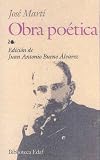
De las dos obras que contiene este volumen, "Ismaelillo" y "Versos sencillos" me parecieron muy, muy bellos. "Versos libres", aunque bello también, es demasiado largo para mi gusto.
Martí tiene el don de hacer poemas aparentemente simples, muy digeribles y conmovedores. Aunque me pareció más romántico que modernista, su obra parece estar a caballo entre las dos corrientes. Su compromiso ideológico que nota en sus versos, pero nunca molesta, más bien enriquece muchos de los poemas.
Muy show more recomendable. show less
Martí tiene el don de hacer poemas aparentemente simples, muy digeribles y conmovedores. Aunque me pareció más romántico que modernista, su obra parece estar a caballo entre las dos corrientes. Su compromiso ideológico que nota en sus versos, pero nunca molesta, más bien enriquece muchos de los poemas.
Muy show more recomendable. show less
Versos Sencillos: Simple Verses (Recovering the Us Hispanic Literary Heritage) (Pinata Books for Young Adults) (English, Spanish and Spanish Edition) by José Martí
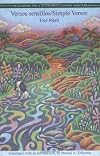
I’ve read a handful of José Martí’s poems in the past (particularly those depicting his love of country and fight for independence), quoted a great deal of them in several of my Facebook posts, even loved and gotten heartbroken at the same time by a particular poem he wrote for his Guatemalan muse.. His poetry is vivid and truthful, and resonates deeply with my progressive soul.
Some favorites:
Do not put me in the dark
To die like a traitor;
I am good, and like a good thing
I will die show more with my face to the sun!
-“Verse XXIII”
When weighed by the cross, a man
Resolves to die for the right;
He does all the good he can,
And returns bathed in the light.
-“Verse XXVI” show less
Some favorites:
Do not put me in the dark
To die like a traitor;
I am good, and like a good thing
I will die show more with my face to the sun!
-“Verse XXIII”
When weighed by the cross, a man
Resolves to die for the right;
He does all the good he can,
And returns bathed in the light.
-“Verse XXVI” show less
Awards


You May Also Like


Associated Authors
Statistics
- Works
- 377
- Also by
- 9
- Members
- 1,607
- Popularity
- #16,043
- Rating
- 4.0
- Reviews
- 33
- ISBNs
- 349
- Languages
- 7
- Favorited
- 9
