
Hiroshi Sakurazaka
Author of All You Need Is Kill
About the Author
Works by Hiroshi Sakurazaka
All You Need is Kill, Vol. 1 5 copies
All You Need is Kill, Vol. 2 4 copies
All you need is kill. Tom 2 2 copies
All You Need Is Kill 01 1 copy
All You Need is Kill 1 copy
Associated Works
Hanzai Japan: Fantastical, Futuristic Stories of Crime From and About Japan (2015) — Contributor — 44 copies
Tagged
Common Knowledge
- Birthdate
- 1970
- Gender
- male
- Occupations
- Information Technology
- Nationality
- Japan
- Birthplace
- Tokyo, Japan
- Associated Place (for map)
- Tokyo, Japan
Members
Reviews
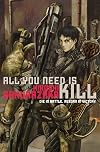
I prefer to read books before they're adapted into films. I don't mind it the other way around. But reading the book first gives me a chance to establish the character in my head before seeing it on screen. When I started seeing previews for the film Edge of Tomorrow and discovered that it was based on this book, I made sure to snap it up ASAP. The premise sounded very interesting and I wanted to be sure to read the source material before Tom Cruise got too far into my head. I'm glad I did, show more because he's almost the exact opposite of the twenty-something Asian protagonist of the novel. On the other hand, he's so different that it would be difficult for anyone to mistake his world-weary fifty-something American character for the same guy. It will be interesting to see what bits the filmmakers kept and what they completely reinvented.
The premise is simple. As the film poster puts it: Live. Die. Repeat. This is basically Groundhog Day meets Starship Troopers. Keiji Kiriya is a fresh recruit in a war against alien invaders. He's thrown into battle, barely prepared, and comes to a pretty quick end. But then he wakes up and is pretty sure it was only a dream. Except he re-lives the events of the dream in startling detail until the sense of deja vu is overwhelming and only explanation is that it wasn't a dream. He's actually stuck in some sort of time loop.
Since this is translated into English from Japanese, it's difficult to know how much of the terse writing style comes from the original author and how much from the translator. I'm sure it's a bit of both. It fits the story and keeps the reader turning pages. It's very readable and I never felt lost. Description and introspection is applied appropriately. War is gritty, messy and painful. Soldiers are real people. Backstory is skillfully woven into unfolding events. The story keeps moving. I'm sure the word count puts this more into novella territory than novel, but there is plenty of character and story to make this a novel.
I really liked this book. It's well worth reading before Tom Cruise gets into your head. show less
The premise is simple. As the film poster puts it: Live. Die. Repeat. This is basically Groundhog Day meets Starship Troopers. Keiji Kiriya is a fresh recruit in a war against alien invaders. He's thrown into battle, barely prepared, and comes to a pretty quick end. But then he wakes up and is pretty sure it was only a dream. Except he re-lives the events of the dream in startling detail until the sense of deja vu is overwhelming and only explanation is that it wasn't a dream. He's actually stuck in some sort of time loop.
Since this is translated into English from Japanese, it's difficult to know how much of the terse writing style comes from the original author and how much from the translator. I'm sure it's a bit of both. It fits the story and keeps the reader turning pages. It's very readable and I never felt lost. Description and introspection is applied appropriately. War is gritty, messy and painful. Soldiers are real people. Backstory is skillfully woven into unfolding events. The story keeps moving. I'm sure the word count puts this more into novella territory than novel, but there is plenty of character and story to make this a novel.
I really liked this book. It's well worth reading before Tom Cruise gets into your head. show less
I heard about a movie based on this first, which was described to me as a kind of science fiction military version of Groundhog's Day, then about the book. I figured "What the heck -- having Tom Cruise in a movie shouldn't ruin the book."
I finished it in one sitting. I cared about the main character, I thought the premise was very well conceived (and, despite some superficial similarity, it wasn't much like Groundhog's Day at all), and the narrative tone was both engaging and evocative. The show more pacing was brisk. The ending was good, with a twist that makes so much sense it looks inevitable in hindsight (even as it might make you feel just a little sad for the protagonist). It's a really good military scifi story, but the real value of it for me wasn't either the military or the scifi. It's just a great read that I really enjoyed. Of course, military scifi tends to be that way, in my experience; maybe that subgenre just attracts good writers. Judging by how the military aspects of it feel, I suspect the author has read a lot of military science fiction and/or fantasy, and done a bit of research on what it's like to actually be in the military, even if I doubt (without having looked up anything about the author) he was ever in the military himself -- which would make the effort a pretty brave attempt to strike a note of authenticity without having lived in that environment.
If you're the kind of reader who complains that a book is "too dark" if people have unpleasant "on-screen" deaths that have a very personal effect on a first-person protagonist, avoid this book. It's gritty that way, and it doesn't deserve your poor ratings and reviews. The title should be a hint.
If you're the kind of reader who complains about strong language in a book, don't read this book (or any other military fiction worth its salt). All You Need Is Kill, like the actual military, is full of profanities, and doesn't deserve your poor ratings and reviews.
If you're the kind of reader who thinks "genre fiction" is beneath you because of some unreasonable belief that "unrealistic" elements of a genre make it impossible to tell a good story, provide a good character study, or otherwise act as a vehicle for some great writing, stay the hell away from this book. It doesn't deserve your pretentious, irrational biases mucking up its ratings and reviews.
I'm sure the Hollywood flick won't be anywhere near as good as the novel. show less
I finished it in one sitting. I cared about the main character, I thought the premise was very well conceived (and, despite some superficial similarity, it wasn't much like Groundhog's Day at all), and the narrative tone was both engaging and evocative. The show more pacing was brisk. The ending was good, with a twist that makes so much sense it looks inevitable in hindsight (even as it might make you feel just a little sad for the protagonist). It's a really good military scifi story, but the real value of it for me wasn't either the military or the scifi. It's just a great read that I really enjoyed. Of course, military scifi tends to be that way, in my experience; maybe that subgenre just attracts good writers. Judging by how the military aspects of it feel, I suspect the author has read a lot of military science fiction and/or fantasy, and done a bit of research on what it's like to actually be in the military, even if I doubt (without having looked up anything about the author) he was ever in the military himself -- which would make the effort a pretty brave attempt to strike a note of authenticity without having lived in that environment.
If you're the kind of reader who complains that a book is "too dark" if people have unpleasant "on-screen" deaths that have a very personal effect on a first-person protagonist, avoid this book. It's gritty that way, and it doesn't deserve your poor ratings and reviews. The title should be a hint.
If you're the kind of reader who complains about strong language in a book, don't read this book (or any other military fiction worth its salt). All You Need Is Kill, like the actual military, is full of profanities, and doesn't deserve your poor ratings and reviews.
If you're the kind of reader who thinks "genre fiction" is beneath you because of some unreasonable belief that "unrealistic" elements of a genre make it impossible to tell a good story, provide a good character study, or otherwise act as a vehicle for some great writing, stay the hell away from this book. It doesn't deserve your pretentious, irrational biases mucking up its ratings and reviews.
I'm sure the Hollywood flick won't be anywhere near as good as the novel. show less
I saw the movie Edge of Tomorrow this past summer, which was based on this book. The movie was fucking awesome, so I absolutely had to read this book. The book didn't have quite the Hollywood happy ending as the movie, but it did have an ending that made a bit more sense.
Often times, when I read a book after seeing the movie, I quit reading halfway through, because fuck, I know what's going to happen. Why bother? Well, with this book, I had no fucking clue what was going to happen, because show more it was that much different from the movie. I mean, the basic ideas are the same. Guy kills an alien which puts him in a time loop, so every time he dies, he comes back to life at the same point in time, like Groundhog Day. But there were so many differences in the details, that it was still a compelling page turner.
This book is about a war with invading aliens. And about a man who doesn't want to have anything to do with the war. But he is thrust into it, by his superiors. He knows that going into battle would be a death sentence, because he isn't a fucking soldier, goddamnit. He's a fucking paper-pusher. He doesn't know how to fight.
He is sent into battle, anyway. Because to the marines, he is just cannon fodder. He's just another expendable body to throw at the aliens. Somehow, he survives the battle, after executing a bomb, that he was sure would kill him, and the attacking alien. But it turns out, that it didn't actually kill him. Instead, it sent him into a time loop. He's back at the base, being introduced to the Sergeant, once again.
So, he ends up going into battle, over and over. Dying, over and over. Until he meets a woman who trains him to fight. She trains him to use the time loop, to stop the alien invasion.
I can't recommend this book enough. And the movie. The movie was great, even with that psycho weirdo Tom Cruise. Both the book, and the movie are non-stop action. Compelling, and not predictable, at all. There. I'm done with the ball washing. I can only drool so much, goddamnit. show less
Often times, when I read a book after seeing the movie, I quit reading halfway through, because fuck, I know what's going to happen. Why bother? Well, with this book, I had no fucking clue what was going to happen, because show more it was that much different from the movie. I mean, the basic ideas are the same. Guy kills an alien which puts him in a time loop, so every time he dies, he comes back to life at the same point in time, like Groundhog Day. But there were so many differences in the details, that it was still a compelling page turner.
This book is about a war with invading aliens. And about a man who doesn't want to have anything to do with the war. But he is thrust into it, by his superiors. He knows that going into battle would be a death sentence, because he isn't a fucking soldier, goddamnit. He's a fucking paper-pusher. He doesn't know how to fight.
He is sent into battle, anyway. Because to the marines, he is just cannon fodder. He's just another expendable body to throw at the aliens. Somehow, he survives the battle, after executing a bomb, that he was sure would kill him, and the attacking alien. But it turns out, that it didn't actually kill him. Instead, it sent him into a time loop. He's back at the base, being introduced to the Sergeant, once again.
So, he ends up going into battle, over and over. Dying, over and over. Until he meets a woman who trains him to fight. She trains him to use the time loop, to stop the alien invasion.
I can't recommend this book enough. And the movie. The movie was great, even with that psycho weirdo Tom Cruise. Both the book, and the movie are non-stop action. Compelling, and not predictable, at all. There. I'm done with the ball washing. I can only drool so much, goddamnit. show less
Edge of Tomorrow (Movie Tie-in Edition): (Previously published and available digitally as All You Need Is Kill) by Hiroshi Sakurazaka
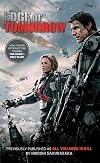
This is one story with three titles. The original Japanese light novel is All You Need is Kill. The theatrical release starring Tom Cruise was called Edge of Tomorrow, and the version released on DVD, Blue-ray, and streaming was Live, Die, Repeat.
My interest in the movie was initially piqued because of the D-Day inspired trailer, and because I had greatly enjoyed Tom Cruise's competent performance in his previous sci-fi movie, Oblivion. I didn't get a chance to see the movie in theatres, so show more I picked it up on Blu-ray when it came out.
By that time, the title of the movie had changed. The re-branding of the movie with the tagline from the theatrical release did not dampen my enjoyment of what turned out to be a war movie blended with the essence of almost all videogames: infinite lives. It is really the combination that makes this movie interesting. Matching up with the trailer, this is a grunt's eye view of war. Confusion, regret, and death barely kept in check with black humor. The idea that war is hell has been done better elsewhere; what is really horrifying is the idea that you have to live out that last, awful day of your life, over, and over, and over.
At least, until you figure out that death is never final [although it is inevitable], and you can do whatever you want with no repercussions. Much like Bill Murray's cynical weatherman in Groundhog Day, Cruise's dilettantish REMF Major Cage travels through disbelief to despair to acceptance to something like grace. Dying seems to have been the best thing that ever happened to Major Cage. Cruise does a good everyman performance, saying and doing the things most of us fear we would do if trapped in a horrible situation, but ultimately turning into something like the best version of himself after getting unlimited chances to rectify all his mistakes.
The movie was well-done, the central conceit turned out to be thought-provoking [at least for me], and I found the characterization plausible. Not bad for a movie that seemed to be inspired by videogames. It has long been true that all movies based on videogames are bad. It is also true that most videogames based on movies are bad. The kinds of stories you tell in the two forms of entertainment differ markedly, particularly in that videogames are supposed to be repetitive. If the hero fails in his quest, you just respawn and try again. Finding a way to turn this into an interesting narrative was quite an achievement. Even more so, when I discovered the movie was based on a light novel by Hiroshi Sakurazaka.
Thus, it is even more remarkable that this game mechanic turned story mechanism survived the transition to the screen, because novels and movies also are forced to tell their stories in different ways. To successfully blend the novel and the videogame, and to then successfully adapt that to the kind of story that Hollywood does best, deserves praise.
Despite pulling in as much money as blockbuster movies do, videogames have almost no effect on the wider society. This has been changing, slowly. Wreck-It Ralph is the best videogame movie ever made, but to say that risks damning the movie with faint praise. I'm starting to see more videogame references in other kinds of media, but perhaps this is just a Kuhnian revolution where all the old guard are dying off, and the new content producers just find videogames a natural part of their life.
Perhaps another reason for all this is popular entertainment is converging in on a common point. Many big movies now have a novelization [sometimes a new one is created even when it was based on a novel!], and if it is an action or sci-fi movie, also a videogame tie-in. If you can market some toys and other merchandise too, all the better. From a production point of view, it makes sense to tell stories in a way that makes it easier to generate all that valuable ancillary content.
Sakurazaka's novel fits into that paradigm in a very Japanese way. Light novels, as the name implies, are disposable popular entertainment marketed to young adults. Popular light novels are illustrated or animated, serving as the farm team for content generation in the Japanese market. This one was popular enough to be optioned by Hollywood, and it gives us a good case study for how different media and different markets produce subtle differences.
The basic story in the novel is much the same as the movie. Unstoppable alien monsters. A hopeless war. Mechanized infantry are the last hope for humanity. A soldier trapped endlessly in a fight against unstoppable hordes. Sakurazaka's book was very traditional military sci-fi. Lots of salt of the earth soldiering, and no visibility to the grand schemes of the brass. Unlike Cruise's Major Cage, Sakurazaka'a protagonist was a plain old grunt, Private Kiriya, fresh out of boot. Even in translation, the book is very Japanese. The idioms, the expectations of the soldiers, even the kinds of women they dream about, different from an American, or even a western novel of the same type.
Also, the ending is different. My editorial policy is to discuss the ending of any story without warning, but here is your spoiler warning regardless. While I think the ending has much of the same spirit in the American movie as in the Japanese book, the critical difference is that the book goes for the tragic ending while the movie goes for the happy one. What they have in common is that each ending upends the idea of infinite lives in a videogame, where the enemies keep doing the same thing over and over while you learn more and more, and posits an enemy that has exactly the same experience you do, and learns with every iteration.
The whole thing almost ends up where it began, with everything coming down to one climactic battle, much like it would in a world were you couldn't rewind time back to before you died. The crucial difference between book and movie is how this all plays out for the protagonist and his friends. Up until the very end, I liked the book better than the movie. It was harder sci-fi, with better military know-how and better science. But at the end, Hollywood demonstrated why it makes so much money worldwide. They know the human heart better, and that made all the difference.
Tragedy has its place, but it takes greater strength of character to insist that it really will turn out well in the end. show less
My interest in the movie was initially piqued because of the D-Day inspired trailer, and because I had greatly enjoyed Tom Cruise's competent performance in his previous sci-fi movie, Oblivion. I didn't get a chance to see the movie in theatres, so show more I picked it up on Blu-ray when it came out.
By that time, the title of the movie had changed. The re-branding of the movie with the tagline from the theatrical release did not dampen my enjoyment of what turned out to be a war movie blended with the essence of almost all videogames: infinite lives. It is really the combination that makes this movie interesting. Matching up with the trailer, this is a grunt's eye view of war. Confusion, regret, and death barely kept in check with black humor. The idea that war is hell has been done better elsewhere; what is really horrifying is the idea that you have to live out that last, awful day of your life, over, and over, and over.
At least, until you figure out that death is never final [although it is inevitable], and you can do whatever you want with no repercussions. Much like Bill Murray's cynical weatherman in Groundhog Day, Cruise's dilettantish REMF Major Cage travels through disbelief to despair to acceptance to something like grace. Dying seems to have been the best thing that ever happened to Major Cage. Cruise does a good everyman performance, saying and doing the things most of us fear we would do if trapped in a horrible situation, but ultimately turning into something like the best version of himself after getting unlimited chances to rectify all his mistakes.
The movie was well-done, the central conceit turned out to be thought-provoking [at least for me], and I found the characterization plausible. Not bad for a movie that seemed to be inspired by videogames. It has long been true that all movies based on videogames are bad. It is also true that most videogames based on movies are bad. The kinds of stories you tell in the two forms of entertainment differ markedly, particularly in that videogames are supposed to be repetitive. If the hero fails in his quest, you just respawn and try again. Finding a way to turn this into an interesting narrative was quite an achievement. Even more so, when I discovered the movie was based on a light novel by Hiroshi Sakurazaka.
Thus, it is even more remarkable that this game mechanic turned story mechanism survived the transition to the screen, because novels and movies also are forced to tell their stories in different ways. To successfully blend the novel and the videogame, and to then successfully adapt that to the kind of story that Hollywood does best, deserves praise.
Despite pulling in as much money as blockbuster movies do, videogames have almost no effect on the wider society. This has been changing, slowly. Wreck-It Ralph is the best videogame movie ever made, but to say that risks damning the movie with faint praise. I'm starting to see more videogame references in other kinds of media, but perhaps this is just a Kuhnian revolution where all the old guard are dying off, and the new content producers just find videogames a natural part of their life.
Perhaps another reason for all this is popular entertainment is converging in on a common point. Many big movies now have a novelization [sometimes a new one is created even when it was based on a novel!], and if it is an action or sci-fi movie, also a videogame tie-in. If you can market some toys and other merchandise too, all the better. From a production point of view, it makes sense to tell stories in a way that makes it easier to generate all that valuable ancillary content.
Sakurazaka's novel fits into that paradigm in a very Japanese way. Light novels, as the name implies, are disposable popular entertainment marketed to young adults. Popular light novels are illustrated or animated, serving as the farm team for content generation in the Japanese market. This one was popular enough to be optioned by Hollywood, and it gives us a good case study for how different media and different markets produce subtle differences.
The basic story in the novel is much the same as the movie. Unstoppable alien monsters. A hopeless war. Mechanized infantry are the last hope for humanity. A soldier trapped endlessly in a fight against unstoppable hordes. Sakurazaka's book was very traditional military sci-fi. Lots of salt of the earth soldiering, and no visibility to the grand schemes of the brass. Unlike Cruise's Major Cage, Sakurazaka'a protagonist was a plain old grunt, Private Kiriya, fresh out of boot. Even in translation, the book is very Japanese. The idioms, the expectations of the soldiers, even the kinds of women they dream about, different from an American, or even a western novel of the same type.
Also, the ending is different. My editorial policy is to discuss the ending of any story without warning, but here is your spoiler warning regardless. While I think the ending has much of the same spirit in the American movie as in the Japanese book, the critical difference is that the book goes for the tragic ending while the movie goes for the happy one. What they have in common is that each ending upends the idea of infinite lives in a videogame, where the enemies keep doing the same thing over and over while you learn more and more, and posits an enemy that has exactly the same experience you do, and learns with every iteration.
The whole thing almost ends up where it began, with everything coming down to one climactic battle, much like it would in a world were you couldn't rewind time back to before you died. The crucial difference between book and movie is how this all plays out for the protagonist and his friends. Up until the very end, I liked the book better than the movie. It was harder sci-fi, with better military know-how and better science. But at the end, Hollywood demonstrated why it makes so much money worldwide. They know the human heart better, and that made all the difference.
Tragedy has its place, but it takes greater strength of character to insist that it really will turn out well in the end. show less
Lists
Awards


You May Also Like


Associated Authors
Statistics
- Works
- 16
- Also by
- 5
- Members
- 1,261
- Popularity
- #20,345
- Rating
- 3.8
- Reviews
- 84
- ISBNs
- 27
- Languages
- 7
- Favorited
- 1