
Chōhei Kambayashi
Author of Yukikaze
About the Author
Image credit: via Alchetron
Series
Works by Chōhei Kambayashi
敵は海賊・A級の敵 1 copy
Associated Works
ヴィジョンズ — Contributor — 2 copies
2010年代SF傑作選 1 — Contributor — 2 copies
SFマガジン 2021年 06 月号 異常論文特集 — Contributor — 1 copy
S-Fマガジン 1979年 11月号 — Contributor — 1 copy
Tagged
Common Knowledge
- Canonical name
- Kambayashi, Chōhei
- Legal name
- 神林, 長平
- Birthdate
- 1953-07-10
- Gender
- male
- Education
- Nagaoka University of Technology
- Organizations
- Science Fiction and Fantasy Writers of Japan
- Nationality
- Japan
- Birthplace
- Niigata, Japan
- Associated Place (for map)
- Niigata, Japan
Members
Reviews
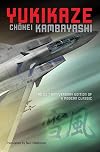
I actually bought Good Luck, Yukikaze, the sequel to this book, first – the mention of AIs in the publisher description piqued my interest. After I realized I'd screwed up, I of course had to buy Yukikaze, but the whole thing made me a little nervous. If I hated Yukikaze, its sequel would probably have sat on my shelves, taunting me and collecting dust, until I finally guiltily added it to my “sell to used bookstore” pile unread. But I did not hate it. I loved it.
Thirty or so years show more ago, the JAM, mysterious aliens, invaded Earth using a strange portal located in the Antarctic. We managed to beat them back, and, in the book's present, the war now takes place entirely on Faery, the planet just on the other side of the portal. The war has absolutely nothing to do with the average, every day lives of most human beings, and most of the people fighting the JAM are actually convicts from various countries, serving their time on the Faery Air Force (FAF) base.
Rei is one such convict. He's part of the SAF (Special Air Force), and Yukikaze, his fighter plane, is a Super Sylph. Super Sylphs have powerful central computers that collect combat activity data, and their duty is to always make it back, even if it means watching while FAF comrades die. SAF pilots like Rei are selected for their ability to be as cold and detached as possible.
The beginning of this book, the foreword, was a little rough. So many acronyms, so much jargon. I kept having to flip back and reread certain paragraphs and pages, and I was worried that it was a sign of worse to come. Thankfully, after that I pretty much gobbled the book up. The jargon and acronyms never went away, but I got used to a lot of it and just accepted that I wasn't going to be able to follow every last bit of it. I was still able to picture the aerial battles and get the gist of what was going on, and that was all that mattered.
The way Yukikaze was structured made it feel almost like a series of short stories, each dealing with a particular chunk of time in Rei and Yukikaze's partnership. The "stories"/chapters were, of course, tied together by Rei and Yukikaze, but they were also tied together by the book's themes of isolation, the futility of the war, and the necessity (or lack thereof) of humans in a war fought by machines. One of the things I loved about the book was the way little details gradually coalesced into something strange and sometimes unsettling.
One of the odd things about Yukikaze was how bare-bones all the characters were, even Rei. We never learned what crime Rei committed, how he became an SAF pilot, or what his life on Earth was like. He had a few stray thoughts about a past girlfriend who left him, but that was it. It fit with the way just about everyone in this book was isolated. The FAF was so isolated from Earth that it was viewed with almost as much fear and suspicion as the JAM. The SAF, in turn, was isolated from the rest of the FAF. Although Rei had one human friend, his entire existence was pretty much wrapped up in Yukikaze.
That's why the possibility that humans might not be necessary to fight the JAM shook him so badly. If humans weren't necessary, that would mean that Yukikaze didn't need him, and he couldn't accept that. This was, for me, one of the most gut-wrenching threads in the book, especially as the true shape of the war between the JAM and the Earth became clearer and Yukikaze became more independent.
One of the things I was hoping to get out of this book was an awesome sentient fighter plane, which is what the publisher description led me to expect. It took a long time, but the book eventually delivered. Just not in the way I expected, or to the extent I hoped for. Yukikaze started off as a really excellent fighter plane with a very advanced central computer, but still primarily in Rei's control. She gradually became more intelligent and capable of operating without her pilot. Indeed, at times she actively ignored her pilot. However, she could barely communicate (with Rei, anyway – she communicated with other computers just fine), and the motivations behind her actions usually had multiple possible interpretations.
As much as I dreaded the direction the book seemed to be taking, the second half of it was my favorite. I loved learning a bit more about the JAM, and the question of where human beings stood in the war kept me at the edge of my seat. When Yukikaze began to come into her own, it was glorious. And also kind of terrifying.
All in all, I loved this book, even though the ending left me feeling a little sad and hollow (it's a full day later, and I still have a book hangover). Thankfully, I can take care of that with the sequel. I looked at the original publication dates for Yukikaze and its sequel and was a little horrified to learn that they were published 15 years apart. That hurts just thinking about it.
Additional Comments:
I couldn't figure out how to fit this in my review, but I felt it needed to be mentioned. There is an instance of semi-sexualized violence near the end – a male character attacks a woman who is drugging him, rips her shirt open, and bites out a chunk of one of her breasts. Even if Kambayashi considered the biting itself to be necessary, I'm not sure why he chose that particular body part.
Extras:
- Yukikaze fact sheet (6 pages)
- "About Yukikaze" by Chohei Kambayashi
- "Human/Inhuman" by Ran Ishidou - I didn't always agree with the way Yukikaze was interpreted, but it was still an interesting essay, and some of the interpretations hadn't even occurred to me.
- "The JAM Are There" by Ray Fuyuki - More literary analysis. This essay was less interesting to me.
- List of abbreviations and acronyms
(Original review, with read-alikes and watch-alikes, posted on A Library Girl's Familiar Diversions.) show less
Thirty or so years show more ago, the JAM, mysterious aliens, invaded Earth using a strange portal located in the Antarctic. We managed to beat them back, and, in the book's present, the war now takes place entirely on Faery, the planet just on the other side of the portal. The war has absolutely nothing to do with the average, every day lives of most human beings, and most of the people fighting the JAM are actually convicts from various countries, serving their time on the Faery Air Force (FAF) base.
Rei is one such convict. He's part of the SAF (Special Air Force), and Yukikaze, his fighter plane, is a Super Sylph. Super Sylphs have powerful central computers that collect combat activity data, and their duty is to always make it back, even if it means watching while FAF comrades die. SAF pilots like Rei are selected for their ability to be as cold and detached as possible.
The beginning of this book, the foreword, was a little rough. So many acronyms, so much jargon. I kept having to flip back and reread certain paragraphs and pages, and I was worried that it was a sign of worse to come. Thankfully, after that I pretty much gobbled the book up. The jargon and acronyms never went away, but I got used to a lot of it and just accepted that I wasn't going to be able to follow every last bit of it. I was still able to picture the aerial battles and get the gist of what was going on, and that was all that mattered.
The way Yukikaze was structured made it feel almost like a series of short stories, each dealing with a particular chunk of time in Rei and Yukikaze's partnership. The "stories"/chapters were, of course, tied together by Rei and Yukikaze, but they were also tied together by the book's themes of isolation, the futility of the war, and the necessity (or lack thereof) of humans in a war fought by machines. One of the things I loved about the book was the way little details gradually coalesced into something strange and sometimes unsettling.
One of the odd things about Yukikaze was how bare-bones all the characters were, even Rei. We never learned what crime Rei committed, how he became an SAF pilot, or what his life on Earth was like. He had a few stray thoughts about a past girlfriend who left him, but that was it. It fit with the way just about everyone in this book was isolated. The FAF was so isolated from Earth that it was viewed with almost as much fear and suspicion as the JAM. The SAF, in turn, was isolated from the rest of the FAF. Although Rei had one human friend, his entire existence was pretty much wrapped up in Yukikaze.
That's why the possibility that humans might not be necessary to fight the JAM shook him so badly. If humans weren't necessary, that would mean that Yukikaze didn't need him, and he couldn't accept that. This was, for me, one of the most gut-wrenching threads in the book, especially as the true shape of the war between the JAM and the Earth became clearer and Yukikaze became more independent.
One of the things I was hoping to get out of this book was an awesome sentient fighter plane, which is what the publisher description led me to expect. It took a long time, but the book eventually delivered. Just not in the way I expected, or to the extent I hoped for. Yukikaze started off as a really excellent fighter plane with a very advanced central computer, but still primarily in Rei's control. She gradually became more intelligent and capable of operating without her pilot. Indeed, at times she actively ignored her pilot. However, she could barely communicate (with Rei, anyway – she communicated with other computers just fine), and the motivations behind her actions usually had multiple possible interpretations.
As much as I dreaded the direction the book seemed to be taking, the second half of it was my favorite. I loved learning a bit more about the JAM, and the question of where human beings stood in the war kept me at the edge of my seat. When Yukikaze began to come into her own, it was glorious. And also kind of terrifying.
All in all, I loved this book, even though the ending left me feeling a little sad and hollow (it's a full day later, and I still have a book hangover). Thankfully, I can take care of that with the sequel. I looked at the original publication dates for Yukikaze and its sequel and was a little horrified to learn that they were published 15 years apart. That hurts just thinking about it.
Additional Comments:
I couldn't figure out how to fit this in my review, but I felt it needed to be mentioned. There is an instance of semi-sexualized violence near the end – a male character attacks a woman who is drugging him, rips her shirt open, and bites out a chunk of one of her breasts. Even if Kambayashi considered the biting itself to be necessary, I'm not sure why he chose that particular body part.
Extras:
- Yukikaze fact sheet (6 pages)
- "About Yukikaze" by Chohei Kambayashi
- "Human/Inhuman" by Ran Ishidou - I didn't always agree with the way Yukikaze was interpreted, but it was still an interesting essay, and some of the interpretations hadn't even occurred to me.
- "The JAM Are There" by Ray Fuyuki - More literary analysis. This essay was less interesting to me.
- List of abbreviations and acronyms
(Original review, with read-alikes and watch-alikes, posted on A Library Girl's Familiar Diversions.) show less
This book was not exactly what I expected it to be.
It contains some very dynamic air battles. Fans of Ace Combat out there, and Macross saga, know what to expect - wild maneuvering, guns blazing, high-G stress and alarms blaring indicating missile locks. But book is not just about that.
It gives a picture of remote battlefield - connected through a portal to Earth (way JAM invaders first attacked Earth) - that seems like a nightmare-induced battlefield (two suns with "bloody river" between show more them, weird flora and fauna, weird colors, everything seems so dreamy) where eternal war between humanity and JAM takes place. This planet, called Faery, is so deadly that combat only takes place in the air. While there are airports and bases, they are just ground targets - Faery's airspace is where actual combat takes place, there are no troops but flyers here. Weirdness of this place, multinational force from Earth (Faery Air Force) deployed there is akin to French Foreign Legion [all the problematic military personnel, with crime record or just unable to fit into standard forces are given chance to serve time on Faery and then go back to Earth with clean slate], which means expendable, all make this battlefield so remote to regular inhabitants of Earth, to the level of myth (after initial JAM attack on Earth years ago, there were no more combat actions on Earth, so everybody returned back to the inter-state squabbling). Every contact between Earth and Faery deployed personnel shows how different they have become, even linguistically they started to diverge. Earth-bound people are either worried that FAF is some deep state army preparing for conquering the Earth (you had to love that journalist chapter) or are just outright worried that personnel going to Faery to fight are losing what makes them human in the first place [state of never-ending war will strip people of the usual traits of society in peace time; Everything becomes tool for the war effort, and what cannot be used is then discarded; This usually means limited to no use of social traits that help build connections and relations and bring tension to low levels, for a simple reason that in war zone these traits usually mean quick death] and thus question arises what to do with veterans when they come back to Earth.
But book is not just about that.
Main antagonist in the book, JAM, are very extraordinary alien force. Nobody ever saw them, there is no communication with them, only physical manifestation are their strike craft and their bio-constructs they use in what might be considered psychological operations. JAM are main psychological difficulty to the FAF forces. If one cannot even visualize what they are fighting against, and since there is no communication one cannot gauge the progress of the campaign, all of the FAF's pilots and personnel in general are under unique and deadly form of stress. This pressure of never-ending war that needs to be fought (as author states, goal is to impede the progress of JAM, since no-one knows what would it take to actually win in this war) starts to create questions of need of human presence in combat airplanes, since every day combat has a feeling of industrialized carnage. Would it not be better to have machines fight it between themselves? Especially since JAM is viewed by most as machines - since humanity comes into contact only with JAM machines. This feeling of impeding doom as war just goes on and on, dehumanizes the FAF force, because what would ordinarily be standard human (re)actions (definition of victory/moral, seeking communication and diplomatic solution etc) just make no sense on Faery because JAM is just ..... unfathomable. This issue of first contact/conflict with alien species that cannot be comprehend by humans, is just one of the areas this book is about.
Through chapters we are given almost evolution-like development of Yukikaze fighter plane. What starts as a series of weird encounters and decisions by Yukikaze [and rest of automated systems on Faery] slowly escalates. Decisions to engage targets Yukikaze identifies as JAM although to humans they seem to be human fighters, weird personnel decisions (snow clearing team story was heart breaking) and almost total recklessness when it comes to human lives in case when fighter planes themselves are endangered - all of this slowly culminates to the point where it is visible that FAF computer systems have reached some level of intelligence, but unfortunately one that will just make them proficient in war against JAM. Everything else is of second nature and at first it seems that tools made by humanity have decided that humanity itself is impediment for most efficient use of tools in question. And it is not that machines have come to their conclusions on their own - everything originates from the actions and decisions of their human controllers that they have become masters of emulating (very good comment on teaching-bias). Is it weird that means justify the ends approach of FAF while fighting the JAM slowly becomes the mantra of ever more smarter weapon systems? Is it weird that these smarts systems start to take themselves to be on par with humans and as such always seek to ensure their own survival over anything else (even their teaches, humans)? All with the aim of defeating the JAM.
As can be seen topics in the book are all very interesting and very current (as is every story about the conflict). Author's style is very readable, there are no repetitions and wasted spaces, everything is very tight and to the point. Translator did excellent job in my opinion.
What might be a cause of contention is tempo of chapters. While there are adrenaline fueled chapters, some of them are slower than the others, sometimes imbued with internal monologues that might be boring to some (i.e. that snow team chapter, truly heartbreaking, but rather slow - not that I mind :)) or just anime/manga ... cringy (!?! in lack of better words) (that ace pilot testing latest FAF fighter and his love interest, constant tension between Rei and commanding officer). I know these elements are here for dramatic effect, but pacing gets affected nevertheless, and some readers might not like it.
Very interesting book, covers some very interesting subjects. I am now on lookout for the sequel :)
Highly recommended to fans of SF, aliens and of course good old mecha/fighter combat. show less
It contains some very dynamic air battles. Fans of Ace Combat out there, and Macross saga, know what to expect - wild maneuvering, guns blazing, high-G stress and alarms blaring indicating missile locks. But book is not just about that.
It gives a picture of remote battlefield - connected through a portal to Earth (way JAM invaders first attacked Earth) - that seems like a nightmare-induced battlefield (two suns with "bloody river" between show more them, weird flora and fauna, weird colors, everything seems so dreamy) where eternal war between humanity and JAM takes place. This planet, called Faery, is so deadly that combat only takes place in the air. While there are airports and bases, they are just ground targets - Faery's airspace is where actual combat takes place, there are no troops but flyers here. Weirdness of this place, multinational force from Earth (Faery Air Force) deployed there is akin to French Foreign Legion [all the problematic military personnel, with crime record or just unable to fit into standard forces are given chance to serve time on Faery and then go back to Earth with clean slate], which means expendable, all make this battlefield so remote to regular inhabitants of Earth, to the level of myth (after initial JAM attack on Earth years ago, there were no more combat actions on Earth, so everybody returned back to the inter-state squabbling). Every contact between Earth and Faery deployed personnel shows how different they have become, even linguistically they started to diverge. Earth-bound people are either worried that FAF is some deep state army preparing for conquering the Earth (you had to love that journalist chapter) or are just outright worried that personnel going to Faery to fight are losing what makes them human in the first place [state of never-ending war will strip people of the usual traits of society in peace time; Everything becomes tool for the war effort, and what cannot be used is then discarded; This usually means limited to no use of social traits that help build connections and relations and bring tension to low levels, for a simple reason that in war zone these traits usually mean quick death] and thus question arises what to do with veterans when they come back to Earth.
But book is not just about that.
Main antagonist in the book, JAM, are very extraordinary alien force. Nobody ever saw them, there is no communication with them, only physical manifestation are their strike craft and their bio-constructs they use in what might be considered psychological operations. JAM are main psychological difficulty to the FAF forces. If one cannot even visualize what they are fighting against, and since there is no communication one cannot gauge the progress of the campaign, all of the FAF's pilots and personnel in general are under unique and deadly form of stress. This pressure of never-ending war that needs to be fought (as author states, goal is to impede the progress of JAM, since no-one knows what would it take to actually win in this war) starts to create questions of need of human presence in combat airplanes, since every day combat has a feeling of industrialized carnage. Would it not be better to have machines fight it between themselves? Especially since JAM is viewed by most as machines - since humanity comes into contact only with JAM machines. This feeling of impeding doom as war just goes on and on, dehumanizes the FAF force, because what would ordinarily be standard human (re)actions (definition of victory/moral, seeking communication and diplomatic solution etc) just make no sense on Faery because JAM is just ..... unfathomable. This issue of first contact/conflict with alien species that cannot be comprehend by humans, is just one of the areas this book is about.
Through chapters we are given almost evolution-like development of Yukikaze fighter plane. What starts as a series of weird encounters and decisions by Yukikaze [and rest of automated systems on Faery] slowly escalates. Decisions to engage targets Yukikaze identifies as JAM although to humans they seem to be human fighters, weird personnel decisions (snow clearing team story was heart breaking) and almost total recklessness when it comes to human lives in case when fighter planes themselves are endangered - all of this slowly culminates to the point where it is visible that FAF computer systems have reached some level of intelligence, but unfortunately one that will just make them proficient in war against JAM. Everything else is of second nature and at first it seems that tools made by humanity have decided that humanity itself is impediment for most efficient use of tools in question. And it is not that machines have come to their conclusions on their own - everything originates from the actions and decisions of their human controllers that they have become masters of emulating (very good comment on teaching-bias). Is it weird that means justify the ends approach of FAF while fighting the JAM slowly becomes the mantra of ever more smarter weapon systems? Is it weird that these smarts systems start to take themselves to be on par with humans and as such always seek to ensure their own survival over anything else (even their teaches, humans)? All with the aim of defeating the JAM.
As can be seen topics in the book are all very interesting and very current (as is every story about the conflict). Author's style is very readable, there are no repetitions and wasted spaces, everything is very tight and to the point. Translator did excellent job in my opinion.
What might be a cause of contention is tempo of chapters. While there are adrenaline fueled chapters, some of them are slower than the others, sometimes imbued with internal monologues that might be boring to some (i.e. that snow team chapter, truly heartbreaking, but rather slow - not that I mind :)) or just anime/manga ... cringy (!?! in lack of better words) (that ace pilot testing latest FAF fighter and his love interest, constant tension between Rei and commanding officer). I know these elements are here for dramatic effect, but pacing gets affected nevertheless, and some readers might not like it.
Very interesting book, covers some very interesting subjects. I am now on lookout for the sequel :)
Highly recommended to fans of SF, aliens and of course good old mecha/fighter combat. show less
Chōhei Kambayashi is an award-winning, well-respected, and popular author of science fiction in Japan. His novel Yukikaze is one of his best known works and has even been adapted into a short anime series. It is also his first book to be translated and released in English. Originally published in Japan in 1984, Yukikaze would go on to win a Seiun Award in 1985. Kambayashi revisited and slightly revised the novel in 2002 in preparation for the volume's sequel Good Luck, Yukikaze. Neil show more Nadelman's translation of Yukikaze, published by Viz Media's speculative fiction imprint Haikasoru in 2010, is based on this 2002 edition. Haikasoru's release of Yukikaze also includes two very interesting essays about the novel by Ran Ishidou and Ray Fuyuki. Haikasoru also released an English translation of Good Luck, Yukikaze. Kambayashi has written a third volume in the series, Unbroken Arrow, which has yet to be translated.
Rei Fukai is one of the best pilots that the Faery Air Force has, surviving numerous encounters with the JAM, an alien force threatening humanity's very existence. It has been more than three decades since the JAM first appeared on Earth. They were quickly pushed back to the planet from where their invasion was launched, however the prolonged war against the JAM continues with no obvious way to secure a complete victory. Survival is Fukai's primary order and goal. A member of an elite squadron associated with the Special Air Force, his mission is to collect and record massive amounts of data about the JAM and their tactical capabilities. He is to return with that information no matter what, even if that means leaving his comrades behind to die. Because of this, he and the others in his squadron have earned the reputation of being cold-hearted bastards. Outside of himself, the only thing that Fukai believes in, cares about, or trusts is the Yukikaze, the highly advanced fighter plane that he pilots.
Kambayashi addresses several themes in depth in Yukikaze: what humanity's purpose is within the context of war, what it means to be human or inhuman, and perhaps most strikingly what the impact of the convergence of human intelligence and the technology it develops could be. Yukikaze is an engaging war story, with kinetic and hazardous air battles that have terrifying implications, but like all great science fiction the novel is also incredibly thought-provoking. The members of the Faery Air Force, and especially those in the Special Air Force, are primarily made up of criminals, those with anti-social tendencies, and other people who are unwanted or have no place back on Earth. They are treated more like expendable resources than they are like human beings. The war and the fighting is so far removed from those living on Earth that they are mostly oblivious to what is occurring on Faery. Protecting Earth is a thankless task for those engaged in the war, people who have very few ties to the planet left but who have no better options other than to fight.
Considering all of this, it isn't that surprising that Fukai and some of the other pilots would prefer their planes to people. I'll admit, as unsociable as Fukai can be, I did like the guy. It did take me a couple of chapters to really settle into Yukikaze, but by the end of the novel I was completely engaged. A large reason behind that was because of Fukai and his development as the novel progressed as well as the evolution of the Yukikaze. In the chaos of war, Fukai's relationship to his fighter is one of the only stable things remaining in his life, but even that begins to change. The members of the Faery Air Force are often called inhuman and compared to machines. At the same time those machines are becoming more and more advanced, raising the question of whether humans are even necessary anymore. The war against the JAM that humanity is waging may not be the only battle of survival that it should be concerned about fighting. After an interesting but somewhat clunky beginning, I was actually quite impressed with the depth of Kambayashi's ideas in Yukikaze. I look forward to reading its sequel.
Experiments in Manga show less
Rei Fukai is one of the best pilots that the Faery Air Force has, surviving numerous encounters with the JAM, an alien force threatening humanity's very existence. It has been more than three decades since the JAM first appeared on Earth. They were quickly pushed back to the planet from where their invasion was launched, however the prolonged war against the JAM continues with no obvious way to secure a complete victory. Survival is Fukai's primary order and goal. A member of an elite squadron associated with the Special Air Force, his mission is to collect and record massive amounts of data about the JAM and their tactical capabilities. He is to return with that information no matter what, even if that means leaving his comrades behind to die. Because of this, he and the others in his squadron have earned the reputation of being cold-hearted bastards. Outside of himself, the only thing that Fukai believes in, cares about, or trusts is the Yukikaze, the highly advanced fighter plane that he pilots.
Kambayashi addresses several themes in depth in Yukikaze: what humanity's purpose is within the context of war, what it means to be human or inhuman, and perhaps most strikingly what the impact of the convergence of human intelligence and the technology it develops could be. Yukikaze is an engaging war story, with kinetic and hazardous air battles that have terrifying implications, but like all great science fiction the novel is also incredibly thought-provoking. The members of the Faery Air Force, and especially those in the Special Air Force, are primarily made up of criminals, those with anti-social tendencies, and other people who are unwanted or have no place back on Earth. They are treated more like expendable resources than they are like human beings. The war and the fighting is so far removed from those living on Earth that they are mostly oblivious to what is occurring on Faery. Protecting Earth is a thankless task for those engaged in the war, people who have very few ties to the planet left but who have no better options other than to fight.
Considering all of this, it isn't that surprising that Fukai and some of the other pilots would prefer their planes to people. I'll admit, as unsociable as Fukai can be, I did like the guy. It did take me a couple of chapters to really settle into Yukikaze, but by the end of the novel I was completely engaged. A large reason behind that was because of Fukai and his development as the novel progressed as well as the evolution of the Yukikaze. In the chaos of war, Fukai's relationship to his fighter is one of the only stable things remaining in his life, but even that begins to change. The members of the Faery Air Force are often called inhuman and compared to machines. At the same time those machines are becoming more and more advanced, raising the question of whether humans are even necessary anymore. The war against the JAM that humanity is waging may not be the only battle of survival that it should be concerned about fighting. After an interesting but somewhat clunky beginning, I was actually quite impressed with the depth of Kambayashi's ideas in Yukikaze. I look forward to reading its sequel.
Experiments in Manga show less
A deceptive book, that starts out as a story about hot-shot pilots fighting an alien menace that turns into a meditation on war, humanity, and what enmity between humans and nonhumans might actually look like.
Fun, well translated, and fast paced military SF.
Fun, well translated, and fast paced military SF.
Lists
Awards
You May Also Like


Associated Authors
Statistics
- Works
- 42
- Also by
- 6
- Members
- 272
- Popularity
- #85,117
- Rating
- 3.4
- Reviews
- 8
- ISBNs
- 50
- Languages
- 1