
京極夏彥
Author of The Summer of the Ubume
About the Author
Image credit: via Goodreads
Series
Works by 京極夏彥
Gyosai Yokai Hyakkei [100 Scenes of Ghost and Specter By Kawanabe Gyosai] (Japanese Imported) (1998) 3 copies
続巷説百物語 3 copies
é?魎ã?®匣 文庫版 2 copies
鉄鼠の檻 2 copies
狂骨の夢 2 copies
姑獲鳥の夏 2 copies
魍魎の匣 2 copies
嗤う伊右衛門 2 copies
鵼の碑 2 copies
宴の始末 2 copies
陰摩羅鬼の瑕 2 copies
邪魅の雫 2 copies
死ねばいいのに 2 copies
絡新婦の理 2 copies
分冊文庫版 塗仏の宴 宴の支度 (中) 1 copy
分冊文庫版 塗仏の宴 宴の支度 (下) 1 copy
どすこい(安) 1 copy
怪談専門誌 幽 VOL.26 1 copy
分冊文庫版 塗仏の宴 宴の支度 (上) 1 copy
文庫版 塗仏の宴―宴の始末 1 copy
文庫版 絡新婦の理 1 copy
どすこい。 1 copy
分冊文庫版 魍魎の匣〈中〉 1 copy
どすこい(仮) 1 copy
分冊文庫版 魍魎の匣〈下〉 1 copy
分冊文庫版 魍魎の匣〈上〉 1 copy
分冊文庫版 絡新婦の理〈2〉 1 copy
分冊文庫版 鉄鼠の檻〈2〉 1 copy
分冊文庫版 鉄鼠の檻〈3〉 1 copy
分冊文庫版 絡新婦の理〈1〉 1 copy
分冊文庫版 鉄鼠の檻〈1〉 1 copy
文庫版 百器徒然袋―雨 1 copy
分冊文庫版 狂骨の夢 下 1 copy
分冊文庫版 狂骨の夢 中 1 copy
分冊文庫版 狂骨の夢 上 1 copy
分冊文庫版 鉄鼠の檻 1 copy
分冊文庫版 絡新婦の理 (四) 1 copy
分冊文庫版 絡新婦の理 (三) 1 copy
怪談専門誌 幽 VOL.25 (カドカワムック 642) 1 copy
京極夏彦対談集 妖怪大談義 1 copy
Associated Works
Tales of Old Edo - Kaiki: Uncanny Tales from Japan, Vol. 1 (2009) — Contributor — 47 copies, 1 review
リテラリーゴシック・イン・ジャパン 文学的ゴシック作品選 — Contributor — 1 copy
Tagged
Common Knowledge
- Canonical name
- Kyogoku, Natsuhiko
- Legal name
- 京極 夏彦
- Birthdate
- 1963-03-26
- Gender
- male
- Organizations
- Mystery Writers of Japan
Honkaku Mystery Writers Club of Japan (founder) - Nationality
- Japan
- Birthplace
- Hokkaido, Japan
- Associated Place (for map)
- Hokkaido, Japan
Members
Reviews
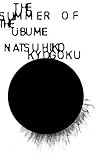
Tokyo, summer 1952. A journalist picks up some rumours of strange goings-on at a medical clinic - a man has vanished from inside a locked room, his wife has been pregnant for 20 months, there are dark hints of Nazi experimentation and stolen babies. Freaked out by the stories but seeing a publication opportunity, he goes to talk it over with his smartest friend, a secondhand bookseller who is also a shaman. The friend warns him off from publishing, but also becomes interested in the story, show more and in the end, joined by a private detective with a sort of second sight and the bookseller's equally clever sister, they are drawn into trying to 'solve' the mysteries.
So, it's a crazy story, told by the (rather susceptible) journalist, but leavened by the staunch rationalism of the bookseller/shaman, who starts the book with a long discussion of how the supernatural - ghosts, curses and spirits - 'exist, but are not real' - that is, people believe in them and therefore they have an impact on people's behaviour, despite the fact that they are total fiction. An atheist shaman (as he is) might seem like a contradiction in terms, but in fact it gives him the ability to play with the language and images of different religious beliefs, until he finds the one which resonates with his 'patient'. The whole story plays out as a demonstration of his argument: there is, in the end, a rational explanation for everything, but it's filtered through the imaginations and psyches of the different characters.
I found this a very interesting concept, although the story itself was occasionally too dry (much too much of the bookseller's philosophical disquisitions) and the mystery story became so baroque that I was very confused even after all the explanations. show less
So, it's a crazy story, told by the (rather susceptible) journalist, but leavened by the staunch rationalism of the bookseller/shaman, who starts the book with a long discussion of how the supernatural - ghosts, curses and spirits - 'exist, but are not real' - that is, people believe in them and therefore they have an impact on people's behaviour, despite the fact that they are total fiction. An atheist shaman (as he is) might seem like a contradiction in terms, but in fact it gives him the ability to play with the language and images of different religious beliefs, until he finds the one which resonates with his 'patient'. The whole story plays out as a demonstration of his argument: there is, in the end, a rational explanation for everything, but it's filtered through the imaginations and psyches of the different characters.
I found this a very interesting concept, although the story itself was occasionally too dry (much too much of the bookseller's philosophical disquisitions) and the mystery story became so baroque that I was very confused even after all the explanations. show less
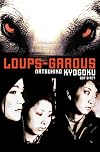
I didn't really intend on reading Natsuhiko Kyogoku's novel Loups-Garous this soon although I did plan on getting around to it eventually. Basically, I will read anything and everything published by Viz Media's Haikasoru imprint, which specializes in Japanese speculative fiction. Out of all of their offerings, Loups-Garous was not the one that interested me the most, which is why I was going to wait to read it. However, I found myself without reading material one day and it was the only show more Haikasoru book the store had in stock that I didn't already own, so Loups-Garous it was. Kyogoku has been writing since the early '90s, mostly mysteries with a special focus on yōkai and the supernatural, and Loups-Garous, originally written in 2001, is one of his few novels not associated with a series. Haikasoru's edition, translated by Anne Ishii, was released in 2010. Currently, the only other work of his available in English that I know of is his debut novel The Summer of the Ubume, originally written in 1994 and released by Vertical in 2009.
After a string of serial killings, apparently targeting junior high girls, the police investigating initiate a unprecedented, and most likely illegal, move to acquire personal data on the local students collected by their counselors from their communication labs. These labs are designed to help facilitate and foster face-to-face interactions in a world that most people experience through their monitors. Shizue Fuwa, one of the counselors, is firmly against the police's actions but is forced to comply. As more students die, her doubts and distrust continue to grow. Three of her students, Hazuki Makino, Mio Tsuzuki, and Ayumi Kono do some poking around on their own, only to find themselves in more danger than they bargained for with no one that they can trust. When reality is determined by what can be viewed on a screen, and when that information can be distorted, who is going to believe a group of delinquent minors?
Loups-Garous is an odd book. For some reason, werewolves seem to have been played-up in its marketing, but there is not a single one in the story. Well, at least not literally--there are plenty of figurative monsters. Instead, I think Loups-Garous is more about the control and power over information, its creation and dissemination, and its potential for manipulation. Personally, that is something I am much more interested in than werewolves, anyway. On top of a bizarre but not entirely unbelievable future, Loups-Garous' story is couched as a mystery. There is a lot going on in the book and many, many layers--genre and otherwise--which made Kyogoku's work absolutely fascinating to me. I really didn't know what I was getting myself into when I picked up Loups-Garous to read and didn't really know what to expect even after I started it; there were certainly some intriguing surprises in store.
The plot of Loups-Garous is somewhat slow to begin with, most of the text being devoted to meticulous world-building until about halfway through. It's then that things start to get really interesting fast and the finale is explosive. Kyogoku's characters tend to have what initially seem to be long and involved tangential conversations but generally these tie back in somehow--there's a lot of deep thinking and philosophizing going on, but important information is conveyed. The dialogue, especially towards the beginning, is rather awkward but I think this is appropriate given the setting of the story and the fact that people aren't used to interacting directly. Kyogoku's future is fully realized and complex and I found Loups-Garous to be a fascinating and absorbing novel.
Experiments in Manga show less
After a string of serial killings, apparently targeting junior high girls, the police investigating initiate a unprecedented, and most likely illegal, move to acquire personal data on the local students collected by their counselors from their communication labs. These labs are designed to help facilitate and foster face-to-face interactions in a world that most people experience through their monitors. Shizue Fuwa, one of the counselors, is firmly against the police's actions but is forced to comply. As more students die, her doubts and distrust continue to grow. Three of her students, Hazuki Makino, Mio Tsuzuki, and Ayumi Kono do some poking around on their own, only to find themselves in more danger than they bargained for with no one that they can trust. When reality is determined by what can be viewed on a screen, and when that information can be distorted, who is going to believe a group of delinquent minors?
Loups-Garous is an odd book. For some reason, werewolves seem to have been played-up in its marketing, but there is not a single one in the story. Well, at least not literally--there are plenty of figurative monsters. Instead, I think Loups-Garous is more about the control and power over information, its creation and dissemination, and its potential for manipulation. Personally, that is something I am much more interested in than werewolves, anyway. On top of a bizarre but not entirely unbelievable future, Loups-Garous' story is couched as a mystery. There is a lot going on in the book and many, many layers--genre and otherwise--which made Kyogoku's work absolutely fascinating to me. I really didn't know what I was getting myself into when I picked up Loups-Garous to read and didn't really know what to expect even after I started it; there were certainly some intriguing surprises in store.
The plot of Loups-Garous is somewhat slow to begin with, most of the text being devoted to meticulous world-building until about halfway through. It's then that things start to get really interesting fast and the finale is explosive. Kyogoku's characters tend to have what initially seem to be long and involved tangential conversations but generally these tie back in somehow--there's a lot of deep thinking and philosophizing going on, but important information is conveyed. The dialogue, especially towards the beginning, is rather awkward but I think this is appropriate given the setting of the story and the fact that people aren't used to interacting directly. Kyogoku's future is fully realized and complex and I found Loups-Garous to be a fascinating and absorbing novel.
Experiments in Manga show less
Finished this a while back. Wow, this is a pretty crazy read though - trying to describe it is a little tricky, partly because it packs so much in, and partly because discovering what it's "about" seems like part of the fun.
Basically a mystery story, but tied in with psycho-magical theses and a driving, intriguing narration. Intense, clever - but I can't say if it's *too* clever or not. All I can say is that it worked for me, and that I found myself tearing through the second half to show more uncover everything.
Some people have complained about the first 80 pages or so, which is probably the main part which might be "too clever". But if you can stick with it, or if you love that kind of semi-scientific conjecture on the cognitive origins of magic, ritual, belief and ghosts, (oh, and if you can skip over some of the slightly-overly-American translation ;) then this is a ghost/detective/fairy story definitely worth picking up. show less
Basically a mystery story, but tied in with psycho-magical theses and a driving, intriguing narration. Intense, clever - but I can't say if it's *too* clever or not. All I can say is that it worked for me, and that I found myself tearing through the second half to show more uncover everything.
Some people have complained about the first 80 pages or so, which is probably the main part which might be "too clever". But if you can stick with it, or if you love that kind of semi-scientific conjecture on the cognitive origins of magic, ritual, belief and ghosts, (oh, and if you can skip over some of the slightly-overly-American translation ;) then this is a ghost/detective/fairy story definitely worth picking up. show less
This book was a real drag to get through and if it had been any other book I would have put it down. In fact, I did put this down several times but it kept calling to me. Partly because the scenario and mystery were intriguing, and partly because I really liked the film version I watched years ago.
What made it a difficult read has to do with the nature of the society in the book. Everyone lives in isolation, only interacting with others through monitor screens. The children, in particular, show more lead extremely sheltered lives, don't learn about history, and are ignorant of many things we take for granted. Things like looking up at the open sky or even the act of crying are alien to them. So the book is filled with long (pages and pages) conversations about these mundane aspects of life. I understand why they are there, and it makes sense, but it's still tedious.
In the end I didn't really find it rewarding but I'm glad I finished because otherwise I would always be wondering about it. show less
What made it a difficult read has to do with the nature of the society in the book. Everyone lives in isolation, only interacting with others through monitor screens. The children, in particular, show more lead extremely sheltered lives, don't learn about history, and are ignorant of many things we take for granted. Things like looking up at the open sky or even the act of crying are alien to them. So the book is filled with long (pages and pages) conversations about these mundane aspects of life. I understand why they are there, and it makes sense, but it's still tedious.
In the end I didn't really find it rewarding but I'm glad I finished because otherwise I would always be wondering about it. show less
Lists
Diverse Horror (1)
Awards


You May Also Like


Associated Authors
Statistics
- Works
- 93
- Also by
- 3
- Members
- 476
- Popularity
- #51,803
- Rating
- 3.7
- Reviews
- 7
- ISBNs
- 71
- Languages
- 3
- Favorited
- 2