
John Stephen Strange (1896–1983)
Author of Catch the gold ring
About the Author
Disambiguation Notice:
"John Stephen Strange" is the pseudonym of Dorothy Stockbridge Tillett.
Image credit: Dorothy Stockbridge Tillett
Series
Works by John Stephen Strange
Silent Witnesses 6 copies
Rope enough 3 copies
A picture of the victim 3 copies
Make my bed soon 2 copies
Angry dust 1 copy
Mördaren beklagar sorgen 1 copy
Lianen som dödade 1 copy
Associated Works
Tagged
Common Knowledge
- Legal name
- Tillett, Dorothy Stockbridge
- Other names
- Strange, John Stephen
- Birthdate
- 1896
- Date of death
- 1983
- Gender
- female
- Short biography
- (edited down from google translation of her French wikipedia page. why no English page???)
John Stephen Strange, pseudonym of Dorothy Stockbridge Tillet, born in 1896 and died in 1983, is an American author of detective stories.
Dorothy Stockbridge Tillet unsuccessfully published a book of poetry in 1920. She adopted the pseudonym of John Stephen Strange and turned to the detective novel.
In 1925 her first title, 'Revenge of a police officer', introduced her recurring hero detective Van Dusen Ormsberry. Assisted by the young Bill Adams; this meticulous detective manages to solve the mystery that hovers over the past two years on the murder of Fortescue financial and found guilty of the death of a famous criminologist in a bus. Strange also offers two classic puzzles to Whodunits Ormsberry before leaving for Barney Gantt, friendly Pulitzer Prize winning photographer, who returns eight investigations of great complexity, whose stories are eyeing a little towards the thriller and above to the thriller with stories of kidnappings and ransoms.
The Accused, one of eight novels without recurring hero John Stephen Stange tells the surprising story of Bardoley judge confronted with his past when it load a case where the accused is a former youth flame. This time, the plot recalls the style of John Dickson Carr, including the novel The Ireton judge is accused, without the novel Strange has suffered from the comparison.
Artwork
Romans
Van Dusen Ormsberry series
The Man Who Killed Fortescue (1925)
Published in French under the title Revenge of a policeman, Paris, Librairie des Champs-Elysees, The Mask No. 655, 1959
The Clue of Second Murder (1929)
Murder on the Ten-Yard Line (1931)
Published in French under the title Fanny wrote too, Paris, Librairie des Champs-Elysees, The Mask No. 804, 1963; reissue, Paris, Librairie des Champs-Elysees, Le Club des Masques No. 242, 1975
Barney Gantt series
The Bell in the Fog (1936)
The Ballot-Box Murders or Rope Enough (1938)
Silent Witness or The Corpse of the Lady (1938)
Published in French under the title No perfect crime, Paris, Librairie des Champs-Elysees, The Mask No. 660 1959; reissue, Paris, Librairie des Champs-Elysees, Le Club des Masques No. 123, 1971
A Picture of the Victim (1940)
Look Your Last (1943)
Soon Make My Bed (1948)
Deadly Beloved (1952)
The House on 9th Street (1976)
George Honegger series
Murder Gives a Lovely Light (1941)
All Men are Liars (1948)
Eye Witness (1961)
Other novels
Murder at World's End or The Strangler Fig (1930)
Black Hawthorn or Jar The Chinese Mystery (1933)
Published in French under the title The Black Hawthorn, Paris, New Critical Review, The Mark No. 52, 1934
For the Hangman (1934)
Uneasy is Unquiet Grave or the Grave (1949)
Reasonable Doubt or The Fair and the Death (1951)
Published in French under the title On the benefit of the doubt, Paris, Librairie des Champs-Elysees, The Mask No. 785, 1963
Let the Past Dead or Dead End (1953)
Published in French under the title The Accused, Geneva, Ditis, Detective Club - Switzerland No. 104, 1954; reissue, Paris, Ditis, coll. Detective Club - France No. 79, 1954; reissue, Ditis, coll. Owl No. 60, 1957; reissue, Paris, I read detective No. 32, 1965
Catch the Gold Ring and A Handful of Silver (1955)
Published in French under title 65, Place des Vosges, Paris, Librairie des Champs-Elysees, The Mask No. 571, 1957
Night of Reckoning (1958)
Another novel signed Dorothy Stockbridge Tillet
Angry Dust (1946)
Poetry signed Dorothy Stockbridge Tillet
Paths of June (1920)
Tillet signed Dorothy Stockbridge Theatre
Jezebel (1921). Got tired of editing, enjoy the translatorese! - Nationality
- USA
- Disambiguation notice
- "John Stephen Strange" is the pseudonym of Dorothy Stockbridge Tillett.
- Associated Place (for map)
- USA
Members
Reviews

John Stephen Strange is actually the pseudonym for a lady by the name of Dorothy Stockbridge Tillet, and English author who published 22 mysteries over a nearly fifty year career. Her 19th novel, Catch the Gold Ring, was first published in 1955 under the original title A Handful of Silver. It tells the story of a former French Resistance fighter named Henri and his search for his brother’s betrayer seven years after the liberation of Paris. Being the self-styled WWII buff I am, the plot show more immediately captured my attention.
The story begins with a series of flashbacks detailing Henri’s experience during the war, his family, and life in general under Nazi occupation. During this period there are two defining points in Henri’s life: his brother’s arrest and tortured execution at the hands of the Gestapo, and his love affair with his neighbor Magritte (who eventually leaves him inexplicably). Fast-forward seven years, and Henri still doesn’t know who betrayed his brother to the Gestapo. His Resistance friend Genet, now inspector of the Metropolitan police, has just uncovered a treasure trove of documents recording the identities of dozens of collaborators who spied for the Germans. They make several arrests, and after exhaustive interrogations they learn that every one of them received instructions and made reports to a man over the phone they knew only as “Albert.”
The trail goes cold for several weeks as both Genet and Henri follow their own lines of inquiry into the identity of Albert. At the same time, Henri’s old flame, Magritte, reappears along with her rich American husband. She flirts with Henri, tries to seduce him, and then abruptly pulls back. Henri realizes then that he still loves Magritte, and soon both his desire for her and the search for Albert begin to consume him. As the investigation begins to pick up steam, though, it becomes obvious that his brother’s betrayer is someone close to the family, and Henri begins to simultaneously yearn for and dread the coming revelation that will turn his world upside down.
To be honest, though, the final revelation ain’t exactly very… revealing. Astute readers out there will find the ending plot twist to be pretty transparent. I figured it out about 1/3 of the way into the book. That isn’t to say, however, that Catch the Gold Ring was a horrible read. It was very well written with deep characterization, an absorbing setting, and an engaging plot. But perhaps the most intriguing facets of the book—to this reader, at least—were the historical details with which Tillett peppered the narrative. It prompted me to do a little research of my own on the French Resistance, the establishment of the French Provisional Government, and period of vigilante justice that took place in between. And when a book prompts me to do even more reading beyond its own two covers, well that one’s a winner to me.
http://manoflabook.com/wp/?p=4892 show less
The story begins with a series of flashbacks detailing Henri’s experience during the war, his family, and life in general under Nazi occupation. During this period there are two defining points in Henri’s life: his brother’s arrest and tortured execution at the hands of the Gestapo, and his love affair with his neighbor Magritte (who eventually leaves him inexplicably). Fast-forward seven years, and Henri still doesn’t know who betrayed his brother to the Gestapo. His Resistance friend Genet, now inspector of the Metropolitan police, has just uncovered a treasure trove of documents recording the identities of dozens of collaborators who spied for the Germans. They make several arrests, and after exhaustive interrogations they learn that every one of them received instructions and made reports to a man over the phone they knew only as “Albert.”
The trail goes cold for several weeks as both Genet and Henri follow their own lines of inquiry into the identity of Albert. At the same time, Henri’s old flame, Magritte, reappears along with her rich American husband. She flirts with Henri, tries to seduce him, and then abruptly pulls back. Henri realizes then that he still loves Magritte, and soon both his desire for her and the search for Albert begin to consume him. As the investigation begins to pick up steam, though, it becomes obvious that his brother’s betrayer is someone close to the family, and Henri begins to simultaneously yearn for and dread the coming revelation that will turn his world upside down.
To be honest, though, the final revelation ain’t exactly very… revealing. Astute readers out there will find the ending plot twist to be pretty transparent. I figured it out about 1/3 of the way into the book. That isn’t to say, however, that Catch the Gold Ring was a horrible read. It was very well written with deep characterization, an absorbing setting, and an engaging plot. But perhaps the most intriguing facets of the book—to this reader, at least—were the historical details with which Tillett peppered the narrative. It prompted me to do a little research of my own on the French Resistance, the establishment of the French Provisional Government, and period of vigilante justice that took place in between. And when a book prompts me to do even more reading beyond its own two covers, well that one’s a winner to me.
http://manoflabook.com/wp/?p=4892 show less

Bolivar Brown, a Baltimore lawyer, receives an invitation to visit the south Florida island estate of Senator Stephen Huntington, who disappeared 7 years previously when essentially the same guests (except Brown) were visiting. After a violent storm strikes, Huntington's skeleton is found encased in a strangler fig. Only a few hours later, the body of one of the guests is found, an apparent suicide. The local sheriff dismisses Brown's belief that both were murdered, but Brown persists in his show more investigation. A good, complicated, Golden Age American detective story. show less

An ok mystery. The detective character was boring, the couple in love weren't interesting so I didn't care about the romance. The mystery itself was pretty good, but nothing else was worthwhile.
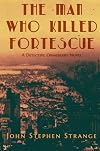
I really enjoyed preparing this old, out-of-print book for reprinting. It is a terrific debut mystery for John Stephen Strange, set in 1926 New York City. Detective Van Dusen Ormsberry is a dapper, clever detective, and his protegee, Billy Adams, is a lovable boy detective wannabe. The victim in this mystery is a Crime Writer himself, but what was he writing about that may have lead to his murder on the top of an omnibus? This title was one of the first recommendations of the newly created show more Crime Club in 1928, and Fans of the Golden Age of Detective Fiction should really enjoy this first of Strange's 22 mystery novels. show less
You May Also Like


Associated Authors
Statistics
- Works
- 25
- Also by
- 1
- Members
- 196
- Popularity
- #111,884
- Rating
- 3.5
- Reviews
- 5
- ISBNs
- 9
- Languages
- 1