
Paul Zollo
Author of Songwriters on Songwriting
About the Author
Paul Zollo is a singer-songwriter, photographer, and the author of seven books, including Conversations with Tom Petty and Hollywood Remembered. The editor of BlueRailroad.com and senior editor of American Songwriter, he's written for many magazines, including Musician, Variety, and Billboard. His show more most recent album is Universal Cure. show less
Works by Paul Zollo
Tagged
Common Knowledge
- Gender
- male
- Occupations
- singer
composer (songwriter)
journalist
photographer
Members
Reviews

At one point in Conversations with Tom Petty, quoted in one of his new introductions to this expanded 2020 edition, author Paul Zollo asks Tom if he was able to appreciate how much his songs meant to so many people. The reply, after a pause: "I hope so. I remember how much it meant to me" (pg. xxxii). This is one of the book's many great examples of Tom Petty's essence: humble, thoughtful, perceptive, non-reactionary, original, soulful. He remembered how important good rock and roll music show more was to him as a kid, listening to Elvis and the Beatles, and he remembered how sustaining his own creative endeavours were when he was writing them.
Petty, while not a notable raconteur, is nevertheless eloquent, incisive and entirely gripping when being interviewed by Zollo here, for precisely these reasons. He lived a unique life in rock and roll, that encompassed everything good about it – even some heights, like the sustained songwriting ability and the Wilburys adventure, that many others could never even reach – and that also navigated the lows of that lifestyle with grace. I have tried elsewhere (in my review of Warren Zanes' biography Petty, also on this website) to summarize the enormity of Petty's achievement in music, but Zollo frames it concisely in his own book:
"He gave us way more than anyone has any right to expect. Had he written only one song at the level of 'Free Fallin'' or 'Insider' or 'Southern Accents', he'd be an artist we'd revere forever. But he did so much more. He devoted nearly forty solid years to writing and recording the purest, truest rock and roll he could coax out of his soul. And not once did he let us down." (pg. 428)
Petty's is one hell of an achievement. It is a near-unique combination of genius songwriting ability and a highly-skilled band of musicians who are also lifelong friends; as Zollo notes, "even Dylan rarely had a band of this greatness" (pg. 399) and never for very long. Only the Beatles had that same synergy of songwriting ability and personal intimacy between musicians, and even then it was only for seven years compared to the Heartbreakers' more than forty. Any time you listen to Petty's music, or read about him, or watch a documentary, you start off being entertained and, while still being entertained, you end up fascinated. Consequently, when he speaks about it all, openly, you listen.
I first read this book about twelve years ago, and had been meaning to return to it even before they announced a new expanded edition. I was worried it wouldn't hold up, or, more accurately, that it wouldn't hold my interest; I know all the stories behind the songs by now, all the anecdotes. I listen to the songs nearly every day, had recently watched the Runnin' Down a Dream documentary yet again, and it hadn't been that long since I'd read Warren Zanes' afore-mentioned biography. I was worried the book would, because of Tom's sudden, tragic death, now read like it was under a dark cloud – what Zollo, in his new introduction, calls "the risk of starting this whole show in a minor key" (pg. xvii). I was worried I would be worn out.
Not a bit of it. The book quickly settles into a warm – and, to me, familiar – groove; Petty and Zollo talking freely and at length during "a year of Saturdays" (pg. 418) about life, family, music and songwriting craft. Every time I put the book down I wanted to pick it up again, every page I read I wanted to slow down and savour it, every anecdote I stopped and brought the memory of the song being discussed into my head. And every so often I would realise I had a big healthy smile on my face just from reading it. Like everything else Petty-related, it feels essential, and yet without any sort of obligation. Slow, fast, high, low – whatever it is, you just enjoy the experience.
This, of course, was also true in the original 2005 edition, so it is worth taking a moment to consider what the 2020 version adds. At first glance, nothing essential, though certainly interesting: a new interview with Tom's widow Dana, as well as new introductions, articles and retrospectives, which, whilst quoting liberally from the main text, go some way in processing Tom's death. The layout of the book is much better than the original, though it should also be said there are more than a few typos and proofing errors in the new stuff. (It would be harsh to criticise typos, but the errors include once referring to the Hypnotic Eye album as Hurricane Eye (pg. xxxiii), to Howie Epstein as a founding member of the band (pg. 341), and to Tom's cameo in Waterworld (pg. 426 – he was actually in The Postman).) A review of Hypnotic Eye offers us Zollo's opinions on the songs, but crucially, it is Petty's thoughts we thirst for. There is, however, a serendipitous first-hand review of the Heartbreakers' final concert – with Tom at the top of his game – which is to be cherished.
It is this concert review, written by Zollo and rightly in awe of Petty's presence, that gives us a line which should perhaps form our final image of the man. Tom, basking in the music and the crowd and the virtuosity of his band-members, is comfortable, "always smiling, and never trying to dazzle as much as add more musical kindling to this great blazing rock and roll fire" (pg. 398). We know, now, that Tom was in great physical pain at this time, which contributed to his death just a week later, and yet we can also believe that he was happy, exultant, in his element. The man believed in the redemptive power of music and was undeniably authentic in all he did. The pain could well have melted away in that rock and roll fire. If he looked good on that last night, then he was good.
This, above all, is the key to understanding Tom Petty, whether in Zollo's book or Zanes' book or in Wildflowers or Damn the Torpedoes: his authenticity. "If it all ends tomorrow, I'm fine," Tom says here, on page 321, when talking about the decline of the music industry. "But I just think it's sad that there's such a wonderful thing there, this music thing, and integrity in music and in art should be respected." A fine sentiment, and a lasting message; but the astonishing thing is that, at the highest level, this man lived so resolutely to that creed. show less
Petty, while not a notable raconteur, is nevertheless eloquent, incisive and entirely gripping when being interviewed by Zollo here, for precisely these reasons. He lived a unique life in rock and roll, that encompassed everything good about it – even some heights, like the sustained songwriting ability and the Wilburys adventure, that many others could never even reach – and that also navigated the lows of that lifestyle with grace. I have tried elsewhere (in my review of Warren Zanes' biography Petty, also on this website) to summarize the enormity of Petty's achievement in music, but Zollo frames it concisely in his own book:
"He gave us way more than anyone has any right to expect. Had he written only one song at the level of 'Free Fallin'' or 'Insider' or 'Southern Accents', he'd be an artist we'd revere forever. But he did so much more. He devoted nearly forty solid years to writing and recording the purest, truest rock and roll he could coax out of his soul. And not once did he let us down." (pg. 428)
Petty's is one hell of an achievement. It is a near-unique combination of genius songwriting ability and a highly-skilled band of musicians who are also lifelong friends; as Zollo notes, "even Dylan rarely had a band of this greatness" (pg. 399) and never for very long. Only the Beatles had that same synergy of songwriting ability and personal intimacy between musicians, and even then it was only for seven years compared to the Heartbreakers' more than forty. Any time you listen to Petty's music, or read about him, or watch a documentary, you start off being entertained and, while still being entertained, you end up fascinated. Consequently, when he speaks about it all, openly, you listen.
I first read this book about twelve years ago, and had been meaning to return to it even before they announced a new expanded edition. I was worried it wouldn't hold up, or, more accurately, that it wouldn't hold my interest; I know all the stories behind the songs by now, all the anecdotes. I listen to the songs nearly every day, had recently watched the Runnin' Down a Dream documentary yet again, and it hadn't been that long since I'd read Warren Zanes' afore-mentioned biography. I was worried the book would, because of Tom's sudden, tragic death, now read like it was under a dark cloud – what Zollo, in his new introduction, calls "the risk of starting this whole show in a minor key" (pg. xvii). I was worried I would be worn out.
Not a bit of it. The book quickly settles into a warm – and, to me, familiar – groove; Petty and Zollo talking freely and at length during "a year of Saturdays" (pg. 418) about life, family, music and songwriting craft. Every time I put the book down I wanted to pick it up again, every page I read I wanted to slow down and savour it, every anecdote I stopped and brought the memory of the song being discussed into my head. And every so often I would realise I had a big healthy smile on my face just from reading it. Like everything else Petty-related, it feels essential, and yet without any sort of obligation. Slow, fast, high, low – whatever it is, you just enjoy the experience.
This, of course, was also true in the original 2005 edition, so it is worth taking a moment to consider what the 2020 version adds. At first glance, nothing essential, though certainly interesting: a new interview with Tom's widow Dana, as well as new introductions, articles and retrospectives, which, whilst quoting liberally from the main text, go some way in processing Tom's death. The layout of the book is much better than the original, though it should also be said there are more than a few typos and proofing errors in the new stuff. (It would be harsh to criticise typos, but the errors include once referring to the Hypnotic Eye album as Hurricane Eye (pg. xxxiii), to Howie Epstein as a founding member of the band (pg. 341), and to Tom's cameo in Waterworld (pg. 426 – he was actually in The Postman).) A review of Hypnotic Eye offers us Zollo's opinions on the songs, but crucially, it is Petty's thoughts we thirst for. There is, however, a serendipitous first-hand review of the Heartbreakers' final concert – with Tom at the top of his game – which is to be cherished.
It is this concert review, written by Zollo and rightly in awe of Petty's presence, that gives us a line which should perhaps form our final image of the man. Tom, basking in the music and the crowd and the virtuosity of his band-members, is comfortable, "always smiling, and never trying to dazzle as much as add more musical kindling to this great blazing rock and roll fire" (pg. 398). We know, now, that Tom was in great physical pain at this time, which contributed to his death just a week later, and yet we can also believe that he was happy, exultant, in his element. The man believed in the redemptive power of music and was undeniably authentic in all he did. The pain could well have melted away in that rock and roll fire. If he looked good on that last night, then he was good.
This, above all, is the key to understanding Tom Petty, whether in Zollo's book or Zanes' book or in Wildflowers or Damn the Torpedoes: his authenticity. "If it all ends tomorrow, I'm fine," Tom says here, on page 321, when talking about the decline of the music industry. "But I just think it's sad that there's such a wonderful thing there, this music thing, and integrity in music and in art should be respected." A fine sentiment, and a lasting message; but the astonishing thing is that, at the highest level, this man lived so resolutely to that creed. show less
Hollywood. The word conjures dreams of fame and fortune, and illusions of ideal beauty and heroic deeds emblazoned in the world’s collective conscience by the medium of sequential still images, recorded on film by a camera ‘box’, that at the rate of 24 images, or frames, per second fool our brain by way of our eyes into seeing a moving (motion) picture of an event or scene that seems actual and quite real. Although motion pictures were made elsewhere – in Astoria, Queens (a New York show more City borough), in New Jersey by Thomas Edison and in France by the brothers Lumière (ironic surname meaning ‘light’ most appropriate for these film makers), Hollywood has become the iconic emblem for the movies and its stars.
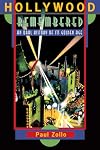
Paul Zollo in this 2011 reprint of _Hollywood Remembered, An Oral History of its Golden Age_, originally published in 2002, gives us three books in one: (1) a history of Hollywood from its beginnings in late-nineteenth-century southern California; (2) interviews of individuals who lived and worked in the city as screen writers, actors, musicians, bar tenders, and so on; and (3) a ‘tour’ of Hollywood’s famed hotels, restaurants, film studios, and the Hollywood Forever cemetery.
Figwood might have been the name of the world’s future movie capital, were it not for Daeida Wilcox, resident of Los Angeles in the 1880s, who first heard the name ‘Hollywood’ spoken by a stranger on a train, an affluent woman talking lovingly of her own home near Chicago, and then insisted that her husband Harvey Wilcox name their land in the Cahuenga valley northwest of Los Angeles, Hollywood and not Figwood. Ironically, Mr. Wilcox trying to create a vivid symbol of this new name, imported English holly shrubs and planted them on his new property only to discover that these plants would not take to the dry climate of the Cahuenga Valley. Zollo sees this as the first ever attempt to align the ideal, abstract image of Hollywood with something authentic and it failed.
That botanical failure would be a portent of the larger issue of drought and the need for a reliable source of water if fledgling Hollywood was to survive. It was William Mulholland, from Dublin, Ireland, a ditch digger who worked his way into what today is called public works and city planning, and who devised the Los Angeles gravity-flow aqueduct which brought water from 250 miles away. He also built a road atop the Santa Monica mountain range from Hollywood westward to the Pacific that bears his name – Mulholland Drive. Controversy followed success, however, with his proposed dam in the hills above Hollywood, begun in 1923 and abandoned after its ‘twin’ the St. Francis Dam collapsed releasing flood water that destroyed towns and farms on its path to the ocean, and ruined Mulholland.
Bad weather, Zollo informs, was the reason movie makers went westward to Hollywood. The Selig Polyscope Company left Chicago in 1907 for Los Angeles to shoot ‘The Count of Monte Cristo’. In 1909 the Bison Company arrived from New York; in 1910 Biograph, also from NYC, came to LA, with director D. W. Griffith and future star Mary Pickford. By 1913, ‘The Squaw Man’ made by the Lasky Feature Play Company (one of its owners was Cecil B. DeMille), from New York, was the first full-length film to be shot completely in Hollywood. From a multitude of independent movie companies, grew the major studios whose names are well known worldwide: United Artists (comprised of Charlie Chaplin, Douglas Fairbanks, Mary Pickford, D. W. Griffith), Columbia, Paramount, Warner Brothers, 20th Century Fox, RKO.
Zollo rounds out his history with nostalgic recollections of Hollywood’s famous restaurants (Ciro’s, Grauman’s Chinese Theater), Sunset Strip’s nightclubs (Trocadero, Mocambo, Palladium), the construction of the gargantuan, now iconic, ‘H O L L Y W O O D’ sign in hills above the city, and the origin of the now famous hand and foot prints of the Stars in concrete along the Walk of Fame. This practice grew out of the need to make a memorable and symbolic link to that historic set of early Hollywood streets and structures that had been demolished by bull dozers and wrecking cranes in the name of progress. That memory and imagination are at work (and play) in the construction and deconstruction of Hollywood is the theme of _Hollywood Remembered_.
Part Two, ‘The Memoirs’, comprises thirty seven interviews with actors (Karl Malden, Evelyn Keyes), bartenders (Hank Seivers), screen writers (Frederica Sagor Maas), song writers (Jules Fox), radio announcers (Robert Cornthwaite), comedians (Steve Allen, Jonathan Winters), and others. I particularly loved a comment by Else Blangstead, sound editor, born 22 May 1920, from Wuertsburg, Germany, about Cecil B. DeMille.
“Demille was a strange man. He was Hollywood. He was a concept. He was an ugly, bald man in riding britches with a whip. He wanted terror, he wanted confusion, and when he got what he wanted he would get an erection. Such that everyone could see; there was no missing it. I did not like him.” (p. 171)
Hollywood’s persona in a nutshell.
Zollo’s research method was simple. In 1984, he posted to community bulletin boards, lamp posts, telephone poles in and around Hollywood, bright ‘signal-orange’ paper flyers with two questions: (1) Do you remember Hollywood? (2) If so, are you willing to talk about it? Both questions were followed by his contact information. What happened next was an influx of vast and diverse responses from current residents of Hollywood, and by ‘word of mouth’ from current residents to former ones, and so on, that resulted in this “chain of shared remembrances” that is _Hollywood Remembered, An Oral History of its Golden Age_.
Part Three, ‘A Tour of Hollywood’, is an alphabetical listing of annotations about significant Hollywood locations and landmarks – from the American Society of Cinematographers to Yamashiro, now a Japanese restaurant, used as background in many movies including ‘Sayanara’ and ‘Teahouse of the August Moon.’ Included in this list is the Hollywood Forever Cemetery (6000 Santa Monica Boulevard), the Père Lachaise of Hollywood, with its permanent residents: Charlie Chaplin, Marion Davies, Cecil B. DeMille, Peter Finch, John Huston, Peter Lorre, Adolphe Menjou, Jayne Mansfield, Tyrone Power, Rudolph Valentino, and also Harvey Henderson Wilcox (1832-1891) and his wife Daeida Wilcox Beveridge (1861-1914), the founders of Hollywood.
_Hollywood Remembered_ is a superb book recommended to all who delight in dreams, in the discovery of ruins, and visiting a city with a forever golden age always in memory. show less
Paul Zollo in this 2011 reprint of _Hollywood Remembered, An Oral History of its Golden Age_, originally published in 2002, gives us three books in one: (1) a history of Hollywood from its beginnings in late-nineteenth-century southern California; (2) interviews of individuals who lived and worked in the city as screen writers, actors, musicians, bar tenders, and so on; and (3) a ‘tour’ of Hollywood’s famed hotels, restaurants, film studios, and the Hollywood Forever cemetery.
Figwood might have been the name of the world’s future movie capital, were it not for Daeida Wilcox, resident of Los Angeles in the 1880s, who first heard the name ‘Hollywood’ spoken by a stranger on a train, an affluent woman talking lovingly of her own home near Chicago, and then insisted that her husband Harvey Wilcox name their land in the Cahuenga valley northwest of Los Angeles, Hollywood and not Figwood. Ironically, Mr. Wilcox trying to create a vivid symbol of this new name, imported English holly shrubs and planted them on his new property only to discover that these plants would not take to the dry climate of the Cahuenga Valley. Zollo sees this as the first ever attempt to align the ideal, abstract image of Hollywood with something authentic and it failed.
That botanical failure would be a portent of the larger issue of drought and the need for a reliable source of water if fledgling Hollywood was to survive. It was William Mulholland, from Dublin, Ireland, a ditch digger who worked his way into what today is called public works and city planning, and who devised the Los Angeles gravity-flow aqueduct which brought water from 250 miles away. He also built a road atop the Santa Monica mountain range from Hollywood westward to the Pacific that bears his name – Mulholland Drive. Controversy followed success, however, with his proposed dam in the hills above Hollywood, begun in 1923 and abandoned after its ‘twin’ the St. Francis Dam collapsed releasing flood water that destroyed towns and farms on its path to the ocean, and ruined Mulholland.
Bad weather, Zollo informs, was the reason movie makers went westward to Hollywood. The Selig Polyscope Company left Chicago in 1907 for Los Angeles to shoot ‘The Count of Monte Cristo’. In 1909 the Bison Company arrived from New York; in 1910 Biograph, also from NYC, came to LA, with director D. W. Griffith and future star Mary Pickford. By 1913, ‘The Squaw Man’ made by the Lasky Feature Play Company (one of its owners was Cecil B. DeMille), from New York, was the first full-length film to be shot completely in Hollywood. From a multitude of independent movie companies, grew the major studios whose names are well known worldwide: United Artists (comprised of Charlie Chaplin, Douglas Fairbanks, Mary Pickford, D. W. Griffith), Columbia, Paramount, Warner Brothers, 20th Century Fox, RKO.
Zollo rounds out his history with nostalgic recollections of Hollywood’s famous restaurants (Ciro’s, Grauman’s Chinese Theater), Sunset Strip’s nightclubs (Trocadero, Mocambo, Palladium), the construction of the gargantuan, now iconic, ‘H O L L Y W O O D’ sign in hills above the city, and the origin of the now famous hand and foot prints of the Stars in concrete along the Walk of Fame. This practice grew out of the need to make a memorable and symbolic link to that historic set of early Hollywood streets and structures that had been demolished by bull dozers and wrecking cranes in the name of progress. That memory and imagination are at work (and play) in the construction and deconstruction of Hollywood is the theme of _Hollywood Remembered_.
Part Two, ‘The Memoirs’, comprises thirty seven interviews with actors (Karl Malden, Evelyn Keyes), bartenders (Hank Seivers), screen writers (Frederica Sagor Maas), song writers (Jules Fox), radio announcers (Robert Cornthwaite), comedians (Steve Allen, Jonathan Winters), and others. I particularly loved a comment by Else Blangstead, sound editor, born 22 May 1920, from Wuertsburg, Germany, about Cecil B. DeMille.
“Demille was a strange man. He was Hollywood. He was a concept. He was an ugly, bald man in riding britches with a whip. He wanted terror, he wanted confusion, and when he got what he wanted he would get an erection. Such that everyone could see; there was no missing it. I did not like him.” (p. 171)
Hollywood’s persona in a nutshell.
Zollo’s research method was simple. In 1984, he posted to community bulletin boards, lamp posts, telephone poles in and around Hollywood, bright ‘signal-orange’ paper flyers with two questions: (1) Do you remember Hollywood? (2) If so, are you willing to talk about it? Both questions were followed by his contact information. What happened next was an influx of vast and diverse responses from current residents of Hollywood, and by ‘word of mouth’ from current residents to former ones, and so on, that resulted in this “chain of shared remembrances” that is _Hollywood Remembered, An Oral History of its Golden Age_.
Part Three, ‘A Tour of Hollywood’, is an alphabetical listing of annotations about significant Hollywood locations and landmarks – from the American Society of Cinematographers to Yamashiro, now a Japanese restaurant, used as background in many movies including ‘Sayanara’ and ‘Teahouse of the August Moon.’ Included in this list is the Hollywood Forever Cemetery (6000 Santa Monica Boulevard), the Père Lachaise of Hollywood, with its permanent residents: Charlie Chaplin, Marion Davies, Cecil B. DeMille, Peter Finch, John Huston, Peter Lorre, Adolphe Menjou, Jayne Mansfield, Tyrone Power, Rudolph Valentino, and also Harvey Henderson Wilcox (1832-1891) and his wife Daeida Wilcox Beveridge (1861-1914), the founders of Hollywood.
_Hollywood Remembered_ is a superb book recommended to all who delight in dreams, in the discovery of ruins, and visiting a city with a forever golden age always in memory. show less
 This review was written for LibraryThing Early Reviewers.
Hollywood Remembered is an interesting book, but not without a few flaws. The first and third sections, “A History of Hollywood” and “A Tour of Hollywood,” are like reading a text book: they’re full of fascinating information, but are a dreadful slog.
The art was also kind of disappointing. There are several dozen photos, including some wonderful shots of Hollywood when it was still farmland, but they’re all in the middle of the book like somebody just stuck them in there and show more then forgot about them. It would have been nice if they had been scattered throughout the book or at least printed on glossy paper.
Also, the book is about ten years old and I can’t find any indication that it’s been updated since then. I don’t have any problem with the fact that it’s a bit dated, but the description of the book and the letter that came with it made it sound like a recently written book rather than a reprint. (I consider this an irritant rather than a flaw.)
What saves the book from being just another boring history of Hollywood is part two: “The Memoirs.” These stories from people who remember Hollywood as more than just the place where movies come from are a treasure. show less
The art was also kind of disappointing. There are several dozen photos, including some wonderful shots of Hollywood when it was still farmland, but they’re all in the middle of the book like somebody just stuck them in there and show more then forgot about them. It would have been nice if they had been scattered throughout the book or at least printed on glossy paper.
Also, the book is about ten years old and I can’t find any indication that it’s been updated since then. I don’t have any problem with the fact that it’s a bit dated, but the description of the book and the letter that came with it made it sound like a recently written book rather than a reprint. (I consider this an irritant rather than a flaw.)
What saves the book from being just another boring history of Hollywood is part two: “The Memoirs.” These stories from people who remember Hollywood as more than just the place where movies come from are a treasure. show less
This review was written for LibraryThing Early Reviewers.Zollo clearly loves Hollywood -- its landmarks, its geography, and the whole story of the studio system, which he feels was Hollywood's golden age. Unfortunately, what isn't clear is the organization of his book. As amanda4242 notes, the first and third sections are informative but rather dry, and Zollo's rundown of famous places often summarizes and repeats information cited earlier in the book. The interviews are by and large interesting, though I would've dropped the first one, as the show more interview subject criticizes actors as a profession and insults several by name. Also, it appears as if Zollo asked every one of them about his favorite landmarks, even if they all say the same things. I would recommend that this not be republished unless it gets some judicious reorganization, editing, and a map and/or a better variety of photos. show less
This review was written for LibraryThing Early Reviewers.Awards

You May Also Like


Associated Authors
Statistics
- Works
- 8
- Members
- 370
- Popularity
- #65,127
- Rating
- 4.1
- Reviews
- 15
- ISBNs
- 29
- Languages
- 1
