
Comtesse de Ségur (1799–1874)
Author of Sophie's Misfortunes
About the Author
Series
Works by Comtesse de Ségur
L'Auberge De L'Ange Gardien 3 copies
Contes de la Comtesse de Ségur : Histoire de Blondine Bonne Biche et Beau Minon / Le Bon petit Henri (1967) 3 copies
A Bíblia de Uma Avó. O Evangelho. 2 copies
A irmã do inocente 2 copies
La comtesse de Ségur : Oeuvres complètes illustrées - 31 titres (Version non censurée et annotée) (French Edition) (2013) 2 copies
Sophie'nin Basina Gelenler 2 copies
Fairy Tales 1 copy
O Pequeno Henrique 1 copy
The Four Little Girls 1 copy
Las hijas del granjero 1 copy
[No title] 1 copy
Le mauvais Genie 1 copy
La Fortune de Gaspard 1 copy
Le Général Dourakine 1 copy
Les Vacances 1 copy
Les Caprices de Gazelle 1 copy
Diloy le chemineau 1 copy
Les deux Nigauds 1 copy
L'auberge de l'ange Gardien 1 copy
Quel Amour d'enfant! 1 copy
Francois Le bossu 1 copy
Les mémoires d'un âne 1 copy
Les plus belles histoires 1 copy
Les malheurs de Sophie - Comtesse de Ségur: Édition illustrée | 112 pages Format 15,24 cm x 22,86 cm (French Edition) (2020) 1 copy
Histoire d'Abraham 1 copy
A irmã do Simplìcio 1 copy
La princesse rosette 1 copy
Les vacances [Histoires universelles - Edition abrégée et adaptée par Thomas Leclere et illustrée par Magali Clavelet] (2011) — Author — 1 copy
Les petites filles modèles [Histoires universelles - Edition abrégée et adaptée par Thomas Leclere et illustrée par Magali Clavelet] (2009) — Author — 1 copy
Les Exploits de Cadichon 1 copy
O Mau Conselheiro 1 copy
O Corcundinha 1 copy
A história de Israel 1 copy
Atos dos Apóstolos 1 copy
Contos de Fadas 1 copy
Sofia, a Desastrada 1 copy
Evangelho de Uma Avó 1 copy
L'AngeGardien 1 copy
Tagged
Common Knowledge
- Canonical name
- Comtesse de Ségur
- Legal name
- Comtesse de Ségur, Sophie Rostopchine
- Other names
- Rostopchina, Countess Sofiya Feodorovna
- Birthdate
- 1799-08-01
- Date of death
- 1874-02-09
- Gender
- female
- Occupations
- writer of fairy tales
novelist
fairy tale writer
children's book author - Relationships
- Ségur, Pierre de (grandson)
Ségur, Louis-Gaston de (son)
Ségur, Louis Philippe de (grandfather-in-law)
Ségur, Anatole de (son) - Short biography
- Sophie, Comtesse de Ségur, was born Sofiya Feodorovna Rostopchina in Saint Petersburg, Russia to an ancient noble family. Her father Count Fyodor Rostopchin was lieutenant-general and later Minister of Foreign Affairs for Tsar Paul I. Her mother Catherine Protassova had been a maid of honor to Empress Catherine the Great. Sophie received a typical education for children of the Russian aristocracy and became fluent in five languages. In 1814, the family left Russia, going first to Warsaw, then to the German Confederation, the Italian peninsula, and finally settled in Paris, France in 1817. Sophie's father established a salon, and his wife and daughter converted to Roman Catholicism from Russian Orthodoxy.
In 1819, Sophie was married to Eugène, Comte de Ségur. The marriage was largely unhappy although the couple had eight children together. The Comtesse began to devote herself to literature, writing down fairy tales she told her grandchildren into a collection called Les Nouveaux Contes de fées, published in 1855. She wrote her first novel at age 58, Les malheurs de Sophie (Sophie's Misfortunes), published in 1859 and still popular among French children. It became the first in the "Fleurville trilogy" that also included Les petite filles models (The Good Little Girls) and Les vacances (The Holidays). She subsequently published another 15 educational or moralizing novels until 1872. They were collected in 1990 under the title Œuvres de la comtesse de Ségur. - Nationality
- France
- Birthplace
- St Petersburg, Russian Empire
- Places of residence
- St. Petersburg, Russian Empire
Paris, France
Château des Nouettes, L'Aigle, France
Moscow, Russian Empire - Place of death
- Paris, France
- Burial location
- Pluneret, Morbihan, France
- Map Location
- France
- Associated Place (for map)
- France
Members
Reviews
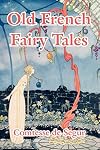
Old. Too much killing of animals for plumes etc. also too much emphasis on beauty and glamor as virtues. Sexism not too bad. Reliance on magic too much. But. The germs of the stories are wonderful, and marvelous retellings could be written. [b:Ourson|15905581|Ourson|Sophie, comtesse de Ségur|https://i.gr-assets.com/images/S/compressed.photo.goodreads.com/books/1365864910l/15905581._SY75_.jpg|21656377] is especially full of the kinds of details that would be fun for a modern writer to show more explore, esp. if told from the perspective of Passerose, the servant woman.
Interesting reference, in 'Ourson,' to [b:Puss in Boots|858152|Puss in Boots (Sunburst Book)|Charles Perrault|https://i.gr-assets.com/images/S/compressed.photo.goodreads.com/books/1312011494l/858152._SX50_.jpg|2756810]: "By his avidity and opulence he ground down the poor workmen who could only find employment with this new Marquis of Carrabas." Also if this one were rewritten the author would have to address the three years that Ourson restricted Violette to the farm for her safety (she had one encounter in the woods, as a teen, though she'd been safe enough there as a child).
Other stories just not as interesting, as written. Art style is fine' if you like the cover you'll like the interiors. Not particularly recommended (unless you're an author looking for an idea.) show less
Interesting reference, in 'Ourson,' to [b:Puss in Boots|858152|Puss in Boots (Sunburst Book)|Charles Perrault|https://i.gr-assets.com/images/S/compressed.photo.goodreads.com/books/1312011494l/858152._SX50_.jpg|2756810]: "By his avidity and opulence he ground down the poor workmen who could only find employment with this new Marquis of Carrabas." Also if this one were rewritten the author would have to address the three years that Ourson restricted Violette to the farm for her safety (she had one encounter in the woods, as a teen, though she'd been safe enough there as a child).
Other stories just not as interesting, as written. Art style is fine' if you like the cover you'll like the interiors. Not particularly recommended (unless you're an author looking for an idea.) show less
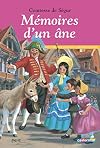
19th century French literature for children. Similar to Les Malheurs de Sophie in that these "memoirs" are comprised of a series of morally instructive lessons in the guise of amusing anecdotes. In this case, the protagonist whose character needs building is a donkey of unique abilities and personality named Cadichon. Memoires d'un Ane is constructed as a continuous story in contrast to the more or less unrelated episodes of Les Malheurs de Sophie. I found the book, despite the pedagogic show more intent of the author, to be quite delightful. Once again I am struck by the differences between the lives of privileged 19th century French children and those of most contemporary American children. The former seem to have had much more freedom of both physical movement & ethical decision-making as they functioned within both a society of their peers (numerous cousins and siblings gathered together at a benevolent grandmother's country estate) as well as a larger society that included parents, aunts & uncles and innumerable employees of the houses and fields. On the final page, Mme de Segur sums up the lessons that the reader should learn from her tale: If you want to be well served, you must treat those who serve you well; those whom you think are stupid or foolish are never so stupid or foolish as you think; and a donkey has, like everyone else, a heart that enables him to love as well as to suffer from mistreatment and a will with which to exact revenge or demonstrate affection. Even a poor donkey can be, depending on how he is treated, either happy or unhappy, friend or enemy. show less
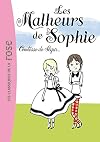
My edition of this rather delightful book is dated 1892 and was once owned by an Aileen Frank at Miss Burke's School. Given to me by a friend back in 1971 or 1972, and carried from house to house until its more-than-a-century-old binding is in tatters, I finally got around to reading Les Malheurs de Sophie.
Les Malheurs de Sophie is a 19th century French children's book, not a novel but rather a series of episodes intended to instruct. These are moral lessons, though much more amusing and show more less didactically dull than most. Sophie is a privileged girl and oh so naughty. She repeatedly disobeys her mother Mme de Rean. (As Sophie says, "It's so boring to obey!") After each of her many mishaps, she is contrite and promises to never again cause an accident or unfortunate event by indulging in one of "her ideas." Paul is Sophie's cousin, best friend, and often reluctant collaborator. He is as obedient and "good" as Sophie is disobedient and "bad." He often tries to save her from her own folly and, thus, spare her the scolding and punishment that is certain to be her due. Many of Sophie's misdeeds involve unwitting cruelty to animals, particularly a pet turtle and a much-prized donkey. It is easy to lose sight of the fact that Sophie is only 4 years old and Paul 6 since they enjoy a freedom of movement and range of activity(even though closely minded by maids and mothers)that would be foreign to most contemporary American four-year-olds. show less
Les Malheurs de Sophie is a 19th century French children's book, not a novel but rather a series of episodes intended to instruct. These are moral lessons, though much more amusing and show more less didactically dull than most. Sophie is a privileged girl and oh so naughty. She repeatedly disobeys her mother Mme de Rean. (As Sophie says, "It's so boring to obey!") After each of her many mishaps, she is contrite and promises to never again cause an accident or unfortunate event by indulging in one of "her ideas." Paul is Sophie's cousin, best friend, and often reluctant collaborator. He is as obedient and "good" as Sophie is disobedient and "bad." He often tries to save her from her own folly and, thus, spare her the scolding and punishment that is certain to be her due. Many of Sophie's misdeeds involve unwitting cruelty to animals, particularly a pet turtle and a much-prized donkey. It is easy to lose sight of the fact that Sophie is only 4 years old and Paul 6 since they enjoy a freedom of movement and range of activity(even though closely minded by maids and mothers)that would be foreign to most contemporary American four-year-olds. show less
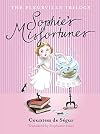
Content Notice: Contains multiple animal death scenes.
While I occasionally enjoy a book about a child who is mischievous, they ONLY sometimes are naughty, NOT every page. However, it's a short book that occasionally can create a chuckle, the main character is Sophie, Sophie is a naughty girl living in 19th century France. Sophie at 4 years old already is quite a mischief-maker, the book contains many of the antics of this young girl.
Multiple animal deaths were written in this less than show more 300-page novel which is startling, to say the least, there were multiple, however, I can get that this was common in the era this was written (the 1800s)
However, Sophie's mother needs to teach her how to care for an animal, not keep replacing them.
It's a little old fashioned but that doesn't ruin the book. show less
While I occasionally enjoy a book about a child who is mischievous, they ONLY sometimes are naughty, NOT every page. However, it's a short book that occasionally can create a chuckle, the main character is Sophie, Sophie is a naughty girl living in 19th century France. Sophie at 4 years old already is quite a mischief-maker, the book contains many of the antics of this young girl.
Multiple animal deaths were written in this less than show more 300-page novel which is startling, to say the least, there were multiple, however, I can get that this was common in the era this was written (the 1800s)
However, Sophie's mother needs to teach her how to care for an animal, not keep replacing them.
It's a little old fashioned but that doesn't ruin the book. show less
Lists
Awards


You May Also Like


Associated Authors
Statistics
- Works
- 131
- Members
- 2,357
- Popularity
- #10,882
- Rating
- 3.7
- Reviews
- 32
- ISBNs
- 542
- Languages
- 7
- Favorited
- 5