
Kashmira Sheth
Author of Keeping Corner
About the Author
Image credit: via Amazon.com
Works by Kashmira Sheth
Tagged
Common Knowledge
- Canonical name
- Sheth, Kashmira
- Birthdate
- 1968
- Gender
- female
- Education
- Iowa State University (B.S., microbiology)
- Occupations
- microbiologist, Wisconsin Department of Agriculture
- Nationality
- India (birth)
- Places of residence
- Bhavangar, Gujarat, India
Mumbai, India
Madison, Wisconsin, USA - Associated Place (for map)
- India
Members
Reviews
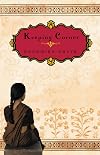
Pretty as a peacock, twelve-year-old Leela has been spoiled all her life. She doesn't care for school and barely marks the growing unrest between the British colonists and her own countrymen. Why should she? Her future has been planned since her engagement at two and marriage at nine.
Leela's whole life changes, though, when her husband dies. She's now expected to behave like a proper widow: shaving her head and trading her jewel-toned saris for rough, earth-colored ones. Leela is considered show more unlucky now, and will have to stay confined to her house for a year—keep corner—in preparation for a life of mourning a boy she barely knew.
When her schoolteacher hears of her fate, she offers Leela lessons at home. For the first time, despite her confinement, Leela opens her eyes to the changing world around her. India is suffering from a severe drought, and farmers are unable to pay taxes to the British. She learns about a new leader of the people, a man named Gandhi, who starts a political movement and practices satyagraha—non-violent protest against the colonists as well as the caste system. The quiet strength of satyagraha may liberate her country. Could she use the same path to liberate herself? show less
Leela's whole life changes, though, when her husband dies. She's now expected to behave like a proper widow: shaving her head and trading her jewel-toned saris for rough, earth-colored ones. Leela is considered show more unlucky now, and will have to stay confined to her house for a year—keep corner—in preparation for a life of mourning a boy she barely knew.
When her schoolteacher hears of her fate, she offers Leela lessons at home. For the first time, despite her confinement, Leela opens her eyes to the changing world around her. India is suffering from a severe drought, and farmers are unable to pay taxes to the British. She learns about a new leader of the people, a man named Gandhi, who starts a political movement and practices satyagraha—non-violent protest against the colonists as well as the caste system. The quiet strength of satyagraha may liberate her country. Could she use the same path to liberate herself? show less

Aportrait of the refugee experience, seen through the eyes of children.
Leaving a highland home in Tibet, a youngster hugs a grandmother goodbye. A Syrian child bids community members goodbye and sets out through fields of cotton. A third child flees a Ukrainian city amid the “loud BOOMS of war.” For each, the journey away from home is hard and exhausting. All find themselves at refugee camps, and when they finally leave, they’re filled with hope and relief—but also fear. The three show more travel to the same new country (which goes unnamed); differences are everywhere in this new land. “Still, you gather up your courage,” and isn’t long before they find familiarity and belonging. Classmates share smiles, laughs, and even a snack; recess and play make connections. “Day by day, little by little… / the new becomes known.” Writing in second person, directly addressing the displaced children, Sheth compassionately acknowledges the heartbreak they’ve endured and underscores their resilience. Carozzi’s soft and detailed digitally enhanced graphite illustrations evoke the tenderness of Sheth’s text. Shifting perspectives through wide shots and close-ups reinforce an idea of shared and personal experiences. The final spread of a child swinging against a blue sky (with the help of another, as shown on the previous page) emphasizes the hope and community support that are so crucial as young refugees build new lives.
Comforting and uplifting. (Picture book. 4-8)
-Kirkus Review show less
Leaving a highland home in Tibet, a youngster hugs a grandmother goodbye. A Syrian child bids community members goodbye and sets out through fields of cotton. A third child flees a Ukrainian city amid the “loud BOOMS of war.” For each, the journey away from home is hard and exhausting. All find themselves at refugee camps, and when they finally leave, they’re filled with hope and relief—but also fear. The three show more travel to the same new country (which goes unnamed); differences are everywhere in this new land. “Still, you gather up your courage,” and isn’t long before they find familiarity and belonging. Classmates share smiles, laughs, and even a snack; recess and play make connections. “Day by day, little by little… / the new becomes known.” Writing in second person, directly addressing the displaced children, Sheth compassionately acknowledges the heartbreak they’ve endured and underscores their resilience. Carozzi’s soft and detailed digitally enhanced graphite illustrations evoke the tenderness of Sheth’s text. Shifting perspectives through wide shots and close-ups reinforce an idea of shared and personal experiences. The final spread of a child swinging against a blue sky (with the help of another, as shown on the previous page) emphasizes the hope and community support that are so crucial as young refugees build new lives.
Comforting and uplifting. (Picture book. 4-8)
-Kirkus Review show less

This lovely picture-book from Indian-American author Kashmira Sheth and Japanese-American illustrator Yoshiko Jaeggi is a celebration of both the loving bond between a grandmother and her granddaughter, and the beauty of the sari. Narrated by young Rupa, whose beloved Dadima, or grandmother, wears a different sari - a traditional Indian dress, created from a cloth that is wrapped around the body in a particular way - every day, My Dadima Wears a Sari highlights one of the realities of show more immigrant life - that the younger generation may dress differently than the older one - while also emphasizing the fact that family love and shared traditions can bring the generations together.
As Rupa questions her Dadima about her saris, asking whether she ever wants to wear anything else - something more like the clothing that Rupa's mother wears - Dadima explains the many different ways she can use her versatile garment. The back and forth between grandmother and granddaughter makes for an engaging read, especially once Rupa gets into the act, imagining some rather adventurous uses for the sari that Dadima probably never dreamed of. The accompanying watercolor illustrations by Jaeggi are just charming, with beautiful colors and expressive faces and figures. I liked the swirling saris that can be seen in some of the paintings (such as the one on the cover), and the family cat that appears in many of the scenes! All in all, a sweet picture-book exploration of the world of an Indian-American girl and her family, one I would recommend to young readers looking for stories about grandparents, or to those looking for books featuring Indian and/or South Asian characters. show less
As Rupa questions her Dadima about her saris, asking whether she ever wants to wear anything else - something more like the clothing that Rupa's mother wears - Dadima explains the many different ways she can use her versatile garment. The back and forth between grandmother and granddaughter makes for an engaging read, especially once Rupa gets into the act, imagining some rather adventurous uses for the sari that Dadima probably never dreamed of. The accompanying watercolor illustrations by Jaeggi are just charming, with beautiful colors and expressive faces and figures. I liked the swirling saris that can be seen in some of the paintings (such as the one on the cover), and the family cat that appears in many of the scenes! All in all, a sweet picture-book exploration of the world of an Indian-American girl and her family, one I would recommend to young readers looking for stories about grandparents, or to those looking for books featuring Indian and/or South Asian characters. show less
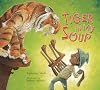
This book will delight any kids who have an older sibling, especially a big sister.
It begins, “Today, my big sister is in charge of the house, the lunch, and me." The boy telling us this story tries to get his sister to read a book to him about tigers but she isn’t interested.
As he eats his soup, he imagines a tiger coming out of his soup and attacking him. He grapples with it, fighting back with his soup spoon.
Finally, his sister agrees to read, and as she roars like a tiger, we see show more the tiger is his sister!
Evaluation: I see this as a light-hearted Life of Pi for the pre-school set! Very inventive and fun, and guaranteed to entertain kids. I love how it shows how much entertainment one can create using one's imagination, and the illustrations by Jeffrey Ebbeler are terrific. show less
It begins, “Today, my big sister is in charge of the house, the lunch, and me." The boy telling us this story tries to get his sister to read a book to him about tigers but she isn’t interested.
As he eats his soup, he imagines a tiger coming out of his soup and attacking him. He grapples with it, fighting back with his soup spoon.
Finally, his sister agrees to read, and as she roars like a tiger, we see show more the tiger is his sister!
Evaluation: I see this as a light-hearted Life of Pi for the pre-school set! Very inventive and fun, and guaranteed to entertain kids. I love how it shows how much entertainment one can create using one's imagination, and the illustrations by Jeffrey Ebbeler are terrific. show less
Lists
Awards


You May Also Like


Associated Authors
Statistics
- Works
- 19
- Members
- 2,250
- Popularity
- #11,399
- Rating
- 3.9
- Reviews
- 162
- ISBNs
- 96
- Languages
- 4