
Julie Aigner-Clark
Author of Baby Einstein: Mirror Me! A Mirror Book
About the Author
Image credit: Uncredited image from author's website.
Series
Works by Julie Aigner-Clark
Alphabooks: 26 Bright and Colorful Letter Books Make Learning the Alphabet Easy and Fun! (Baby Einstein) (2005) 40 copies, 2 reviews
Asperger's in Pink: Pearls of Wisdom from Inside the Bubble of Raising a Child with Asperger's (2010) 17 copies
Baby Van Gogh: A field trip for curious young minds into vivid colors, beautiful art, and expressive poems (2000) 14 copies
Baby Einstein: Language Discovery Cards - Images and Words to Teach and Delight Your Baby (2000) 11 copies
Baby Einstein: World Animals 6 copies
THE ABC OF ART 1 copy
Mirror Me! My Body 1 copy
Music Is Every Where 1 copy
Baby Einstein: World Music 1 copy
Copos De Nieve Y Carambanos 1 copy
הספר הראשון שלי צבעים 1 copy
Associated Works
The Safe Side - Stranger Safety: Hot Tips To Keep Cool Kids Safe With People They Don't Know And Kinda Know (2005) — Creator, Producer, Host — 20 copies
Tagged
Common Knowledge
- Gender
- female
Members
Reviews
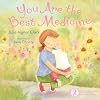
A mother diagnosed with cancer reassures her little girl that she can endure all the bad things by thinking of the good things they have together and how much they love each other.
I'm always a bit ambivalent about "sick parent" or similarly themed books for several reasons. This particular book is probably the best of the ones I've seen. It deals with various aspects of cancer and chemotherapy - losing hair, being tired, feeling sick - in a gentle and reassuring way by having the mother show more remember all the good things about her daughter and the fun they've had together that she loves. It's hopeful and comforting, finishing with the message that "love and kindness really are the best medicine." The soft pastel illustrations fit the hopeful, gentle theme of the book.
What bothers me about this type of story, is how focused it is on reassuring the child that their parent will, of course, eventually recover. This story seems to say that the mother's memories, hope for the future, and mutual love between her and her daughter will triumph over her illness. Now, I'm going to assume this book is referring to breast cancer, on the rather flimsy basis that there's a strong pink theme, plus it's the most common cancer for women. Now, just grabbing some random percentages off the internet - 20% of women with breast cancer die (random stats! do not call me on them please!) the point is - sometimes your parents do not get well. Sometimes all the love and kindness you have to offer isn't enough.
So where does that leave the child whose mother has died? Wondering if they just didn't love mommy enough? If she didn't have enough happy memories to help her through?
Of course, on the other hand, how on earth do you convey the possibility of death in a picturebook to a young child? Do you really want them to be aware of their mortality at that age, even if they're capable of grasping it? I guess somehow I want something a little less definitely "you will get well" and more focused on the warm memories and togetherness of the earlier parts of the story.
Verdict: While I have reservations, this is still probably one of the best dealing with cancer in a parent books I've seen up until now, so I would recommend it for your tough topics or parenting collections. show less
I'm always a bit ambivalent about "sick parent" or similarly themed books for several reasons. This particular book is probably the best of the ones I've seen. It deals with various aspects of cancer and chemotherapy - losing hair, being tired, feeling sick - in a gentle and reassuring way by having the mother show more remember all the good things about her daughter and the fun they've had together that she loves. It's hopeful and comforting, finishing with the message that "love and kindness really are the best medicine." The soft pastel illustrations fit the hopeful, gentle theme of the book.
What bothers me about this type of story, is how focused it is on reassuring the child that their parent will, of course, eventually recover. This story seems to say that the mother's memories, hope for the future, and mutual love between her and her daughter will triumph over her illness. Now, I'm going to assume this book is referring to breast cancer, on the rather flimsy basis that there's a strong pink theme, plus it's the most common cancer for women. Now, just grabbing some random percentages off the internet - 20% of women with breast cancer die (random stats! do not call me on them please!) the point is - sometimes your parents do not get well. Sometimes all the love and kindness you have to offer isn't enough.
So where does that leave the child whose mother has died? Wondering if they just didn't love mommy enough? If she didn't have enough happy memories to help her through?
Of course, on the other hand, how on earth do you convey the possibility of death in a picturebook to a young child? Do you really want them to be aware of their mortality at that age, even if they're capable of grasping it? I guess somehow I want something a little less definitely "you will get well" and more focused on the warm memories and togetherness of the earlier parts of the story.
Verdict: While I have reservations, this is still probably one of the best dealing with cancer in a parent books I've seen up until now, so I would recommend it for your tough topics or parenting collections. show less
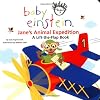
Looking for a book to teach a child the basics of poetry? This may well be the ticket.
Ms. Aigner-Clark is clearly a shrewd businesswoman, but in this book she demonstrates that she has no concept of poetry. Inept meter and bad rhymes abound. Plus, the author is so desperate to find anything even approaching a rhyme that she ignores the illustrations of her own book: the savannah’s grasses are yellow, yet she calls them brown, because she can’t think of a word to rhyme with yellow (I show more suppose bellow or Jello or hello or cello would have required too much ingenuity?). Similarly the desert’s sands are described as white, visual evidence be damned!
My point is that the poetry in this book is so bad, that a six year old could understand what makes it bad. And that just might help them understand what makes other poetry good. show less
Ms. Aigner-Clark is clearly a shrewd businesswoman, but in this book she demonstrates that she has no concept of poetry. Inept meter and bad rhymes abound. Plus, the author is so desperate to find anything even approaching a rhyme that she ignores the illustrations of her own book: the savannah’s grasses are yellow, yet she calls them brown, because she can’t think of a word to rhyme with yellow (I show more suppose bellow or Jello or hello or cello would have required too much ingenuity?). Similarly the desert’s sands are described as white, visual evidence be damned!
My point is that the poetry in this book is so bad, that a six year old could understand what makes it bad. And that just might help them understand what makes other poetry good. show less
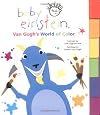
What better way to teach children about colors than using great pieces of art from a master artist? My husband and I love van Gogh, and this board book makes me smile. It has color-coded tabs, especially appropriate in a book about color, and each tab opens to a labeled color, a painting, questions, and a quote. The paintings all contain the desired color, but sometimes the child has to search for it; it doesn't always dominate the painting. Each of the paintings are, obviously, pieces by show more Vincent van Gogh. The title of the painting is in clear font under the picture of the painting, and below that, a quote that relates to the topic of the piece, and is from the artist himself. The questions further direct children to analyze the painting, guiding them to see that looking at art is an act of interpretation and enjoyment, that it is both personal and collective, but they are all appropriate for young readers. The back of the book even has teachable suggestions for parents. This book is fantastic, a fun read for children and interesting for adults - not that common an occurrence in board books. I wish they had a series of color books featuring different artists, but I understand choosing van Gogh for his vivid pictures. Truly, this is a good find, and worth an addition to the library. show less
Sometimes simplicity is not a detriment. This set of 26 board books feature a repetitive pattern which is wonderful for helping babies learn the alphabet. On the cover and back, in bright colors and bold font, is the featured letter. Inside are three words that begin with that letter, and each example is either paired up with a cartoon, an actual photograph, or artwork. When I read them, I like to say the letter, make the phonetic sound a few times, and slowly read each example, stressing show more the beginning. I feel like a character on Sesame Street going over the letter of the day! My daughter loves them. Aside from the fun of taking them in and out of the storage box (which she can do for hours), she will open them and try to read them like mommy. She repeats the same sound over and over - even if it is always 'buh' or duh' - and then goes through each example, making one sound, pointing at the picture, and turning to the next page. Absolutely adorable. show less
You May Also Like


Associated Authors
Statistics
- Works
- 130
- Also by
- 1
- Members
- 4,273
- Popularity
- #5,881
- Rating
- 3.5
- Reviews
- 67
- ISBNs
- 275
- Languages
- 11