
Vassilis Vassilikos (1934–2023)
Author of Z
About the Author
Image credit: photo by E Moreau, found at web1.radio-france.fr
Works by Vassilis Vassilikos
Foco d'amor 2 copies
La Grèce 2 copies
Λούνικ ΙΙ 1 copy
Ἐκτός τῶν τειχῶν 1 copy
Ανάπλους 1 copy
Υποθήκες Παπαδόπουλου… 1 copy
Πάσχα στους Γαργαλιάνους 1 copy
Το ημερολόγιο του Ζ 1 copy
Αναμνήσεις από τον Χείρωνα 1 copy
Οι λωτοφάγοι 1 copy
Το τελευταίο αντίο 1 copy
Ο Ιατροδικαστης 1 copy
Γλαύκος Θρασακης 1 copy
Η ατέλειωτη επιστολή 1 copy
Οι φωτογραφίες 1 copy
Η φλόγα της αγάπης 1 copy
Θύματα ειρήνης 1 copy
Κ 1 copy
Εκτός των τειχών 1 copy
Heliona, Uji i ishullir Kos 1 copy
Το νερό της Κω 1 copy
Mon soleil, mon maître 1 copy
Como Ser Anjo 1 copy
Ο θάνατος του αμερικάνου 1 copy
Το "νερό" (το ήλιον της Κω) 1 copy
Ο Πλανόδιος Πλασιέ 1 copy
To Nero 1 copy
Τα Καμάκια 1 copy
Alfatride 1 copy
Το γράμμα της αγάπης 1 copy
Il greco errante 1 copy
... And Dreams Are Dreams 1 copy
Associated Works
Tagged
Common Knowledge
- Canonical name
- Vassilikos, Vassilis
- Other names
- Βασιλικός, Βασίλης
- Birthdate
- 1934-11-18
- Date of death
- 2023-11-30
- Gender
- male
- Occupations
- journalist
general manager (Greek state television) - Nationality
- Greece
- Birthplace
- Kavala, Greece
- Places of residence
- Thassos, Greece
Salonika, Greece
Athens, Greece
Thessaloniki, Greece - Associated Place (for map)
- Greece
Members
Reviews
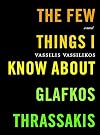
Known for his landmark 1967 novel Z, Vassilis Vassilikos is one of Greece’s foremost literary talents. The Few Things I Know About Glafkos Thrassakis functions on many different levels. It is a meditation on the act of research and writing; it is an autobiography written about someone else; it creates a person out of the literary ether from someone who is real. Ostensibly, the book covers the travails of the narrator trying to find out the truth about the fictional writer Glafkos show more Thrassakis. Thrassakis is supposed to have been killed at the hands of New Guinea cannibals, but this story quickly falls apart. After discovering new manuscripts, he gains different picture of his elusive prey, but never fully captures him.
Thrassakis, we find out, is really a pseudonym for Lazarus Laziridis, a political dissident, and here’s where the dance between distance and intimacy start. Each layer is really just another façade for the author, but he keeps the reader caring about all three people. While the novel tends towards the Borgesian with its stories within stories, the feeling is delightfully European. There are times when Vassilikos becomes very cheeky and knows full well what he’s doing, and there are other times when his poetry cannot contain itself and creates remarkable passages, but overall, this book is both bewildering and satisfying. show less
Thrassakis, we find out, is really a pseudonym for Lazarus Laziridis, a political dissident, and here’s where the dance between distance and intimacy start. Each layer is really just another façade for the author, but he keeps the reader caring about all three people. While the novel tends towards the Borgesian with its stories within stories, the feeling is delightfully European. There are times when Vassilikos becomes very cheeky and knows full well what he’s doing, and there are other times when his poetry cannot contain itself and creates remarkable passages, but overall, this book is both bewildering and satisfying. show less

Few who read in English will have come across Vassilis Vassilikos unless they have seen the Costa Gavros movie Z and that is a shame because his is an important voice and because he is an important talent. His work is taught in Greek schools and he is often portrayed as the voice of exile.
In that respect The Few Things I Know About Glafkos Thrassakis (hereafter referred to as (TFTIKAGT) adds to the evidence. While TFTIKAGT is ostensibly the story of a biographer attempting to write about a show more famous writer exiled during the times of the Greek junta and his travels and travails TFTIKAGT is fundamentally about the nature of writing itself. As the narrator follows his subject, or should that be prey, trying to piece together his life and work and thoughts he finds himself mirroring said Glafkos Thrassakos more and more closely despite himself. In becoming Thrassakos's biographer the narrator himself becomes a temporary exile and experiences the pain and freedom that exile grants.
Glafkos Thrassakis, we soon learn, is a pseudonym, and a slightly self deprecating one at that, for the true subject of the biography whose given name is actually Lazarus Laziridis. Names and identities are important keys in Vassilikos's work and the adoption of a pseudonym indicates the sense of authorial exile that Thrassakis has chosen over and above his political one.
The narrator, himself a writer remember, presents a series of episodes form Lazaridis's life and Thrassakos's work in a wonderfully evocative tapestry within which we often lose track of who is who. We even begin to wonder whether all of the main characters are not just facets of the same writer and this is where Vassilikos ups the ante with the externals of his plot turning what could and might have been a biographical procedural into a thriller and a mystery and picks up the narrativer pace. At the very same time he also investigates the nature of the writer and the process of writing.
There is a majesty to Vassilikos's text both in its construction and its language that elevates it to a position among important 20th century European writing. That it manages along the way to examine a difficult period in European history is a stunning achievement.
I am so very glad that Karen Emmerich has translated this important work with the balance of wit and insight that Vassilikos must have laboured so hard to invest it with. show less
In that respect The Few Things I Know About Glafkos Thrassakis (hereafter referred to as (TFTIKAGT) adds to the evidence. While TFTIKAGT is ostensibly the story of a biographer attempting to write about a show more famous writer exiled during the times of the Greek junta and his travels and travails TFTIKAGT is fundamentally about the nature of writing itself. As the narrator follows his subject, or should that be prey, trying to piece together his life and work and thoughts he finds himself mirroring said Glafkos Thrassakos more and more closely despite himself. In becoming Thrassakos's biographer the narrator himself becomes a temporary exile and experiences the pain and freedom that exile grants.
Glafkos Thrassakis, we soon learn, is a pseudonym, and a slightly self deprecating one at that, for the true subject of the biography whose given name is actually Lazarus Laziridis. Names and identities are important keys in Vassilikos's work and the adoption of a pseudonym indicates the sense of authorial exile that Thrassakis has chosen over and above his political one.
The narrator, himself a writer remember, presents a series of episodes form Lazaridis's life and Thrassakos's work in a wonderfully evocative tapestry within which we often lose track of who is who. We even begin to wonder whether all of the main characters are not just facets of the same writer and this is where Vassilikos ups the ante with the externals of his plot turning what could and might have been a biographical procedural into a thriller and a mystery and picks up the narrativer pace. At the very same time he also investigates the nature of the writer and the process of writing.
There is a majesty to Vassilikos's text both in its construction and its language that elevates it to a position among important 20th century European writing. That it manages along the way to examine a difficult period in European history is a stunning achievement.
I am so very glad that Karen Emmerich has translated this important work with the balance of wit and insight that Vassilikos must have laboured so hard to invest it with. show less

“What, then, is the request, and what its requested catharsis? Thrassakis finally settled the issue thus: none of these “alienated” forms of communication live up to his expectations. The only driving force that prods people to keep up the fight for communication is self-deception, which he describes as a vast gas station constantly refuelling the conscious advance of humanity. Which is to say, pity if the utopians were to disappear.”

65-Κεντρικός άξονας ο έρωτας δυο αντισυμβατικών ανθρώπων
Αυτός γίνεται συν τω χρόνω Εκείνη κι Εκείνη μεταμορφώνεται με τον τρόπο της σε Αυτόν, κατά την Πλατωνική θεωρία, αφομοιώνοντας ο ένας τον εαυτό και την ταυτότητα του άλλου για να μπορέσει να αποκτήσει την show more ανυπέρβλητη διάρκεια της αγάπης.
Περιγράφει όλες τις λεπτές ψυχοσυναισθηματικές μεταπτώσεις του ανθρώπου που υποφέρει, παρακολουθώντας το πέρασμά του από τα κανάλια της απαισιοδοξίας και της απόλυτης συντριβής
Με γέμισε θλίψη .... show less
Αυτός γίνεται συν τω χρόνω Εκείνη κι Εκείνη μεταμορφώνεται με τον τρόπο της σε Αυτόν, κατά την Πλατωνική θεωρία, αφομοιώνοντας ο ένας τον εαυτό και την ταυτότητα του άλλου για να μπορέσει να αποκτήσει την show more ανυπέρβλητη διάρκεια της αγάπης.
Περιγράφει όλες τις λεπτές ψυχοσυναισθηματικές μεταπτώσεις του ανθρώπου που υποφέρει, παρακολουθώντας το πέρασμά του από τα κανάλια της απαισιοδοξίας και της απόλυτης συντριβής
Με γέμισε θλίψη .... show less
Lists
Awards


You May Also Like


Associated Authors
Statistics
- Works
- 93
- Also by
- 1
- Members
- 657
- Popularity
- #38,399
- Rating
- 3.2
- Reviews
- 15
- ISBNs
- 100
- Languages
- 12
- Favorited
- 1