
Marie Bradby
Author of More Than Anything Else
About the Author
Works by Marie Bradby
More Than Anything Else 9 copies
Tagged
Common Knowledge
There is no Common Knowledge data for this author yet. You can help.
Members
Reviews
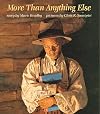
Personally, I liked this book because of the message it gave. It talked about a boy and how he was a slave but desperately wanted to learn how to read. I think the language in the book was very clear and understandable. The book was also very descriptive and made it easy for readers to create pictures in their heads. For example, one page stated, "A white mountain of salt rises above Papa's head. All day long we shovel it, but it refuses to grow smaller." The writing was well organized and show more flowed through as the book went along. The story was told in first person, from the young boy's perspective, so I think it is easy for other children to comprehend and understand what the boy was going through in the story. I like how this book also pushes readers to think about slavery and the consequences people had to go through when it existed. The books main message to readers is that we should not take reading for granted. Although almost everyone today is given the opportunity to learn how to read, this why not always the case in past history. show less

This had the potential to be an outstanding book, but the author chose to be coy about the context and not reveal the name of the protagonist until the penultimate page. Even for grownups, it’s confusing. A lot of reviewers seem to think that Booker’s family (that’s a spoiler! What kind of biography is it where the subject’s name is a spoiler?!) is enslaved; a bit of research confirmed my impression that it’s set during Reconstruction. Again, that’s pretty basic information to show more leave out.
I’m 100 years closer in age to my grandchildren than Booker, and I have to supply context when I tell them about my childhood. If this book had been narrated by an elderly, reminiscent Booker who supplied necessary information about his background and perhaps his later accomplishments (at least to the extent of “I went to college and founded a college so other young Black people could get an education”), it would have been a far less confusing book and I would have kept it. show less
I’m 100 years closer in age to my grandchildren than Booker, and I have to supply context when I tell them about my childhood. If this book had been narrated by an elderly, reminiscent Booker who supplied necessary information about his background and perhaps his later accomplishments (at least to the extent of “I went to college and founded a college so other young Black people could get an education”), it would have been a far less confusing book and I would have kept it. show less
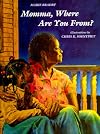
When a young girl sits by her mother ontheporch on a summer's eve, she asks her mother about her roots -- Where is she from?
Told in poetic fashion with beautiful illustrations, rather than give the name of a specific area, her mother answers her daughter with memorable images of Monday morning washing of clothes that are placed through the old wringer washing machine, and then hung on the line to dry.
There are memories told of green, lima and pea beans picked, snapped and shelled to simmer show more on the back of the stove, there is a peddler who stops to show all the fresh fish he has for sale. A rag man stop by the house on a cold winter's eve asking the family if there are rags he might buy from them.
There is also a delivery truck containing much wanted cold ice for a blazign hot day. Miss Mary stops by and waves every day on her way home from work. The children walk many miles to be taught with their other classmates -- all of them black, light brown, or in between.
There is a swing that goes high, higher, highest when her mother was pushed way up to try to catch the clouds. And, on Friday evenings, there is a fish fry, cherry pie and ice cream as well as a tub of cold, cold bottles of pop.
The answer to the young girl's question to her mother is all of the above. She is from a place where wonderful memories were made. show less
Told in poetic fashion with beautiful illustrations, rather than give the name of a specific area, her mother answers her daughter with memorable images of Monday morning washing of clothes that are placed through the old wringer washing machine, and then hung on the line to dry.
There are memories told of green, lima and pea beans picked, snapped and shelled to simmer show more on the back of the stove, there is a peddler who stops to show all the fresh fish he has for sale. A rag man stop by the house on a cold winter's eve asking the family if there are rags he might buy from them.
There is also a delivery truck containing much wanted cold ice for a blazign hot day. Miss Mary stops by and waves every day on her way home from work. The children walk many miles to be taught with their other classmates -- all of them black, light brown, or in between.
There is a swing that goes high, higher, highest when her mother was pushed way up to try to catch the clouds. And, on Friday evenings, there is a fish fry, cherry pie and ice cream as well as a tub of cold, cold bottles of pop.
The answer to the young girl's question to her mother is all of the above. She is from a place where wonderful memories were made. show less
I really enjoyed this book for a few reasons. For one, I really enjoyed the author's voice. Bradby wrote with a lot of character and her writing was very enjoyable because her voice was very strong. For instance, the author wrote, "I'm from beans- green, lima, and pea-picked, strung, snapped and shelled into pans." In addition, the author also used African American vernacular dialect which also made the story more relatable. For instance, the author talked a lot about African American show more heritage and traditions and it was appropriate for her to use "informal dialect" in order to show how their family interacted and the importance of their heritage. Adding to that, the author also uses sentence fragments throughout the book. The author wrote, "Where families grew into a neighborhood as close as a knit sweater..." The sentence fragments worked well in this book and the writing was very effective. and intentional. The purpose of this book was to share African American heritage and family traditions and this book was very successful and I really enjoyed reading it. show less
Lists
Awards


You May Also Like


Associated Authors
Statistics
- Works
- 7
- Members
- 1,713
- Popularity
- #14,988
- Rating
- 4.2
- Reviews
- 64
- ISBNs
- 23
- Languages
- 2