
Margaree King Mitchell
Author of Uncle Jed's Barbershop
Works by Margaree King Mitchell
Tagged
Common Knowledge
- Canonical name
- Mitchell, Margaree King
- Gender
- female
Members
Reviews
UNCLE JEDS BARBERSHOP (PAPERBACK) COPYRIGHT 1998 ALADDIN (Aladdin Picture Books) by Margaree King Mitchell
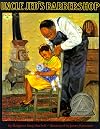
I liked this book for two reasons: the theme is uplifting and it pushes readers to think about racial issues in America’s past. The theme of the story or big idea is to believe in your dreams. The character, Uncle Jed, wants to open a barber shop and he saves money for years. However, when his niece is ill and needs an operation, he loans her family money. Then, during the great depression, his bank fails and he loses all the money he had saved.
Throughout the story, these setbacks do not show more stop Uncle Jed from pursuing his dream and believing he could make it happen. He eventually opens his barber shop on his seventy-ninth birthday. He faces trials and tribulations but he achieves his dream. I think this is an inspiring message for readers of all ages. It shows that you are never too old to reach your goals and you should always persevere. The theme was inspirational but also realistic. Uncle Jed faces many challenges. I think this encourages the reader to believe in their dreams and to keep trying even when they face an inevitable difficulty.
I also liked the multicultural aspects of this book that push readers to think about the life of African Americans in the early half of the nineteenth century. The narrator, a little African American girl, talks about how “people didn’t have dreams like that in those days,” because everyone was poor. She describes how many African Americans were sharecroppers, who worked someone else’s land for a piece of the profit.
The narrator also talks about the hardships she faces for being an African American. She explains about having to wait for all the Caucasian patients at the hospital to be seen before she receives treatment. She details how everything was separate for people of different skin colors.
Because this is the backdrop in which the story is set, it introduces readers to this discrimination without making it the main focus of the story. I think this gives the reader a sense that this segregation was part of everyday life. I think it makes readers think about what life would be like to be treated poorly because of appearances. I liked how the author made me think about how discrimination would affect every aspect of life. Overall, I thought this was an excellent book with inspiring themes and much food for thought. show less
Throughout the story, these setbacks do not show more stop Uncle Jed from pursuing his dream and believing he could make it happen. He eventually opens his barber shop on his seventy-ninth birthday. He faces trials and tribulations but he achieves his dream. I think this is an inspiring message for readers of all ages. It shows that you are never too old to reach your goals and you should always persevere. The theme was inspirational but also realistic. Uncle Jed faces many challenges. I think this encourages the reader to believe in their dreams and to keep trying even when they face an inevitable difficulty.
I also liked the multicultural aspects of this book that push readers to think about the life of African Americans in the early half of the nineteenth century. The narrator, a little African American girl, talks about how “people didn’t have dreams like that in those days,” because everyone was poor. She describes how many African Americans were sharecroppers, who worked someone else’s land for a piece of the profit.
The narrator also talks about the hardships she faces for being an African American. She explains about having to wait for all the Caucasian patients at the hospital to be seen before she receives treatment. She details how everything was separate for people of different skin colors.
Because this is the backdrop in which the story is set, it introduces readers to this discrimination without making it the main focus of the story. I think this gives the reader a sense that this segregation was part of everyday life. I think it makes readers think about what life would be like to be treated poorly because of appearances. I liked how the author made me think about how discrimination would affect every aspect of life. Overall, I thought this was an excellent book with inspiring themes and much food for thought. show less
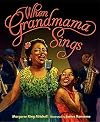
This is a fictional story set in the 1940’s about Belle, a young girl who accompanies her talented grandmother and her jazz band on a singing tour through Southern towns. As they travel from town to town, the author shows the different kinds of discrimination they would have faced in the Jim Crow South. Although Belle’s grandmother eventually leaves for the north, “where things were a little easier for black people,” Belle’s grandmother never loses her faith that blacks and whites show more can live together one day all over the country, and that, by the time Belle grows up, she will be able to follow her own dreams.
Ransome’s warm watercolors echo the warmth of the family members’ love for one another, but what is really notable for me is his use of facial expressions. They speak volumes, and kids will be able to figure out what is going on even without reading the text.
I also love the nerve exhibited by Grandmama, and the unshaking faith she has that people will eventually do the right thing. show less
Ransome’s warm watercolors echo the warmth of the family members’ love for one another, but what is really notable for me is his use of facial expressions. They speak volumes, and kids will be able to figure out what is going on even without reading the text.
I also love the nerve exhibited by Grandmama, and the unshaking faith she has that people will eventually do the right thing. show less
Along with this book being a Coretta Scott King Award winner, it won a special place in my heart. The very warm and inviting plot, along with very friendly illustrations, sold me as a reader. As a young black girl with few male role models, I would have found this book very encouraging and would have kept it very close to my heart to keep reading and reading. I feel that this book, along with its bright and very vivid colors and shades give us, the reader,a clearer picture of what dreaming show more and believing in yourself at any age can do! show less
I read this as a companion to the newer book, [b:Crown: An Ode to the Fresh Cut|34144489|Crown An Ode to the Fresh Cut|Derrick Barnes|https://i.gr-assets.com/images/S/compressed.photo.goodreads.com/books/1520007342l/34144489._SX50_.jpg|55181311]. It does work that way, but more as a contrast than a direct comparison. This is narrated by Jed's great-niece, as a reflection of personal and American history, and emphasizes themes of courage and pride from an entirely different pov. I do show more recommend this whether or not you read (or enjoyed) "Crown." show less
Lists
Awards


You May Also Like


Statistics
- Works
- 4
- Members
- 2,385
- Popularity
- #10,763
- Rating
- 4.3
- Reviews
- 44
- ISBNs
- 26
- Languages
- 1