
Catherine E. Chambers
Author of California Gold Rush: Search for Treasure
About the Author
Series
Works by Catherine E. Chambers
Ready or not 2 copies
Papa was a Georgia preacher: Growing up in Madison, Georgia : showplace of Southern architecture (1999) 1 copy
Der Medici-Ring 1 copy
Ellen Ross Private Detective 1 copy
Associated Works
Tagged
Common Knowledge
- Legal name
- Norma Johnston
- Gender
- female
- Education
- Montclair State College
- Nationality
- USA
- Birthplace
- Ridgewood, New Jersey, USA
- Map Location
- USA
Members
Discussions
80s Era YA Novel About Making a Sci-Fi Film in Name that Book (June 2012)
Reviews
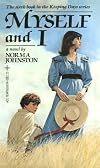
This book strikes me objectively as overwrought. However, I think it's a very interesting and true look at how easily a person can get completely overwhelmed and subsumed by someone who's attractively broken. Watching Saranne try to fix Paul is painful and reminiscent of many of our adolescences. Paul is hugely annoying in this book. I can't count the number of times I wanted to slap him. I love the weaving in of the stories of Tish, Ben, Mary and the rest. It's a satisfying conclusion to show more the whole series.
I'm actually kind of glad to be finished with this re-read. I found myself slipping into dangerously sentimental territory with Tish and Saranne- I kept finding myself standing, aimless, eyes full of tears. That sensitive misunderstood stuff is easy to fall back into. Fortunately I got through the series before I could write any poetry. show less
I'm actually kind of glad to be finished with this re-read. I found myself slipping into dangerously sentimental territory with Tish and Saranne- I kept finding myself standing, aimless, eyes full of tears. That sensitive misunderstood stuff is easy to fall back into. Fortunately I got through the series before I could write any poetry. show less

I found The Keeping Days through LibraryThing. Someone recommended it for fans of the Anne of Green Gables series, and that's usually enough to send me off in search of whatever is being recommended. I wasn't disappointed. Although Norma Johnston's story and characters are much more brazen than L. M. Montgomery's, the snapshots of small-town life and all the myriad characters that inhabit it are similar. I hesitate to say that Johnston's characters are more realistic; whenever I'm tempted to show more do that, I reread Montgomery and am again surprised at her insight into human relationships. Say rather that Johnston's characters live and move and have their being in a much less idealized world.
The story is narrated by Tish Sterling, who is just turning fourteen. She and her family live in New York at the turn of the century. The members of the Sterling family are all strong individualists. There's Pa, who works as a court stenographer; Mama, who specializes in being an Early Christian Martyr and never seems to understand her children; Bron, the beauty of the family who can't decide between her beaus; Ben, who cuts school and experiments with smoking when he can get away with it; Peter, who retreats to a world of his own to study insects; Marnie, who wishes she had been born a boy; and Missy, the baby. And these are just the immediate family. Gramps and Aunt Kate are also quite distinct characters who come across as very believable.
Tish knows herself to be "sensitive." She keeps a diary of sorts in which she records "keeping days," the kind of days on which something emotionally momentous happens, something that changes the rest of life. She doesn't really know what makes a keeping day what it is, and learns as the story goes on that she can't contrive them. They either happen, or they don't. There isn't a lot of overarching plot in this story. Like the Anne books, it seems mostly composed of episodic chapters that reveal different aspects of life in that place and time. But there are some plotlines that run throughout the book, like the worry over Father's job, Mama's unexpected pregnancy, Bron's love affairs, and Tish's own slowly blooming relationship with Ken Latham. Their neighbors are very like those in Avonlea. There is the resident brat of the class, Mary Lou, who goes after all the boys in a very Josie Pye-ish way. There's Cecelia, Tish's meek friend, and the whole gang of background neighborhood characters whom we hear about only in the conversation of the main characters. It's clear that Johnston has read and loved Montgomery's stories.
But this is not a rip-off of the Anne books. Montgomery had a much more idealistic worldview, and at times flies off in ecstasies of poetry. I love those flights, but they can be somewhat stylized. Johnston indulges in no such things, and the feel of her book is a bit more gritty. There's profanity and some candid talk about physical attraction, which Montgomery would never have touched. Where Montgomery and Johnston are really alike is in their portrayal of a neighborbood and all the personalities that make it unique. A lot of the little vignettes in The Keeping Days could have been used by either author, though ultimately I prefer Montgomery's more humorous style.
In many ways, Tish's honest narration reminded me of Cassandra Mortmain in Dodie Smith's I Capture the Castle. It's an Anne setting, with Cassandra pointing out the local sights — always honest, a bit wry, and very perceptive about the people around her. I have to say I enjoyed The Keeping Days much more than I Capture the Castle, which started out so wonderfully but fizzled badly (in the plot, at least) as it went on. I especially appreciated the final emotional/spiritual crisis, because it's something I went through myself. I think a lot of young people can identify with it. Higher education can certainly shake what you believe, and I agree with Ben that it feels hellish. The resolution they reach is fascinating.
I wouldn't recommend this as universally as I do the Anne books, mostly because of the language and some of the content (which is actually rather tame by modern standards). Mature teens and older readers will enjoy this blunt, winning little story, and I'm eagerly looking out for the next in the series. show less
The story is narrated by Tish Sterling, who is just turning fourteen. She and her family live in New York at the turn of the century. The members of the Sterling family are all strong individualists. There's Pa, who works as a court stenographer; Mama, who specializes in being an Early Christian Martyr and never seems to understand her children; Bron, the beauty of the family who can't decide between her beaus; Ben, who cuts school and experiments with smoking when he can get away with it; Peter, who retreats to a world of his own to study insects; Marnie, who wishes she had been born a boy; and Missy, the baby. And these are just the immediate family. Gramps and Aunt Kate are also quite distinct characters who come across as very believable.
Tish knows herself to be "sensitive." She keeps a diary of sorts in which she records "keeping days," the kind of days on which something emotionally momentous happens, something that changes the rest of life. She doesn't really know what makes a keeping day what it is, and learns as the story goes on that she can't contrive them. They either happen, or they don't. There isn't a lot of overarching plot in this story. Like the Anne books, it seems mostly composed of episodic chapters that reveal different aspects of life in that place and time. But there are some plotlines that run throughout the book, like the worry over Father's job, Mama's unexpected pregnancy, Bron's love affairs, and Tish's own slowly blooming relationship with Ken Latham. Their neighbors are very like those in Avonlea. There is the resident brat of the class, Mary Lou, who goes after all the boys in a very Josie Pye-ish way. There's Cecelia, Tish's meek friend, and the whole gang of background neighborhood characters whom we hear about only in the conversation of the main characters. It's clear that Johnston has read and loved Montgomery's stories.
But this is not a rip-off of the Anne books. Montgomery had a much more idealistic worldview, and at times flies off in ecstasies of poetry. I love those flights, but they can be somewhat stylized. Johnston indulges in no such things, and the feel of her book is a bit more gritty. There's profanity and some candid talk about physical attraction, which Montgomery would never have touched. Where Montgomery and Johnston are really alike is in their portrayal of a neighborbood and all the personalities that make it unique. A lot of the little vignettes in The Keeping Days could have been used by either author, though ultimately I prefer Montgomery's more humorous style.
In many ways, Tish's honest narration reminded me of Cassandra Mortmain in Dodie Smith's I Capture the Castle. It's an Anne setting, with Cassandra pointing out the local sights — always honest, a bit wry, and very perceptive about the people around her. I have to say I enjoyed The Keeping Days much more than I Capture the Castle, which started out so wonderfully but fizzled badly (in the plot, at least) as it went on. I especially appreciated the final emotional/spiritual crisis, because it's something I went through myself. I think a lot of young people can identify with it. Higher education can certainly shake what you believe, and I agree with Ben that it feels hellish. The resolution they reach is fascinating.
I wouldn't recommend this as universally as I do the Anne books, mostly because of the language and some of the content (which is actually rather tame by modern standards). Mature teens and older readers will enjoy this blunt, winning little story, and I'm eagerly looking out for the next in the series. show less

On the one hand this did hold up decently well.
On the other I'm...of two minds about Mark's secrets.
-----
I mentioned this in my updates, but I first read this book when I was about 11, the same copy that I have in my hands in fact. I had at that point gone through my local library in a fervor to read all of the Sweet Valley High, Nancy Drew, Hardy Boys and Baby Sitter's Club I could find. I was still making my way through Fear Street and the Point Horror books, but I wanted something a show more little less creepy and bit more atmospheric. Thus did I buy WHISPER OF THE CAT at my local used bookstore.
I remember how much I loved this book; I loved Tracy, I loved Mark, I loved Dorr Island and how very different it was from my own small town suburb life. The South to me was a magical place at that point in my life - somewhere I had barely been (a week in North Carolina) and knew no one from. Dorr Island captivated me in the same way Pern and Valdemar and Narnia did.
I fully admit some of that is definitely the "otherness" of the Island. Johnston explains in an Author Note at the beginning that many of the Islanders speak Gullah, a language with roots in Creole, english, the pidgin english of slaver ships and West/south Africa. She wrote it basically to forestall people commenting on how "wrong" their English is. Its not wrong, its just not European English. Plus the gothic overtones to this book had me enthralled. Was it supernatural? Was it really the curse of the Silver cat? Can Tracy escape it?
Mark was the sort of hero that was so intriguing too. Mysterious, a little older, arrogant, but soft towards Tracy. It was easy to see why Tracy both wanted to trust him and couldn't find it in herself to truly believe him.
The mystery is mundane at the end - motivated by very earthly reasons. The book also glosses over the very real world consequences that Mark would have to face despite the extraordinary circumstances.
Still, its easy to see why I reread it as often as I did (and why I put it aside as an adult). Tracy isn't annoying or cloying or in any manner off putting, she really down to earth and mature. This would be somewhat surprising if not for the fact she seems to have had a really steady childhood despite the fact her father was absent through most of it. I do wonder somewhat at the relationship dynamic ("Mother" and "Dad", you would think it would be opposite since she never saw her dad), but appreciated the fact that Tracy approached everything without drama.
The story itself though, once you know the end, is full of red herrings that go nowhere and make little sense.
As far as teen pulp novels of the late 80's/early 90's this is a recommendation and one folk should pick up for the nostalgia kick (a telegram! her father sent her a telegram so she could have an answer quickly) show less
On the other I'm...of two minds about Mark's secrets.
-----
I mentioned this in my updates, but I first read this book when I was about 11, the same copy that I have in my hands in fact. I had at that point gone through my local library in a fervor to read all of the Sweet Valley High, Nancy Drew, Hardy Boys and Baby Sitter's Club I could find. I was still making my way through Fear Street and the Point Horror books, but I wanted something a show more little less creepy and bit more atmospheric. Thus did I buy WHISPER OF THE CAT at my local used bookstore.
I remember how much I loved this book; I loved Tracy, I loved Mark, I loved Dorr Island and how very different it was from my own small town suburb life. The South to me was a magical place at that point in my life - somewhere I had barely been (a week in North Carolina) and knew no one from. Dorr Island captivated me in the same way Pern and Valdemar and Narnia did.
I fully admit some of that is definitely the "otherness" of the Island. Johnston explains in an Author Note at the beginning that many of the Islanders speak Gullah, a language with roots in Creole, english, the pidgin english of slaver ships and West/south Africa. She wrote it basically to forestall people commenting on how "wrong" their English is. Its not wrong, its just not European English. Plus the gothic overtones to this book had me enthralled. Was it supernatural? Was it really the curse of the Silver cat? Can Tracy escape it?
Mark was the sort of hero that was so intriguing too. Mysterious, a little older, arrogant, but soft towards Tracy. It was easy to see why Tracy both wanted to trust him and couldn't find it in herself to truly believe him.
The mystery is mundane at the end - motivated by very earthly reasons. The book also glosses over the very real world consequences that Mark would have to face despite the extraordinary circumstances.
Still, its easy to see why I reread it as often as I did (and why I put it aside as an adult). Tracy isn't annoying or cloying or in any manner off putting, she really down to earth and mature. This would be somewhat surprising if not for the fact she seems to have had a really steady childhood despite the fact her father was absent through most of it. I do wonder somewhat at the relationship dynamic ("Mother" and "Dad", you would think it would be opposite since she never saw her dad), but appreciated the fact that Tracy approached everything without drama.
The story itself though, once you know the end, is full of red herrings that go nowhere and make little sense.
As far as teen pulp novels of the late 80's/early 90's this is a recommendation and one folk should pick up for the nostalgia kick (a telegram! her father sent her a telegram so she could have an answer quickly) show less

This is an early Johnston, and it shows. I'm a big fan of her Keeping Days series, and it was interesting to see some of the same underpinnings here. This story is set during the American Revolution, and it's pretty bare in a lot of ways- it presupposes that the reader knows a lot about the war, especially in New Jersey. The protagonist is a 15 year old girl who has adulthood cares thrust upon her far to early. There are 5 kids in the family, and an extended family of cousins and friends, show more some of whom were hard to tell apart. There's a fair bit of interesting Dutch history, and a nice picture of farm living in the late 1770s. There is also, since it's Johnston, a lot of romance. The love interests are worthy, for the most part, and their struggles ring true.
I liked it but I didn't love it. It's certainly worth a read, especially if you are a fan. show less
I liked it but I didn't love it. It's certainly worth a read, especially if you are a fan. show less
Lists
Awards


You May Also Like


Associated Authors
Statistics
- Works
- 82
- Also by
- 1
- Members
- 2,649
- Popularity
- #9,694
- Rating
- 4.0
- Reviews
- 18
- ISBNs
- 182
- Languages
- 1
- Favorited
- 1