
Catherine Cusset
Author of The Story of Jane
About the Author
Image credit: By ActuaLitté
Works by Catherine Cusset
Associated Works
The Libertine Reader: Eroticism and Enlightenment in Eighteenth-Century France (1997) — Contributor — 71 copies
Tagged
Common Knowledge
- Canonical name
- Cusset, Catherine
- Legal name
- Cusset, Catherine
- Birthdate
- 1963
- Gender
- female
- Occupations
- Professeur de littérature française
- Nationality
- France
- Associated Place (for map)
- France
Members
Reviews

In Bucharest in 1958, Elena's parents tell her not to have any more to do with Jacob - if she marries him, he'll only drag her off to Israel and she won't be happy there because she isn't Jewish. In New Jersey in 1990, Elena (now Helen) and Jacob tell their son Alexandru not to marry Marie - she'll only want to drag him off to France, and he won't be happy there...
Through several generations of a Romanian-American family, Cusset looks with a mixture of irony and agony at some of the complex show more ways relations between generations can fail to work - not just the alarming tendency of parents to repeat, with the best possible intentions, the exact same mistakes that their own parents made in trying to ensure that their children get the brilliant future they obviously deserve, but also the astonishing way we can manage to give offence to our in-laws and start epic feuds without even noticing it.
It's tempting to imagine that Cusset set out on this exercise as a way of releasing her feelings about her real-life mother-in-law, but then got so interested in the character of Elena that she let her take over and become the sympathetic focus of the book, in which the French daughter-in-law ends up a rather peripheral and not always very endearing figure. Elena is the fighter whose determination gets her family out of Romania and via Israel to the US; she's the dreamy reader of Tolstoy and Victor Hugo who carves out a career in nuclear physics (how many works of literary fiction can you think of where a female scientist is the central character?) and then reinvents herself as a software engineer; she's the little girl who never discovers for sure whether her adoptive parents are also her biological parents; and she's also the mother-in-law who can never bring herself to believe that her son's wife is treating him right...
A fascinating and very readable novel - for once, I think the mixing-up of the timeline, juxtaposing parallel incidents from different generations, is not just a gimmick or a way of delaying a big reveal, but does actually add something to the book. I think I'll be looking out for some more of Cusset's work. show less
Through several generations of a Romanian-American family, Cusset looks with a mixture of irony and agony at some of the complex show more ways relations between generations can fail to work - not just the alarming tendency of parents to repeat, with the best possible intentions, the exact same mistakes that their own parents made in trying to ensure that their children get the brilliant future they obviously deserve, but also the astonishing way we can manage to give offence to our in-laws and start epic feuds without even noticing it.
It's tempting to imagine that Cusset set out on this exercise as a way of releasing her feelings about her real-life mother-in-law, but then got so interested in the character of Elena that she let her take over and become the sympathetic focus of the book, in which the French daughter-in-law ends up a rather peripheral and not always very endearing figure. Elena is the fighter whose determination gets her family out of Romania and via Israel to the US; she's the dreamy reader of Tolstoy and Victor Hugo who carves out a career in nuclear physics (how many works of literary fiction can you think of where a female scientist is the central character?) and then reinvents herself as a software engineer; she's the little girl who never discovers for sure whether her adoptive parents are also her biological parents; and she's also the mother-in-law who can never bring herself to believe that her son's wife is treating him right...
A fascinating and very readable novel - for once, I think the mixing-up of the timeline, juxtaposing parallel incidents from different generations, is not just a gimmick or a way of delaying a big reveal, but does actually add something to the book. I think I'll be looking out for some more of Cusset's work. show less

One of the techniques David Hockney is known for is shooting large numbers of photographs of someone or something from different angles, and then putting them together into a collage that isn't limited by a single perspective. That seems to be more or less what Catherine Cusset is trying to do here, but with the important difference that she hasn't taken any of the photographs herself. She has read a stack of memoirs, biographies, interviews, catalogue introductions, etc., and watched a few show more films about Hockney. She makes it plain in her opening note that she doesn't know Hockney and didn't do any original research for this book, but has tried to distil the information from the published sources down into an imaginatively coherent novel.
What's supposed to happen in that process is that the novelist's liberty to imagine adds a layer to our understanding of the character, but in this case the effect is either so subtle or so trivial that I didn't really notice it was there at all, and the book just felt like a summary of the facts. Useful if you're looking for a pocket guide to Hockney's life in French without any illustrations, but it's hard to see where the added value is otherwise.
Part of the problem is that Cusset is clearly a big fan, and is always more inclined to defend Hockney from "élitist" critics than to question the wisdom of any of his many leaps into new techniques and styles. And of course it's tricky to go very deep into the private lives of characters who are mostly still alive - even if you say it's a novel, you don't want to cause unnecessary offence. But the biggest problem seems to be that Hockney's life simply doesn't lend itself very well to a literary narrative. It's very hard to engage the reader's sympathy for a character who - as we already know before reading the book - has met with continuous popular and commercial success from an early age and who has never let the minor reverses of his private life divert him from hard work and creativity. Where's the drama and suspense in that? He's obviously a remarkable person, but Cusset doesn't seem to have been able to put her finger on quite what it is that makes him so remarkable. I wonder if this would have worked better if Cusset hadn't been so determined to look at Hockney's entire life to date, and had instead focussed on his early life, before he got to London, when he had much bigger challenges to overcome.
Writing entirely at second-hand has its risks too - I was amused to learn that Hockney's Bradford friend Jonathan Silver had set up a gallery in "une ancienne usine de sel" (the famous Salt's Mill at Saltaire is actually a former textile mill, but it was built by a man called Titus Salt). Totally unimportant to what Cusset is trying to achieve, but it illustrates how easily information can degrade in transmission. Fun also to see that Gallimard's blurb-writer describes Hockney on the back cover as being born "dans une petite ville du nord de l'Angleterre". Not many people have said things like that about Bradford and lived to tell the tale. Of course, to rile Bradford patriots properly, they should have written "Né dans les banlieues de Leeds...".
Well-intended, but somewhat redundant. show less
What's supposed to happen in that process is that the novelist's liberty to imagine adds a layer to our understanding of the character, but in this case the effect is either so subtle or so trivial that I didn't really notice it was there at all, and the book just felt like a summary of the facts. Useful if you're looking for a pocket guide to Hockney's life in French without any illustrations, but it's hard to see where the added value is otherwise.
Part of the problem is that Cusset is clearly a big fan, and is always more inclined to defend Hockney from "élitist" critics than to question the wisdom of any of his many leaps into new techniques and styles. And of course it's tricky to go very deep into the private lives of characters who are mostly still alive - even if you say it's a novel, you don't want to cause unnecessary offence. But the biggest problem seems to be that Hockney's life simply doesn't lend itself very well to a literary narrative. It's very hard to engage the reader's sympathy for a character who - as we already know before reading the book - has met with continuous popular and commercial success from an early age and who has never let the minor reverses of his private life divert him from hard work and creativity. Where's the drama and suspense in that? He's obviously a remarkable person, but Cusset doesn't seem to have been able to put her finger on quite what it is that makes him so remarkable. I wonder if this would have worked better if Cusset hadn't been so determined to look at Hockney's entire life to date, and had instead focussed on his early life, before he got to London, when he had much bigger challenges to overcome.
Writing entirely at second-hand has its risks too - I was amused to learn that Hockney's Bradford friend Jonathan Silver had set up a gallery in "une ancienne usine de sel" (the famous Salt's Mill at Saltaire is actually a former textile mill, but it was built by a man called Titus Salt). Totally unimportant to what Cusset is trying to achieve, but it illustrates how easily information can degrade in transmission. Fun also to see that Gallimard's blurb-writer describes Hockney on the back cover as being born "dans une petite ville du nord de l'Angleterre". Not many people have said things like that about Bradford and lived to tell the tale. Of course, to rile Bradford patriots properly, they should have written "Né dans les banlieues de Leeds...".
Well-intended, but somewhat redundant. show less
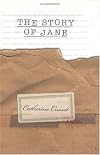
I did not expect to enjoy this book as much as I did. It got better and better with each chapter. One of the few mysteries that kept me guessing right up to the reveal.
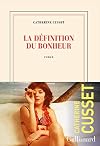
Peut-être trois étoiles et demi—j’ai bien aimé lire cette histoire des vies de deux femmes à Paris et à New York. Il s’agit du vieillissement, de l’amitié, et des sœurs—et de la pandémie Covid (les couvre-feux en France, les masques, les quarantaines). Mais j’ai trouvé Clarisse un peu trop tragique.
Lists
Awards


You May Also Like


Associated Authors
Statistics
- Works
- 24
- Also by
- 1
- Members
- 617
- Popularity
- #40,746
- Rating
- 3.3
- Reviews
- 19
- ISBNs
- 86
- Languages
- 5