
Philippe Halsman (1906–1979)
Author of Dali's Mustache
Works by Philippe Halsman
Associated Works
Georgia O'Keeffe and the camera : the art of identity (2008) — Cover photo, some editions — 22 copies
Tagged
Common Knowledge
- Birthdate
- 1906-05-02
- Date of death
- 1979-06-25
- Gender
- male
- Occupations
- photographer
author - Organizations
- Life
American Society of Magazine Photographers (president, 1945) - Awards and honors
- Lifetime Achievement Award, American Society of Magazine Photographers (1975)
- Relationships
- Dali, Salvador (collaborator)
- Short biography
- Philippe Halsman was born to a Jewish family in Riga, Latvia, then part of the Russian Empire. His parents were Ita (Grintuch), a grammar school principal, and Morduch (Maks) Halsman, a dentist. He studied electrical engineering in Dresden, Germany. In 1928, he endured the painful ordeal of being accused of murdering his father while they were on a hike together in the Austrian Tyrol. After a trial based only on circumstantial evidence, Halsman was found guilty. His family, friends, and lawyers worked for his release, getting international publicity and support from Thomas Mann and various important European Jewish intellectuals including Sigmund Freud and Albert Einstein. Halsman spent two years in prison, where he contracted tuberculosis, before being pardoned in 1930. He moved to Paris, where he opened his own photography studio, and soon gained a reputation as one of the best portrait photographers in France. When Nazi Germany invaded in World War II, Halsman fled to Marseille and eventually managed to reach the USA, settling in New York City. Halsman had his earliest success in America when the cosmetics firm Elizabeth Arden used one of his photos in an ad campaign for "Victory Red" lipstick. In 1941, Halsman met the Surrealist artist Salvador Dalí and they began to work together in the late 1940s. Halsman's famous 1948 photo entitled "Dalí Atomicus" explored the idea of suspension, depicting three cats flying, a bucket of thrown water, and Dalí in mid-air. Halsman and Dalí eventually released a compendium of their collaborations in the 1954 book Dali's Mustache. In 1947, Halsman photographed a mournful Albert Einstein, which became one of his most famous images. It was later used on a 1996 U.S. postage stamp and on the cover of Time magazine in 1999, when it called Einstein the "Person of the Century." In 1951 Halsman was commissioned by NBC to photograph various popular comedians of the time including Milton Berle, Sid Caesar, Groucho Marx, and Bob Hope. He captured many of them jumping, in mid-air, which went on to inspire many later jump pictures of celebrities. His 1961 book Halsman on the Creation of Photographic Ideas discussed ways for photographers to produce unusual pieces of work. Other celebrities Halsman photographed included Alfred Hitchcock, François Truffaut, Martin and Lewis, Judy Garland, Winston Churchill, Marilyn Monroe, Dorothy Dandridge, Pablo Picasso, and Jean Cocteau. Many of those photographs appeared on the cover of Life Magazine. In 1952, John F. Kennedy sat twice for photographs by Halsman; a photo from the first sitting appeared on the jacket of the original edition of Profiles in Courage. In 1975, Halsman received the Lifetime Achievement Award from the American Society of Magazine Photographers (now the American Society of Media Photographers), for which he was elected the first president in 1945. He also held many large exhibitions of his work worldwide. Today, Halsman's works are held in the collections of The Museum of Modern Art in New York, the J. Paul Getty Museum in Los Angeles, and the Indianapolis Museum of Art, among others.
- Nationality
- USA
Latvia (birth) - Birthplace
- Riga, Latvia
- Places of residence
- Dresden, Germany
Paris, France
New York, New York, USA - Place of death
- New York, New York, USA
Members
Reviews
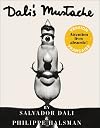
With 101 Life magazine covers to his credit, Philippe Halsman (1906-1979) was one of the leading portrait photographers of his time. In addition to his distinguished career in photojournalism, Halsman was one of the great pioneers of experimental photography, motivated by a profound desire to push this youngest of art forms toward new frontiers by using innovative and unorthodox photographic techniques. One of Halsman's favorite subjects was Salvador Dali, the glittering and controversial show more painter and theorist with whom the photographer shared a unique friendship and extraordinary professional collaboration that spanned over thirty years. Whenever Dali imagined a photograph so strange that its production seemed impossible, Halsman tried to find the solution, and invariably succeeded. As Halsman explains in his postface, Dali's Mustache is the fruit of this marriage of the minds. The jointly conceived and seemingly nonsensical questions and answers reveal the gleeful humor and assumed cynicism for which Dali is famous, while the marvelous and inspired images of Dali's mustache brilliantly display Halsman's consumate skill and extraordinary inventiveness as a photographer. This combination of wit, absurdity, and the off-handedly profound is irresistible and has contributed to the enduring fascination inspired by this unique photographic interview, which has become a cult classic and valuable collector's item since its original publication in 1954. The present volume faithfully reproduces the first edition and will introduce a new generation to the irreverent humor and imaginative genius of two great artists. show less
Another artist whose work I dearly love. & even further proof that my politics doesn't always exclusively determine wch artists I endorse. After all, Stalin was great for that sort of thing, anarchists don't need to be doing it too. In the early 1980s I put together 2 editions of a small pamphlet called "Famous Moustaches". In the 1st edition, I included Frank Zappa, Adolph Hitler, John Waters, Groucho Marx, & myself (as Tim Ore). Waters pointed out that Dali shd be included. How cd I've show more missed him?! Hence the 2nd edition. Why wdn't I endorse Dali for political reasons? Welp, he was into money & he reconciled himself to the authotitarian regime of Franco in Spain. But, what the fuck, he had a fabulous imagination & that transcends it all. show less
The Frenchman: A Photographic Interview with Fernandel (Photo Books) (Photo Books S.) by Philippe Halsman

This book is quite remarkable. In response to each question posed to him, Fernandel replies with a facial expression which speaks volumes. Amusing and at times side-splitting it is no wonder he is still one of the French speaking worlds most loved personalities.
Fun for the Dali fan. Also for photography/Halsman fans (re: notes in the back that discuss how the photos were created). A nice little art piece.
Awards

You May Also Like


Associated Authors
Statistics
- Works
- 15
- Also by
- 3
- Members
- 440
- Popularity
- #55,640
- Rating
- 4.2
- Reviews
- 8
- ISBNs
- 19
- Languages
- 3