
C. Daly King (1895–1963)
Author of Obelists at Sea
About the Author
Series
Works by C. Daly King
Associated Works
The Mammoth Book of Perfect Crimes & Impossible Mysteries (2006) — Contributor — 160 copies, 4 reviews
Tagged
Common Knowledge
- Legal name
- King, Charles Daly
- Birthdate
- 1895
- Date of death
- 1963
- Gender
- male
- Education
- Newark Academy (1912)
Yale University (1916)
Columbia University (1928) - Occupations
- psychologist
novelist - Organizations
- U.S. Army
- Short biography
- [from Penguin Random House website]
C. Daly King (1895-1963) was an American psychologist and detective story writer. He was born in New York City and educated at Yale University. After fighting in World War I, he worked in textiles and in advertising before returning to school to study psychology, with a particular focus on sleep and consciousness. In the 1930s, King published nine books that quickly established him as a master of the Golden Age mystery, but ceased writing fiction with the advent of World War II. - Nationality
- USA
- Birthplace
- New York, New York, USA
- Associated Place (for map)
- New York, USA
Members
Reviews
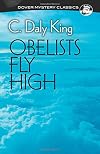
When I was younger, I thought mysteries were literarily inferior &, for the most part, didn't read them. Then I read Hammett & Chandler & changed my mind. Ellroy & Highsmith came later. I liked the cover of this bk & had, admittedly slim, hopes that its era of publication, 1935, might be promising. Well.. it's no Hammett but it did turn out to be interesting in ways I didn't expect. For one thing, it's openly atheistic & dismissive of scare-preachers - in fact, the character who's a popular show more fire-&-brimstone pulpit pounder seems included mostly so the author can ridicule him thru other characters. But, more importantly, there's heavy referencing of Charles Fort's philosophy - esp his bk "Wild Talents"! THIS, I definitely didn't expect! The mystery itself is fine, albeit frustrating at times in the "such-&-such-is-obvious!" & "why-doesn't-he-do-this?" veins. Since the tale takes place mostly on a 'plane {I write it this way b/c that's the way it's written throughout the story - a correct, for its time, abbreviation of "aeroplane" just as "ma'am" wd be a correct abbreviation of "madam" - bringing up a pet subject of mine that I won't go into here], the chapters are broken into sections w/ distance-above-sea-level heading such as "7900 feet". This, in addition to the bk's beginning w/ an Epilogue & penultimately ending w/ a Prologue makes for some formal novelty. Given that the author is also a psychologist, there's a substantial amt of frank psychological analysis that might've been shocking in its day - latent incest & the like. All in all, not bad - despite its pretty conventional sexual mores & rather stupid heterosexuality. show less
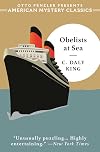
A wealthy businessman and his daughter are killed during a power outage in the middle of the crowded smoking-room aboard the Meganaut, a transatlantic liner bound for Cherbourg from New York. No one seems to know what happened or how the bizarre murders could have occurred—especially after the most obvious suspect is ultimately cleared of all involvement. The ship’s captain calls upon the assistance of four eminent psychologists who are on their way to a professional conference in London show more to help him analyze the minds of various suspects and try to identify the guilty person.
The four psychologists are the “sleuths” starring in this cruise ship whodunit, but they aren’t very good at sleuthing. Most of their theories are proven incorrect, and the psychological tests they conduct and their analyses of their suspects’ neuroses fall pitifully short of providing any tangible proof of guilt. Their elaborate discussions of psychology are long-winded and become tedious for the reader. The actions and conversations of the four psychologists go a long way to allowing the reader to realize what is actually going on, but they themselves aren’t even mildly competent sleuths. They really only succeed in convincing their readers that psychology is a pastiche of hot air quackery.
The captain is an especially annoying character. He leans toward the stupid side and blusters around like a confused bully. His insistence that he is the ‘be all and end all’ law and order on his ship gets boring. And his constant threats to the criminal suspects on board are absurd. The fact that he actually has one suspect roughed up in order to get a signed confession out of him is too over the top. And his physical intimidation of one suspect (an attorney, no less) in order to force him to answer questions against his will is offensive (and unrealistic).
The killer, the motive, and the real identities of the characters are easy to ferret out. It is not difficult to figure out the who and the why very early on. The how is a little more convoluted, but really doesn’t maintain the interest of the reader as the story progresses.
One character is just senseless. This character knows the identity of the killer, but stubbornly refuses to identify the culprit—for no clear or rational reason. This character impedes the investigation throughout the narrative and is actually involved in crimes—including conspiracy and being a stowaway—but never faces any repercussions for the misdeeds committed. This irritating character’s actions are downright stupid and really bogged the book down quite a bit.
In spite of these problems, Obelists at Sea is an ok read. Overall, the story is engaging, and the cruise ship setting is fun. The writing is good, although the technical jargon does make it drag a bit at times. Obelists at Sea is a decent, mostly enjoyable way to pass the time. However, it wasn’t enjoyable enough that I would go out of my way to track down the additional titles in the series. show less
The four psychologists are the “sleuths” starring in this cruise ship whodunit, but they aren’t very good at sleuthing. Most of their theories are proven incorrect, and the psychological tests they conduct and their analyses of their suspects’ neuroses fall pitifully short of providing any tangible proof of guilt. Their elaborate discussions of psychology are long-winded and become tedious for the reader. The actions and conversations of the four psychologists go a long way to allowing the reader to realize what is actually going on, but they themselves aren’t even mildly competent sleuths. They really only succeed in convincing their readers that psychology is a pastiche of hot air quackery.
The captain is an especially annoying character. He leans toward the stupid side and blusters around like a confused bully. His insistence that he is the ‘be all and end all’ law and order on his ship gets boring. And his constant threats to the criminal suspects on board are absurd. The fact that he actually has one suspect roughed up in order to get a signed confession out of him is too over the top. And his physical intimidation of one suspect (an attorney, no less) in order to force him to answer questions against his will is offensive (and unrealistic).
The killer, the motive, and the real identities of the characters are easy to ferret out. It is not difficult to figure out the who and the why very early on. The how is a little more convoluted, but really doesn’t maintain the interest of the reader as the story progresses.
One character is just senseless. This character knows the identity of the killer, but stubbornly refuses to identify the culprit—for no clear or rational reason. This character impedes the investigation throughout the narrative and is actually involved in crimes—including conspiracy and being a stowaway—but never faces any repercussions for the misdeeds committed. This irritating character’s actions are downright stupid and really bogged the book down quite a bit.
In spite of these problems, Obelists at Sea is an ok read. Overall, the story is engaging, and the cruise ship setting is fun. The writing is good, although the technical jargon does make it drag a bit at times. Obelists at Sea is a decent, mostly enjoyable way to pass the time. However, it wasn’t enjoyable enough that I would go out of my way to track down the additional titles in the series. show less

2 1/2 stars: I didn't particularly like it or dislike it; mixed or no real interest
From the back cover: "The Most Imaginative
Detective Stories of Our Times" So wrote Ellery Queen about The Curious Mr. Tarrant, an extraordinary collection of detective stories by Charles Daly King (1895-1963). The cases solved by Trevis Tarrant, during the early 1930's, assisted by his manservant (who is in actuality a Japanese spy) include locked rooms, headless corpses, a vanishing harp, and newly built but show more haunted house, and other bizarre events. With the encouragement of Ellery Queen, King wrote four additional stories about Mr. Tarrant, some of them becoming "curiouser and curiouser." They include the case of a Hollywood star who disappears from a locked suite of rooms, in a house surrounded by detectives, and the murder solved only because of the absence of a fish. These additional stories along with the original six tales are included in The Complete Curious Mr. Tarrant.
------------
Fairly forgettable, this series is mostly memorable for having one of those detectives that themself is the "mystery" (like Agatha Christie's Mr. Quin). In particular, the very ending of this collection lies on a cryptic note, the tales themselves loosely tied together. show less
From the back cover: "The Most Imaginative
Detective Stories of Our Times" So wrote Ellery Queen about The Curious Mr. Tarrant, an extraordinary collection of detective stories by Charles Daly King (1895-1963). The cases solved by Trevis Tarrant, during the early 1930's, assisted by his manservant (who is in actuality a Japanese spy) include locked rooms, headless corpses, a vanishing harp, and newly built but show more haunted house, and other bizarre events. With the encouragement of Ellery Queen, King wrote four additional stories about Mr. Tarrant, some of them becoming "curiouser and curiouser." They include the case of a Hollywood star who disappears from a locked suite of rooms, in a house surrounded by detectives, and the murder solved only because of the absence of a fish. These additional stories along with the original six tales are included in The Complete Curious Mr. Tarrant.
------------
Fairly forgettable, this series is mostly memorable for having one of those detectives that themself is the "mystery" (like Agatha Christie's Mr. Quin). In particular, the very ending of this collection lies on a cryptic note, the tales themselves loosely tied together. show less
Lists
Awards

You May Also Like


Associated Authors
Statistics
- Works
- 17
- Also by
- 6
- Members
- 246
- Popularity
- #92,612
- Rating
- 3.5
- Reviews
- 3
- ISBNs
- 21
- Languages
- 1