
Vesna Goldsworthy
Author of Gorsky
About the Author
Vesna Goldsworthy was born in Belgrade in 1961 and has lived in London since 1986. She writes in English, her third language. Her first novel, Gorsky (2015), is the tale of a Russian oligarch in London.
Works by Vesna Goldsworthy
Associated Works
Tagged
Common Knowledge
- Birthdate
- 1961
- Gender
- female
- Education
- University of London (MA - Modern English Literature, PhD - English Literature)
University of Belgrade (BA - Comparative Literature) - Occupations
- professor (Creative Writing)
novelist
memoirist
poet - Organizations
- University of Exeter
Kingston University
British Broadcasting Corporation - Nationality
- Serbia
- Birthplace
- Belgrade, Yugoslavia
- Places of residence
- England, UK
- Map Location
- Serbia
Members
Reviews
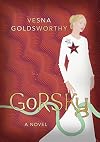
When I read Nino Harataschvili’s The Eighth Life (For Brilka) early on in the year (I think it may have been back in January), I was worried that the rest of the year might be a literary anticlimax, and that I would not encounter anything else anywhere near as good. Well I can relax again now, as Vesna Goldsworthy's 'Gorsky' has served to herald the onset of spring, and give a new zest to the year's reading.
It is important to stress that Gorsky is a wondeful novel in its own right. It is show more also, however, a glittering homage to 'The Great Gatsby'. Goldsworthy might not quite ascend to Fitzgerald's effortlessly poetic narrative [well, who could? I first read 'The Great Gatsby' as part of my A Level English course and even as an emotionally callow Leicestershire lad, it was immediately apparent to me that Fitzgerald's prose was infinitely more poetic than even the best of D H Lawrence's verse, which formed another part of the syllabus] but she does often come close. A laudable achievement for any writer, this is altogether more remarkable for Ms Goldsworthy as English is, I believe, her third or fourth language.
Gatsby's 1920s dazzling New York and New Jersey is replaced by a twenty first century London peopled by east European émigrés, ranging from Russian multi-millionaires who are left left feeling humble alongside their neighbouring billionaires, Bulgarian former Olympic gymnastics medallists and impoverished Serbians. Nick Carraway has morphed into Nikola "Nick" Kimovic, a Serbian who escaped the troubles of his homeland in the 1990s and wound up in London, working for a pittance in Fynch's antiquarian bookshop in the back streets of Chelsea. Here he first encounters the dazzlingly beautiful Natalia Summerscale who comes in seeking works on Russian art.
Shortly afterwards, Ramon Borisovich Gorsky comes into Fynch's and deposits a huge cheque with a request that the shop track down remarkable books to populate the library he is including in the new mansion he is having built in Chelsea, Gorsky is the richest of the superrich Russians who have made London their playground, and Nick gradually fills us in about some of his exotic history. Like Gatsby, no-one really knows where Gorsky came from. He was suddenly there, with his billions behind him, owning properties all around the world and throwing the most amazing parties, attended by society magazine 'A listers' from all over the world (though not always by Gorsky himself).
Like Jay Gatsby, Gorsky is a driven man, one who has achieved limitless commercial success of dubious moral provenance, but one for whom something remains missing, seemingly unattainable despite the wealth and power at his behest. He is in love, and desperate for fulfilment.
Goldsworthy's plotting is immaculate, and the books fairly fizzes along, supported by beautiful descriptions of London: the city is almost a character in its own right (even though it is a London with which I am wholly unfamiliar myself, despite having lived her for nearly forty years!). She seamlessly mingles a little bit of everything: politics, murder, love, art and social observation, though the melange is managed impeccably. show less
It is important to stress that Gorsky is a wondeful novel in its own right. It is show more also, however, a glittering homage to 'The Great Gatsby'. Goldsworthy might not quite ascend to Fitzgerald's effortlessly poetic narrative [well, who could? I first read 'The Great Gatsby' as part of my A Level English course and even as an emotionally callow Leicestershire lad, it was immediately apparent to me that Fitzgerald's prose was infinitely more poetic than even the best of D H Lawrence's verse, which formed another part of the syllabus] but she does often come close. A laudable achievement for any writer, this is altogether more remarkable for Ms Goldsworthy as English is, I believe, her third or fourth language.
Gatsby's 1920s dazzling New York and New Jersey is replaced by a twenty first century London peopled by east European émigrés, ranging from Russian multi-millionaires who are left left feeling humble alongside their neighbouring billionaires, Bulgarian former Olympic gymnastics medallists and impoverished Serbians. Nick Carraway has morphed into Nikola "Nick" Kimovic, a Serbian who escaped the troubles of his homeland in the 1990s and wound up in London, working for a pittance in Fynch's antiquarian bookshop in the back streets of Chelsea. Here he first encounters the dazzlingly beautiful Natalia Summerscale who comes in seeking works on Russian art.
Shortly afterwards, Ramon Borisovich Gorsky comes into Fynch's and deposits a huge cheque with a request that the shop track down remarkable books to populate the library he is including in the new mansion he is having built in Chelsea, Gorsky is the richest of the superrich Russians who have made London their playground, and Nick gradually fills us in about some of his exotic history. Like Gatsby, no-one really knows where Gorsky came from. He was suddenly there, with his billions behind him, owning properties all around the world and throwing the most amazing parties, attended by society magazine 'A listers' from all over the world (though not always by Gorsky himself).
Like Jay Gatsby, Gorsky is a driven man, one who has achieved limitless commercial success of dubious moral provenance, but one for whom something remains missing, seemingly unattainable despite the wealth and power at his behest. He is in love, and desperate for fulfilment.
Goldsworthy's plotting is immaculate, and the books fairly fizzes along, supported by beautiful descriptions of London: the city is almost a character in its own right (even though it is a London with which I am wholly unfamiliar myself, despite having lived her for nearly forty years!). She seamlessly mingles a little bit of everything: politics, murder, love, art and social observation, though the melange is managed impeccably. show less
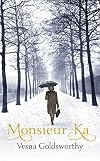
I first encountered Vesna Goldsworthy, for whom English is probably at least her third language, through her wonderful debut novel Gorsky, an homage to The Great Gatsby translated to the twenty-first century London of émigré Russian oligarchs. That novel was beautifully written and effortlessly conjured all the hopes, anguish and despair that resonate so powerfully through Fitzgerald's novel.
Her latest novel, equally beautifully written, defies easy classification. The strongest theme is show more that of displacement and the difficulty in conforming to new worlds following seismic upheavals, whether on an individual or global scale. Albertine Wheeler is a French Jew, who after being orphaned in her youth had fled the Nazi occupation, initially relocating to Romania, and then escaping via Greece to Alexandria where, in the final months of the Second World War, she worked as an administrator in the military hospital. There she met, and subsequently married, Lieutenant Colonel Albert Wheeler, an English officer who was recovering from a shrapnel wound to his shoulder.
Following the war, the couple move to London. Albert takes on an undefined role within the Foreign Office that requires him frequently to travel back to Europe, and particularly Berlin, to assist with the administration of the peace, and reconstruction of countries left even more devastated by the war than Britain. The novel opens in February 1947, the coldest month of what was the coldest recorded British winter, and the cold and the snow are a constant presence, almost becoming characters in their own right.
Frequently left alone while her husband travels around Europe, and looking for some constructive occupation with which to fill her time, Albertine answers and advert in a newsagent's window looking for someone a French speaker who can read to an elderly gentleman. She replies to the advert, and finds herself regularly visiting the enigmatic Sergei Alexandrovich Carr, a Russian émigré who had lived in London for the last thirty-five years. Albertine begins her role by reading from the original French edition of Madame Bovary. As her acquaintance with the Carr family develops, she learns that Sergei Alexandrovich's original surname was Karenin, and that he is, in fact, the son of Anna, whose story Tolstoy had appropriated for his famous novel. A further fascinating twist is thrown on this tale as the family has been invited to watch progress on the production of Alexander Korda's film version of the book, in which Sergei Carr's grandson is playing the part of Anna's son (i.e. Sergei himself). There are marvellous cameo appearances of Vivien Leigh and, later, Laurence Olivier.
Albertine is drawn increasingly into the Carr/Karenin household, and learns of Sergei's amazing life, ending up in Petrograd during the russian revolution, and his subsequent departure with his wife and young son, ending up in exile in West London during the austere post-war years.
Goldsworthy writes beautifully and delivers a sad but triumphant story that is part historical fiction and part paean to the enduring allure of great literature and the power of language. A very heady and addictive mix. show less
Her latest novel, equally beautifully written, defies easy classification. The strongest theme is show more that of displacement and the difficulty in conforming to new worlds following seismic upheavals, whether on an individual or global scale. Albertine Wheeler is a French Jew, who after being orphaned in her youth had fled the Nazi occupation, initially relocating to Romania, and then escaping via Greece to Alexandria where, in the final months of the Second World War, she worked as an administrator in the military hospital. There she met, and subsequently married, Lieutenant Colonel Albert Wheeler, an English officer who was recovering from a shrapnel wound to his shoulder.
Following the war, the couple move to London. Albert takes on an undefined role within the Foreign Office that requires him frequently to travel back to Europe, and particularly Berlin, to assist with the administration of the peace, and reconstruction of countries left even more devastated by the war than Britain. The novel opens in February 1947, the coldest month of what was the coldest recorded British winter, and the cold and the snow are a constant presence, almost becoming characters in their own right.
Frequently left alone while her husband travels around Europe, and looking for some constructive occupation with which to fill her time, Albertine answers and advert in a newsagent's window looking for someone a French speaker who can read to an elderly gentleman. She replies to the advert, and finds herself regularly visiting the enigmatic Sergei Alexandrovich Carr, a Russian émigré who had lived in London for the last thirty-five years. Albertine begins her role by reading from the original French edition of Madame Bovary. As her acquaintance with the Carr family develops, she learns that Sergei Alexandrovich's original surname was Karenin, and that he is, in fact, the son of Anna, whose story Tolstoy had appropriated for his famous novel. A further fascinating twist is thrown on this tale as the family has been invited to watch progress on the production of Alexander Korda's film version of the book, in which Sergei Carr's grandson is playing the part of Anna's son (i.e. Sergei himself). There are marvellous cameo appearances of Vivien Leigh and, later, Laurence Olivier.
Albertine is drawn increasingly into the Carr/Karenin household, and learns of Sergei's amazing life, ending up in Petrograd during the russian revolution, and his subsequent departure with his wife and young son, ending up in exile in West London during the austere post-war years.
Goldsworthy writes beautifully and delivers a sad but triumphant story that is part historical fiction and part paean to the enduring allure of great literature and the power of language. A very heady and addictive mix. show less
When I read Emily St John Mandel's 'Station Eleven' early on in the year (I think it may have been back in February), I was worried that the rest of the year might be a literary anticlimax, and that I wouldn't encounter anything else anywhere near as good. Of course, at that point I hadn't read Mandel's own 'Last Night in Montreal' or William Boyd's 'Sweet Caress', and now Vesna Goldsworthy's 'Gorsky' has added some autumnal glory to the year's reading.
While a marvellous novel in its own show more right, 'Gorsky' is also a glittering homage to 'The Great Gatsby'. Goldsworthy might not quite ascend to Fitzgerald's effortlessly poetic narrative [well, who could? I first read 'The Great Gatsby' as part of my A Level English course and even as am emotionally callow Leicestershire lad it was immediately apparent that Fitzgerald's prose was infinitely more poetic than even the best of D H Lawrence's verse, which formed another part of the syllabus] but she does often come close. A laudable achievement for any writer, this is altogether more remarkable for Ms Goldsworthy as English is, I believe, her third language.
Gatsby's 1920s dazzling New York and New Jersey is replaced by a twenty first century London peopled by east European émigrés, ranging from Russian multi-millionaires left feeling humble alongside their neighbouring billionaires, Bulgarian former Olympic gymnastics medallists and impoverished Serbians. Nick Carraway has morphed into Nikola "Nick" Kimovic, a Serbian who escaped the troubles of his homeland in the 1990s and wound up in London, working for a pittance in Fynch's antiquarian bookshop in the back streets of Chelsea. Here he first encounters the dazzlingly beautiful Natalia Summerscale who comes in looking for works on Russian art.
Shortly afterwards Ramon Borisovich Gorsky comes into Fynch's and deposits a huge cheque with a request that the shop track down remarkable books to populate the library he is including in the new mansion he is having built in Chelsea, Gorsky is the richest of the superrich Russians who have made London their playground, and Nick gradually fills us in about some of his exotic history. Like Gatsby, no-one really knows where Gorsky came from. He was suddenly there, with his billions behind him, owning properties all around the world and throwing the most amazing parties, attended by society magazine 'A listers' from all over the world (though not always by Gorsky himself).
Like Jay Gatsby, Gorsky is a driven man, one who has achieved limitless commercial success of dubious moral provenance, but one for whom something remains missing, seemingly unattainable despite the wealth and power at his behest. He is in love, and desperate for fulfilment.
Goldsworthy's plotting is immaculate, and the books fairly fizzes along, supported by beautiful descriptions of London: the city is almost a character in its own right (even though it is a London with which I am wholly unfamiliar myself!). She seamlessly mingles a little bit of everything: politics, murder, love, art and social observation, though the melange is managed impeccably. show less
While a marvellous novel in its own show more right, 'Gorsky' is also a glittering homage to 'The Great Gatsby'. Goldsworthy might not quite ascend to Fitzgerald's effortlessly poetic narrative [well, who could? I first read 'The Great Gatsby' as part of my A Level English course and even as am emotionally callow Leicestershire lad it was immediately apparent that Fitzgerald's prose was infinitely more poetic than even the best of D H Lawrence's verse, which formed another part of the syllabus] but she does often come close. A laudable achievement for any writer, this is altogether more remarkable for Ms Goldsworthy as English is, I believe, her third language.
Gatsby's 1920s dazzling New York and New Jersey is replaced by a twenty first century London peopled by east European émigrés, ranging from Russian multi-millionaires left feeling humble alongside their neighbouring billionaires, Bulgarian former Olympic gymnastics medallists and impoverished Serbians. Nick Carraway has morphed into Nikola "Nick" Kimovic, a Serbian who escaped the troubles of his homeland in the 1990s and wound up in London, working for a pittance in Fynch's antiquarian bookshop in the back streets of Chelsea. Here he first encounters the dazzlingly beautiful Natalia Summerscale who comes in looking for works on Russian art.
Shortly afterwards Ramon Borisovich Gorsky comes into Fynch's and deposits a huge cheque with a request that the shop track down remarkable books to populate the library he is including in the new mansion he is having built in Chelsea, Gorsky is the richest of the superrich Russians who have made London their playground, and Nick gradually fills us in about some of his exotic history. Like Gatsby, no-one really knows where Gorsky came from. He was suddenly there, with his billions behind him, owning properties all around the world and throwing the most amazing parties, attended by society magazine 'A listers' from all over the world (though not always by Gorsky himself).
Like Jay Gatsby, Gorsky is a driven man, one who has achieved limitless commercial success of dubious moral provenance, but one for whom something remains missing, seemingly unattainable despite the wealth and power at his behest. He is in love, and desperate for fulfilment.
Goldsworthy's plotting is immaculate, and the books fairly fizzes along, supported by beautiful descriptions of London: the city is almost a character in its own right (even though it is a London with which I am wholly unfamiliar myself!). She seamlessly mingles a little bit of everything: politics, murder, love, art and social observation, though the melange is managed impeccably. show less
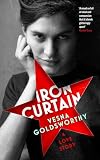
Milena Orbansky is the privileged daughter of a hero of the revolution. Her life is one of luxury and indulgence, albeit within a communist state. Then she meets an English poet, over to perform at a festival, and her life changes. She falls deeply in love and escapes to the West. However life in 1980s London is not what she is used to and she begins to realise that there is a price to pay for freedom.
This is a really strong book. The decadence and rebellion of Milena's life in her home show more country is contrasted so sharply to realities of poverty in the free world. There is also a huge undercurrent on the theme of betrayal, Milena will not betray her country or her family but her husband has no such morals. It is obvious that the author has lived life in the communist bloc, the authenticity screams from the page. show less
This is a really strong book. The decadence and rebellion of Milena's life in her home show more country is contrasted so sharply to realities of poverty in the free world. There is also a huge undercurrent on the theme of betrayal, Milena will not betray her country or her family but her husband has no such morals. It is obvious that the author has lived life in the communist bloc, the authenticity screams from the page. show less
Lists
Awards


You May Also Like


Associated Authors
Statistics
- Works
- 6
- Also by
- 1
- Members
- 261
- Popularity
- #88,098
- Rating
- 3.6
- Reviews
- 19
- ISBNs
- 43
- Languages
- 9