
Raymond Coppinger (–2017)
Author of Dogs: A Startling New Understanding of Canine Origin, Behavior & Evolution
About the Author
Raymond Coppinger is professor of biology at Hampshire College & the author of "Fishing Dogs". A former sled dog racing champion, he now lectures widely about dogs. He & Lorna Coppinger co-founded Hampshire's Livestock Dog Project. He lives in Montague, Massachusetts. (Bowker Author Biography)
Works by Raymond Coppinger
Dogs: A Startling New Understanding of Canine Origin, Behavior & Evolution (2001) — Author — 176 copies, 5 reviews
Tagged
Common Knowledge
- Date of death
- 2017-08-14
- Gender
- male
- Education
- Boston University (BA|Literature and Philosophy)
University of Massachusetts (PhD|Biology) - Organizations
- Hampshire College
British Broadcasting Corporation
Canadian Broadcasting Corporation - Short biography
- Raymond Coppinger was a professor of cognitive science and biology at Hampshire College. He was an expert in dog behavior and the origin of the domestic dog.
- Cause of death
- cancer
- Nationality
- USA
- Associated Place (for map)
- USA
Members
Reviews

Having studied dogs for more than four decades, Coppinger presents here the fairly convincing scholarly argument that the dogs humans have known, loved, and lived alongside for millennia are more or less machines responding to external phenomena with, essentially, genetically pre-programmed directives. This is interesting to contemplate, though disappointing as dog lovers truly convinced of our pets' intelligence. It also prompts the musing that though we think of ourselves as having free show more will, to what extent is our own behavior also subconsciously determined by outside stimuli?
I love how many of the other reviews I've read close with "but I know my dog loves me!" I look forward to a feline edition of this study so I can get inside the minds of my cats. show less
I love how many of the other reviews I've read close with "but I know my dog loves me!" I look forward to a feline edition of this study so I can get inside the minds of my cats. show less
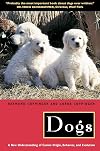
This book is fascinating. It challenges so many widely held popular beliefs about dogs. With careful logic, the Coppingers examine what dogs are and how they got to be that way. They pick apart the idea that dogs are descendants of wolves deliberately tamed and bred by early humans. Instead their hypothesis is that dogs actually domesticated themselves, adapting to a new niche- scavenging at Neolithic rubbish heaps. This means that even though dogs and wolves share a common ancestor, dogs show more don't behave like wolves and shouldn't be treated like they do. It's very complicated. Sometimes the explanations get quite technical, but the authors always bring it back down to layman's terms.
Presenting a new idea about how dogs evolved is only a small part of this book. It covers many other topics. Why are there so many different dog breeds? How is it possible that dogs can take so many diverse shapes and sizes, yet still be the same species? How much of canine behavior is intelligence, and how much genetic or instinctual? There's a lot of detail about several working breeds: sled dogs, livestock guarding dogs, and sheep herding dogs in particular. There is heavy criticism in this book about how working breeds have now become household pets, and the breeding of dogs for show. This book held my attention all the way to the end. (Except for one boring chapter about the scientific nomenclature of canine species.)
from the Dogear Diary show less
Presenting a new idea about how dogs evolved is only a small part of this book. It covers many other topics. Why are there so many different dog breeds? How is it possible that dogs can take so many diverse shapes and sizes, yet still be the same species? How much of canine behavior is intelligence, and how much genetic or instinctual? There's a lot of detail about several working breeds: sled dogs, livestock guarding dogs, and sheep herding dogs in particular. There is heavy criticism in this book about how working breeds have now become household pets, and the breeding of dogs for show. This book held my attention all the way to the end. (Except for one boring chapter about the scientific nomenclature of canine species.)
from the Dogear Diary show less
This book will totally change your understanding of canine psychology. While the "pack-oriented" focus of popular canine trainers like Cesar Millan yields results, this volume explains the real differences between dogs and wolves in the wild. The book also provides insight into the world of work dogs, including shepherd dogs, sled dogs, guard dogs, and more.
You May Also Like


Associated Authors
Statistics
- Works
- 6
- Members
- 294
- Popularity
- #79,673
- Rating
- 4.2
- Reviews
- 6
- ISBNs
- 20
- Languages
- 4