
Alexandra Horowitz
Author of Inside of a Dog: What Dogs See, Smell, and Know
About the Author
Alexandra Horowitz is the author of the #1 New York Times bestseller Inside of a Dog: What Dogs See, Smell, and Know and On Looking: A Walker's Guide to the Art of Observation. She teaches at Barnard College, where she runs the Dog Cognition Lab. She lives with her family, including two large, show more highly sniffy dogs, in New York City. show less
Image credit: Alexandra Horowitz speaks on a panel about animal emotions and human-animal relations with Frans de Wall and moderator Betsy Herrelko at the National Book Festival, August 31, 2019. Photo by Kimberly T. Powell/Library of Congress.By Library of Congress Life - 20190831KP0199.jpg, CC0, https://commons.wikimedia.org/w/index.php?curid=82899211
Works by Alexandra Horowitz
Inside of a Dog -- Young Readers Edition: What Dogs See, Smell, and Know (2016) 182 copies, 3 reviews
Associated Works
Tagged
Common Knowledge
- Birthdate
- 1956-04-05
- Gender
- female
- Education
- University of Pennsylvania
University of California, San Diego - Occupations
- professor
lexicographer - Organizations
- Columbia University (Barnard College)
- Agent
- Kris Dahl
Caroline Eisenmann - Short biography
- Alexandra Horowitz teaches psychology at Barnard College, Columbia University where she is a term assistant professor and continues to research dog behavior. She earned her B.A. in philosophy from the University of Pennsylvania and a PhD in cognitive science at the University of California at San Diego, and has studied the cognition of humans, rhinosceroses, bonobos, and dogs. Before her scientific career, Horowitz worked as a lexicographer at Merrian-Webster and served on the staff of The New Yorker. She lives in New York City with her husband, infant son, and Finnegan, a dog of indeterminate parentage and determinate character, and fond memories of dogs past. She also likes to sketch her dogs. [adapted from Inside of of Dog (2009)]
- Nationality
- USA
- Places of residence
- New York, New York, USA
- Associated Place (for map)
- New York, USA
Members
Reviews

INSIDE OF A DOG was a fascinating and informative read, and probably would be for any "dog-owner," or, if that's already a politically incorrect term, then for anyone who has ever shared his or her life with a dog. And there have been dogs around for most of my life, so I certainly qualify. Yeah, I liked Alexandra Horowitz's scientific study of canine behavior. If it doesn't contain all the answers on why dogs do the things they do, it certainly gives you plenty to gnaw on, and entertains show more you in the process. There are plenty of "yes" moments in the book, like "Barking can be contagious ... one dog barking might prompt a chorus of barking dogs, all joined in their shared noisiness." That's an "OH, yes" statement I can heartily agree with. Walking around the block with my two dogs I know of nearly two dozen dogs in that four-block stretch. Those other dogs often all take note of our walk and, well, yeah, "a chorus of barking dogs." (This reminded me of something I read somewhere about a guy who had devised a special collar for dogs which 'translated' their barks. Turned out they were all saying: "hey! hey! HEY!")
Or, conversely, here's another favorite bit -
"... it is the very fact that they do not use language that makes me especially treasure dogs. Their silence can be one of their most endearing traits ... There is no awkwardness in a shared silent moment with a dog: a gaze from the dog on the other side of the room; lying sleepily alongside of each other. It is when language stops that we connect most fully."
Perhaps my favorite chapter here was toward the end, "You Had Me at Hello." In it Horowitz states: "Often it is contact that draws us to animals. Our sense of touch ..." Again, an 'aha' moment of recognition for me. Our most recent dog, adopted from the local shelter, is a delicately leggy Boston Terrier-Chihuahua mix. Emmy was not at all the kind of dog we were looking for, but she was the only dog in the place who wasn't barking, which intrigued me. Upon being let out of her cage, she shyly approached me, stood up on her hind legs and placed just one front foot ever so softly upon my knee. Touch. She had me even withOUT Hello. Emmy has owned me for just over a year now.
Horowitz is a psychologist and specializes in animal behavior. But she is also a doglover. Me too. If I have any complaints about INSIDE OF A DOG, it's that it can be on occasion a bit TOO scientific and a little redundant here and there. But that's a small thing. This is a damn good read. If you've got a dog that owns you, you'll enjoy dipping into this book. I recommend it. show less
Or, conversely, here's another favorite bit -
"... it is the very fact that they do not use language that makes me especially treasure dogs. Their silence can be one of their most endearing traits ... There is no awkwardness in a shared silent moment with a dog: a gaze from the dog on the other side of the room; lying sleepily alongside of each other. It is when language stops that we connect most fully."
Perhaps my favorite chapter here was toward the end, "You Had Me at Hello." In it Horowitz states: "Often it is contact that draws us to animals. Our sense of touch ..." Again, an 'aha' moment of recognition for me. Our most recent dog, adopted from the local shelter, is a delicately leggy Boston Terrier-Chihuahua mix. Emmy was not at all the kind of dog we were looking for, but she was the only dog in the place who wasn't barking, which intrigued me. Upon being let out of her cage, she shyly approached me, stood up on her hind legs and placed just one front foot ever so softly upon my knee. Touch. She had me even withOUT Hello. Emmy has owned me for just over a year now.
Horowitz is a psychologist and specializes in animal behavior. But she is also a doglover. Me too. If I have any complaints about INSIDE OF A DOG, it's that it can be on occasion a bit TOO scientific and a little redundant here and there. But that's a small thing. This is a damn good read. If you've got a dog that owns you, you'll enjoy dipping into this book. I recommend it. show less
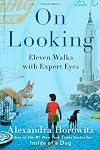
Sometimes you can be around something so often you stop seeing it. The opposite can be true as well: you're expecting to find something, so your senses focus on that something and you miss everything else. How can you be more observant of the everyday world around you? That's what Alexandra Horowitz set out to understand in On Looking: Eleven Walks with Expert Eyes.
Horowitz lives in New York City apartment building and takes frequent walks around her neighborhood. She wanted to discover how show more much she was missing by taking walks with people attentive to very different things. The perspectives of her companions might reveal things she had overlooked. I found the concept predictable but intriguing. I walk my neighborhood streets -- albeit suburban rather than Manhattan -- about three times a week.
Horowitz managed to surprise me. Her effort was not simply to become more observant; she wanted to see a wholly different city. In separate chapters she took walks with eleven different companions, beginning with her dog (studying the whys and wheres of sniffing, listening, and watching) and her son (who she raved about, by the way. I'm sure he's as wonderful and smart as she says.). She also walked with a geologist who pointed out the fossils and shells from various limestone deposits around the country that now make up the foundations of buildings in her neighborhood.
Then she took a turn I wasn't expecting. She walked with a typographer who didn't merely look at the signs in the neighborhood but read details and histories into the typefaces and graphical applications themselves. She strolled a campus with a doctor who gave basic observational medical diagnoses of people based on the way they walked, limped, or favored one knee over another. A blind woman led her around the block and she became aware how minute variations in wind and warmth signaled awnings and approaching street corners. She walked with a sound engineer, a public spaces and pedestrian traffic consultant, a wildlife expert, an insect advocate and an artist.
Each person had a particular talent that added dimension to her basic awareness. Each walk brought with it the potential of an entirely new neighborhood. I don't think I would try to tackle all eleven different perspectives in any single walk but I may, from time to time, decide to pick one of those viewpoints and see what new things I might find on my walks. It's my neighborhood; I might as well see what it has to show me. show less
Horowitz lives in New York City apartment building and takes frequent walks around her neighborhood. She wanted to discover how show more much she was missing by taking walks with people attentive to very different things. The perspectives of her companions might reveal things she had overlooked. I found the concept predictable but intriguing. I walk my neighborhood streets -- albeit suburban rather than Manhattan -- about three times a week.
Horowitz managed to surprise me. Her effort was not simply to become more observant; she wanted to see a wholly different city. In separate chapters she took walks with eleven different companions, beginning with her dog (studying the whys and wheres of sniffing, listening, and watching) and her son (who she raved about, by the way. I'm sure he's as wonderful and smart as she says.). She also walked with a geologist who pointed out the fossils and shells from various limestone deposits around the country that now make up the foundations of buildings in her neighborhood.
Then she took a turn I wasn't expecting. She walked with a typographer who didn't merely look at the signs in the neighborhood but read details and histories into the typefaces and graphical applications themselves. She strolled a campus with a doctor who gave basic observational medical diagnoses of people based on the way they walked, limped, or favored one knee over another. A blind woman led her around the block and she became aware how minute variations in wind and warmth signaled awnings and approaching street corners. She walked with a sound engineer, a public spaces and pedestrian traffic consultant, a wildlife expert, an insect advocate and an artist.
Each person had a particular talent that added dimension to her basic awareness. Each walk brought with it the potential of an entirely new neighborhood. I don't think I would try to tackle all eleven different perspectives in any single walk but I may, from time to time, decide to pick one of those viewpoints and see what new things I might find on my walks. It's my neighborhood; I might as well see what it has to show me. show less
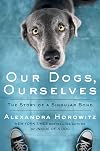
I guess I was looking for a different book. Given that Alexandra Horowitz is a scientist at the Dog Cognition Lab at Barnard College, I expected something more sciency, maybe focussed on what research shows about how dogs seem to experience the human/dog relationship, and maybe something about the evolution of the relationship. But the book goes from topic to topic, mostly ruminating about the human side of the relationship, not really research per se.
Okay, reset. Ruminations it is. Informed show more ruminations, dispelling some myths along the way, e.g., that a dog’s breed can serve as a guide to its personality and behavior, more than a couple of myths about spay-neuter, and maybe others.
The chapters focus on topics:
- bonding
- naming
- “ownership” and the legal status of dogs,
- how we talk to dogs
- breeds and breeding
- observing dogs and refining our snap opinions about them
- dog “stuff” (collars, coats, leashes, toys, beds, trust funds, . . . )
- reading our dogs and reading ourselves
- what a “dog cognition lab” does
- dog emotions
- spay-neuter (“de-sexing”)
- the web formed by our responsibilities toward dogs, how living with dogs changes us, and our respect or disrespect for their dignity
The third chapter, on “ownership,” was especially interesting to me. We really lack the legal and conceptual category for dog “ownership.” Dogs are not furniture (the example Horowitz keeps coming back to) — they aren’t “things” at all. They aren’t persons, either. They can’t speak, vote, or drive cars. They can be held responsible for their actions, both by their “owners” and, to some extent, by law. They express desires. And they communicate, in their way.
But in some crucial situations, we don’t have the category at hand that would do their status justice. In divorce proceedings, they are treated as property. Their owners can abandon them, pretty much at will. Although there are laws against animal cruelty, they do not give dogs adequate relief from cruel or neglectful owners.
There’s a larger issue at stake there, beyond the scope of the book. Corporations have legal “personhood.” What about chimpanzees? Horowitz raises the case. Our legal categories cluster around persons and things. Dogs, like chimpanzees and other animals, forests, oceans, etc. are pretty much wedged in where they can be fit, uncomfortably.
But Horowitz hits hardest on two other topics — breeds and spay-neuter.
She takes a strong stand on breeds and breeding. We have bred dogs against their own interests. The AKC and other organizations that promote “purebred” dogs carry the banner for inbreeding, with its consequences — birth defects turned into breed standards, dogs that can’t breathe or exercise freely, dogs subject to seizures, dogs with skeletal structures unsuited to their size and behavior, . . . But it’s bigger than that. Puppy mills, designer breeds, . . .
Horowitz laments what we’ve done, that we’ve bred dogs for centuries without health and fitness as primary criteria. We won’t stop breeding, but we might change how we do it, and breed for exactly those things.
Some of that has to do with educating the prospective dog owner. People want specific breeds, because of their looks or their behavior. Those “looks” may be unhealthy. That behavior may be unreliable. As Horowitz reports, there is as much behavioral variation within breeds as between them. One golden retriever may be a slobbery, faithful, gentle companion. Another might bite your child.
Horowitz’s thoughts on spay-neuter may rile some people. She’s not an advocate for automatic spay-neuter or strict legal requirements. It’s a complex issue, and she clearly struggles to find the the right answer, to thread a responsible and respectful way through the overpopulation issue, health problems that can result from spay-neuter, the consequences of our current laws, and the dignity of life owed to dogs.
Some readers are going to react. It’s probably good to listen first.
The tone of the book varies. The opening chapters are a little bit tongue-in-cheek, and a little bit self-effacing. Later chapters, on those hotter topics are stronger, serious. But she always comes back to a couple of things.
We don’t know what it’s like to be a dog — we only have our glimpses into their lives that we get from our intimate relationships with them. We can study them, observe them, live with them, but their lives are their lives not ours.
And they have the ability to bring out something good in us. This comes out in Horowitz’s tone in the book. Dogs give us an outlet for our less dour, less “adult” sides, a chance to drop the “I’m a serious person” facade.
Sure, you can incorporate a dog into your dysfunctional seriousness, or you can count yourself out of dog companionship entirely, but the dog did give you a chance. If you didn’t take it, well, your refusal tells us all something. Don’t be coming around my house, and please don’t run for president. show less
Okay, reset. Ruminations it is. Informed show more ruminations, dispelling some myths along the way, e.g., that a dog’s breed can serve as a guide to its personality and behavior, more than a couple of myths about spay-neuter, and maybe others.
The chapters focus on topics:
- bonding
- naming
- “ownership” and the legal status of dogs,
- how we talk to dogs
- breeds and breeding
- observing dogs and refining our snap opinions about them
- dog “stuff” (collars, coats, leashes, toys, beds, trust funds, . . . )
- reading our dogs and reading ourselves
- what a “dog cognition lab” does
- dog emotions
- spay-neuter (“de-sexing”)
- the web formed by our responsibilities toward dogs, how living with dogs changes us, and our respect or disrespect for their dignity
The third chapter, on “ownership,” was especially interesting to me. We really lack the legal and conceptual category for dog “ownership.” Dogs are not furniture (the example Horowitz keeps coming back to) — they aren’t “things” at all. They aren’t persons, either. They can’t speak, vote, or drive cars. They can be held responsible for their actions, both by their “owners” and, to some extent, by law. They express desires. And they communicate, in their way.
But in some crucial situations, we don’t have the category at hand that would do their status justice. In divorce proceedings, they are treated as property. Their owners can abandon them, pretty much at will. Although there are laws against animal cruelty, they do not give dogs adequate relief from cruel or neglectful owners.
There’s a larger issue at stake there, beyond the scope of the book. Corporations have legal “personhood.” What about chimpanzees? Horowitz raises the case. Our legal categories cluster around persons and things. Dogs, like chimpanzees and other animals, forests, oceans, etc. are pretty much wedged in where they can be fit, uncomfortably.
But Horowitz hits hardest on two other topics — breeds and spay-neuter.
She takes a strong stand on breeds and breeding. We have bred dogs against their own interests. The AKC and other organizations that promote “purebred” dogs carry the banner for inbreeding, with its consequences — birth defects turned into breed standards, dogs that can’t breathe or exercise freely, dogs subject to seizures, dogs with skeletal structures unsuited to their size and behavior, . . . But it’s bigger than that. Puppy mills, designer breeds, . . .
Horowitz laments what we’ve done, that we’ve bred dogs for centuries without health and fitness as primary criteria. We won’t stop breeding, but we might change how we do it, and breed for exactly those things.
Some of that has to do with educating the prospective dog owner. People want specific breeds, because of their looks or their behavior. Those “looks” may be unhealthy. That behavior may be unreliable. As Horowitz reports, there is as much behavioral variation within breeds as between them. One golden retriever may be a slobbery, faithful, gentle companion. Another might bite your child.
Horowitz’s thoughts on spay-neuter may rile some people. She’s not an advocate for automatic spay-neuter or strict legal requirements. It’s a complex issue, and she clearly struggles to find the the right answer, to thread a responsible and respectful way through the overpopulation issue, health problems that can result from spay-neuter, the consequences of our current laws, and the dignity of life owed to dogs.
Some readers are going to react. It’s probably good to listen first.
The tone of the book varies. The opening chapters are a little bit tongue-in-cheek, and a little bit self-effacing. Later chapters, on those hotter topics are stronger, serious. But she always comes back to a couple of things.
We don’t know what it’s like to be a dog — we only have our glimpses into their lives that we get from our intimate relationships with them. We can study them, observe them, live with them, but their lives are their lives not ours.
And they have the ability to bring out something good in us. This comes out in Horowitz’s tone in the book. Dogs give us an outlet for our less dour, less “adult” sides, a chance to drop the “I’m a serious person” facade.
Sure, you can incorporate a dog into your dysfunctional seriousness, or you can count yourself out of dog companionship entirely, but the dog did give you a chance. If you didn’t take it, well, your refusal tells us all something. Don’t be coming around my house, and please don’t run for president. show less

This is a thoroughly delightful and very interesting book about dogs. It's not the usual "how to get your dog to behave and to x, y, z". Instead, this book is about how dogs see and experience the world, how they interact with other dogs and humans, and what sets them apart from many other animals, both wild and domesticated. One big take-away for me from this book is that dogs are special: the way they are able to bond with humans, how good they are at working with humans, and how well they show more understand us makes them a rather unique species.
I particularly enjoyed the scientific breakdown of how dogs play with each other, and Horowitz' engaging explanation of how various behavioural experiments show how deep the connection is between dogs and humans.
This book is an engaging and easy read, with lots of new insight and information for any and all dog owners. It also promotes a much more easy going and relaxed relationship between dogs and dog owners than many "dog books", something I very much appreciated. show less
I particularly enjoyed the scientific breakdown of how dogs play with each other, and Horowitz' engaging explanation of how various behavioural experiments show how deep the connection is between dogs and humans.
This book is an engaging and easy read, with lots of new insight and information for any and all dog owners. It also promotes a much more easy going and relaxed relationship between dogs and dog owners than many "dog books", something I very much appreciated. show less
Lists
Awards


You May Also Like


Associated Authors
Statistics
- Works
- 8
- Also by
- 1
- Members
- 4,045
- Popularity
- #6,222
- Rating
- 3.7
- Reviews
- 122
- ISBNs
- 100
- Languages
- 9
- Favorited
- 1
