
Terrence Holt
Author of Internal Medicine: A Doctor's Stories
About the Author
Image credit: Terrence Holt
Works by Terrence Holt
Islam 1 copy
Associated Works
Tagged
Common Knowledge
- Gender
- male
- Occupations
- Professor of literature
Members
Reviews
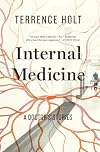
This is a stunning collection of beautifully crafted medical stories. While not exactly a memoir, the book is deeply informed by the author's experiences as a physician trained in internal medicine.
Holt, who has a PhD in English literature, a Master's of Fine Arts Degree, and is currently Assistant Professor of Social Medicine at Cornell, writes on his university profile page that he is "especially interested in how we confront our mortal condition, or fail to, and the roles narrative [the show more stories we tell ourselves or about ourselves]serves in that vexed recognition."
INTERNAL MEDICINE provides readers with a collection of characters, many of whom are in tenuous states due to cancer, heart failure, or even self-inflicted injury (as a result of mental illness). As readers, we are also invited to view patients through the eyes of Dr. Harper, seemingly Holt's alter ego, who struggles with exhaustion, awkwardness, his own fears about mortality, and even horror at some of the conditions he encounters.
Potential readers should be warned that there is little that is light about this book. In these stories, Holt illuminates dark places, not always making clear to us what is there, but certainly underscoring the mystery of living with/in a body.
This is one of the finest books I've read this year--one that begs a second reading and discussion with others.
For the brave who wish to meditate further on being human, pair this book with any of the following: Gawande's BEING MORTAL, Louise Aronson's A HISTORY OF THE PRESENT ILLNESS, and Henry Marsh's DO NO HARM. show less
Holt, who has a PhD in English literature, a Master's of Fine Arts Degree, and is currently Assistant Professor of Social Medicine at Cornell, writes on his university profile page that he is "especially interested in how we confront our mortal condition, or fail to, and the roles narrative [the show more stories we tell ourselves or about ourselves]serves in that vexed recognition."
INTERNAL MEDICINE provides readers with a collection of characters, many of whom are in tenuous states due to cancer, heart failure, or even self-inflicted injury (as a result of mental illness). As readers, we are also invited to view patients through the eyes of Dr. Harper, seemingly Holt's alter ego, who struggles with exhaustion, awkwardness, his own fears about mortality, and even horror at some of the conditions he encounters.
Potential readers should be warned that there is little that is light about this book. In these stories, Holt illuminates dark places, not always making clear to us what is there, but certainly underscoring the mystery of living with/in a body.
This is one of the finest books I've read this year--one that begs a second reading and discussion with others.
For the brave who wish to meditate further on being human, pair this book with any of the following: Gawande's BEING MORTAL, Louise Aronson's A HISTORY OF THE PRESENT ILLNESS, and Henry Marsh's DO NO HARM. show less
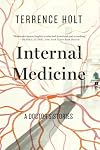
The author tells us in a prologue that this is a work of fictitious non-fiction. His aim is to accurately represent the experience of a man becoming a doctor, without violating HIPAA, and without relying on specific cases or milieus that could lend themselves to lawsuits. As a work of fiction, it accomplishes its goal of educating the reader about hospital/medical hierarchies, & presenting the doctor's complex perspective on pain, suffering & death.
As someone already highly critical of show more modern medical institutions, this book did nothing to allay my fears that everything about the system is wrong, from the hazing that we call residencies, to the professional detachment (desensitization) that is worn like armor to shield doctors against the emotional burden of witnessing pain day after day after day.
Holt’s Internal Medicine drives home the fact that “best” medical practices today are bad for the patient, bad for the families of patients, and bad for the doctors. I can think of no other profession where the system itself demands you remain sleep-deprived, psychically unrested, exposed to near constant suffering & death, and physically separated from your friends, family and loved ones. Any sane employer would tell you this is a recipe for terrible employees: they would be prone to errors in judgment, demonstrate an impairment in fine motor skills, become embittered by their long hours & their inability to commune with those loved ones in whose arms they may find a smidgen of respite. In this hellscape the healers have no time to heal themselves. Do we value Health at any cost? show less
As someone already highly critical of show more modern medical institutions, this book did nothing to allay my fears that everything about the system is wrong, from the hazing that we call residencies, to the professional detachment (desensitization) that is worn like armor to shield doctors against the emotional burden of witnessing pain day after day after day.
Holt’s Internal Medicine drives home the fact that “best” medical practices today are bad for the patient, bad for the families of patients, and bad for the doctors. I can think of no other profession where the system itself demands you remain sleep-deprived, psychically unrested, exposed to near constant suffering & death, and physically separated from your friends, family and loved ones. Any sane employer would tell you this is a recipe for terrible employees: they would be prone to errors in judgment, demonstrate an impairment in fine motor skills, become embittered by their long hours & their inability to commune with those loved ones in whose arms they may find a smidgen of respite. In this hellscape the healers have no time to heal themselves. Do we value Health at any cost? show less
This review originally appeared on my blog at www.gimmethatbook.com.
A collection of essays about life as a surgical intern.
Terrence Holt, whose In the Valley of the Kings was hailed as a “work of genius” (New York Times) and made Amazon’s Top Ten Short Story Collections of the year, brings a writer’s eye and a doctor’s touch to this powerful account of residency.
Intense, ironic, heartfelt, and heartbreaking, these nine vivid stories put us at the bedside of a patient dying in a show more house full of cursing parrots, through a nightmarish struggle to convince a man that he has cancer, at a life-and-death effort to keep an oxygen mask on a claustrophobic patient, and in the lounge of a snowbound hospital where doctors swap yarns through the night.
Out of these “dioramas from the Museum of Human Misery”, Holt draws meaning, beauty, wonder, and truth. Personal, poignant, and meticulously precise, these stories evoke Chekhov, Maugham, and William Carlos Williams, admitting readers to the beating heart of medicine. Internal Medicine is an account of what it means to be a doctor, to be mortal, and to be human.
This book was on my “to-read” list, so I picked it up from the library. Attempts to reach the author for a review/giveaway copy were unsuccessful.
It only took a few pages for INTERNAL MEDICINE to become a great read. Told in the voice of a doctor, explaining how he handled difficult cases during his internship, this book is alternately chilling and poignant. The take away message is this: doctors have self doubt and fatigue just like everyone else, despite the brave front they put on.
Each chapter told the story of one patient, and how Holt learned from their situation. One lesson was patience, one was bravery, one was teamwork, and so on. Brilliant details and situations that everyone can identify with are what makes this such a moving and important read.
As I read about the woman whose oxygen saturation was dipping into the 80’s, yet she kept ripping her O2 mask off due to claustrophobia, I ferverently hoped I would never be ill and lingering in the hospital. The intimate details of how the human body betrays us all is what will stay with you, long after the book is finished. Holt’s writing style is easy to follow, and full of honesty.
Each chapter can be read as a stand alone, and I recommend that–for you will need time to digest the life lessons revealed with each patient’s final outcome. Holt does not hide his fear, his disgust, his anger, and his weariness. He exposes himself – and the entire medical profession – with stories that cannot help but touch your soul. What makes this book so wonderful is that the stories take place during his internship, where each moment is a learning experience and a doctor’s intuition is “make or break”. The spin on each chapter would be totally different if it was written under the guise of a man who was completely comfortable with his medical knowledge, with his ability to heal and comfort. Instead, there are questions and internal monologues, which make the doctor not larger than life, but truly human and with foibles.
The book can be graphic at times, so beware. Seasoned readers of the medical genre will enjoy it, as there are some things that I haven’t read about previously. The scenes and maladies are diverse, and there is a chilling story from a mental hospital thrown in for good measure. The only chapter I had a problem with was the last one: a seemingly out of place fable (told on a regular basis by doctors) about an incident that may or may not have taken place in real life–a rambling and unsatisfying tale told (in this case) by an older doctor in an on call room where others are trying to get some rest. I’m not sure why the author chose to end with this story, as it took the life out of the other eight chapters that went before. Other than that, I have nothing but praise for INTERNAL MEDICINE. This should be on the must read shelf for all those about to enter the medical profession. show less
A collection of essays about life as a surgical intern.
Terrence Holt, whose In the Valley of the Kings was hailed as a “work of genius” (New York Times) and made Amazon’s Top Ten Short Story Collections of the year, brings a writer’s eye and a doctor’s touch to this powerful account of residency.
Intense, ironic, heartfelt, and heartbreaking, these nine vivid stories put us at the bedside of a patient dying in a show more house full of cursing parrots, through a nightmarish struggle to convince a man that he has cancer, at a life-and-death effort to keep an oxygen mask on a claustrophobic patient, and in the lounge of a snowbound hospital where doctors swap yarns through the night.
Out of these “dioramas from the Museum of Human Misery”, Holt draws meaning, beauty, wonder, and truth. Personal, poignant, and meticulously precise, these stories evoke Chekhov, Maugham, and William Carlos Williams, admitting readers to the beating heart of medicine. Internal Medicine is an account of what it means to be a doctor, to be mortal, and to be human.
This book was on my “to-read” list, so I picked it up from the library. Attempts to reach the author for a review/giveaway copy were unsuccessful.
It only took a few pages for INTERNAL MEDICINE to become a great read. Told in the voice of a doctor, explaining how he handled difficult cases during his internship, this book is alternately chilling and poignant. The take away message is this: doctors have self doubt and fatigue just like everyone else, despite the brave front they put on.
Each chapter told the story of one patient, and how Holt learned from their situation. One lesson was patience, one was bravery, one was teamwork, and so on. Brilliant details and situations that everyone can identify with are what makes this such a moving and important read.
As I read about the woman whose oxygen saturation was dipping into the 80’s, yet she kept ripping her O2 mask off due to claustrophobia, I ferverently hoped I would never be ill and lingering in the hospital. The intimate details of how the human body betrays us all is what will stay with you, long after the book is finished. Holt’s writing style is easy to follow, and full of honesty.
Each chapter can be read as a stand alone, and I recommend that–for you will need time to digest the life lessons revealed with each patient’s final outcome. Holt does not hide his fear, his disgust, his anger, and his weariness. He exposes himself – and the entire medical profession – with stories that cannot help but touch your soul. What makes this book so wonderful is that the stories take place during his internship, where each moment is a learning experience and a doctor’s intuition is “make or break”. The spin on each chapter would be totally different if it was written under the guise of a man who was completely comfortable with his medical knowledge, with his ability to heal and comfort. Instead, there are questions and internal monologues, which make the doctor not larger than life, but truly human and with foibles.
The book can be graphic at times, so beware. Seasoned readers of the medical genre will enjoy it, as there are some things that I haven’t read about previously. The scenes and maladies are diverse, and there is a chilling story from a mental hospital thrown in for good measure. The only chapter I had a problem with was the last one: a seemingly out of place fable (told on a regular basis by doctors) about an incident that may or may not have taken place in real life–a rambling and unsatisfying tale told (in this case) by an older doctor in an on call room where others are trying to get some rest. I’m not sure why the author chose to end with this story, as it took the life out of the other eight chapters that went before. Other than that, I have nothing but praise for INTERNAL MEDICINE. This should be on the must read shelf for all those about to enter the medical profession. show less

A great collection of surreal short stories. The stories are a little difficult to describe, which is not that surprising given the influence of authors such as Kafka and Borges. There is a certain heaviness to the influence, which sometimes takes a little from the stories, obscuring Holt's own authorial voice.
For me the best of the stories are the title story and the three stories preceding it. These three stories strike me as the most clearly science-fictional in nature, and the use of show more language and distance and a certain sense of chilliness really seemed to shine through with a voice of their own, something in the tradition of Phillip Dick or Stanislaw Lem, yet they weren't specifically like either of those two authors. Similarly, the title story, in which an Egyptologist searches for the tomb of a pharaoh whose very name has been wiped from history. I could think of many antecedents or other authors which I was reminded of by the story, yet it clearly seemed Holt's own.
In these stories, one of the themes that really comes out is our relationship with language and how language mediates our relationship with everything else: other people, our environment, our pasts, our own sense of who we are. It's a double-edged sword, as language can conceal as much as it reveals, a sort of tragic underpinning to the nature of our relationships. It's sometimes a little bit chilly within the confines of Holt's stories, but the value of the struggle to connect and understand still shines through.
Considering the sort of fiction Holt is writing here--conceptually heavy, surreal, sometimes plotless--I think this little volume is quite an achievement. It's definitely not for everyone--it's chilliness might give you frostbite, but when Holt's voice comes through, there is a transcendent beauty to his ice storms. show less
For me the best of the stories are the title story and the three stories preceding it. These three stories strike me as the most clearly science-fictional in nature, and the use of show more language and distance and a certain sense of chilliness really seemed to shine through with a voice of their own, something in the tradition of Phillip Dick or Stanislaw Lem, yet they weren't specifically like either of those two authors. Similarly, the title story, in which an Egyptologist searches for the tomb of a pharaoh whose very name has been wiped from history. I could think of many antecedents or other authors which I was reminded of by the story, yet it clearly seemed Holt's own.
In these stories, one of the themes that really comes out is our relationship with language and how language mediates our relationship with everything else: other people, our environment, our pasts, our own sense of who we are. It's a double-edged sword, as language can conceal as much as it reveals, a sort of tragic underpinning to the nature of our relationships. It's sometimes a little bit chilly within the confines of Holt's stories, but the value of the struggle to connect and understand still shines through.
Considering the sort of fiction Holt is writing here--conceptually heavy, surreal, sometimes plotless--I think this little volume is quite an achievement. It's definitely not for everyone--it's chilliness might give you frostbite, but when Holt's voice comes through, there is a transcendent beauty to his ice storms. show less
Awards

You May Also Like


Associated Authors
Statistics
- Works
- 3
- Also by
- 3
- Members
- 242
- Popularity
- #93,892
- Rating
- 3.7
- Reviews
- 10
- ISBNs
- 8