
Chris Harman (1942–2009)
Author of A People's History of the World: From the Stone Age to the New Millennium
About the Author
Chris Harman is the author of several books, including A People's History of the World.
Image credit: © 2009 Hossam el-Hamalawy
Works by Chris Harman
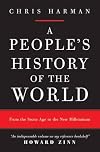
A People's History of the World: From the Stone Age to the New Millennium (1999) 888 copies, 11 reviews
The Struggle in Ireland 4 copies
La otra historia del Mundo : una historia de las clases populares desde la Edad de Piedra al Nuevo Milenio (2018) 2 copies
International Socialism 114, Spring 2007, Antonio Gramsci's Revolutionary Legacy (2007) — Editor — 2 copies
Pond Friends 1 copy
Why Labour fails 1 copy
Wer baute das siebentorige Theben? Dreibändige Gesamtausgabe: Wie Menschen ihre Geschichte machen. Bd. 1, 2, 3 (Allgemein) (2016) 1 copy
International Socialism 117, Winter 2008 — Editor — 1 copy
Associated Works
International Socialism 13, Summer 1981 — Contributor — 2 copies
Tagged
Common Knowledge
- Birthdate
- 1942-11-08
- Date of death
- 2009-11-07
- Gender
- male
- Occupations
- socialist
journalist - Organizations
- Socialist Workers Party (UK)
- Place of death
- Cairo, Egypt
- Associated Place (for map)
- Cairo, Egypt
Members
Reviews

I read the first edition of this excellent and important book when it was published in 1988. That was 20 years after the momentous events of 1968. Now we are not far off 60 years on from those events, and with capitalism dragging the world deeper and deeper into the mire, the political lessons that Chris Harman draws from that period are more important than ever.
Harman shows that the crises and revolts of 1968 shot down three orthodoxies that had dominated mainstream political thinking in show more the 1950s and early 1960s.
Firstly, there was the illusion that the USA was an all-powerful but benevolent and democratic state. This illusion was dispelled by the Vietnam War and the struggles against racism in the US.
Secondly, there was the illusion that the Stalinist states of Russia, Eastern Europe etc were socialist or communist. That illusion was blown away when Russian tanks went into Czechoslovakia to crush the attempts by the more liberal “communist” leaders there to bring in reforms. This made very clear what genuine Marxists had known for a long time: that the so-called “communist” states were in fact bureaucratic state capitalist tyrannies. Genuine socialism does not just mean state ownership of the economy; it means the democratic control of society by workers themselves.
Thirdly, there was the orthodoxy that the working class was no longer a potentially revolutionary class. Academics and the media asserted that the working class was too “affluent” to be interested in radical change. This orthodoxy was shot down by the mass strike of 10 million French workers, as well as the many factory occupations/take-overs by workers, including white-collar workers, which were ignited by the student revolt in France.
As well as looking at the events of 1968, Harman looks at the return of capitalist economic crisis in the 1970s (following the “long boom” of the 1950s and 1960s); he analyses the upturn in working class struggle in the early 1970s; and he shows how reformist (social democratic and Labour Party) political and trade union leaders were used by the ruling class to dampen down the struggle, thus helping capitalism to survive.
The author himself was radicalised in the 1960s, and he continued to fight for “socialism from below” until his death in 2009. His ideas are still very relevant for anyone who wants to see a just, equal and peaceful world. This book shows how 1968 gave us a glimpse of how such a better world could be achieved. show less
Harman shows that the crises and revolts of 1968 shot down three orthodoxies that had dominated mainstream political thinking in show more the 1950s and early 1960s.
Firstly, there was the illusion that the USA was an all-powerful but benevolent and democratic state. This illusion was dispelled by the Vietnam War and the struggles against racism in the US.
Secondly, there was the illusion that the Stalinist states of Russia, Eastern Europe etc were socialist or communist. That illusion was blown away when Russian tanks went into Czechoslovakia to crush the attempts by the more liberal “communist” leaders there to bring in reforms. This made very clear what genuine Marxists had known for a long time: that the so-called “communist” states were in fact bureaucratic state capitalist tyrannies. Genuine socialism does not just mean state ownership of the economy; it means the democratic control of society by workers themselves.
Thirdly, there was the orthodoxy that the working class was no longer a potentially revolutionary class. Academics and the media asserted that the working class was too “affluent” to be interested in radical change. This orthodoxy was shot down by the mass strike of 10 million French workers, as well as the many factory occupations/take-overs by workers, including white-collar workers, which were ignited by the student revolt in France.
As well as looking at the events of 1968, Harman looks at the return of capitalist economic crisis in the 1970s (following the “long boom” of the 1950s and 1960s); he analyses the upturn in working class struggle in the early 1970s; and he shows how reformist (social democratic and Labour Party) political and trade union leaders were used by the ruling class to dampen down the struggle, thus helping capitalism to survive.
The author himself was radicalised in the 1960s, and he continued to fight for “socialism from below” until his death in 2009. His ideas are still very relevant for anyone who wants to see a just, equal and peaceful world. This book shows how 1968 gave us a glimpse of how such a better world could be achieved. show less

This excellent book covers the revolutionary years in Germany from 1918 to 1923: years which started with the revolt by workers and soldiers which brought the First World War to an end.
Harman shows that the lack of an experienced revolutionary socialist party led to a missed opportunity for the working class to democratically and collectively take power into their own hands through the workers' councils which had sprung up.
The author also shows how the failure of this anti-capitalist show more revolution led to two great tragedies. Firstly it led to a situation where Hitler could eventually come to power, backed by German big business. And secondly it led to the isolation of the Russian Revolution, which in turn created the conditions for Stalin's counter-revolution, the destruction of the remnants of the original democracy of the soviets (democratic workers' councils), and the development of the state capitalist tyranny in Russia which falsely claimed to be socialist/Marxist. show less
Harman shows that the lack of an experienced revolutionary socialist party led to a missed opportunity for the working class to democratically and collectively take power into their own hands through the workers' councils which had sprung up.
The author also shows how the failure of this anti-capitalist show more revolution led to two great tragedies. Firstly it led to a situation where Hitler could eventually come to power, backed by German big business. And secondly it led to the isolation of the Russian Revolution, which in turn created the conditions for Stalin's counter-revolution, the destruction of the remnants of the original democracy of the soviets (democratic workers' councils), and the development of the state capitalist tyranny in Russia which falsely claimed to be socialist/Marxist. show less
The basic argument - technical innovation leads to establishment of a means of production and corresponding relations of production that persist until the avarice of the ruling class absorbs all the available surplus and squeezes the working classes too hard, leading either to revolution and change in means/relations of production, or mutual collapse - is of course partial, but illuminates big-picture human history better than any other partial argument I can think of. And it's always show more wonderful to take a journey at this level - you're like, "All these things happened. Every sentence in this book contains a world."
Energy of course flags a bit at moments in a book this size, and Harman has the orthodox Marxist's bias for focus on Europe at the expense of Asia even in the pre-modern era, but you can't fault him for that when it vivifies the moments of revolutionary change - your French and Russian Revolutions, in particular - so powerfully. Sometimes he falls into the bad kind of partiality (as opposed to the good kind, which is basically rooting for the common people in all circumstances) and overjustifies e.g. the Jacobin terror - God knows it's enough, and appreciated, to remind us of the numbers that were beign killed by monarchist reactionaries at the same time, and the disconnect between that and our popular images of crazy Robespierre and the guillotine.
The only substantial criticism I have to make is that Harman keeps moving the goalposts when he discusses the failure of worker's movements at potentially revolutionary moments. Usually that failure comes in the form of "they weren't radical enough, didn't rise to the moment, tried to compromise with the cuddlier sections of the bourgeoisie" and fair enough, that certainly fits the revolution-or-collapse model. sometimes, though, it's all of a sudden "they should have made common cause against the fascists with the social democrats" or whatever, and you're all "I thought you just said - " and sure, he can argue that obviously they should have done the thing they didn't do because of how it all didn't work out so good with what they did do, but providing a specific plan of action is a hard thing, let alone retroactively setting out a plausible way they could have come to it at the time. Every disfferent situation requires a new response, and we sure as hell don't know what they are, and Harman sort of implicitly admits as much when he says look at how long it took bourgeois consciousness to mature, and we're expecting a proletarian consciousness strong enough to build a social system on how fast? But you understand. He gets frustrated. We all do. show less
Energy of course flags a bit at moments in a book this size, and Harman has the orthodox Marxist's bias for focus on Europe at the expense of Asia even in the pre-modern era, but you can't fault him for that when it vivifies the moments of revolutionary change - your French and Russian Revolutions, in particular - so powerfully. Sometimes he falls into the bad kind of partiality (as opposed to the good kind, which is basically rooting for the common people in all circumstances) and overjustifies e.g. the Jacobin terror - God knows it's enough, and appreciated, to remind us of the numbers that were beign killed by monarchist reactionaries at the same time, and the disconnect between that and our popular images of crazy Robespierre and the guillotine.
The only substantial criticism I have to make is that Harman keeps moving the goalposts when he discusses the failure of worker's movements at potentially revolutionary moments. Usually that failure comes in the form of "they weren't radical enough, didn't rise to the moment, tried to compromise with the cuddlier sections of the bourgeoisie" and fair enough, that certainly fits the revolution-or-collapse model. sometimes, though, it's all of a sudden "they should have made common cause against the fascists with the social democrats" or whatever, and you're all "I thought you just said - " and sure, he can argue that obviously they should have done the thing they didn't do because of how it all didn't work out so good with what they did do, but providing a specific plan of action is a hard thing, let alone retroactively setting out a plausible way they could have come to it at the time. Every disfferent situation requires a new response, and we sure as hell don't know what they are, and Harman sort of implicitly admits as much when he says look at how long it took bourgeois consciousness to mature, and we're expecting a proletarian consciousness strong enough to build a social system on how fast? But you understand. He gets frustrated. We all do. show less
I found this book offensive. There is really no other way to put it. It's blatantly one sided, with pointless character assassinations on one side and whitewashing on the other. The author uses a really insulting tactic of quoting other sources as if they were factual on disputed matters giving no background or differing sources or even any disclaimers. A lot of it is childish point scoring and "look how nasty capitalism is".
At the same time though, I found it interesting and I useful to see show more what the world looks like through the eyes of communism's number one fan. Funny how there are no fans of communism in countries that suffered through it.
Another problem with this book and pretty much any communist is they always compare capitalism in practice with communism in theory which is a pointless comparison. Want to debate which one is better in theory? Fine, but don't use examples from the real world to show how capitalism is broken because then we have to use examples from the real world for communism and that debate you have lost about 50 times over and still losing by such a wide margin it's embarrassing. show less
At the same time though, I found it interesting and I useful to see show more what the world looks like through the eyes of communism's number one fan. Funny how there are no fans of communism in countries that suffered through it.
Another problem with this book and pretty much any communist is they always compare capitalism in practice with communism in theory which is a pointless comparison. Want to debate which one is better in theory? Fine, but don't use examples from the real world to show how capitalism is broken because then we have to use examples from the real world for communism and that debate you have lost about 50 times over and still losing by such a wide margin it's embarrassing. show less
Lists
World (1)
You May Also Like


Associated Authors
Statistics
- Works
- 70
- Also by
- 1
- Members
- 1,518
- Popularity
- #16,944
- Rating
- 3.8
- Reviews
- 17
- ISBNs
- 78
- Languages
- 6
- Favorited
- 1