
Francis Henry King (1923–2011)
Author of A Domestic Animal
About the Author
Image credit: Guardian obituary
Works by Francis Henry King
The Sitting Tenant 2 copies
The Puppets 1 copy
School Crossing 1 copy
To the Camp and Back 1 copy
The Snake Temple 1 copy
Associated Works
In Another Part of the Forest: An Anthology of Gay Short Fiction (1994) — Contributor — 192 copies, 2 reviews
Winter's Tales: New Series No 6 (International Anthology of Stories by New & Established Auth) (1990) — Contributor — 11 copies
Tagged
Common Knowledge
- Birthdate
- 1923-03-04
- Date of death
- 2011-07-03
- Gender
- male
- Education
- Shrewsbury School
University of Oxford (Balliol College) - Occupations
- The British Council (1949-1966)
Drama critic (The Sunday Telegraph, 1978-1988) - Organizations
- PEN UK (President ∙ vice president)
International PEN ( [1986])
Society of Authors (President) - Awards and honors
- Order of the British Empire (Officer, 1979)
Order of the British Empire (Commander, 1985)
Royal Society of Literature (Fellow) - Relationships
- Ackerley, J. R. (friend)
Cumming, Anne (friend) - Nationality
- UK
- Birthplace
- Adelboden, Switzerland
- Places of residence
- India
England, UK
Salonika, Greece
Kyoto, Japan - Place of death
- Kensington, London, England, UK
Members
Discussions
Francis King in Gay Men (November 2012)
Reviews
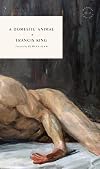
Rating: 4* of five
The Publisher Says: Francis King's 1970 novel A Domestic Animal is the story of Antonio Valli, a brilliant young Italian philosopher, who arrives to do a year's research at a well-to-do university. He lodges with Dick Thompson, a successful middle-aged novelist, and his good looks and impulsive yet immensely likeable character soon have Dick captivated.
Valli is someone who needs to be admired and loved and has an insatiable craving for attention from everyone he meets; he show more needs an audience to perform to and he finds this at the university, but especially in Dick's company. It is not long before Dick Thompson has fallen completely in love with his charming—but very heterosexual—lodger.
What follows is an ill-fated relationship that can only end in disaster, but in A Domestic Animal King has created a novel of bitter longing and painful complexities.
I RECEIVED A DRC FROM THE PUBLISHER VIA EDELWEISS+. THANK YOU.
My Review: Is it easier to fall in love with someone who can't return your feelings, or someone who won't? Unlike the girl who doesn't love you back, Dick Thompson's love object Antonio Valli can't reciprocate his feelings...Antonio Valli is a straight man.
This is how the story frames its unhappy ending, or at the most charitable of my responses, its bittersweet ending: A straight man with a very intense psychological need to seduce and captivate those he's identified as powerful chooses a gay man whose lust is barely concealed to ensorcel. It was written in the 1960s, so this was pretty advanced stuff. Dick Thompson is not presented as sick,or weird, or as a pervert. He's simply made a bad bet on a man...everyone can relate to that.
Nowadays we'd call Dick Thompson "sapiosexual" and Antonio Valli a "queerbaiter". I suspect that, in a novel written on this model in 2026, Antonio would be heteroflexible if only to cement his conquest of Dick. It is a conquest, a thoroughly (though not consciously, I think) intentional act of subjugation for the purposes of the conqueror's ego gratification.
Antonio Valli is an unapologetic bounder...fucks Pam, a loud, vulgar woman despite pretending (in my opinion it's a pretense) not to know how much this hurts his inappropriately-but-consensually emotionally attached host Dick Thompson, despite being married and having a family with the wife left in Italy. He is fully in control of Dick Thompson's emotions. Only when Dick Thompson dares to display some liveliness of spirit in an indirect calling-out of his caddish behavior towards both women does Antonio Valli deign to treat Dick Thompson's feelings as real, as something not deliberately evoked as part of his power-play, his ownership of Dick Thompson's feelings.
Dick Thompson is utterly besotted by Antonio Valli in so many ways. He's queer, knows he's queer, but does nothing to approach sexual activity with Antonio Valli because, in that time, bottoms like women waited to be approached or risked serious consequences...physical, reputational, emotional. Dick Thompson revels in his emotional subjugation for the same reason submissives everywhere enter into Dom/sub relationships: I'll let you hurt me if you'll really choose me, own me, care for me. If this book was ever filmed it would have to be made like Pillion, an exploration of the consuming need some people have to be the full focus of another's attention. It is a deep, and from what I know about it, life-long need that finds a way to get met that can change over time...but is never satisfied. That fact is never clearer than in the ending of this novel.
Antonio Valli, in his lordly disdain for anything not immediately satisfying to his own clawing desperation to be central to the life of someone he actually admires, chooses Pam over Dick as his bedmate...but never lets Dick off his emotional hook, or allows Pam to be more than a sexual obsession. He is a man of his time, the kind we all hope is disappearing: the thoughtless user, convinced he should be able to do just as he likes and you should do just as he likes as well. It was the privilege of maleness at that time. I suspect that 1970 readers of this novel really didn't interrogate that Antonio Valli was perfectly ordinary, at least until they were confronted by Dick Thompson's emotional responses to his arrogance.
Has all that much changed? Heavens yes. Has it changed for the better? Mixed bag on that one. As a member of Dick Thompson's native minority, I'll say mostly yes on his behalf. One thing that's changed is the desuetude of the unrequited love/unhappy ending novel. I think the point of this story stands out in relief against that uglier truth of the ending: Men loving each other the way Ralph and Mervyn do can exist, men can and do fall in love with each other (even relentlessly heterosexual ones), and gay love is fraught, complicated, and very much as interesting as cishet love.
Lest y'all think Francis King was simply talking about the subject, know that he was my fellow AIDS widower. He, much like Dick Thompson, led a quietly queer life in a time where this could easily have led him onto nasty legal troubles à la Alan Turing. I suspect but cannot prove that Pam, Antonio Valli's object of sexual obsession, was modeled after King's friend Anne Cumming (albeit unflatteringly). King was not exoticizing or fetishizing his straight man in love with a man he had no desire to fuck. He was most likely discussing his own life in too-thinly veiled terms.
Brave of him. A major step towards accurate representation of gay life in the days before liberation began. Still not that great, it's centering desire for a cishet man, but definitely honest and in its day quite positive. show less
The Publisher Says: Francis King's 1970 novel A Domestic Animal is the story of Antonio Valli, a brilliant young Italian philosopher, who arrives to do a year's research at a well-to-do university. He lodges with Dick Thompson, a successful middle-aged novelist, and his good looks and impulsive yet immensely likeable character soon have Dick captivated.
Valli is someone who needs to be admired and loved and has an insatiable craving for attention from everyone he meets; he show more needs an audience to perform to and he finds this at the university, but especially in Dick's company. It is not long before Dick Thompson has fallen completely in love with his charming—but very heterosexual—lodger.
What follows is an ill-fated relationship that can only end in disaster, but in A Domestic Animal King has created a novel of bitter longing and painful complexities.
I RECEIVED A DRC FROM THE PUBLISHER VIA EDELWEISS+. THANK YOU.
My Review: Is it easier to fall in love with someone who can't return your feelings, or someone who won't? Unlike the girl who doesn't love you back, Dick Thompson's love object Antonio Valli can't reciprocate his feelings...Antonio Valli is a straight man.
This is how the story frames its unhappy ending, or at the most charitable of my responses, its bittersweet ending: A straight man with a very intense psychological need to seduce and captivate those he's identified as powerful chooses a gay man whose lust is barely concealed to ensorcel. It was written in the 1960s, so this was pretty advanced stuff. Dick Thompson is not presented as sick,or weird, or as a pervert. He's simply made a bad bet on a man...everyone can relate to that.
Nowadays we'd call Dick Thompson "sapiosexual" and Antonio Valli a "queerbaiter". I suspect that, in a novel written on this model in 2026, Antonio would be heteroflexible if only to cement his conquest of Dick. It is a conquest, a thoroughly (though not consciously, I think) intentional act of subjugation for the purposes of the conqueror's ego gratification.
Antonio Valli is an unapologetic bounder...fucks Pam, a loud, vulgar woman despite pretending (in my opinion it's a pretense) not to know how much this hurts his inappropriately-but-consensually emotionally attached host Dick Thompson, despite being married and having a family with the wife left in Italy. He is fully in control of Dick Thompson's emotions. Only when Dick Thompson dares to display some liveliness of spirit in an indirect calling-out of his caddish behavior towards both women does Antonio Valli deign to treat Dick Thompson's feelings as real, as something not deliberately evoked as part of his power-play, his ownership of Dick Thompson's feelings.
Dick Thompson is utterly besotted by Antonio Valli in so many ways. He's queer, knows he's queer, but does nothing to approach sexual activity with Antonio Valli because, in that time, bottoms like women waited to be approached or risked serious consequences...physical, reputational, emotional. Dick Thompson revels in his emotional subjugation for the same reason submissives everywhere enter into Dom/sub relationships: I'll let you hurt me if you'll really choose me, own me, care for me. If this book was ever filmed it would have to be made like Pillion, an exploration of the consuming need some people have to be the full focus of another's attention. It is a deep, and from what I know about it, life-long need that finds a way to get met that can change over time...but is never satisfied. That fact is never clearer than in the ending of this novel.
Antonio Valli, in his lordly disdain for anything not immediately satisfying to his own clawing desperation to be central to the life of someone he actually admires, chooses Pam over Dick as his bedmate...but never lets Dick off his emotional hook, or allows Pam to be more than a sexual obsession. He is a man of his time, the kind we all hope is disappearing: the thoughtless user, convinced he should be able to do just as he likes and you should do just as he likes as well. It was the privilege of maleness at that time. I suspect that 1970 readers of this novel really didn't interrogate that Antonio Valli was perfectly ordinary, at least until they were confronted by Dick Thompson's emotional responses to his arrogance.
Has all that much changed? Heavens yes. Has it changed for the better? Mixed bag on that one. As a member of Dick Thompson's native minority, I'll say mostly yes on his behalf. One thing that's changed is the desuetude of the unrequited love/unhappy ending novel. I think the point of this story stands out in relief against that uglier truth of the ending: Men loving each other the way Ralph and Mervyn do can exist, men can and do fall in love with each other (even relentlessly heterosexual ones), and gay love is fraught, complicated, and very much as interesting as cishet love.
Lest y'all think Francis King was simply talking about the subject, know that he was my fellow AIDS widower. He, much like Dick Thompson, led a quietly queer life in a time where this could easily have led him onto nasty legal troubles à la Alan Turing. I suspect but cannot prove that Pam, Antonio Valli's object of sexual obsession, was modeled after King's friend Anne Cumming (albeit unflatteringly). King was not exoticizing or fetishizing his straight man in love with a man he had no desire to fuck. He was most likely discussing his own life in too-thinly veiled terms.
Brave of him. A major step towards accurate representation of gay life in the days before liberation began. Still not that great, it's centering desire for a cishet man, but definitely honest and in its day quite positive. show less

Penguin have done their best to make it look like a supernatural horror story, which is obviously what they thought would sell in the early 1980s, but in fact this turns out to be a kind of murder mystery, set in a dysfunctional British family in a country house in 1930s colonial India. The actual crime only happens a third of the way into the book, and we discover the who of the crime quite quickly, but the real mystery here is why, and that is only fully unwrapped nearly fifty years on, in show more a Patrick-Whiteish epilogue set in the Sydney art world.
The mystery aspect of the book is fun, and its digging into ideas about guilt and atonement is interesting too, but the real reason for reading it is its minute and detailed dissection of the complex mix of social, sexual and cultural tensions going on in the Thompson household against the background of the crumbling Raj.
It struck me as a very visually-constructed novel too, I'm sure it would have made a great TV miniseries back in the day, when the Raj was in fashion — but the LGBT plot lines might have been a bit challenging for British TV in the eighties. King's reputation for getting into difficulties with the libel laws would have put producers off as well. show less
The mystery aspect of the book is fun, and its digging into ideas about guilt and atonement is interesting too, but the real reason for reading it is its minute and detailed dissection of the complex mix of social, sexual and cultural tensions going on in the Thompson household against the background of the crumbling Raj.
It struck me as a very visually-constructed novel too, I'm sure it would have made a great TV miniseries back in the day, when the Raj was in fashion — but the LGBT plot lines might have been a bit challenging for British TV in the eighties. King's reputation for getting into difficulties with the libel laws would have put producers off as well. show less

Series of three interrelated narratives about middle aged women who have lost important men in their lives to violent deaths and are seeking to reconnect with them through spiritualist/psychical channels. Set in the Thatcher era in England. This was an unusual book because the stories are too interrelated to be short stories, yet aren't really strongly connected to one another as a narrative.
The main theme here is that the dead are not perfect but that doesn't stop us from missing and show more mourning them. In fact, part of what makes the relationships so complexly envisioned is that the more prickly the relationship between living woman and dead man seemed to be, the more guilt and confusion she felt at his passing. I was really fascinated by the stories of Hugo and Stephen, Hugo most of all. The third portion of the narrative was the weakest (I thought) but was used to tie all the threads together nicely.
On the whole a thought provoking and disturbing book. Very well written and absorbing but also easy to read, not a slog. He has a deft touch for human emotions and expresses them in an understated yet constantly believable way. show less
The main theme here is that the dead are not perfect but that doesn't stop us from missing and show more mourning them. In fact, part of what makes the relationships so complexly envisioned is that the more prickly the relationship between living woman and dead man seemed to be, the more guilt and confusion she felt at his passing. I was really fascinated by the stories of Hugo and Stephen, Hugo most of all. The third portion of the narrative was the weakest (I thought) but was used to tie all the threads together nicely.
On the whole a thought provoking and disturbing book. Very well written and absorbing but also easy to read, not a slog. He has a deft touch for human emotions and expresses them in an understated yet constantly believable way. show less

An aroma can arouse memories you didn’t know you had. Maybe even the memories of others.
“Down below at this idle hour
Nobody walked in the dusty street
A scent of dying mimosa flower
Lay on the air, but sweet - too sweet.”
Final stanza of Sanary by Katherine Mansfield.
Three judges of the Katherine Mansfield Prize arrive in Menton, Côte d'Azur, along with the winner, Lenore. It’s November. All four are vividly and somewhat amusingly portrayed, along with the awkward subtleties of their show more interactions. Before the prizegiving, they visit places associated with the author, as well as a ceremony for Armistice Day. At various times, Lenore is a little unwell or overwhelmed. The reasons are ambiguous, but the scent of mimosa, which Mansfield wrote about, is totemic, pivotal, and ultimately joyous or unsettling, depending on your interpretation.
Image: A basket of yellow mimosa flowers, by an open door (Source)
The poetic, witty, sensory writing, and the crescendo of understated unease, are reminiscent of Mansfield’s own writing.
Author’s chutzpah
Francis King wrote this story in 1975, nine years after he won the Katherine Mansfield Prize that this story is about. He then submitted it for a different prize - and came second. The judges were authors Kingsley Amis and Patricia Highsmith, actor Christopher Lee, John Higgins of The Times, and Tom Maschler of Jonathan Cape. The winning story was Michael Kernan’s The Doll Named Silvio, and the top 25 were collected as The Times Anthology of Ghost Stories. The final twist of King’s story is another tribute to Mansfield.
“My small, pale yellow house with a mimosa tree growing in front of it - just a bit deeper yellow - the garden, full of plants, the terrace with crumbling yellow pillars covered with green (lurking-place for lizards) all belong to a picture or a story - I mean they are not remote from one's ideal - one's dream.”
From a letter by Katherine Mansfield, 18 September 1920, describing her home in Menton, Côte d'Azur.
Image: Katherine Mansfield’s house in Menton (Source)
It's also worth noting that Francis King was a conscientious objector in WW2 (perhaps also because of the risk of being outed as gay), but this story is deeply respectful of those who died in it.
Quotes
• “This imminent parting from a total stranger had become like the resurgence of some deep-seated, long-forgotten sorrow.”
• “It was as though, walking over sunlit fields, she had all at once unexpectedly found ahead of her a dark and dense wood; had hesitated whether to enter it or not; and had then turned and in panic retraced her steps.”
• “She breathed in the scent, deeper and deeper until her lungs began to ache with it.”
• “When he had first seen her, he… had hardly bothered to speak to her. But now he experienced a sudden pull, as though a boat in which he had long been becalmed had all at once felt the tug and sweep of the tide.”
• “With an extraordinary hyperaesthesia, she could hear the water fizzing even when she was far away from it.”
• “In the premature dusk, they talked outside the Town Hall, pacing the terrace among the stunted oleanders.”
See also
I’ve reviewed a few of Katherine Mansfield’s own stories:
• The Garden Party, HERE.
• The Daughters of the Late Colonel, HERE.
• Miss Brill, HERE.
• Bliss, HERE.
Shortly after reading this, I read another metafictional, fantastical homage to Katherine Mansfield in Ali Smith’s story, The ex-wife, in her collection, Public library and other stories. See my review HERE.
Short story club
I read this in Black Water: The Anthology of Fantastic Literature, by Alberto Manguel, from which I’m reading one story a week with The Short Story Club, starting 4 September 2023.
You can read this story… - I can’t find a legit online version of this one.
You can join the group here. show less
“Down below at this idle hour
Nobody walked in the dusty street
A scent of dying mimosa flower
Lay on the air, but sweet - too sweet.”
Final stanza of Sanary by Katherine Mansfield.
Three judges of the Katherine Mansfield Prize arrive in Menton, Côte d'Azur, along with the winner, Lenore. It’s November. All four are vividly and somewhat amusingly portrayed, along with the awkward subtleties of their show more interactions. Before the prizegiving, they visit places associated with the author, as well as a ceremony for Armistice Day. At various times, Lenore is a little unwell or overwhelmed. The reasons are ambiguous, but the scent of mimosa, which Mansfield wrote about, is totemic, pivotal, and ultimately joyous or unsettling, depending on your interpretation.
Image: A basket of yellow mimosa flowers, by an open door (Source)
The poetic, witty, sensory writing, and the crescendo of understated unease, are reminiscent of Mansfield’s own writing.
Author’s chutzpah
Francis King wrote this story in 1975, nine years after he won the Katherine Mansfield Prize that this story is about. He then submitted it for a different prize - and came second. The judges were authors Kingsley Amis and Patricia Highsmith, actor Christopher Lee, John Higgins of The Times, and Tom Maschler of Jonathan Cape. The winning story was Michael Kernan’s The Doll Named Silvio, and the top 25 were collected as The Times Anthology of Ghost Stories. The final twist of King’s story is another tribute to Mansfield.
“My small, pale yellow house with a mimosa tree growing in front of it - just a bit deeper yellow - the garden, full of plants, the terrace with crumbling yellow pillars covered with green (lurking-place for lizards) all belong to a picture or a story - I mean they are not remote from one's ideal - one's dream.”
From a letter by Katherine Mansfield, 18 September 1920, describing her home in Menton, Côte d'Azur.
Image: Katherine Mansfield’s house in Menton (Source)
It's also worth noting that Francis King was a conscientious objector in WW2 (perhaps also because of the risk of being outed as gay), but this story is deeply respectful of those who died in it.
Quotes
• “This imminent parting from a total stranger had become like the resurgence of some deep-seated, long-forgotten sorrow.”
• “It was as though, walking over sunlit fields, she had all at once unexpectedly found ahead of her a dark and dense wood; had hesitated whether to enter it or not; and had then turned and in panic retraced her steps.”
• “She breathed in the scent, deeper and deeper until her lungs began to ache with it.”
• “When he had first seen her, he… had hardly bothered to speak to her. But now he experienced a sudden pull, as though a boat in which he had long been becalmed had all at once felt the tug and sweep of the tide.”
• “With an extraordinary hyperaesthesia, she could hear the water fizzing even when she was far away from it.”
• “In the premature dusk, they talked outside the Town Hall, pacing the terrace among the stunted oleanders.”
See also
I’ve reviewed a few of Katherine Mansfield’s own stories:
• The Garden Party, HERE.
• The Daughters of the Late Colonel, HERE.
• Miss Brill, HERE.
• Bliss, HERE.
Shortly after reading this, I read another metafictional, fantastical homage to Katherine Mansfield in Ali Smith’s story, The ex-wife, in her collection, Public library and other stories. See my review HERE.
Short story club
I read this in Black Water: The Anthology of Fantastic Literature, by Alberto Manguel, from which I’m reading one story a week with The Short Story Club, starting 4 September 2023.
You can read this story… - I can’t find a legit online version of this one.
You can join the group here. show less
Lists
Awards


You May Also Like


Associated Authors
Statistics
- Works
- 52
- Also by
- 22
- Members
- 823
- Popularity
- #30,997
- Rating
- 3.9
- Reviews
- 8
- ISBNs
- 138
- Languages
- 3
- Favorited
- 1