
Lester W. Grau
Author of The Other Side of the Mountain: Mujahideen Tactics in the Soviet-Afghan War
About the Author
Works by Lester W. Grau
The Other Side of the Mountain: Mujahideen Tactics in the Soviet-Afghan War (1996) 235 copies, 1 review
Operation Anaconda: America's First Major Battle in Afghanistan (Modern War Studies) (2011) 17 copies, 1 review
The Red Army's Do-it-Yourself, Nazi-Bashing Guerrilla Warfare Manual: The Partizan's Handbook, Updated and Revised Edition, 1942 (2011) 16 copies
The Russian Way of War: Force Structure, Tactics, and Modernization of the Russian Ground Forces (2018) 15 copies, 1 review
Associated Works
Tagged
Common Knowledge
- Legal name
- Grau, Lester W.
- Gender
- male
- Occupations
- soldier
military analyst
military historian - Organizations
- Foreign Military Studies Office
United States Army - Short biography
- Lester W. Grau is a retired U.S. Army Lieutenant Colonel. He served as an infantry officer and a Soviet Foreign Area Officer (FAO) throughout his career. He fought in Vietnam. In 1981, he completed one year of Russian language training at the Defense Language Institute at Monterey, California and then graduated from the U.S. Army Russian Institute (USARI) in Garmisch-Partenkirchen, Germany in 1983. USARI was a two-year post-graduate school which dealt with all aspects of the then Soviet Union and all classes were taught in Russian. He has served in Moscow and traveled extensively in the former Warsaw Pact and former Soviet Union and continues that travel today. Since 1983, his work has exclusively been in the area of Russian and Soviet tactics and operations. As a combat infantryman, he finds it fascinating to compare and contrast how both the US and USSR fought and fight.
- Nationality
- USA
- Associated Place (for map)
- USA
Members
Reviews
The Other Side of the Mountain: Mujahideen Tactics in the Soviet-Afghan War (Soviet Russian Study of War) by Ali Ahmad Jalali
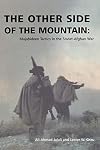
This is the stronger of Grau's books on the Soviet-Afghan War by far. Based on hundreds of interviews with former mujahideen in the mid 1990s, it is an invaluble account of how asymmetric warfare looks from the guerrilla's side.
When the mujahideen had it good, they had it very good indeed. Soviet convoy tactics were laughable, and skilled fighters were able to pick trucks off with ease, while avoiding the counterfire of armored escorts. Afghan Army outposts were basically supply depots, with show more guards that were cowardly and unwilling to fight. Conversely, when things went poorly, they went very poorly very quickly. Soviet airborne forces were a minority in battle, but they were supremely effective. Heavy artillery and aircraft pounded anyone exposed. The mujahideen logistics system and command structure never went beyond 'ramshackle'. This was both a weakness and a strength. While the mujahideen were unable to press an operational advantage, they were also impossible to decapitate. New leaders always rose to replace casualties. The Soviets, following the adage that the guerrilla swims like a fish in the sea of the people, attempted to drain the sea. Aerial bombardment and massive mining operations turned millions of Afghans into refugees, and lead directly to the Taliban, 9/11, the American invasion, and Afghanistan today.
The Other Side of the Mountain is focused solely on tactics, and probably should be read with a broader history of the region. But for what it does, it is the best book I've read!
Oh, and one more thing. show less
When the mujahideen had it good, they had it very good indeed. Soviet convoy tactics were laughable, and skilled fighters were able to pick trucks off with ease, while avoiding the counterfire of armored escorts. Afghan Army outposts were basically supply depots, with show more guards that were cowardly and unwilling to fight. Conversely, when things went poorly, they went very poorly very quickly. Soviet airborne forces were a minority in battle, but they were supremely effective. Heavy artillery and aircraft pounded anyone exposed. The mujahideen logistics system and command structure never went beyond 'ramshackle'. This was both a weakness and a strength. While the mujahideen were unable to press an operational advantage, they were also impossible to decapitate. New leaders always rose to replace casualties. The Soviets, following the adage that the guerrilla swims like a fish in the sea of the people, attempted to drain the sea. Aerial bombardment and massive mining operations turned millions of Afghans into refugees, and lead directly to the Taliban, 9/11, the American invasion, and Afghanistan today.
The Other Side of the Mountain is focused solely on tactics, and probably should be read with a broader history of the region. But for what it does, it is the best book I've read!
Oh, and one more thing. show less
The Russian Way of War: Force Structure, Tactics, and Modernization of the Russian Ground Forces by Lester Grau
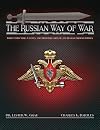
I'll admit to being fascinated by Russian strategy and hardware; Deep Battle, all those MiGs, the menacing bulk of a T-72, the sacrifices of the Great Patriotic War. Russian tactics might even had some advantages at home, as Curry's blog post on Warsaw Pact tactics in Wargaming discusses. "The correct application of Russian tactics can undermine the morale of opponents. I first noticed this at a free kriegspiel invasion of the Isle of Wight, where as a Russian advisor I planned the invasion show more force to arrive in the same order as the order of march of a Soviet regiment. It took me 15 minutes to produce the shipping and logistic plan based on Soviet doctrine. Apparently, the other HQ found it most off putting for their opponents to plan so quickly and then be so confident as to sit around drinking beer for the next two hours." And what with geopolitics as they are, you never know when you might be called on to defend Estonia.
Dr. Grau is one of the major figures of Russian military studies, and Bartles is a solidly rising scholar. This is a serious, if dry account of Russian force structure and doctrine. They start with personnel policy. The Russian military is dependent on conscripts, with more of the 'shooters' being long term contract NCOs. Compared to Western armies, officers are more specialized and directly involved in combat. Commanders do more of the explicit positioning and direction of units than in a US-style staff-centered approach. Officers are specialists within a major branch, with a distinction between General Staff and line officers. Russian doctrine should not be stereotyped as simple and mechanical. Rather, it follows basic Clausewitzian principles on the importance of mass, unity of command, and speed in the execution of basic tactical maneuvers to dominate the enemy.
The majority of the book is concerned with the use of the Motorized Rifle Brigade in the attack and defense. The MRB is the basic maneuver element of the Russian Army, and equivalent to a US Brigade Combat Team. I can't say which one would win, but the MRB packs a lot of artillery, a lot of infantry fighting vehicles, and Russians love their thermobaric rockets. The multilayered air defense network is also something
If I have any problems with this book, it's a rather uncritical take on Russian procurement. Grau and Bartles argue that Russia is able to achieve miracles of speed and commonality in deployment, with five-year pipelines for the acquisition of major systems like the T-14 Armata Main Battle Tank, as well as a common architecture for armored vehicle turrets and software defined radios. GLONASS guided artillery shells are supposedly $1000 a pop, compared to $80,000 for the US equivalent. I'm not saying the US Military Industrial Complex is good (it's not), but I'm skeptical a much poorer Russia is able to achieve order of magnitude improvements over Raytheon and Lockheed Martin. The T-14 breaking down in Red Square in 2015 is not encouraging, along with the near cancellation of the Su-57 stealth fighter. On the other hand, Russia appears quite adept at refitting older Soviet-era trucks and tanks, and an artillery shell doesn't need to be state of the art to kill you dead.
Finally, this book focuses mainly on maneuver warfare, with relatively little on information operations, hybrid warfare, and how the Russian military has been used as political weight in the near-abroad. But for what it does, it's aces. show less
Dr. Grau is one of the major figures of Russian military studies, and Bartles is a solidly rising scholar. This is a serious, if dry account of Russian force structure and doctrine. They start with personnel policy. The Russian military is dependent on conscripts, with more of the 'shooters' being long term contract NCOs. Compared to Western armies, officers are more specialized and directly involved in combat. Commanders do more of the explicit positioning and direction of units than in a US-style staff-centered approach. Officers are specialists within a major branch, with a distinction between General Staff and line officers. Russian doctrine should not be stereotyped as simple and mechanical. Rather, it follows basic Clausewitzian principles on the importance of mass, unity of command, and speed in the execution of basic tactical maneuvers to dominate the enemy.
The majority of the book is concerned with the use of the Motorized Rifle Brigade in the attack and defense. The MRB is the basic maneuver element of the Russian Army, and equivalent to a US Brigade Combat Team. I can't say which one would win, but the MRB packs a lot of artillery, a lot of infantry fighting vehicles, and Russians love their thermobaric rockets. The multilayered air defense network is also something
If I have any problems with this book, it's a rather uncritical take on Russian procurement. Grau and Bartles argue that Russia is able to achieve miracles of speed and commonality in deployment, with five-year pipelines for the acquisition of major systems like the T-14 Armata Main Battle Tank, as well as a common architecture for armored vehicle turrets and software defined radios. GLONASS guided artillery shells are supposedly $1000 a pop, compared to $80,000 for the US equivalent. I'm not saying the US Military Industrial Complex is good (it's not), but I'm skeptical a much poorer Russia is able to achieve order of magnitude improvements over Raytheon and Lockheed Martin. The T-14 breaking down in Red Square in 2015 is not encouraging, along with the near cancellation of the Su-57 stealth fighter. On the other hand, Russia appears quite adept at refitting older Soviet-era trucks and tanks, and an artillery shell doesn't need to be state of the art to kill you dead.
Finally, this book focuses mainly on maneuver warfare, with relatively little on information operations, hybrid warfare, and how the Russian military has been used as political weight in the near-abroad. But for what it does, it's aces. show less
The Bear Went Over the Mountain: Soviet Combat Tactics in Afghanistan (Soviet Russian Study of War) by Lester W. Grau
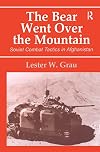
The Bear Went Over The Mountain is about as niche as books get. It's an account of 49 tactical engagements by Soviet forces in Afghanistan, as collected by the Russian Frunze Military Academy, and then translated and commentary added by Dr. Grau.
Each of the vignettes is short, accompanies by a tactical map and stripped of irrelevant information by the multiple layers of translation. What's interesting is seeing what lessons the General Staff at Frunze drew, and Grau's commentary on those show more lessons. Soviet doctrine and equipment was oriented for maneuver warfare on the irradiated plains of Central Europe. Infantry was an adjunct to the armored arm, and tactics were stripped to simple plans that would enable higher commander to rapidly concentrate mass and fire against NATO forces as cities vanished under mushroom clouds. Afghanistan was a classic counter-insurgency nightmare, with mountain terrain restricting the use of armor, and years of bloody attritional warfare against agile mujaheddin fighters. Generally, small groups of Soviet infantry lacked initiative and aggression, especially in night fighting and patrolling. Cordons for sweep and clear operations were leaky, convoy security an ongoing problem, and even the poor Russian loadbearing gear worked against success, as troops were tied to road-bound infantry fighting vehicles for resupply.
Agressive helicopter insertions showed some success, but airpower cannot control the ground or protect the population. Expensive helicopters were always in short supply, and rarely worked at their best in the mountains. Grau criticize the Russians for inadequate reconnaissance, using reconnaissance troops as combat infantry, and ad hoc special units for missions, rather than establishing proper combined infantry and support units for the ongoing counter-insurgency warfare.
I grabbed this book and the sequel from the Afghan side for $3 apiece, which was a steal. I see they're back up to $40 now, which is a lot (unless you can get the DOD to buy it for you). Still a cool bit of history. show less
Each of the vignettes is short, accompanies by a tactical map and stripped of irrelevant information by the multiple layers of translation. What's interesting is seeing what lessons the General Staff at Frunze drew, and Grau's commentary on those show more lessons. Soviet doctrine and equipment was oriented for maneuver warfare on the irradiated plains of Central Europe. Infantry was an adjunct to the armored arm, and tactics were stripped to simple plans that would enable higher commander to rapidly concentrate mass and fire against NATO forces as cities vanished under mushroom clouds. Afghanistan was a classic counter-insurgency nightmare, with mountain terrain restricting the use of armor, and years of bloody attritional warfare against agile mujaheddin fighters. Generally, small groups of Soviet infantry lacked initiative and aggression, especially in night fighting and patrolling. Cordons for sweep and clear operations were leaky, convoy security an ongoing problem, and even the poor Russian loadbearing gear worked against success, as troops were tied to road-bound infantry fighting vehicles for resupply.
Agressive helicopter insertions showed some success, but airpower cannot control the ground or protect the population. Expensive helicopters were always in short supply, and rarely worked at their best in the mountains. Grau criticize the Russians for inadequate reconnaissance, using reconnaissance troops as combat infantry, and ad hoc special units for missions, rather than establishing proper combined infantry and support units for the ongoing counter-insurgency warfare.
I grabbed this book and the sequel from the Afghan side for $3 apiece, which was a steal. I see they're back up to $40 now, which is a lot (unless you can get the DOD to buy it for you). Still a cool bit of history. show less
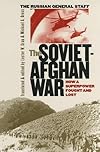
Ironies abound with this book. There is the irony that the intervention was called a war of "fraternal socialism," when active fraternization was discouraged. There is the irony that the army that did as much as any to invent operational war found its whole range of standard operating procedures largely irrelevant. There is the irony that while the Russians had no shortage of relevant history to draw upon they refused to exploit it. Finally, at a time when there is no shortage of guerrilla show more fighting in the former Soviet Union, this book wound up being first published in the West due to a lack of money. Not that the Russians are alone in suffering from such ironies, but that's a different review.
As for what you actually get for the investment of time, you'll learn a great deal about the nuts-and-bolts conduct of the war from the Soviet perspective. Also useful is the commentary provided by the editors, particularly when they poke holes in the blind spots the Russians suffer from to this day about the whole adventure. Be warned though, this is a rather dry business. show less
As for what you actually get for the investment of time, you'll learn a great deal about the nuts-and-bolts conduct of the war from the Soviet perspective. Also useful is the commentary provided by the editors, particularly when they poke holes in the blind spots the Russians suffer from to this day about the whole adventure. Be warned though, this is a rather dry business. show less
Lists
Awards

You May Also Like


Associated Authors
Statistics
- Works
- 11
- Also by
- 1
- Members
- 651
- Popularity
- #38,782
- Rating
- 3.6
- Reviews
- 8
- ISBNs
- 38