

Ali Ahmad Jalali
Author of The Other Side of the Mountain: Mujahideen Tactics in the Soviet-Afghan War
About the Author
Works by Ali Ahmad Jalali
The Other Side of the Mountain: Mujahideen Tactics in the Soviet-Afghan War (1996) 236 copies, 1 review
Tagged
Common Knowledge
- Birthdate
- 1940
- Gender
- male
- Education
- Military University of Kabul
- Occupations
- Officer, Afghan Army
Afghanistan Minister of Interior
Professor, National Defense University
journalist - Organizations
- Afghan Army
Afghan Mujahideen - Short biography
- Ali Ahmad Jalali is a former Afghan Army Colonel. A distinguished graduate of the Military University in Kabul, he has also attended the Infantry Officers Advanced Course in Fort Benning, Georgia; the British Army Staff College in Camberley; the U.S. Naval Postgraduate School in Monterey, California; the Frunze Academy in Moscow and the Institute of World Politics in Washington, DC. He taught in the Military Academy and advanced military schools in Kabul. He joined the Mujahideen in 1980 and served as the top military planner on the directing staff of the Islamic Unity of Afghan Mujahideen (an alliance of three moderate Mujahideen factions) during the early 1980s before he joined Voice of America (VOA). As a journalist, he has covered Central Asia and Afghanistan over the past 15 years. He is the author of several books including works on the Soviet Military, works on Central Asia and a three-volume Military History of Afghanistan.
- Nationality
- USA (naturalized)
Afghanistan (birth) - Birthplace
- Afghanistan
- Associated Place (for map)
- Afghanistan
Members
Reviews
The Other Side of the Mountain: Mujahideen Tactics in the Soviet-Afghan War (Soviet Russian Study of War) by Ali Ahmad Jalali
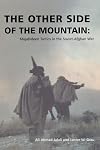
This is the stronger of Grau's books on the Soviet-Afghan War by far. Based on hundreds of interviews with former mujahideen in the mid 1990s, it is an invaluble account of how asymmetric warfare looks from the guerrilla's side.
When the mujahideen had it good, they had it very good indeed. Soviet convoy tactics were laughable, and skilled fighters were able to pick trucks off with ease, while avoiding the counterfire of armored escorts. Afghan Army outposts were basically supply depots, with show more guards that were cowardly and unwilling to fight. Conversely, when things went poorly, they went very poorly very quickly. Soviet airborne forces were a minority in battle, but they were supremely effective. Heavy artillery and aircraft pounded anyone exposed. The mujahideen logistics system and command structure never went beyond 'ramshackle'. This was both a weakness and a strength. While the mujahideen were unable to press an operational advantage, they were also impossible to decapitate. New leaders always rose to replace casualties. The Soviets, following the adage that the guerrilla swims like a fish in the sea of the people, attempted to drain the sea. Aerial bombardment and massive mining operations turned millions of Afghans into refugees, and lead directly to the Taliban, 9/11, the American invasion, and Afghanistan today.
The Other Side of the Mountain is focused solely on tactics, and probably should be read with a broader history of the region. But for what it does, it is the best book I've read!
Oh, and one more thing. show less
When the mujahideen had it good, they had it very good indeed. Soviet convoy tactics were laughable, and skilled fighters were able to pick trucks off with ease, while avoiding the counterfire of armored escorts. Afghan Army outposts were basically supply depots, with show more guards that were cowardly and unwilling to fight. Conversely, when things went poorly, they went very poorly very quickly. Soviet airborne forces were a minority in battle, but they were supremely effective. Heavy artillery and aircraft pounded anyone exposed. The mujahideen logistics system and command structure never went beyond 'ramshackle'. This was both a weakness and a strength. While the mujahideen were unable to press an operational advantage, they were also impossible to decapitate. New leaders always rose to replace casualties. The Soviets, following the adage that the guerrilla swims like a fish in the sea of the people, attempted to drain the sea. Aerial bombardment and massive mining operations turned millions of Afghans into refugees, and lead directly to the Taliban, 9/11, the American invasion, and Afghanistan today.
The Other Side of the Mountain is focused solely on tactics, and probably should be read with a broader history of the region. But for what it does, it is the best book I've read!
Oh, and one more thing. show less
Lists
You May Also Like


Associated Authors
Statistics
- Works
- 4
- Members
- 253
- Popularity
- #90,474
- Rating
- 3.9
- Reviews
- 1
- ISBNs
- 19