
Jacques Lusseyran (1924–1971)
Author of And There Was Light: The Extraordinary Memoir of a Blind Hero of the French Resistance in World War II
About the Author
Jacques Lusseyran was born in Paris, France on September 19, 1924. He became totally blind in a school accident at the age of 8. In the spring of 1941, at the age of 17, he formed a Resistance group called the Volunteers of Liberty with 52 other boys. The group later merged with another Resistance show more group called Défense de la France. On July 20, 1943, he was betrayed by a member of his resistance group and arrested by the Gestapo. He was sent to Buchenwald and was liberated in April 1945. After World War II, he became a professor of French literature at Case Western Reserve University. He wrote several books including Against the Pollution of the I: Selected Writings of Jacques Lusseyran and And There Was Light: The Extraordinary Memoir of a Blind Hero of the French Resistance in World War II. He died in a car accident on July 27, 1971. (Bowker Author Biography) show less
Works by Jacques Lusseyran
And There Was Light: The Extraordinary Memoir of a Blind Hero of the French Resistance in World War II (1963) 388 copies, 11 reviews
Against the Pollution of I 1 copy
Douce trop douce Amérique 1 copy
Tagged
Common Knowledge
- Birthdate
- 1924-09-19
- Date of death
- 1971-07-27
- Gender
- male
- Nationality
- France
- Associated Place (for map)
- France
Members
Reviews
And There Was Light: The Extraordinary Memoir of a Blind Hero of the French Resistance in World War II by Jacques Lusseyran
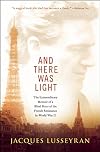
Summary: A memoir of a blind hero of the French resistance and Buchenwald survivor.
Jacques Lusseyran lived the life of a normal, active French boy until age 8, when he became blind, due to an accident. Yet, all did not go dark for him. He writes,
“Immediately, the substance of the universe drew together, redefined and peopled itself anew. I was aware of a radiance emanating from a place which might as well have been outside me as within. But radiance was there, or to put it more precisely, show more light. It was a fact, for light was there” (pp. 16-17).
In this memoir, Lusseyran recounts the years between that experience and his liberation from Buchenwald by the Allies at the end of World War 2. The first part of the book recounts his adjustment to being blind, from learning Braille to enjoying the assistance of friends to live a more or less normal life. Among those was Jean, who becomes his closest friend and protector. They went through school for seven years and were deeply bound together. They were friends in heart and mind.
He became aware of the rising German threat, and learned German so that he could listen to German broadcasts. He tells the story of young men with all the hopes of advanced school students under the looming cloud that broke upon France in 1940. The following year, at age 17, he organized a resistance group, the Volunteers of Liberty, which later merged with another group, Defense de la France. He recounts the care they took to avoid betrayal. Lusseyran had an ability, by listening to determine whether someone could be trust. Sadly, in the end one of whom he had doubts betrayed them. He coordinated publication of an underground paper, eventually circulating 100,000 copies an issue. They also coordinated efforts with other groups to get downed fliers out of France. Until his arrest in 1943.
After six months at Fresnes, he was taken to Buchenwald. He avoided the hard labor of most due to his blindness and the tip of another prisoner to play up his ability to translate. Nevertheless he nearly died and recounts how the light came to him at deaths door. He spoke a song within with the words “Providence, the Guardian Angel, Jesus Christ, God.” He survived, but only to watch Jean die. Yet joy and light sustained him. He describes the decision to remain at Buchenwald when the Germans offered to take them away. Those who left were shot…and he was liberated.
Lusseyran ends the story here, although he went on to teach in the United States and receive several awards from the French government for his work in the resistance. The publisher indicates that this story was part of the inspiration for Anthony Doerr’s All the Light We Cannot See. In some ways, while I think Doerr writes more beautifully, this may be a more powerful story. While not preachy, it is a story of “life, light and joy by the grace of God.” Indeed, there is a luminosity that radiates from this work, even in the darkest hours of Vichy France and over a year and a half in transports and prisons. One senses Lusseyran knows that his life is not his own in a way that frees him from anxiety and despair. show less
Jacques Lusseyran lived the life of a normal, active French boy until age 8, when he became blind, due to an accident. Yet, all did not go dark for him. He writes,
“Immediately, the substance of the universe drew together, redefined and peopled itself anew. I was aware of a radiance emanating from a place which might as well have been outside me as within. But radiance was there, or to put it more precisely, show more light. It was a fact, for light was there” (pp. 16-17).
In this memoir, Lusseyran recounts the years between that experience and his liberation from Buchenwald by the Allies at the end of World War 2. The first part of the book recounts his adjustment to being blind, from learning Braille to enjoying the assistance of friends to live a more or less normal life. Among those was Jean, who becomes his closest friend and protector. They went through school for seven years and were deeply bound together. They were friends in heart and mind.
He became aware of the rising German threat, and learned German so that he could listen to German broadcasts. He tells the story of young men with all the hopes of advanced school students under the looming cloud that broke upon France in 1940. The following year, at age 17, he organized a resistance group, the Volunteers of Liberty, which later merged with another group, Defense de la France. He recounts the care they took to avoid betrayal. Lusseyran had an ability, by listening to determine whether someone could be trust. Sadly, in the end one of whom he had doubts betrayed them. He coordinated publication of an underground paper, eventually circulating 100,000 copies an issue. They also coordinated efforts with other groups to get downed fliers out of France. Until his arrest in 1943.
After six months at Fresnes, he was taken to Buchenwald. He avoided the hard labor of most due to his blindness and the tip of another prisoner to play up his ability to translate. Nevertheless he nearly died and recounts how the light came to him at deaths door. He spoke a song within with the words “Providence, the Guardian Angel, Jesus Christ, God.” He survived, but only to watch Jean die. Yet joy and light sustained him. He describes the decision to remain at Buchenwald when the Germans offered to take them away. Those who left were shot…and he was liberated.
Lusseyran ends the story here, although he went on to teach in the United States and receive several awards from the French government for his work in the resistance. The publisher indicates that this story was part of the inspiration for Anthony Doerr’s All the Light We Cannot See. In some ways, while I think Doerr writes more beautifully, this may be a more powerful story. While not preachy, it is a story of “life, light and joy by the grace of God.” Indeed, there is a luminosity that radiates from this work, even in the darkest hours of Vichy France and over a year and a half in transports and prisons. One senses Lusseyran knows that his life is not his own in a way that frees him from anxiety and despair. show less
And There Was Light: The Extraordinary Memoir of a Blind Hero of the French Resistance in World War II by Jacques Lusseyran
In the last few days, I read the stories of two incredible men, Steven Biko and Jacques Lusseyran.
Most of us spend our days whining, and during the pandemic, we have whined louder. Yet, there are incredible people who have walked the face of the earth. Jacques Lusseyran is one of them.
He became blind when he was eight yet did not let that depress him. He was blessed to have enlightened parents.
In 1938, World War II broke out, and France capitulated. Jacques Lusseyran became the leader of show more one of the main wings of the Resistance, and he was a young teenager! Then, in 1943, when someone betrayed him, he was marched off to prison and then the concentration camps in Buchwald. There, he became an inspiration to many prisoners. Again, when he was not yet out of his teens.
He was one of the thirty who survived the concentration camps. When you read the book, you understand how he refused to let his spirit die. At one point he says, I didn't have physical strength, but I had my head and was determined to use it.
He recommends how we must approach life in prison, and in the camps. Apply this to your life, and it will transform into something magical.
This book is inspiring. Read it. show less
Most of us spend our days whining, and during the pandemic, we have whined louder. Yet, there are incredible people who have walked the face of the earth. Jacques Lusseyran is one of them.
He became blind when he was eight yet did not let that depress him. He was blessed to have enlightened parents.
In 1938, World War II broke out, and France capitulated. Jacques Lusseyran became the leader of show more one of the main wings of the Resistance, and he was a young teenager! Then, in 1943, when someone betrayed him, he was marched off to prison and then the concentration camps in Buchwald. There, he became an inspiration to many prisoners. Again, when he was not yet out of his teens.
He was one of the thirty who survived the concentration camps. When you read the book, you understand how he refused to let his spirit die. At one point he says, I didn't have physical strength, but I had my head and was determined to use it.
He recommends how we must approach life in prison, and in the camps. Apply this to your life, and it will transform into something magical.
This book is inspiring. Read it. show less
Die Geschichte von Jacques Lusseyran ist unglaublich, und daher vielleicht so inspirierend. Aber nicht nur Lusseyran's Biographie überzeugt, auch seine Sinne die so viel feinfühliger sind als die meisten von es sich vorstellen können beeindrucken und regen zum Hintersinnen der eigenen Wahrnehmung an.
One of the first books I ever fell in love with; story of a blind leader of the French resistence--it prepared me to marry a man with less than 3 % of his vision (my husband of 38 years).
Awards

You May Also Like


Statistics
- Works
- 18
- Members
- 479
- Popularity
- #51,491
- Rating
- 4.0
- Reviews
- 16
- ISBNs
- 56
- Languages
- 6
- Favorited
- 2