
Alicia Gaspar de Alba
Author of Desert Blood: The Juarez Murders
About the Author
Alicia Gaspar De Alba is Professor of Chicana and Chicano Studies, English, and Women's Studies at UCLA. Her nine previous books encompass historical novels, poetry, short stories, and a cultural study of Chicano art. Alma Lpez is an artist, activist, and visual storyteller originally from Los show more Mochis, Sinaloa, Mexico. They live in Los Angeles. show less
Works by Alicia Gaspar de Alba
Chicano Art Inside/Outside the Master's House: Cultural Politics and the CARA Exhibition (1998) 54 copies
Making a Killing: Femicide, Free Trade, and La Frontera (Chicana Matters) (2010) 26 copies, 1 review
Associated Works
From Totems to Hip-Hop: A Multicultural Anthology of Poetry Across the Americas 1900-2002 (2002) — Contributor — 182 copies
Tasting Life Twice: Literary Lesbian Fiction by New American Writers (1995) — Contributor — 127 copies
Currents from the Dancing River: Contemporary Latino Fiction, Nonfiction, and Poetry (1994) — Contributor — 54 copies
Hecho en Tejas: An Anthology of Texas-Mexican Literature (Southwestern Writers Collection) (2006) — Contributor — 32 copies
Without Discovery: A Native Response to Columbus (Turning Point Series) (1992) — Contributor — 17 copies
Tagged
Common Knowledge
- Birthdate
- 1958-07-29
- Gender
- female
- Nationality
- USA
- Birthplace
- El Paso, Texas, USA
- Map Location
- Texas, USA
Members
Reviews
3.5 stars
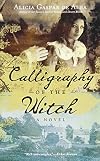
Conception is brought from Mexico to Massachusetts as a slave in the late 1600s. But on the ship on the way there, she is raped over and over. Once in New England, she has a baby, but the couple who bought her want a second child and haven’t been able to. So, while Conception tries to teach her daughter Spanish and some of her own culture, Rachel takes it upon herself to turn the child against her mother, and eventually takes Hanna (or Jeronima, depending if you ask Rachel or show more Conception). In a town not too far away, people are being accused of being witches, including Conception’s friend, Tituba.
This was good. There were parts that were a bit slower to read (literally), when Conception was writing letters, as the font was changed to look like handwriting. It does make me wonder if younger people will be able to read those parts of the book at all (if kids are no longer being taught cursive). It’s a tough book to read, though. I saw someone use the word “gritty”. Good way to describe it. Hanna/Jeronima drove me nuts sometimes! But I guess it’s hard for me to understand how easy it is for a child to be “brainwashed”, and that’s really what it amounted to. show less
Conception is brought from Mexico to Massachusetts as a slave in the late 1600s. But on the ship on the way there, she is raped over and over. Once in New England, she has a baby, but the couple who bought her want a second child and haven’t been able to. So, while Conception tries to teach her daughter Spanish and some of her own culture, Rachel takes it upon herself to turn the child against her mother, and eventually takes Hanna (or Jeronima, depending if you ask Rachel or show more Conception). In a town not too far away, people are being accused of being witches, including Conception’s friend, Tituba.
This was good. There were parts that were a bit slower to read (literally), when Conception was writing letters, as the font was changed to look like handwriting. It does make me wonder if younger people will be able to read those parts of the book at all (if kids are no longer being taught cursive). It’s a tough book to read, though. I saw someone use the word “gritty”. Good way to describe it. Hanna/Jeronima drove me nuts sometimes! But I guess it’s hard for me to understand how easy it is for a child to be “brainwashed”, and that’s really what it amounted to. show less
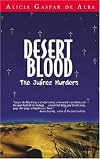
I've read and watched lots of crime dramas this year, and they can present some really creepy, disturbing scenarios. This novel is definitely one of the more creepy, disturbing crime dramas I've come across lately, not just because of the idea of a whole network of well-placed men preying upon women long enough to rack up a death toll of over 140 women, but because this book is based on real events. There really are thousands of missing and dead Hispanic women in the border towns and cities, show more whose lives are valued so little by the local criminal and judicial systems that the crimes against them will never be investigated. While they may not all be victims of snuff rings, I've no doubt that for some of those missing women in real life that is exactly what happened to them.
Reading a novelization of this nightmarish mess is not entertaining, and my knowing about this stuff may not change anything for the better, but I do like reading about real problems like this occasionally just so that they do not remain quite as completely under the radar and invisible. If you find rape and assault narratives particularly disturbing, this book may be too rough a read for you, but it is a well written novel and the issues it addresses are important. show less
Reading a novelization of this nightmarish mess is not entertaining, and my knowing about this stuff may not change anything for the better, but I do like reading about real problems like this occasionally just so that they do not remain quite as completely under the radar and invisible. If you find rape and assault narratives particularly disturbing, this book may be too rough a read for you, but it is a well written novel and the issues it addresses are important. show less
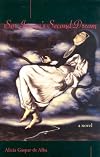
If there's one thing that Sor Juana devotees agree on, it's that the facts of her life are somewhat scant. In Sor Juana: Or, The Traps of Faith, Octavio Paz makes up for these holes by subjecting the life of Sor Juana to some heavy-handed neo-Freudian interpretations. That, and a lot of literary asides on the structure and content of Golden Age Latin American literature. In contrast, Alicia Gaspar de Alba takes what is a less academic approach that is probably no less valid. In Sor Juana's show more Second Dream: A Novel we're treated to a very personal account of what it might have been like to live the loves and struggles of Sor Juana. The rough outline of Sor Juana's life is followed, but this time all of the juicy bits stricken from the historical record have been added back in.
Books like this can be a lot of fun. It's an opportunity to take an historical figure shrouded in mystery and recreate a full-bodied woman, in this case in a sort of pastiche style one might call lesbian historical pulp fiction. My beef with this book lies in the occasionally exercised first person approach to telling the story. Sor Juana is largely revealed in this novel through fictionalized journal entries and letters. What might work with other subjects comes across as presumptuous. Due to the infantile tone and content, you're not likely to forget that the first person aspect of the novel is most definitely the fictionalized aspect of the story. I'm not convinced that Gaspar de Alba does justice to her subject, though it is a valiant effort.
At the end of the day, Sor Juana's poetry stands up very well on its own and speaks volumes of her own life. Fiction really isn't needed to stir our imaginations in order to fill in the gaps, though this is an instance where it is fun to try (and an unfortunate letdown when it doesn't quite succeed). show less
Books like this can be a lot of fun. It's an opportunity to take an historical figure shrouded in mystery and recreate a full-bodied woman, in this case in a sort of pastiche style one might call lesbian historical pulp fiction. My beef with this book lies in the occasionally exercised first person approach to telling the story. Sor Juana is largely revealed in this novel through fictionalized journal entries and letters. What might work with other subjects comes across as presumptuous. Due to the infantile tone and content, you're not likely to forget that the first person aspect of the novel is most definitely the fictionalized aspect of the story. I'm not convinced that Gaspar de Alba does justice to her subject, though it is a valiant effort.
At the end of the day, Sor Juana's poetry stands up very well on its own and speaks volumes of her own life. Fiction really isn't needed to stir our imaginations in order to fill in the gaps, though this is an instance where it is fun to try (and an unfortunate letdown when it doesn't quite succeed). show less
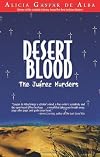
Desert Blood: The Juarez Murders is a chilling novel that uncovers the horrible truth of what happens at the El Paso, Texas and Juarez, Mexico border. Hundreds of women, from teens to middle-age wives, are kidnapped, raped, tortured, used for experiments, and killed in the desert. While this may seem like an awful book that has too much controversial material, it is all relevant to what is currently happening not only in Texas/Mexico, but all throughout the world with severe mistreatment of show more women, exploitation, and murder. The investigation that takes place during the novel also uncovers complex characters and relationships that illustrate both conventional and modern gender roles. Perhaps not necessarily a central part of the curriculum, excerpts can be used appropriately to promote awareness of the injustice and tragedies that are constantly being covered up by the media and those in social, economic, and political power. In addition, it ties in greatly with the exponentially growing Hispanic population in the U.S. and how Mexican-Americans view themselves and how society views them in turn. Students can relate to this through a variety of means—based on gender (several main characters are gay), race/ethnicity (struggling with identifying yourself as an American, a Mexican, and/or a Mexican-American), current social and political ideals regarding American and Chicano relations (immigration stereotypes), etc. I believe that students can relate to this book in the sheer fact that so many of these sorts of things go unnoticed and undiscovered in classrooms throughout the nation. If they can shed light on huge issues and become passionate about one, their horizons will be expanded as they read other sources to learn more. show less
Awards

You May Also Like


Associated Authors
Statistics
- Works
- 15
- Also by
- 14
- Members
- 427
- Popularity
- #57,178
- Rating
- 3.9
- Reviews
- 8
- ISBNs
- 45
- Languages
- 3