
Nelly Sachs (1891–1970)
Author of O the Chimneys: Selected Poems, Including the Verse Play, Eli
About the Author
Nelly Sachs was born into a secular Jewish family in Berlin. She conceived the ambition to become a writer as a young woman, but her early publications attracted hardly any attention. After the rise to power of Hitler, she witnessed the terrible fate of her fellow Jews. Only the intervention of the show more Swedish writer Selma Lagerlof enabled her to leave for Stockholm and escape being sent to a concentration camp. In exile, as she tried to come to terms with the traumatic events of the recent past, she developed the unique poetic idiom for which she is famous. Individual experience hardly seems to exist at all in her poetry, as personal life blends into the mythic story of humanity, especially of her Jewish ancestors. Hans Magnus Enzensberger has written, "The oeuvre of Nelly Sachs is great and mysterious, two attributes that literary criticism has few occasions to apply to poetry these days." (Bowker Author Biography) show less
Image credit: Plaque at the birthplace of Nelly Sachs, Berlin-Schöneberg Maaßenstraße 12
Works by Nelly Sachs
Penguin Modern European Poets : Abba Kovner and Nelly Sachs : selected poems (1971) — Author — 22 copies
Gedichten, toneel en proza 7 copies
In den Wohnungen des Todes 4 copies
Izbrane pesmi / In den Wohnungen des Todes, Sternverdunkelung, Und niemand weiss weiter, Flucht und Verwandlung... (2012) 3 copies
Än hyllar döden livet : dikter 2 copies
Poesias 2 copies
Rekviem for Israel 2 copies
Poesie 2 copies
Und Niemand weiss weiter : Gedichte 2 copies
Poemas * Gedichte 1 copy
Danta le Nelly Sachs 1 copy
Schwedische Gedichte 1 copy
Lírica amorosa alemã moderna — Author — 1 copy
AKKOR BİLMECELER 1 copy
Suche nach Lebenden Die Gedichte d. Nelly Sachs. (Hrsg. von Margaretha Holmqvist u. Bengt Holmqvist) 1 copy
Geklibene lider — Author — 1 copy
Gedichte 1891 - 1970 1 copy
Nelly Sachs zu Ehren. Zum 75. Geburtstag am 10. Dezember 1966. Gedichte, Beiträge, Bibliographie (1966) 1 copy
Opere 1 copy
Gedichte 1 copy
Von Welle und Granit 1 copy
AUSWAHLTE GEDICHTE 1 copy
Associated Works
Women in Praise of the Sacred: 43 Centuries of Spiritual Poetry by Women (1994) — Contributor — 387 copies, 5 reviews
Against Forgetting: Twentieth-Century Poetry of Witness (1993) — Contributor — 376 copies, 2 reviews
The Poetry of Survival: Post-War Poets of Central and Eastern Europe (1991) — Contributor — 46 copies
Transit. Die Iraner in Wien — Contributor — 2 copies
Poesie : Hebräisch, Deutsch — Translator — 1 copy
Tagged
Common Knowledge
- Legal name
- Sachs, Leonie Nelly
- Other names
- Закс, Нелли
- Birthdate
- 1891-12-10
- Date of death
- 1970-05-12
- Gender
- female
- Occupations
- translator
poet
playwright - Organizations
- Deutsche Akademie für Sprache und Dichtung
- Awards and honors
- Nobel Prize (Literature, 1966)
- Relationships
- Lagerlöf, Selma (friend)
Domin, Hilde (friend)
Celan, Paul (friend) - Short biography
- Nelly Sachs was born to a Jewish family in Berlin-Schöneberg, Germany. Her parents were Margarethe (Karger) and Georg Wilhelm Sachs, a wealthy industrialist and inventor. She grew up in the fashionable Tiergarten area of Berlin and was educated at home, also attending the Hoch Toechterschule (girls' school). She began writing poetry at an early age. The rise of the Nazi regime to power in 1933 brought the family increasing persecution and fear. In 1940, a week before she was to be sent to forced labor, Nelly fled to Sweden with her mother, with the help of her friend Selma Lagerlöf. At age 50, her career as a published poet then began. She also translated German poetry into Swedish and Swedish poetry into German. Among her most famous works were "O die Schornsteine" ("O the Chimneys," a reference to the smoke from the Nazi death camps), which was selected as the title poem of a 1967 collection of her work in English translation; and the verse play Eli: A Mystery Play of the Sufferings of Israel (1950), broadcast as a radio play. She was awarded the Nobel Prize for Literature in 1966, shared with the poet S.Y. (Shmuel Yosef) Agnon. The German town of Dortmund instituted and funded the Nelly Sachs Prize for Literature, of which she was the first recipient in 1961.
- Nationality
- Germany
Sweden - Birthplace
- Schöneberg, Germany
- Places of residence
- Schöneberg, Germany
Berlin, Germany
Stockholm, Sweden - Place of death
- Stockholm, Sweden
- Burial location
- Northern Cemetery, Stockholm, Sweden
- Associated Place (for map)
- Stockholm, Sweden
Members
Reviews

You can't read a collection of lyric poems in one go as you can a novel, so this is a first impression, rather than a review.
This collection was put together posthumously in 1977 by the poet Hilde Domin, who knew Sachs and was also an exile from Germany during the Hitler period. It includes a short but very helpful afterword by Domin summing up Sachs's career, the main themes in her poetry, and her critical reception in postwar Germany.
The poems in this collection are selected from the show more whole course of Sachs's career as a serious poet (broadly-speaking 1943-1968 - she never allowed her pre-war "juvenilia" to be republished). Most deal in one way or another with her experience as a refugee and as someone who survived when so many were killed. Some are specifically addressed to the man she loved, others to victims and survivors more generally. I was struck by the absence of direct topical references in the poems: as Domin also points out, they come out of the specific event of the Holocaust, but they actually speak just as well for the survivors and refugees of other cataclysmic events. They haven't lost any of their relevance: Domin talks about Vietnam, we could say Syria or North Africa. What's crucial to these poems is that they always seem to be looking for ways to move forward, not dealing in revenge and recrimination. Domin describes the process Sachs is engaged in as giving the victims a worthy burial.
There are also some more obscure, more or less mystical poems in the collection, which didn't mean very much to me on a first reading: she repeatedly uses the same set of images in these poems in different contexts (fish, butterflies, stars, sand, footwear...), and there's obviously a particular language that you need to be familiar with. But I'm quite happy with the idea of keeping this book on my bedside table for a few months to dip into and gain familiarity with the way her poetic imagination works: I'm sure it will be worth it.
(A stranger always has / his home in his arms / like an orphan / for whom he's perhaps only / seeking a grave.) show less
This collection was put together posthumously in 1977 by the poet Hilde Domin, who knew Sachs and was also an exile from Germany during the Hitler period. It includes a short but very helpful afterword by Domin summing up Sachs's career, the main themes in her poetry, and her critical reception in postwar Germany.
The poems in this collection are selected from the show more whole course of Sachs's career as a serious poet (broadly-speaking 1943-1968 - she never allowed her pre-war "juvenilia" to be republished). Most deal in one way or another with her experience as a refugee and as someone who survived when so many were killed. Some are specifically addressed to the man she loved, others to victims and survivors more generally. I was struck by the absence of direct topical references in the poems: as Domin also points out, they come out of the specific event of the Holocaust, but they actually speak just as well for the survivors and refugees of other cataclysmic events. They haven't lost any of their relevance: Domin talks about Vietnam, we could say Syria or North Africa. What's crucial to these poems is that they always seem to be looking for ways to move forward, not dealing in revenge and recrimination. Domin describes the process Sachs is engaged in as giving the victims a worthy burial.
There are also some more obscure, more or less mystical poems in the collection, which didn't mean very much to me on a first reading: she repeatedly uses the same set of images in these poems in different contexts (fish, butterflies, stars, sand, footwear...), and there's obviously a particular language that you need to be familiar with. But I'm quite happy with the idea of keeping this book on my bedside table for a few months to dip into and gain familiarity with the way her poetic imagination works: I'm sure it will be worth it.
Ein Fremder hat immer
seine Heimat im Arm
wie eine Waise
für die er vielleicht nichts
als ein Grab sucht.
(A stranger always has / his home in his arms / like an orphan / for whom he's perhaps only / seeking a grave.) show less

Volume 2 of the 20-volume Nobel Prize Library. Contains selected works of Nelly Sachs (Nobel 1966), George Bernard Shaw (Nobel 1925), Frans Eemil Sillanpää (Nobel 1939), and Sully Prudhomme (Nobel 1901), with presentation addresses by the Swedish Academy and biographical essays. Illustrated in color.
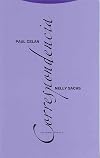
La correspondencia entre Nelly Sachs y Paul Celan se extiende a lo largo de casi dieciséis años, desde la primavera de 1954 hasta finales de 1969. Poetas y exiliados, ambos se vieron forzados a vivir y escribir fuera del ámbito cultural y geográfico de la lengua alemana. Los dos llevaron existencias atormentadas y experimentaron la suerte de su salvación como una culpa. «La vida tiene la misericordia de rompernos», escribió una vez Sachs a Celan. Y también: «Querido Paul Celan, show more nosotros queremos seguir aportándonos la verdad el uno al otro. Entre París y Estocolmo se extiende el meridiano del dolor y del consuelo».
Sus cartas, acompañadas en ocasiones de las primeras versiones de algunos de sus poemas, albergan la amistad de estos dos seres humanos hermanados por la experiencia del sufrimiento y permiten acceder a su intimidad creadora. Una correspondencia publicada aquí por primera vez íntegramente, en una edición comentada y anotada. show less
Sus cartas, acompañadas en ocasiones de las primeras versiones de algunos de sus poemas, albergan la amistad de estos dos seres humanos hermanados por la experiencia del sufrimiento y permiten acceder a su intimidad creadora. Una correspondencia publicada aquí por primera vez íntegramente, en una edición comentada y anotada. show less
Nov 9, 2022Spanish

Nelly Sachs, eg. Leonie Sachs, född 10 december 1891 i Berlin, död 12 maj 1970 i Stockholm, tysk författare av judiskt ursprung; nobelpristagare i litteratur 1966, detta utdelat på hennes födelsedag. Den 25 april 1952 blev hon svensk medborgare.
Hon fick hjälp av Selma Lagerlöf att fly till Sverige 1940, där hon sedan kom att stanna till sin död. Hennes hymnartade poesi är en klagosång över det judiska folkets olyckor. En exakt kopia av hennes lägenhet finns bevarad i ett magasin show more under Kungliga Biblioteket i Stockholm, komplett med alla hennes ägodelar. show less
Hon fick hjälp av Selma Lagerlöf att fly till Sverige 1940, där hon sedan kom att stanna till sin död. Hennes hymnartade poesi är en klagosång över det judiska folkets olyckor. En exakt kopia av hennes lägenhet finns bevarad i ett magasin show more under Kungliga Biblioteket i Stockholm, komplett med alla hennes ägodelar. show less
Mar 20, 2010Swedish
Lists
Awards


You May Also Like


Associated Authors
Statistics
- Works
- 82
- Also by
- 13
- Members
- 542
- Popularity
- #45,992
- Rating
- 4.2
- Reviews
- 4
- ISBNs
- 65
- Languages
- 10
- Favorited
- 3


